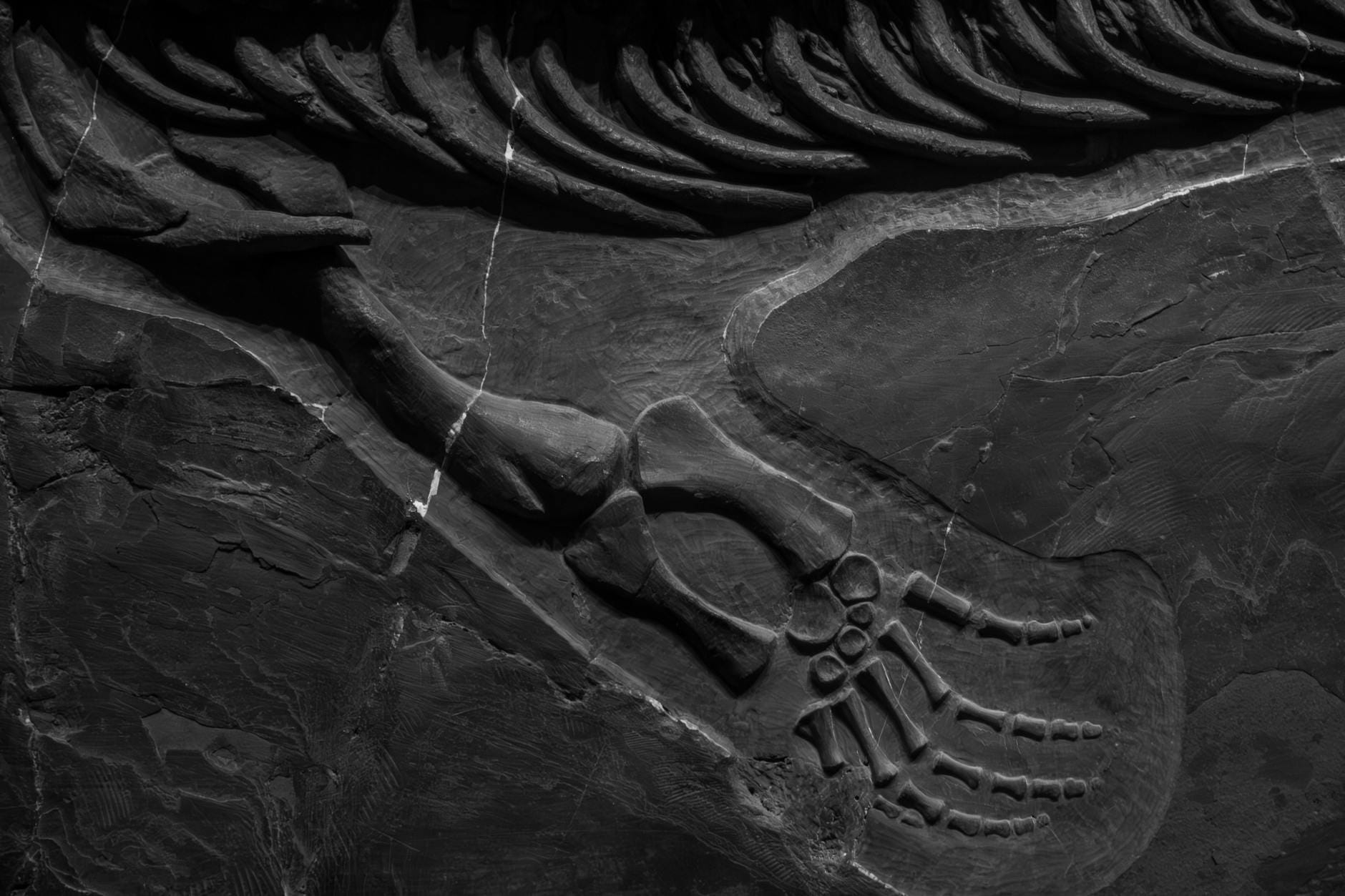
Three Maiasaura skeletons are listed at Spazio Amanita in New York. With fossil auction records reaching $44.6 million in 2024, complete dinosaur skeletons represent a high-risk, high-return alternative asset for long-horizon investors with strong provenance documentation.
Dinosaur Fossils as Investment Assets: A Market Worth Watching
Three complete Maiasaura dinosaur skeletons — representing juvenile, adolescent, and adult specimens — are currently listed for sale at Spazio Amanita, a New York gallery that has carved out a niche at the intersection of natural history and the high-end collectibles market. The asking prices have not been publicly disclosed, but comparable complete dinosaur skeletons have fetched between $2 million and $44.6 million at major auction houses. For investors tracking alternative assets beyond whisky casks and blue-chip art, the fossil market represents illiquid but potentially high-returning corners of the collectibles universe — and the Spazio Amanita offering is a useful lens through which to examine it.
The Maiasaura, a hadrosaur from the Late Cretaceous period discovered primarily in Montana's Two Medicine Formation, is notable for its scientific significance as one of the first dinosaurs associated with evidence of parental care. A matched set capturing three distinct life stages — juvenile, adolescent, and adult — is exceptionally rare from a provenance standpoint. Rarity of this kind is precisely what drives price premiums in the fossil market, just as age statements and distillery closures drive premiums in rare whisky. For a high-net-worth investor, the question is not whether dinosaur bones are interesting. The question is whether they hold and grow value over time — and the data increasingly suggests they do.
Auction Records and Price Appreciation in the Fossil Market
The headline number in dinosaur fossil investment is Christie's 2020 sale of Stan, a Tyrannosaurus rex skeleton, which hammered at $31.8 million — more than eight times its pre-sale high estimate of $8 million. That result sent shockwaves through the natural history market and prompted serious institutional attention. Prior to Stan, the record had been set by Sue, another T. rex, which sold at Sotheby's in 1997 for $8.36 million — meaning the category delivered roughly a 280% nominal return over 23 years on its flagship asset. More recently, a Stegosaurus skeleton named Apex sold at Sotheby's New York in July 2024 for $44.6 million, setting a new world record for any fossil sold at auction and confirming that the market's ceiling is still rising.
These are not isolated data points. According to reporting from Sotheby's and Christie's market reviews, natural history lots — including fossils, meteorites, and mineralogical specimens — have become a consistent growth category since 2015. The segment benefits from a structural supply constraint that no other alternative asset class can replicate: the number of scientifically significant, exhibition-quality dinosaur skeletons in private hands is finite and shrinking as institutions and museums acquire pieces for permanent collections. Once a specimen enters a museum, it is effectively removed from the investable market permanently. That dynamic is analogous to the closure of a Scotch whisky distillery — each acquisition reduces future supply and supports long-term price appreciation for remaining inventory.
The $44.6 million hammer price for Apex the Stegosaurus at Sotheby's in 2024 confirmed that complete dinosaur skeletons are now firmly in the ultra-high-net-worth asset category — on par with trophy art and rare whisky collections.
Key Investment Metrics: What the Numbers Tell Us
Investors considering exposure to the fossil market should benchmark it against other alternative assets. The following data points frame the opportunity:
- Record auction price (2024): $44.6 million for Apex the Stegosaurus, Sotheby's New York — a new world record for any fossil.
- Previous record (2020): $31.8 million for Stan the T. rex at Christie's — 8x the high pre-sale estimate, signalling chronic undervaluation by auction specialists.
- 1997 benchmark: Sue the T. rex sold for $8.36 million at Sotheby's, representing approximately 280% nominal appreciation to the Stan result over 23 years.
- Market segment growth: Sotheby's natural history category has grown from a niche offering to a dedicated annual sale series since 2015, reflecting sustained collector and investor demand.
- Supply constraint: The US Paleontological Resources Preservation Act limits commercial excavation on federal land, meaning the pipeline of legally tradeable, high-quality specimens is structurally restricted.
- Gallery pricing tier: Mid-market complete skeletons from lesser-known species typically list between $500,000 and $5 million at specialist galleries, offering entry points below the auction headline figures.
The illiquidity premium in this market is real — but so is the upside when a specimen reaches the right buyer at the right moment. Unlike whisky casks, which can be valued against a relatively transparent secondary market, fossil pricing is highly event-driven and dependent on provenance documentation, scientific significance, and the presence of competing bidders. That opacity is a risk, but it is also the source of the category's most dramatic returns.
Scarcity Dynamics and the Maiasaura Trifecta
What makes the Spazio Amanita offering particularly noteworthy from an investment perspective is the coherence of the set. A single Maiasaura skeleton is collectible. Three specimens representing a complete ontogenetic sequence — the full arc from hatchling to adult — is a scientific and aesthetic rarity that commands a meaningful premium over individual pieces. Provenance coherence is reliable drivers of price premiums across all alternative asset classes, from single-malt whisky distillery collections to matched sets of vintage watches. A buyer acquiring all three specimens would hold an essentially unrepeatable asset.
The Maiasaura was first described by palaeontologist Jack Horner and Robert Makela in 1979, and the species has since become studied hadrosaurs in the fossil record. Its association with nesting behaviour and juvenile care gives it a narrative quality that resonates with both scientific institutions and private collectors — a dual demand profile that supports pricing. Spazio Amanita has positioned itself as a gallery bridging the natural history and contemporary art markets, which means its client base likely includes both serious collectors and investors already comfortable with alternative asset allocation. The gallery context matters: a fossil sold through a credible gallery with documented provenance will always command a premium over an undocumented specimen at a regional auction.
Risks, Liquidity, and Portfolio Fit
No investment analysis of the fossil market is complete without addressing the risks. Liquidity is the primary concern: unlike a whisky cask, which can be sold back into a relatively active secondary market, a complete dinosaur skeleton requires a very specific buyer — typically a wealthy individual, a natural history museum, or a corporate collection. Holding periods of five to fifteen years are not unusual, and forced sales in illiquid markets almost always result in value destruction. Investors should treat fossil acquisitions as long-duration, low-liquidity positions with asymmetric upside — appropriate for a small allocation within a broader alternative assets portfolio, not as a core holding.
Legal provenance is also non-negotiable. The international fossil trade is governed by a patchwork of national laws, and specimens with unclear excavation history or export documentation carry significant legal and reputational risk. The Maiasaura specimens at Spazio Amanita are presented through a reputable gallery, which implies a degree of provenance verification — but any serious investor should commission independent legal and scientific due diligence before committing capital. In the fossil market, provenance documentation is not a formality; it is the foundation of the asset's value. A skeleton with a clean chain of custody from excavation to current ownership will always outperform an equivalent specimen with gaps in its history.
Frequently Asked Questions
How much are complete dinosaur skeletons worth at auction?
Complete dinosaur skeletons have sold for between $2 million and $44.6 million at major auction houses. The current world record is held by Apex, a Stegosaurus sold at Sotheby's New York in July 2024 for $44.6 million. Mid-market specimens from less prominent species typically sell in the $500,000 to $5 million range through specialist galleries and auction houses.
Are dinosaur fossils a legitimate alternative investment?
Yes, for investors with high risk tolerance, long time horizons, and significant existing liquidity. The fossil market has produced some of the most dramatic returns in the alternative assets space — Stan the T. rex returned roughly 8x its pre-sale estimate in 2020 — but the market is illiquid, opaque, and highly dependent on provenance quality. It is best treated as a small, opportunistic allocation rather than a core portfolio position.
What legal issues should investors consider before buying a fossil?
Buyers must verify that any fossil was legally excavated and exported from its country of origin. In the United States, the Paleontological Resources Preservation Act restricts commercial collection on federal land. International specimens must comply with the laws of their country of origin, and incomplete export documentation can result in seizure or legal challenge. Independent legal due diligence is essential before any acquisition.
How does the fossil market compare to other alternative assets like whisky or art?
The fossil market shares characteristics with both fine art (illiquid, provenance-driven, event-based pricing) and rare whisky (supply-constrained, with a finite and shrinking pool of investable assets). It differs in having a smaller, less transparent secondary market and longer typical holding periods. Returns can be exceptional when a specimen reaches the right buyer, but the path to liquidity is less predictable than in the whisky cask or blue-chip art markets.
What to Watch: Key Signals for Fossil Market Investors
The Spazio Amanita listing is a useful moment to track gallery-level pricing for complete skeletons before they reach the auction block. Sotheby's and Christie's natural history sale schedules for late 2024 and 2025 will provide the next set of public benchmarks. Watch in particular for any complete hadrosaur or sauropod lots, which have historically been the strongest performers outside the theropod category dominated by T. rex. If the Maiasaura trifecta reaches auction rather than selling privately, the hammer price will set a meaningful new reference point for ontogenetic sets — a sub-category with no existing public comparables. Investors tracking the natural history market should also monitor legislative developments in the US regarding fossil excavation rights on state and private land, which could materially affect the legal supply pipeline over the next decade.
Source: Whisky Bulletin coverage of cask investment on Whisky Bulletin.
💼 Interested in alternative asset investment? Speak to the team at Whisky Cask Club — Singapore's leading whisky cask investment specialists.
💼 Interested in alternative asset investment? Speak to the team at Whisky Cask Club — Singapore's leading whisky cask investment specialists.