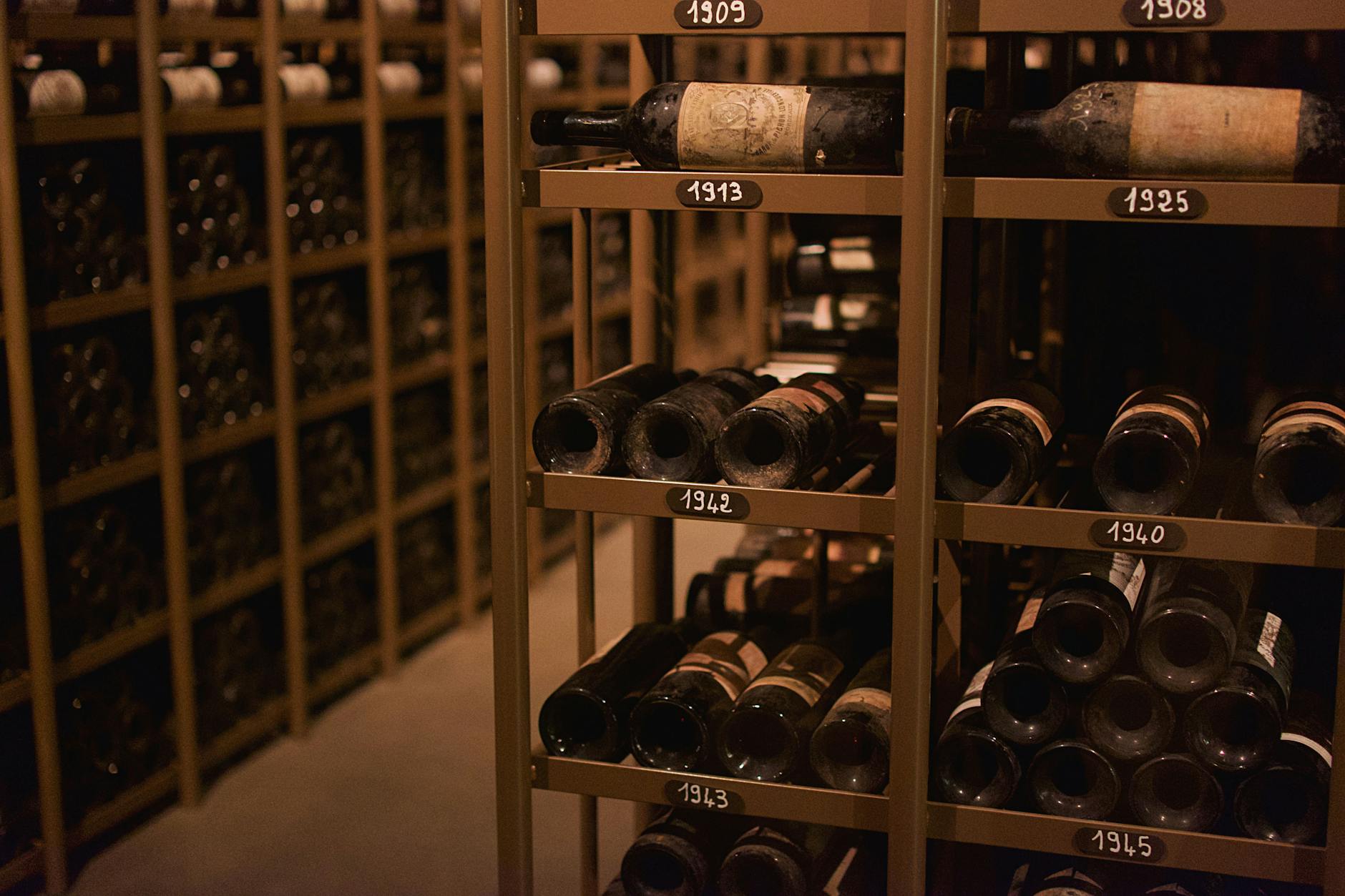
A Philanthropic Sale With a Market Signal Attached
When one of the world's most recognisable private wine collections comes to auction for the final time, investors pay attention — not out of sentiment, but because of what it signals about the fine wine market's enduring ability to attract serious capital. Andrew Lloyd Webber, the composer behind The Phantom of the Opera and Cats, has consigned the remaining portion of his celebrated cellar to Christie's, with proceeds directed toward funding classical music education for disadvantaged secondary school pupils. The sale represents the concluding chapter of a collection that has already generated substantial sums across previous auction tranches, and the market is watching closely. Christie's, which handled earlier portions of the same collection, has a strong track record with high-profile cellar dispersals — their fine wine and spirits department regularly posts annual sale totals exceeding $50 million globally.
Lloyd Webber's collection is not a casual accumulation of dinner-party bottles. It is a deeply curated cellar built over decades, weighted toward blue-chip Bordeaux and Burgundy — the very categories that have historically outperformed broader alternative asset benchmarks. The Liv-ex Fine Wine 1000 index, which tracks the wider fine wine market, has delivered returns of approximately 35% over the past five years, while top-tier Burgundy and first-growth Bordeaux have in some cases doubled in value over the same period. When a collection of this provenance and depth reaches the block, hammer prices routinely exceed pre-sale estimates by 20–40%, a premium that reflects both the quality of the wine and the storytelling power of documented ownership history.
Why Provenance Commands a Price Premium
In fine wine investment, provenance is not a soft concept — it is a quantifiable premium. Bottles with an unbroken, verifiable chain of custody from a named, reputable cellar consistently outperform anonymous equivalents at auction. A case of 1982 Pétrus from a private collector with documented storage history will routinely fetch 15–25% more than the same wine offered without that paper trail. Lloyd Webber's cellar carries exactly the kind of provenance that institutional buyers and serious private collectors compete for. Christie's ability to market the collection under his name adds a layer of narrative scarcity that no amount of secondary-market trading can replicate. For investors tracking the fine wine space, this sale is a live demonstration of how provenance translates directly into yield.
- 5-year appreciation (Liv-ex Fine Wine 1000): approximately +35%
- Top Burgundy appreciation (5-year): up to +90% for select domaines
- Provenance premium at auction: typically 15–25% above anonymous equivalents
- Christie's global wine and spirits annual sales: consistently above $50 million
- Estimate-to-hammer outperformance on named collections: 20–40%
The Scarcity Dynamics Driving Demand
Fine wine operates under supply constraints that few other asset classes can match. Unlike equities or real estate, the supply of a specific vintage is permanently fixed the moment harvest ends. Every bottle consumed, corked, or poorly stored reduces the investable pool further. For the most sought-after appellations — premier and grand cru Burgundy, first-growth Bordeaux, cult Californian producers — annual production is measured in thousands of cases, not millions. As Asian demand, particularly from Hong Kong, Singapore, and mainland China, has expanded the global buyer base over the past decade, the pressure on finite supply has intensified considerably. Christie's Hong Kong operation now accounts for a meaningful share of global fine wine auction volume, reflecting a structural demand shift that is far from reversing.
The Lloyd Webber sale also arrives at a moment when high-net-worth investors are increasingly scrutinising alternative assets for both capital preservation and uncorrelated returns. Fine wine has a historically low correlation to equity markets, making it a credible diversifier within a broader portfolio. During the 2022 equity drawdown, the Liv-ex 1000 held its value far more effectively than the S&P 500, reinforcing the asset class's defensive characteristics.
Investment Takeaway
For investors already allocated to fine wine, this sale is a timely reminder to audit the provenance quality of existing holdings. Bottles with weak or undocumented custody chains are materially harder to exit at full value. For those considering entry, named-cellar dispersals at Christie's or Sotheby's represent one of the cleaner ways to acquire investment-grade wine with built-in provenance documentation. Bidding on individual lots is one route; alternatively, working with a specialist fund or advisory that sources directly from such sales offers exposure without the operational complexity of physical storage and insurance. The broader takeaway is structural: scarcity, documented provenance, and expanding global demand remain the three pillars underpinning fine wine as an investable asset class — and the Lloyd Webber sale illustrates all three simultaneously.
💼 Interested in alternative asset investment? Speak to the team at Whisky Cask Club — Singapore's leading whisky cask investment specialists.
💼 Interested in alternative asset investment? Speak to the team at Whisky Cask Club — Singapore's leading whisky cask investment specialists.
💼 Interested in alternative asset investment? Speak to the team at Whisky Cask Club — Singapore's leading whisky cask investment specialists.