{"title":"Rare Watch Market Delivers 6-Figure Returns at Neighborhood Watch Fair 2024","html":"
What Is the Neighborhood Watch Fair and Why Do Investors Care?
The Neighborhood Watch Fair is an independent collector event that has quietly become reliable barometers of secondary-market demand for rare and vintage timepieces in the United States. Unlike the polished corporate floors of Watches of Switzerland or the velvet-rope atmosphere of major auction previews, the fair operates closer to the ground level — which is precisely why the price signals it generates are so instructive. When serious money changes hands in an informal setting, it tells you something that a curated auction catalogue cannot: what collectors actually want, at what price, right now.
If you manage a portfolio that includes alternative assets, the watch market deserves your attention this quarter. According to data from the Morgan Stanley and LuxConsult Watch Industry Report, the global pre-owned watch market was valued at approximately $22 billion in 2023 and is projected to reach $35 billion by 2030. That trajectory is not driven by sentiment alone — it is driven by the same scarcity mechanics that underpin fine wine and whisky cask investment. The Neighborhood Watch Fair, held in 2024 with attendance from hundreds of specialist dealers and private collectors, offered a live demonstration of those mechanics in action.
For high-net-worth investors already allocating to whisky casks, fine wine, or art, the watch market represents a liquid, portable, and increasingly data-rich asset class. The fair's trading floor — where grail-level references changed hands at prices that would not have looked out of place at a Christie's sale — is evidence that the secondary watch market has matured well beyond hobbyist territory.
Which Watch References Are Generating the Strongest Investment Returns?
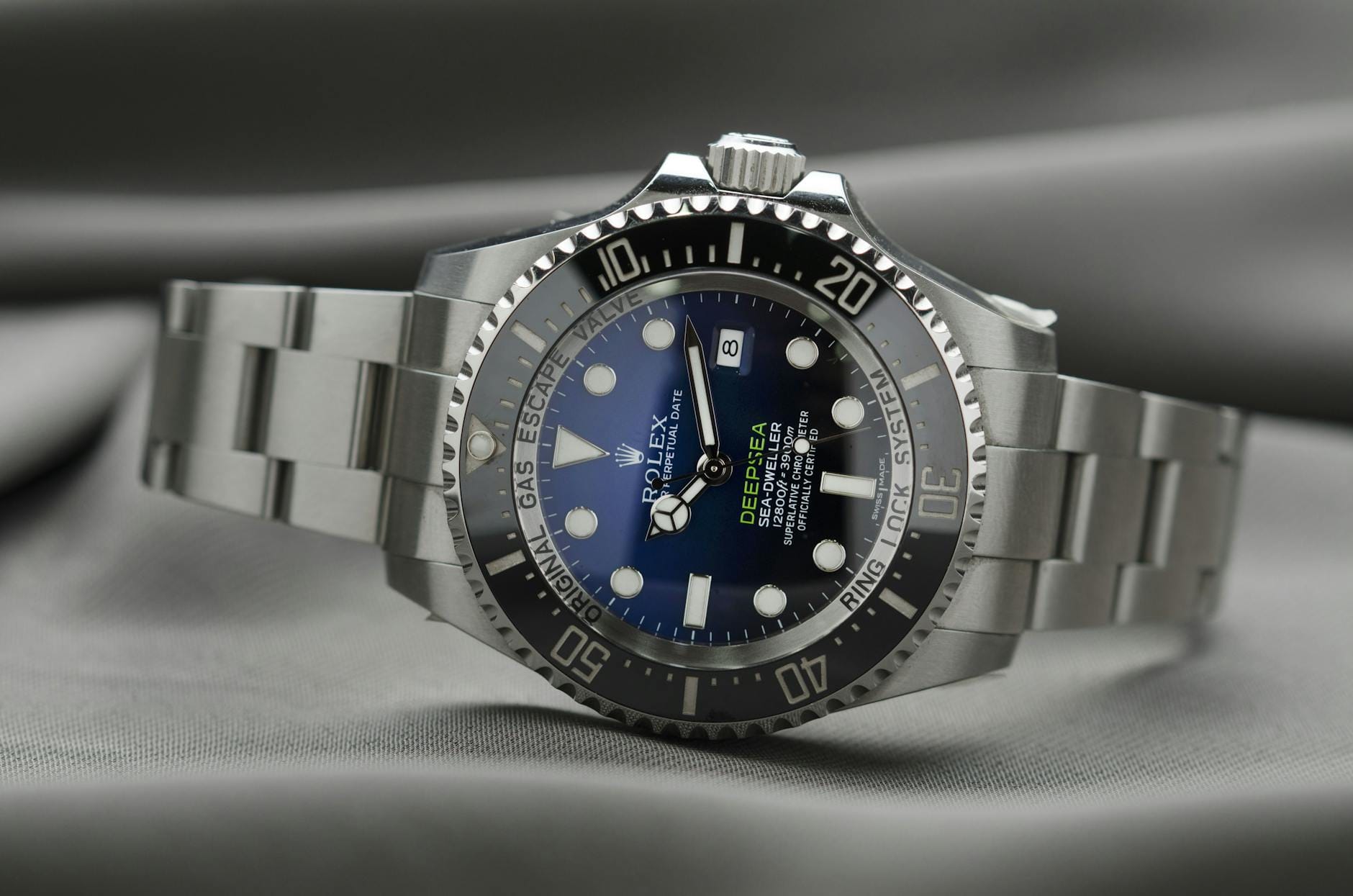
The strongest returns in the watch market are concentrated in a narrow band of references from Rolex, Patek Philippe, and A. Lange and Söhne, with vintage Rolex Daytona and Patek Philippe Nautilus models leading documented appreciation curves. At the Neighborhood Watch Fair, attendees reported transactions involving references that have appreciated between 40% and 300% over five-year holding periods, depending on condition, provenance, and dial variant. A Paul Newman Rolex Daytona reference 6239 in original condition, for example, has sold at auction for north of $500,000 — a reference point that anchors private-market negotiations at events like this one.
According to WatchCharts market data, the overall pre-owned watch market index declined approximately 20% from its 2022 peak through mid-2023 before stabilising and beginning a selective recovery in late 2023 and into 2024. This correction has created a genuine entry window for investors who missed the pandemic-era run-up. The fair's attendance and transaction volume in 2024 suggest that sophisticated buyers recognise this window. Dealers at the event noted particular demand for references with documented service histories and original dials — the watch equivalent of a wine with an unbroken cellar provenance.
A. Lange and Söhne, the Glashütte-based German manufacture, drew notable attention at the fair for its Datograph and Lange 1 references. Lange pieces have historically been under-appreciated relative to Swiss peers, but auction results from Phillips Geneva and Sotheby's New York in 2023 and 2024 have shown Lange hammer prices climbing steadily, with select references achieving 30% to 50% premiums above pre-sale estimates. For investors seeking less-crowded positions in the watch market, German horology offers a compelling asymmetric opportunity.
"The watch market's correction from 2022 peaks has not erased long-term gains — a Patek Philippe Nautilus reference 5711 purchased in 2015 for roughly $30,000 retail still trades above $80,000 on the secondary market today, representing a compound annual growth rate that outpaces most traditional fixed-income instruments."
How Does Watch Investment Compare to Other Alternative Assets?
Watch investment compares favourably to other tangible alternative assets on several metrics, including liquidity, portability, and price transparency. Unlike a whisky cask, which requires bonded warehouse storage and a multi-year maturation horizon before realisation, a watch can be liquidated within days through platforms such as Chrono24, WatchBox, or a major auction house. This liquidity profile is closer to fine wine than to private equity, making watches a practical diversifier for investors who want alternative exposure without locking up capital for a decade.
- 5-year appreciation (Rolex Daytona 116500LN): approximately +85% from 2019 to 2024 secondary market pricing
- 5-year appreciation (Patek Philippe Nautilus 5711/1A): approximately +170% over the same period, peaking above $200,000 in 2022
- Pre-owned market size (2023): $22 billion globally, per Morgan Stanley and LuxConsult
- Projected market size (2030): $35 billion, representing a CAGR of approximately 7%
- WatchCharts index correction: approximately -20% from peak (2022) to trough (mid-2023), with selective recovery underway
- Phillips Geneva auction, 2023: Patek Philippe reference 2499 sold for CHF 3.96 million, setting a record for the reference at that house
The key differentiator between watches and whisky casks or fine wine is the role of brand equity as a value anchor. Rolex produces approximately 800,000 to 1 million watches per year — a figure that sounds large until you consider that global demand vastly exceeds authorised dealer allocation for the most sought-after references. This structural supply constraint, which Rolex has shown no intent to resolve, is the single most important driver of secondary-market premiums and the reason that certain references hold value through broader market corrections.
What Did the Neighborhood Watch Fair Reveal About Current Market Sentiment?
Current market sentiment, as evidenced by the Neighborhood Watch Fair's 2024 edition, is cautiously optimistic with a strong bias toward quality and provenance over speculation. The frenzied flipping behaviour that characterised 2021 and early 2022 — when buyers were purchasing grey-market Rolex Submariners at 100% premiums over retail and expecting further appreciation — has largely dissipated. What remains is a more disciplined cohort of buyers who understand the difference between a watch as a speculative instrument and a watch as a long-duration store of value.
Dealers at the fair reported that buyers are asking harder questions about service history, original parts, and box-and-papers completeness than at any point in the past decade. This mirrors a trend visible in the fine wine market, where provenance documentation — chain of custody, storage conditions, import records — has become a prerequisite for premium pricing rather than a nice-to-have. Investors entering the watch market now should treat provenance documentation with the same rigour they would apply to a château wine or a single-malt cask certificate.
The community dimension of the fair — the informal networks, the direct dealer relationships, the opportunity to handle pieces before committing — also carries investment relevance. Private transactions at events like this frequently occur at prices below the Chrono24 or WatchBox market rate, precisely because the buyer is absorbing counterparty risk that a platform transaction eliminates. For experienced investors who can assess condition accurately, this discount represents alpha that is not available through conventional channels.
Frequently Asked Questions
What is watch investment and how does it work?
Watch investment is the practice of acquiring mechanical timepieces — typically from brands such as Rolex, Patek Philippe, Audemars Piguet, and A. Lange and Söhne — with the expectation that their secondary-market value will appreciate over time. Returns are generated through resale on platforms like Chrono24, WatchBox, or through auction houses including Phillips, Christie's, and Sotheby's. Value is driven by brand prestige, reference scarcity, condition, and provenance documentation.
Is watch investment a good investment compared to stocks or property?
Watch investment can outperform traditional asset classes for specific references over specific holding periods, but it carries meaningful risks including illiquidity for certain references, condition deterioration, and market sentiment shifts. The Patek Philippe Nautilus 5711 delivered approximately 170% appreciation over five years at its peak, outperforming most equity indices. However, the subsequent correction illustrates that watches are not a one-way trade. They are best treated as a portfolio diversifier rather than a primary investment vehicle.
Which watch brands hold value best for investment purposes?
Rolex, Patek Philippe, and Audemars Piguet have the strongest documented track records for value retention and appreciation in the secondary market. A. Lange and Söhne represents an emerging opportunity with less crowded positioning. Independent watchmakers such as F.P. Journe and Philippe Dufour have produced exceptional returns for early buyers but operate in a thinner, less liquid market. For investors prioritising liquidity, Rolex references — particularly the Daytona, Submariner, and GMT-Master II — offer the deepest secondary market globally.
How do I assess the provenance of a watch before investing?
Provenance assessment for investment-grade watches should include verification of original box and papers, service history documentation, originality of dial and hands (unstretched, unpolished), and chain of ownership where possible. Auction house catalogues from Phillips, Christie's, and Sotheby's provide detailed condition reports that serve as benchmarks. For private purchases, third-party authentication services and independent watchmakers who specialise in the relevant brand are essential due-diligence tools.
What to Watch: Key Market Signals for Watch Investors in 2025
The forward-looking signals for watch investors are concentrated in three areas. First, monitor the Phillips Geneva and New York auction calendars for Q1 and Q2 2025 — hammer prices at these sales will confirm whether the selective recovery observed in late 2024 is broadening or narrowing to a handful of trophy references. Second, track Rolex's authorised dealer allocation policies; any signal of increased supply to the grey market would compress secondary premiums for steel sports references. Third, watch for movement in the A. Lange and Söhne secondary market, where institutional awareness remains low relative to Swiss peers — this is where the next significant re-rating may occur.
For investors already active in whisky casks or fine wine, the watch market offers a complementary allocation: portable, increasingly liquid, and anchored by brand equity that has survived multiple economic cycles. The Neighborhood Watch Fair demonstrated that the community of serious buyers is growing, that provenance standards are rising, and that the correction from 2022 peaks has not erased the structural case for owning exceptional timepieces. The actionable step is straightforward: identify two or three references with documented five-year appreciation, establish your provenance criteria, and build relationships with reputable dealers before the next upward cycle narrows the entry window.
💼 Interested in alternative asset investment? Speak to the team at Whisky Cask Club — Singapore's leading whisky cask investment specialists.
","meta_title":"Rare Watch Market Investment Returns: 2024 Fair Insights","meta_description":"The Neighborhood Watch Fair reveals strong demand for rare Rolex and Patek Philippe references. Key data on watch investment returns, market size, and 2025 outlook.","focus_keyword":"watch investment","keywords":["rare watch investment","Rolex secondary market","Patek Philippe appreciation","pre-owned watch market","alternative assets","Phillips auction watches","watch market returns","Neighborhood Watch Fair"],"tldr":"The 2024 Neighborhood Watch Fair confirmed sustained demand for grail-level references from Rolex, Patek Philippe, and A. Lange and Söhne. With the pre-owned watch market projected to reach $35 billion by 2030 and post-2022 corrections creating entry windows, watches offer credible portfolio diversification for alternative asset investors.","faqs":[{"q":"What is watch investment and how does it work?","a":"Watch investment involves buying mechanical timepieces from brands like Rolex, Patek Philippe, and A. Lange and Söhne and reselling them on secondary markets or at auction. Returns depend on reference scarcity, condition, provenance, and brand equity. Platforms include Chrono24, WatchBox, Phillips, Christie's, and Sotheby's."},{"q":"Is watch investment a good investment compared to stocks or property?","a":"Certain watch references have outperformed equity indices over specific periods — the Patek Philippe Nautilus 5711 appreciated roughly 170% over five years at its peak. However, watches carry risks including illiquidity, condition deterioration, and sentiment-driven corrections. They are best used as a portfolio diversifier rather than a primary asset class."},{"q":"Which watch brands hold value best for investment purposes?","a":"Rolex, Patek Philippe, and Audemars Piguet have the strongest secondary-market track records. A. Lange and Söhne offers an emerging opportunity with less competition. For liquidity, Rolex sports references — Daytona, Submariner, GMT-Master II — have the deepest global secondary markets."},{"q":"How do I assess the provenance of a watch before investing?","a":"Check for original box and papers, service history, unpolished case, and original dial and hands. Use auction house condition reports from Phillips, Christie's, or Sotheby's as benchmarks. For private purchases, engage third-party authentication services or independent watchmakers specialising in the relevant brand."}],"entities":{"people":[],"organizations":["Rolex","Patek Philippe","A. Lange and Söhne","Audemars Piguet","Phillips Geneva","Christie's","Sotheby's","WatchBox","Chrono24","WatchCharts","Morgan Stanley","LuxConsult","Watches of Switzerland","Whisky Cask Club"],"places":["Glashütte","Geneva","New York","Singapore","United States"]}}
💼 Interested in alternative asset investment? Speak to the team at Whisky Cask Club — Singapore's leading whisky cask investment specialists.