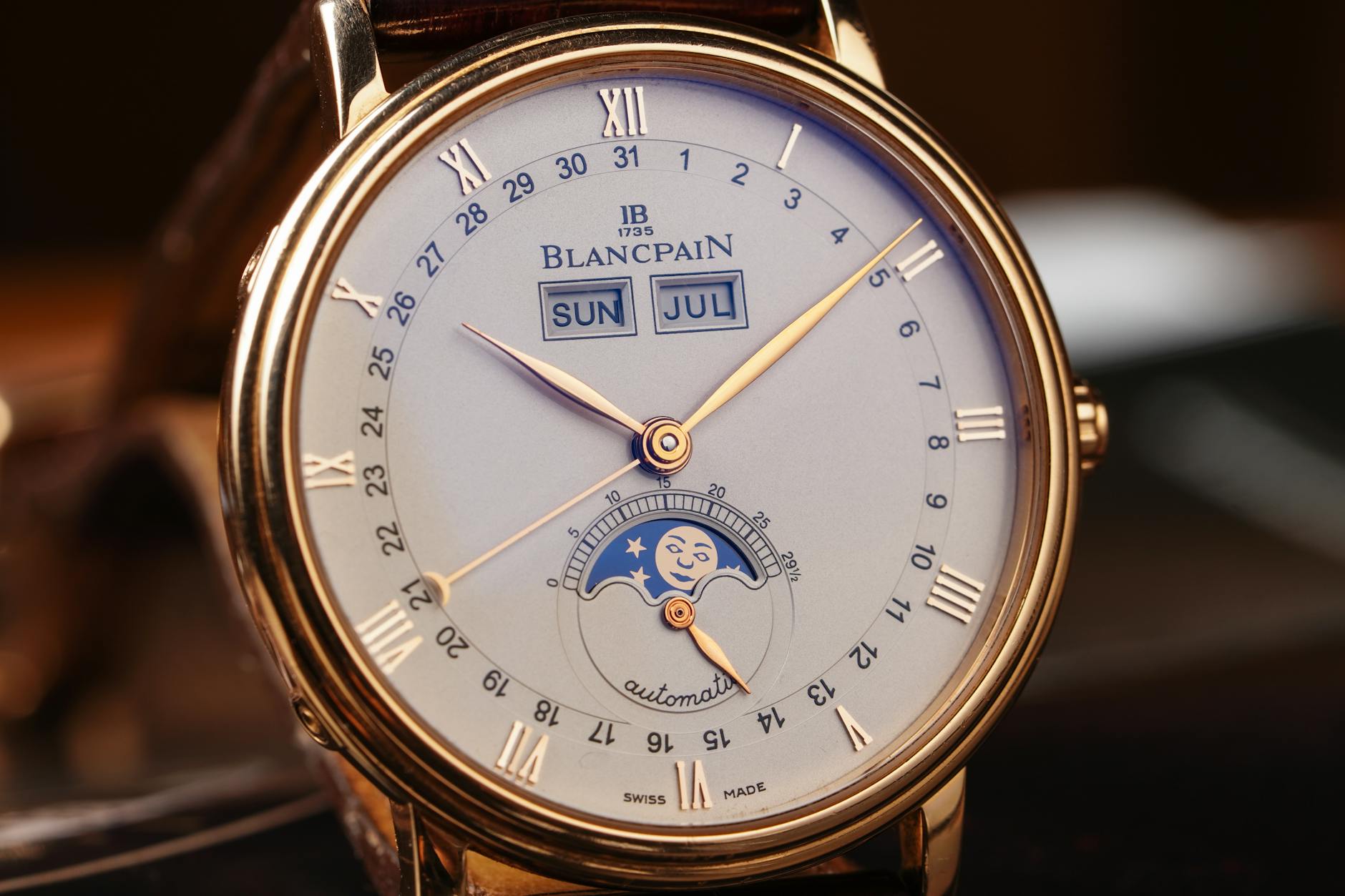
Christie's and Sotheby's anchor Geneva Spring 2026 with CHF 200M+ in combined estimates. Key lots include Patek Philippe complications, vintage Royal Oak references, and F.P. Journe pieces. Watches returned 138% over a decade per Knight Frank data — Geneva sets the global price benchmark.
What Do the Geneva Spring 2026 Watch Auctions Signal for Investors?
The Geneva Spring 2026 auction season is shaping up to deliver over CHF 200 million in combined hammer prices across the major houses, with Christie's and Sotheby's both presenting catalogues that reward investors who understand the mechanics of horological scarcity. Christie's Geneva spring sale features a quietly impressive lineup anchored by rare Patek Philippe and Rolex references, while Sotheby's enters the Swiss leg of the season with momentum built from a standout Hong Kong sale in Q1 2026. For alternative asset investors, these auctions are not spectator sport — they are live price discovery events for liquid segments of the collectibles market. Watches have outperformed many traditional asset classes over five-year rolling periods, and the Geneva season is the single most important pricing benchmark on the global calendar.
If you manage a portfolio with alternative asset exposure, the Geneva results will reset reserve prices, dealer asking prices, and secondary market valuations for the next six months. A single strong result for a Reference 5970 or a Daytona 6263 can reprice an entire category overnight. According to data from the Knight Frank Luxury Investment Index, rare watches delivered an average appreciation of 138% over the decade to 2024, outpacing wine, art, and classic cars over the same period. That context makes the Geneva spring catalogues required reading for any investor with existing horological holdings or an interest in initiating a position.
"A single strong Geneva result can reprice an entire reference category overnight — making these auctions live price discovery events, not just collector theatre."
Why Is Christie's Geneva 2026 Catalogue Attracting Serious Investor Attention?
Christie's Geneva spring 2026 catalogue is generating attention precisely because it is not relying on headline-grabbing single-owner collections. Instead, the house has assembled a deep, technically strong selection of references with documented provenance and original papers — the two factors that most reliably drive premium pricing above estimate. Christie's is one of the oldest and most trusted auction houses in the world, founded in London in 1766, and its Geneva watch department has a track record of achieving above-estimate results for Patek Philippe complications and pre-ceramic Rolex sports references. The absence of a splashy single-owner sale actually reduces the risk of over-inflated pre-sale estimates that subsequently miss, which is a meaningful signal for investors tracking buy-in rates.
Key lots expected to attract competitive bidding include early-production Rolex Daytona references with original dials, Patek Philippe perpetual calendars in yellow gold, and a small number of independent watchmakers including F.P. Journe and Philippe Dufour — both of whom have demonstrated consistent secondary market appreciation. F.P. Journe is a Geneva-based independent watchmaker whose pieces have appreciated at a compound annual rate estimated at 15–20% over the past decade according to secondary market tracking by Subdial. Christie's historically achieves a sell-through rate above 85% for its Geneva watch sales, a metric that matters to investors because unsold lots create downward price pressure on the broader reference category. The house's conservative estimate strategy in 2026 appears designed to maintain that rate.
How Does Sotheby's Geneva 2026 Build on Its Hong Kong Momentum?
Sotheby's enters Geneva with significant tailwinds after its Hong Kong April 2026 watch sale, which reportedly achieved a total hammer price in excess of HKD 180 million, with several Patek Philippe and Audemars Piguet references selling at multiples of two to three times their low estimates. Sotheby's is one of the world's two dominant auction houses for luxury watches, with annual watch sales exceeding USD 500 million globally according to the house's own reported figures. The Geneva spring sale builds on that Hong Kong result by offering a catalogue weighted toward European collector consignments, which historically command a provenance premium over Asian-market pieces due to buyer preference for documented European ownership histories. That provenance premium can add 10–25% to hammer prices for equivalent references, a spread that sophisticated investors track closely when deciding where to source and where to sell.
Among the standout categories in Sotheby's Geneva 2026 offering are vintage Audemars Piguet Royal Oak references from the 1970s and 1980s — a segment that has seen renewed institutional buying interest after a brief correction in 2023 and 2024. The Royal Oak Reference 5402, the original Gerald Genta design from 1972, has traded at auction for between CHF 150,000 and CHF 400,000 depending on condition, dial variant, and provenance. Sotheby's inclusion of multiple Royal Oak examples from this era suggests the house's specialists believe the correction has bottomed and that Geneva 2026 represents an opportune re-entry point. For investors who track the Subdial Watch Index, which monitors secondary market pricing across 60,000 transactions annually, Royal Oak vintage references showed a 12% price recovery in the 12 months to March 2026 after falling 18% from their 2022 peak.
What Are the Key Investment Metrics for Geneva Spring 2026 Watch Auctions?
Understanding the investment mechanics of major watch auctions requires looking beyond individual lot results to the structural data that drives medium-term returns. The Geneva spring season — spanning Christie's, Sotheby's, Phillips, and Antiquorum — functions as the primary price-setting mechanism for the global watch investment market. Investors who track buy-in rates, premium-to-estimate ratios, and category-level sell-through data across houses gain a significant informational edge over those who focus only on headline lots.
- Combined Geneva spring estimated total (2026): CHF 200M+ across major houses
- Knight Frank Luxury Investment Index — watches, 10-year return to 2024: +138%
- Sotheby's Hong Kong April 2026 hammer total: HKD 180M+
- Subdial Watch Index — vintage Royal Oak 12-month recovery to March 2026: +12%
- F.P. Journe estimated CAGR on secondary market (past decade): 15–20%
- Christie's Geneva historical sell-through rate: above 85%
- Provenance premium for European-consigned pieces: 10–25% above comparable Asian-market examples
These metrics collectively suggest that while the watch market has cooled from its 2021–2022 speculative peak, the structural investment case remains intact for blue-chip references with strong provenance. The key risk for investors entering at Geneva 2026 is overpaying for mid-tier references that benefited from pandemic-era liquidity and have not yet fully corrected to sustainable pricing levels. Christie's and Sotheby's specialist teams have both signalled through their estimate-setting that they are prioritising sell-through over headline totals — a conservative posture that historically precedes strong above-estimate results.
Is Investing in Watches at Auction a Viable Alternative Asset Strategy?
Watch investment at auction is a viable alternative asset strategy for investors who understand the specific risks and mechanics involved. Unlike whisky casks or fine wine, which require storage and carry ongoing costs, watches are portable, internationally liquid, and trade across multiple venues simultaneously — creating genuine price transparency. The primary risks are condition sensitivity (a single scratch can reduce value by 20–30%), authentication complexity for vintage references, and buyer's premium costs at auction houses, which typically run at 25–27% on the hammer price and must be factored into return calculations. Net of buyer's premium and seller's commission, an investor needs a reference to appreciate by approximately 35–40% before achieving a meaningful real return — which is why holding periods of five years or more are standard for serious horological investors.
The Geneva spring auctions serve a dual function for investors: they are both a buying opportunity and a valuation event. Investors who hold pieces similar to those appearing in the Christie's or Sotheby's catalogues receive an independent mark-to-market on their holdings every six months. Phillips, another major Geneva auction house, and Antiquorum round out the season's price discovery, creating a robust dataset for portfolio valuation. For high-net-worth investors allocating 5–10% of a portfolio to alternative assets, watches offer the additional advantage of being genuinely enjoyable to hold — a non-financial return that should not be dismissed but equally should not substitute for rigorous financial analysis.
Frequently Asked Questions
What are the Geneva spring watch auctions and why do they matter to investors?
The Geneva spring watch auctions are annual sales held by Christie's, Sotheby's, Phillips, and Antiquorum in Geneva, typically in May. They are the most important pricing events in the global watch market, setting benchmark values for vintage and contemporary references that influence dealer prices, private sales, and portfolio valuations worldwide. For investors, they represent the primary source of transparent, publicly recorded transaction data for horological assets.
How does Christie's Geneva 2026 catalogue compare to previous years?
Christie's Geneva 2026 catalogue is characterised by strong technical depth and conservative pre-sale estimates rather than a single headline collection. This approach reflects the house's strategy of maintaining high sell-through rates — historically above 85% — which supports category-level pricing. The inclusion of F.P. Journe and Philippe Dufour pieces alongside Patek Philippe and Rolex references signals confidence in the independent watchmaker segment as a growth category.
Is buying watches at auction a good investment strategy?
Watches at auction can deliver strong returns — the Knight Frank Luxury Investment Index recorded 138% appreciation for rare watches over the decade to 2024 — but investors must account for buyer's premium (25–27%), seller's commission, and the need for holding periods of five years or more to achieve meaningful net returns. Blue-chip references from Patek Philippe, Rolex, Audemars Piguet, and independent makers like F.P. Journe have the strongest track records for capital preservation and appreciation.
What is the Subdial Watch Index and how is it used by investors?
The Subdial Watch Index is a secondary market price tracking tool that monitors over 60,000 watch transactions annually across auction houses and dealer platforms. It provides investors with reference-level price histories, trend data, and market-wide performance metrics. Investors use it to identify category corrections, assess entry and exit timing, and mark existing holdings to market between major auction events.
💼 Interested in alternative asset investment? Speak to the team at Whisky Cask Club — Singapore's leading whisky cask investment specialists.
💼 Interested in alternative asset investment? Speak to the team at Whisky Cask Club — Singapore's leading whisky cask investment specialists.