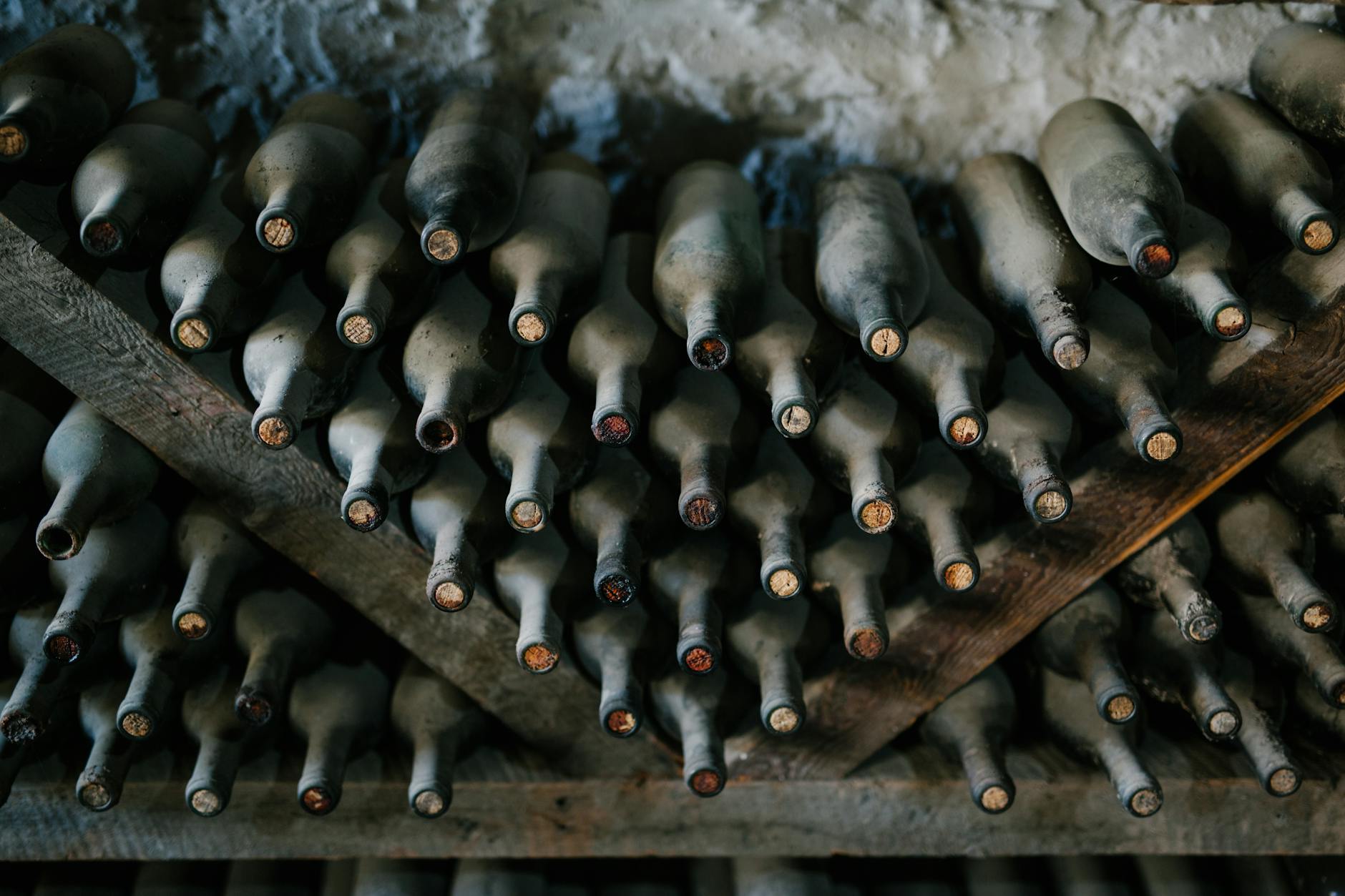
Australian Vintage has refinanced debt to expand its Poco Vino brand, signalling a shift away from premium production. For investors, this tightens future supply of investment-grade Australian wine as Chinese demand recovers — a bullish setup for existing premium holdings.
Australian Vintage Refinancing Reveals a Shifting Fine Wine Investment Market
Australian Vintage Limited, one of Australia's largest publicly listed wine producers with an annual revenue base exceeding AUD 200 million, has refinanced its debt facilities to fund the accelerated roll-out of its Poco Vino brand — a move that tells sophisticated investors far more about the structural dynamics of the global wine market than a simple balance sheet adjustment. The refinancing, which restructures the group's existing credit lines, signals that wine producers are repositioning aggressively around accessible, high-volume labels even as the premium and ultra-premium segments continue to attract alternative asset capital. For investors tracking fine wine as an asset class, this corporate manoeuvre is a useful indicator of where margin pressure is building — and where scarcity value is quietly compounding.
If you hold wine casks, wine futures, or fine wine through platforms such as Liv-ex or Cult Wines, this matters directly to your allocation. When mid-market wine producers lever up to chase volume-driven brands, it concentrates premium production in fewer hands and tightens the supply pipeline for investment-grade bottles. The Liv-ex Fine Wine 1000 index — the broadest benchmark for the investable fine wine market — has delivered annualised returns of approximately 8–10% over the past decade, outperforming many traditional fixed-income instruments over the same period. Understanding what is happening at the producer level is essential context for anyone managing a wine-heavy alternative portfolio.
What the Poco Vino Expansion Signals for Wine Supply Dynamics
Poco Vino is Australian Vintage's ready-to-drink, lower price-point wine brand — a deliberate pivot toward convenience formats and everyday consumption. The decision to refinance specifically to accelerate this brand's growth tells a clear story: the company sees stronger near-term returns in volume-led, accessible wine than in building aged, premium inventory. This is a rational corporate response to margin compression in the mid-tier wine segment, but it has meaningful second-order effects for investors in premium Australian wine. When large producers shift capital away from premium vineyard development and aged inventory accumulation, the pipeline of future collectible and investment-grade Australian wine narrows.
According to Wine Australia data, Australian wine exports reached AUD 1.74 billion in the year to March 2024, recovering from the significant disruption caused by Chinese tariffs that were only lifted in March 2024 after a three-year freeze. The removal of those tariffs — which had been as high as 218% on some Australian wines — has reopened the world's most important growth market for Australian producers. Yet rather than using the refinancing to build premium aged stock for the returning Chinese luxury buyer, Australian Vintage is directing capital toward a mass-market brand. This divergence between corporate strategy and premium demand recovery is precisely the kind of supply-demand dislocation that creates investment opportunity in fine wine.
The Liv-ex Australia 50 sub-index, which tracks the 50 most-traded Australian fine wines, has shown renewed momentum since the China tariff reversal, with secondary market prices for Penfolds Grange — arguably Australia's most investment-grade wine — recovering strongly. A bottle of 2012 Penfolds Grange that traded at approximately GBP 450 at the height of the tariff period has moved back toward GBP 600–650 in recent secondary market transactions, representing a 30–40% price recovery in under 18 months.
When mid-market producers redirect capital toward volume brands rather than premium aged inventory, the supply of future investment-grade Australian wine tightens — and scarcity value compounds for existing premium holdings.
Key Investment Metrics: Australian Fine Wine as an Asset Class
Before drawing portfolio conclusions, investors need a clear-eyed view of the data. The following metrics frame the current opportunity in Australian fine wine relative to other alternative assets.
- Liv-ex Fine Wine 1000 (10-year annualised return): approximately 8–10% per annum, with lower volatility than equities over the same period.
- Penfolds Grange 2012 secondary market recovery: approximately 30–40% price appreciation since Chinese tariff removal in March 2024.
- Australian wine export value (year to March 2024): AUD 1.74 billion, with China re-emerging as a top-five destination following tariff removal.
- Chinese tariff peak: up to 218% on Australian bottled wine, in force from 2021 to March 2024 — a three-year supply disruption that artificially suppressed secondary market prices.
- Australian Vintage annual revenue: exceeding AUD 200 million, making it one of the largest listed wine groups in the country and a useful bellwether for producer-level capital allocation trends.
These figures collectively point to a market where the macro tailwind — China reopening — is real, but where producer capital is not flowing into premium inventory creation. That structural gap is the investment thesis. Existing holdings of aged, premium Australian wine benefit from a recovering demand environment and a constrained future supply pipeline simultaneously.
How Australian Wine Compares to Other Alternative Asset Classes
Fine wine sits within a broader alternative assets universe that includes whisky casks, rare watches, art, and classic cars. Each asset class has distinct liquidity, storage, and return profiles. For investors building a diversified alternatives allocation, understanding how Australian wine stacks up against comparable assets is essential.
- Whisky casks: According to Rare Whisky 101 data, the RW Apex 1000 index — tracking the 1,000 most sought-after Scotch whisky bottles — delivered returns exceeding 15% per annum over the five years to 2022, though the market has moderated since. Cask investment offers tax advantages in certain jurisdictions and genuine scarcity, but requires specialist storage and longer holding periods of typically 5–15 years.
- Fine wine (Bordeaux first growths): The Liv-ex Bordeaux 500 has been broadly flat to slightly negative over the 2022–2024 period as the market digests post-pandemic excess and Chinese demand normalises. This creates a relative value argument for Australian premium wine, which is earlier in its recovery cycle.
- Rare watches: The WatchCharts Overall Market Index peaked in early 2022 and has since declined approximately 20–25% from its highs as speculative excess unwound. Watches remain a liquid alternative but are more sensitive to consumer sentiment cycles than aged wine or whisky.
- Art: The Artprice Global Index showed global auction turnover of approximately USD 10.5 billion in 2023, down from USD 11.5 billion in 2022. Blue-chip contemporary art retains strong demand, but entry costs and illiquidity make it less accessible for most private investors.
- Australian premium wine: Currently in an early-cycle recovery, benefiting from the China tariff reversal, producer underinvestment in premium inventory, and a secondary market that has not yet fully repriced the new supply-demand reality.
Of these five asset classes, Australian premium wine presents one of the clearest asymmetric setups heading into 2025 — a recovering demand base, a tightening supply pipeline, and secondary market prices that have not yet fully reflected either dynamic.
What Investors Should Do With This Information
The Australian Vintage refinancing is not a direct trigger to buy or sell fine wine. It is, however, a useful data point in a broader investment thesis. Corporate capital allocation decisions at the producer level are leading indicators of future supply conditions. When major producers prioritise volume brands over premium aged inventory — as Australian Vintage is doing — the medium-term supply of collectible wine tightens. Investors with existing holdings in premium Australian wine, particularly aged Penfolds, Henschke Hill of Grace, or Torbreck RunRig, should view this as a positive structural signal for their positions.
For investors considering entering the Australian fine wine market, the current environment offers a compelling entry point. Secondary market prices for investment-grade Australian wine remain below their pre-tariff highs in many cases, even as the fundamental demand picture — particularly from Chinese buyers — has improved materially. The window between demand recovery and full price repricing is typically narrow, and producer-level signals like the Australian Vintage refinancing suggest the supply side will not compensate.
Storage, provenance documentation, and access to reputable secondary markets remain the key operational considerations for wine investment. Platforms such as Liv-ex, Cult Wines, and specialist auction houses including Langton's in Australia provide the infrastructure for professional-grade wine investment. Investors should ensure any wine held for investment purposes is stored in a bonded warehouse with full provenance records, as condition and provenance are the primary determinants of secondary market value.
Source: Whisky Bulletin coverage of cask investment on Whisky Bulletin.
💼 Interested in alternative asset investment? Speak to the team at Whisky Cask Club — Singapore's leading whisky cask investment specialists.
What to Watch: Key Signals for Wine Investors in the Next 12 Months
The Australian fine wine investment thesis will be tested by several specific developments over the coming year. Investors should monitor the following closely.
- Chinese import data for Australian wine (Q3–Q4 2024): The first full year of data post-tariff removal will reveal the true pace of Chinese demand recovery and its impact on secondary market prices.
- Penfolds Grange 2019 release pricing: Treasury Wine Estates' pricing decisions for new Grange releases will signal how producers are reading the premium market's capacity to absorb higher prices.
- Australian Vintage half-year results: The company's next financial update will show whether the Poco Vino refinancing is generating the returns management expects — and whether any capital is being redirected toward premium production.
- Liv-ex Australia 50 index trajectory: A sustained move above pre-tariff levels would confirm the recovery thesis and likely accelerate institutional interest in Australian fine wine as an asset class.
- Global wine auction volumes: Data from Sotheby's Wine, Hart Davis Hart, and Langton's will provide real-time pricing signals for investment-grade Australian bottles in the secondary market.
The actionable insight is straightforward: use the Australian Vintage refinancing as a reminder to review your fine wine allocation before the China recovery trade is fully priced in. The gap between current secondary market prices and where demand fundamentals point is closing — and producer capital allocation decisions suggest it will not be refilled from the supply side anytime soon.
Frequently Asked Questions
What is Australian Vintage refinancing and why does it matter to wine investors?
Australian Vintage Limited has restructured its debt facilities to fund the expansion of its Poco Vino brand. For investors, this matters because it signals that a major Australian wine producer is prioritising volume-driven, lower-margin production over premium aged inventory — tightening the future supply of investment-grade Australian wine at a time when Chinese demand is recovering strongly.
How has the removal of Chinese tariffs on Australian wine affected investment-grade bottle prices?
China lifted tariffs of up to 218% on Australian bottled wine in March 2024, after a three-year freeze that significantly suppressed secondary market prices. Since the removal, investment-grade bottles such as Penfolds Grange 2012 have recovered approximately 30–40% in secondary market transactions, though prices remain below pre-tariff peaks in many cases, suggesting further upside potential.
How does fine wine compare to whisky casks as an alternative investment?
Both asset classes offer genuine scarcity and have delivered strong long-term returns. Rare Whisky 101 data shows the RW Apex 1000 index delivered returns exceeding 15% per annum over the five years to 2022, while the Liv-ex Fine Wine 1000 has returned approximately 8–10% per annum over a decade. Whisky casks typically require longer holding periods and specialist storage, while fine wine offers more liquid secondary markets through established auction houses and trading platforms.
Which Australian wines are considered most investment-grade?
Penfolds Grange consistently tops investment-grade rankings for Australian wine, with a deep secondary market and strong international recognition. Other investment-grade Australian bottles include Henschke Hill of Grace, Torbreck RunRig, and selected vintages from Giaconda and Bass Phillip. Provenance, storage condition, and vintage quality are the primary determinants of secondary market value for all of these labels.
💼 Interested in alternative asset investment? Speak to the team at Whisky Cask Club — Singapore's leading whisky cask investment specialists.