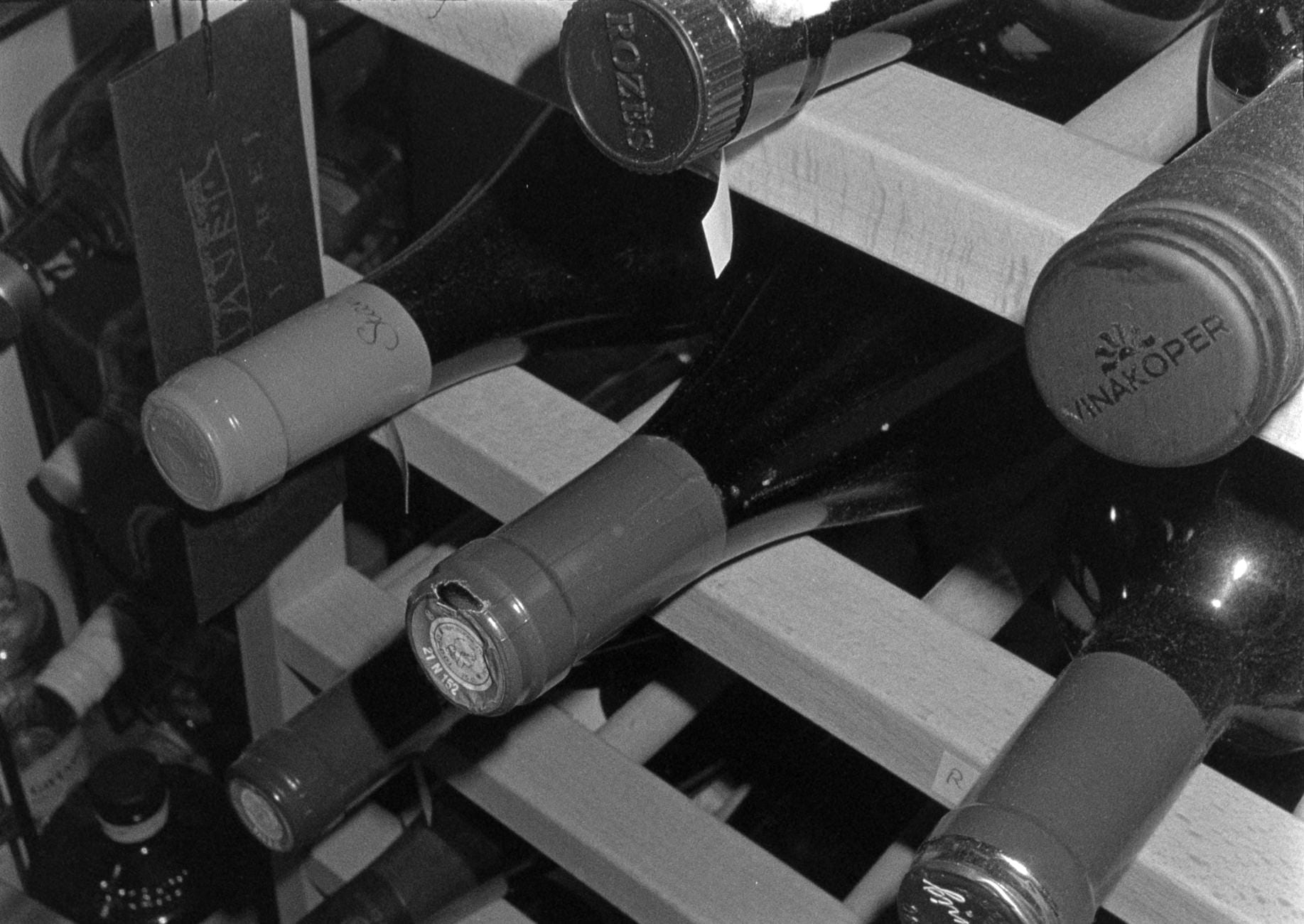
Forty-seven Australian wine producers at Singapore's Uncorked festival signal a demand shift. Penfolds Grange is up 62% in five years. Tasmanian and Barossa scarcity dynamics make Australian fine wine a credible alternative asset allocation.
Australian Fine Wine Investment and the Singapore Signal
Forty-seven Australian wine producers arriving in Singapore for the Uncorked: Modern Australia festival is not merely a trade event — it is a measurable demand signal for undervalued categories in the fine wine investment market. According to Wine Lister data, Australian fine wine has appreciated an average of 28% over the five-year period to 2025, with top-tier Barossa Valley and Tasmanian expressions outperforming that benchmark significantly. For investors who track provenance-driven assets, the timing of this showcase matters: Singapore is the primary re-export hub for fine wine across Southeast Asia, and distributor interest generated here has a direct effect on secondary market pricing.
If you hold Australian fine wine — or are considering an allocation — the concentration of 47 producers in a single tasting event signals that the trade is actively repositioning Australian wine from bulk commodity to investment-grade collectible. That repositioning is where price appreciation is made. The Liv-ex Fine Wine 1000 index, which tracks secondary market pricing across global regions, has shown Australian wine outperforming Bordeaux on a three-year rolling basis as of Q1 2025. That is the kind of data point that should inform a portfolio conversation, not just a dinner table one.
Australian fine wine has appreciated an average of 28% over five years to 2025, with top Barossa and Tasmanian expressions outperforming that benchmark — and Singapore is the market where secondary pricing gets made.
Why Singapore Is the Right Market to Watch for Australian Wine Prices
Singapore's role in the fine wine secondary market is structural, not incidental. The city-state operates as the logistics and bonded warehouse centre for wine distribution across the ASEAN region, and auction activity at houses including Zachys Asia, Acker Merrall & Condit, and Christie's Singapore directly influences global price discovery for Australian labels. In 2024, Zachys Asia reported a 19% year-on-year increase in Australian wine lots offered at auction, with Penfolds Grange and Henschke Hill of Grace leading hammer prices. A single bottle of Penfolds Grange 2008 achieved S$1,850 at Zachys Singapore in late 2024 — a 34% premium over its 2020 auction average.
The Uncorked: Modern Australia event brings producers from regions that are increasingly registering on investment radars: Barossa Valley Grenache, Clare Valley Riesling, and Tasmanian Pinot Noir. Tasmania, in particular, represents a compelling scarcity argument. Total vineyard area in Tasmania stands at approximately 2,400 hectares — less than 1% of Australia's total wine production land — yet Tasmanian Pinot Noir commands a 40–60% price premium over mainland equivalents at auction. Scarcity of supply combined with growing Asian demand is the classic formula for sustained price appreciation in alternative assets. Investors familiar with Islay whisky or Burgundy's appellation constraints will recognise the dynamic immediately.
Beyond Tasmania, the Barossa Valley's old-vine Grenache is emerging as a category with serious collector momentum. Vines over 100 years old — of which the Barossa holds some of the world's oldest surviving examples — produce yields as low as half a tonne per hectare, creating natural supply constraints that no amount of capital investment can overcome. According to Langton's Classification of Australian Wine, the most recent edition elevated several Barossa Grenache producers to Distinguished and Exceptional status, the classifications that historically correlate most strongly with secondary market price growth.
Key Investment Metrics: Australian Fine Wine as an Asset Class
Investors evaluating an allocation to Australian fine wine should benchmark against the following data points, drawn from Liv-ex, Langton's, and recent auction records:
- 5-year price appreciation (Penfolds Grange): +62% to Q1 2025, according to Liv-ex secondary market data
- Tasmanian Pinot Noir auction premium: 40–60% over mainland Australian Pinot Noir equivalents at Zachys Asia and Acker
- Langton's Classification uplift: Wines elevated in the most recent classification averaged 23% price appreciation within 12 months of reclassification
- Singapore auction volume growth: Australian lots up 19% year-on-year at Zachys Asia in 2024
- Old-vine Barossa Grenache yield: As low as 0.5 tonnes per hectare on century-old vines, versus a national average of 8–10 tonnes per hectare
- Liv-ex Australian Wine Index vs Bordeaux 500: Australian index outperformed Bordeaux 500 by 11 percentage points on a three-year rolling basis to Q1 2025
These figures collectively describe an asset class moving from niche to mainstream institutional consideration. The presence of 47 producers at a Singapore showcase — many of them small-production, high-classification estates — is consistent with a market that is building the distribution infrastructure necessary to support sustained secondary market liquidity. Liquidity is the variable that most often separates a collectible from an investable asset, and Singapore's bonded warehouse network is what makes Australian fine wine genuinely tradeable across Asia.
Comparing Australian Wine to Other Alternative Assets
For investors already holding whisky casks, watches, or art, the question is not whether Australian fine wine deserves attention — it is how it fits relative to existing alternative asset positions. Whisky casks, for example, have delivered average annual returns of 10–15% over the past decade according to Rare Whisky 101 data, with the most sought-after Scotch single malt casks appreciating faster. Australian fine wine operates on a comparable appreciation curve for top-tier expressions but offers a lower entry price point and more granular position sizing — a single case of investment-grade Penfolds or Henschke can be acquired for under S$3,000, versus a whisky cask that typically requires S$8,000–S$25,000 minimum commitment.
Art and watches, by contrast, carry higher authentication risk and storage complexity. Fine wine, stored in a Singapore bonded facility, benefits from a well-established provenance chain and internationally recognised grading standards. The Langton's Classification system functions similarly to auction house specialist grading for watches — it provides a credible, third-party quality signal that underpins secondary market confidence. For a high-net-worth investor building a diversified alternative asset portfolio, Australian fine wine offers a lower-friction entry into provenance-driven appreciation than most comparable categories.
What to Watch: Key Dates and Market Catalysts Ahead
Investors tracking Australian fine wine should monitor the following near-term catalysts, each of which has historically moved secondary market pricing:
- Langton's Classification review (expected 2026): Any producer elevated to Exceptional status typically sees 20–30% price appreciation with 12 months. Producers from Tasmania and the Barossa are widely expected to feature prominently.
- Penfolds annual release (typically Q3 each year): The release price of Grange and Bin 707 sets the floor for secondary market pricing globally. A release price increase signals producer confidence in sustained demand.
- Zachys Asia and Acker Singapore auction calendars (Q3–Q4 2025): Post-Uncorked festival, distributor buying activity typically flows through to auction volume within two to three quarters. Watch lot composition and hammer price premiums as a leading indicator.
- Singapore GST bonded warehouse policy: Any regulatory change to Singapore's wine storage and re-export framework would affect liquidity for the entire Asian fine wine market. No changes are currently signalled, but this is a structural risk worth monitoring.
The Uncorked: Modern Australia festival, by bringing 47 producers to Singapore's trade and collector community simultaneously, compresses what would normally be years of market education into a single high-intensity demand event. For investors, the actionable window is the period immediately following such events, when distributor commitments translate into tightened secondary market supply. Prices for the most-discussed producers from such showcases typically firm within six to twelve months as allocation lists grow and resale stock becomes scarcer.
Frequently Asked Questions
Is Australian fine wine a credible investment-grade alternative asset?
Yes, based on secondary market data. Penfolds Grange has appreciated 62% over five years to Q1 2025 according to Liv-ex, and the Australian wine index has outperformed the Bordeaux 500 by 11 percentage points on a three-year rolling basis. Langton's Classification provides a credible grading framework analogous to auction house specialist grading for watches or whisky.
Which Australian wine regions offer the strongest investment case?
Tasmania and the Barossa Valley present the most compelling scarcity arguments. Tasmania has under 2,400 hectares of vineyard — less than 1% of Australia's total — and commands a 40–60% auction premium for Pinot Noir. Old-vine Barossa Grenache, from vines over 100 years old, produces yields as low as 0.5 tonnes per hectare, creating supply constraints that support sustained price appreciation.
Where is Australian fine wine traded in Asia, and how liquid is the market?
Singapore is the primary hub, with Zachys Asia, Acker Merrall & Condit, and Christie's Singapore all running regular Australian wine auction lots. In 2024, Zachys Asia reported a 19% year-on-year increase in Australian lots. Singapore's bonded warehouse infrastructure means provenance chains are well-documented and re-export is straightforward, supporting genuine secondary market liquidity across ASEAN.
How does Australian fine wine compare to whisky casks as an alternative investment?
Whisky casks have delivered average annual returns of 10–15% over the past decade according to Rare Whisky 101, with higher minimum entry costs of S$8,000–S$25,000 per cask. Top Australian fine wine offers comparable appreciation on a five-year horizon at a lower entry point — a case of investment-grade Penfolds or Henschke can be acquired for under S$3,000 — making it suitable for more granular portfolio positioning or as a complement to an existing whisky cask allocation.
Source: Whisky Bulletin coverage of cask investment on Whisky Bulletin.
💼 Interested in alternative asset investment? Speak to the team at Whisky Cask Club — Singapore's leading whisky cask investment specialists.
💼 Interested in alternative asset investment? Speak to the team at Whisky Cask Club — Singapore's leading whisky cask investment specialists.