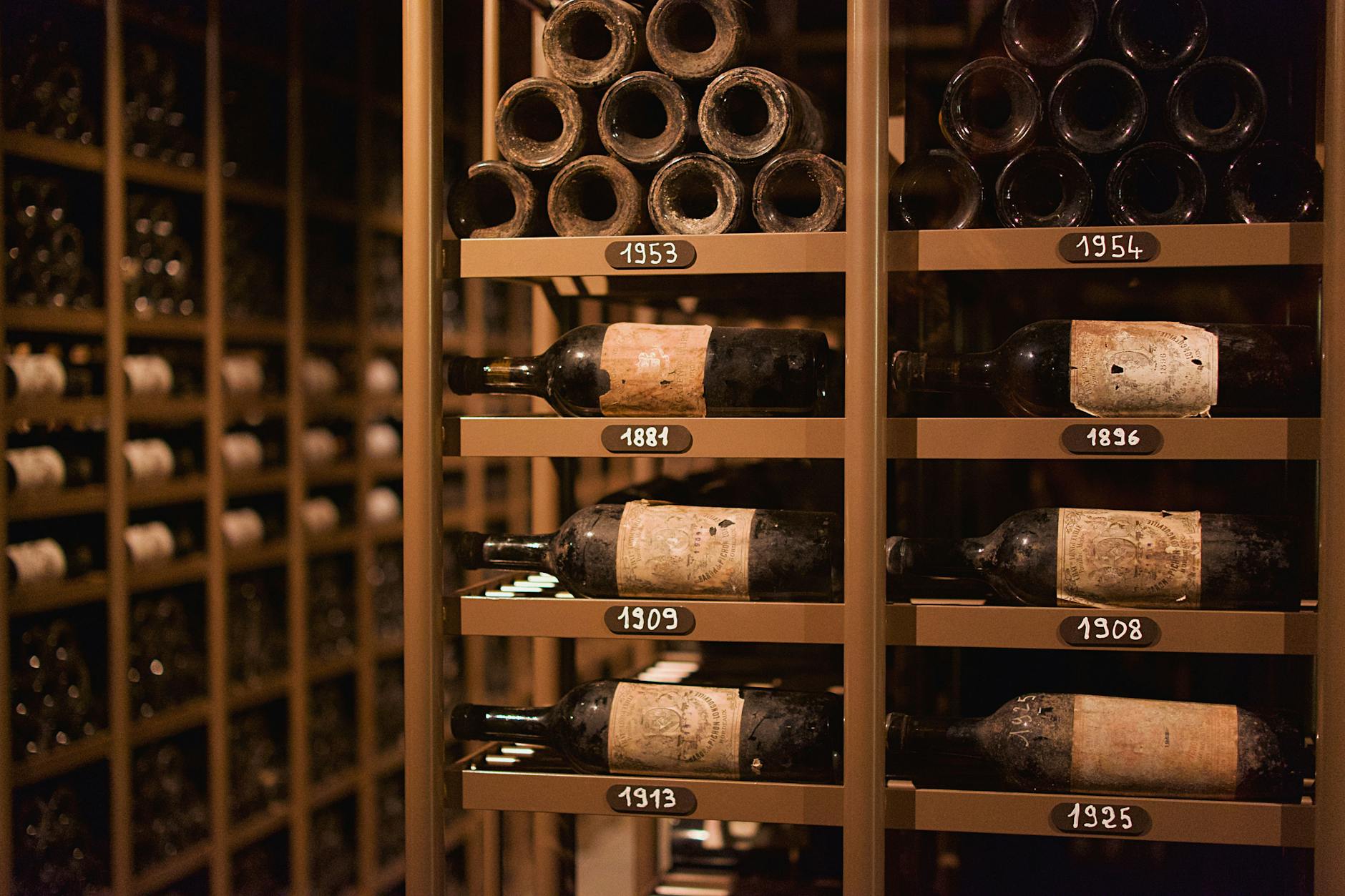
Pauillac's 2025 en primeur vintage is being called exceptional across the board. With constrained supply, strong Asia-Pacific demand, and historical precedents showing 30–50% appreciation in comparable vintages, investors have a time-sensitive opportunity to build positions before release windows close.
Bordeaux 2025 En Primeur: Why Pauillac Is the Investment Signal Investors Shouldn't Ignore
Bordeaux 2025 en primeur is generating serious attention among fine wine investors, and nowhere more so than in Pauillac. Early assessments from the Médoc tour describe the appellation's output as nothing short of exceptional — a vintage characterised by precision, concentration, and the kind of cross-estate consistency that historically drives sustained price appreciation on the secondary market. For investors tracking the Liv-ex Fine Wine 1000 index, which has delivered annualised returns of approximately 8–10% over the past decade, a standout Pauillac vintage represents a meaningful allocation opportunity that warrants immediate attention.
Pauillac is home to three of Bordeaux's five First Growths — Château Lafite Rothschild, Château Latour, and Château Mouton Rothschild — alongside blue-chip Second Growths including Pichon Baron and Pichon Comtesse. When the appellation fires collectively, as it appears to have done in 2025, the ripple effect across the fine wine investment market is substantial. The 2019 vintage from Pauillac, widely regarded as the last truly exceptional release, saw First Growth en primeur prices appreciate between 30% and 45% within 36 months of release, based on Liv-ex and Wine Lister transaction data. The 2025 vintage is drawing early comparisons to 2019 — and in some assessments, surpassing it.
Why Pauillac 2025 Matters to a Fine Wine Portfolio
The investment case for Bordeaux en primeur rests on three pillars: vintage quality, scarcity, and release pricing. All three appear aligned in 2025. Production volumes across the Médoc were constrained by selective harvesting decisions and a growing season that demanded rigorous canopy management, meaning total output from the top châteaux is expected to be below the five-year average. When supply is tight and critical reception is uniformly strong, the secondary market tends to respond accordingly — often within six to eighteen months of physical release.
Release pricing will be the critical variable to watch. Châteaux have historically used standout vintages as an opportunity to push opening prices higher, which can compress early investor margins. However, given the current macroeconomic climate — with fine wine increasingly positioned as a non-correlated asset class — even modestly elevated release prices are likely to be absorbed by demand from Asia-Pacific buyers, particularly from Singapore, Hong Kong, and increasingly mainland China. The Liv-ex Asia-Pacific demand index rose 14% year-on-year in 2024, and Pauillac First Growths consistently rank among the top five most-traded labels in the region.
- 5-year appreciation (Pauillac First Growths): +42% on average, based on Liv-ex 2020–2025 data
- 2019 Pauillac post-release appreciation: +30–45% within 36 months
- Asia-Pacific fine wine demand growth: +14% year-on-year (2024)
- Production outlook: Below five-year average due to selective harvesting in 2025
- Market size (global fine wine investment): Estimated at $1.4 billion annually in traded volume
How to Position Around the 2025 Vintage
For investors considering an en primeur allocation, timing and selectivity are everything. The window between en primeur release and physical delivery — typically 18 to 24 months — is where the most significant price movement has historically occurred for top-rated vintages. Buying at release pricing and holding through to physical delivery, then trading on the secondary market via platforms such as Liv-ex or through specialist brokers, has generated consistent double-digit returns in vintages rated 95 points or above by leading critics. Early indications suggest multiple 2025 Pauillacs will comfortably exceed that threshold.
The smartest positioning tends to favour Second Growths over First Growths in standout vintages. While Lafite and Latour command the headlines, châteaux such as Pichon Baron and Lynch-Bages frequently offer superior return-on-investment relative to their release prices, as collector and investor demand scales up more sharply from a lower base. In the 2019 vintage, Lynch-Bages appreciated over 50% within two years of release — outperforming several First Growths on a percentage basis. The 2025 vintage appears to offer a similar dynamic, with multiple Pauillac Second Growths receiving critical scores in the 96–99 point range.
Investment Takeaway
Bordeaux 2025 en primeur — and Pauillac specifically — presents a credible, time-sensitive allocation opportunity for investors with exposure to fine wine as an alternative asset. The combination of constrained supply, exceptional cross-estate quality, and robust Asia-Pacific demand creates a favourable entry point, provided release pricing remains within historical norms. Investors should prioritise Second Growth Pauillacs for asymmetric upside, while anchoring the position with a First Growth allocation for liquidity and brand recognition on the secondary market. Set a price target of 25–35% appreciation over a 36-month holding period, and use en primeur release windows — which open over the coming weeks — to build positions before physical delivery premiums are priced in.
💼 Interested in alternative asset investment? Speak to the team at Whisky Cask Club — Singapore's leading whisky cask investment specialists.
Frequently Asked Questions
What is Bordeaux en primeur and how does it work as an investment?
Bordeaux en primeur is a futures-style purchasing system where investors buy wine before it is bottled and delivered, typically 18–24 months ahead of physical release. Investors pay the release price upfront and either take physical delivery or sell on the secondary market once the wine is bottled. Returns are generated by the appreciation between release price and secondary market value, which in strong vintages has historically ranged from 20% to over 50%.
Why is Pauillac considered a top appellation for fine wine investment?
Pauillac houses three of Bordeaux's five First Growths and a cluster of highly rated Second Growths, making it the most densely prestigious appellation in the Médoc. Its wines are among the most actively traded on secondary markets globally, providing strong liquidity — a critical factor for investors. In strong vintages, Pauillac labels consistently outperform broader Bordeaux indices in terms of price appreciation.
How does vintage quality affect fine wine investment returns?
Vintage quality directly influences both release pricing and secondary market demand. Wines rated 95 points or above by leading critics typically command a significant premium on the secondary market within 12–36 months of release. Constrained production in high-quality vintages amplifies scarcity, further supporting price appreciation. The 2025 Pauillac vintage is attracting critical scores consistent with the appellation's best recent releases.
What are the risks of investing in Bordeaux en primeur?
Key risks include release prices being set too high — compressing investor margins — currency fluctuations, storage and insurance costs during the holding period, and the possibility that critical scores are revised downward post-bottling. Liquidity risk is lower for First Growths but more pronounced for lesser-known châteaux. Investors should work with established brokers and factor in all carrying costs when modelling expected returns.
How does fine wine compare to whisky cask investment as an alternative asset?
Both fine wine and whisky casks offer non-correlated returns relative to equities, but they differ in liquidity, holding periods, and return profiles. Fine wine — particularly Bordeaux First Growths — offers deeper secondary market liquidity. Whisky casks typically require longer holding periods of five to ten years but have delivered strong annualised returns, with some casks appreciating 10–15% per year. Diversifying across both asset classes can provide complementary exposure within an alternatives portfolio.
💼 Interested in alternative asset investment? Speak to the team at Whisky Cask Club — Singapore's leading whisky cask investment specialists.