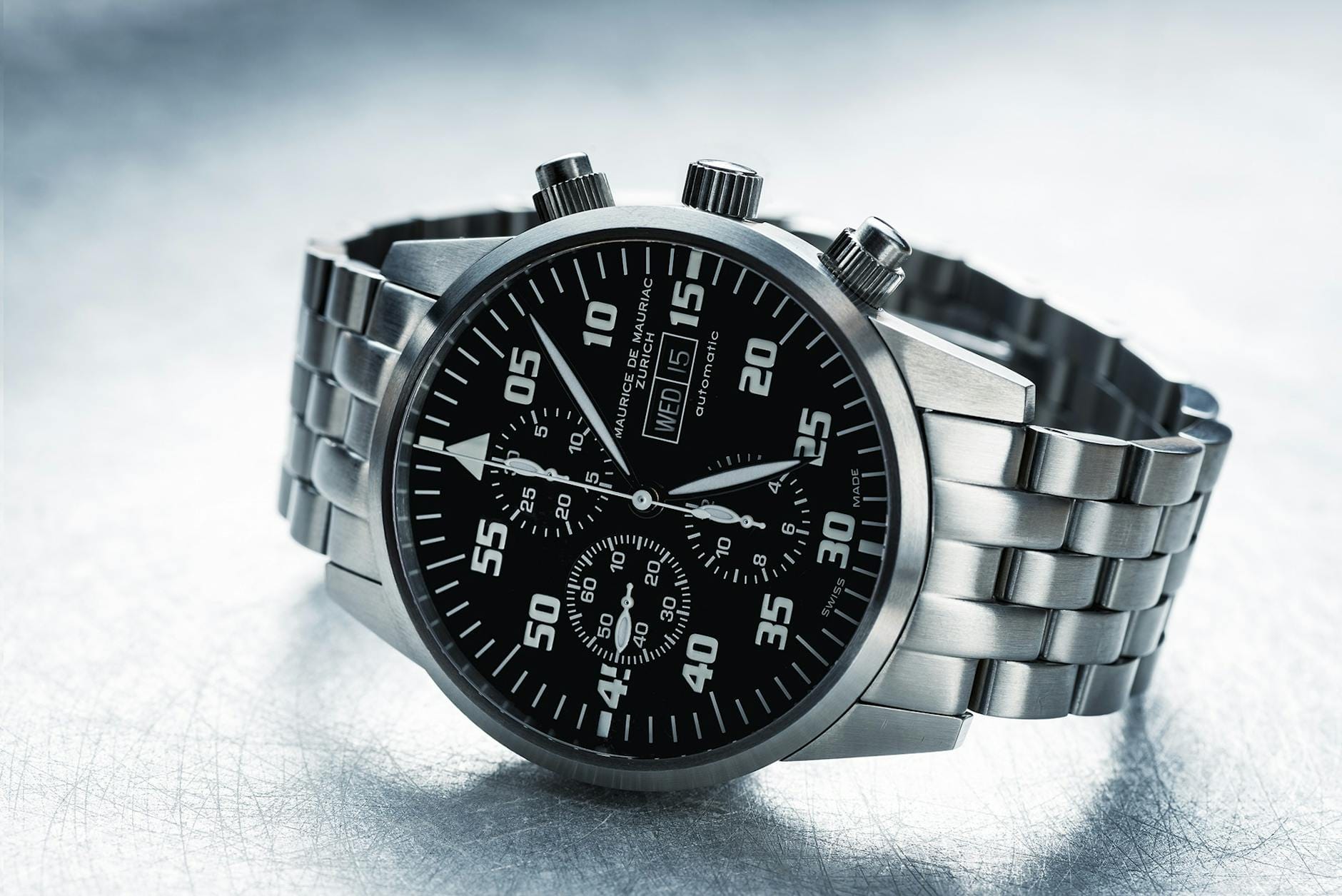
Watches and Wonders 2024 saw attendance rise to 45,000+, signalling resilient demand despite a 25–35% market correction from 2022 peaks. Brands focused on proven references, supporting secondary market liquidity for investors with a 5–10 year horizon.
TL;DR: Watches and Wonders 2024 recorded rising attendance despite global headwinds, with luxury watch brands doubling down on value-driven releases. For investors, this signals continued demand depth in the secondary market, where blue-chip references have appreciated 30–80% over five years.
Watch Investment Market Signals A Resilient Floor
The luxury watch market has endured a meaningful correction since its 2022 peak — the Rolex Daytona in stainless steel, which briefly touched $50,000 on the secondary market, has since normalised closer to $28,000–$32,000. Yet Watches and Wonders 2024 in Geneva told a more nuanced story. Attendance climbed year-on-year, with over 45,000 visitors passing through the Palexpo exhibition centre, up from approximately 40,000 in 2023. That figure matters not just as a PR metric but as a leading indicator of sustained institutional and retail appetite for horology as an asset class.
What distinguished this year's edition was the deliberate pivot by major houses toward value justification. Brands including Rolex, Patek Philippe, Audemars Piguet, and a cohort of independent makers structured their launches around incremental refinements to proven references rather than speculative novelties. This is a classic defensive move in a softening market: anchor buyers to familiar, liquid references with established secondary market histories rather than untested complications that carry pricing risk.
Why Attendance Growth Matters To Watch Investors
For those tracking watches as an alternative asset, footfall at Watches and Wonders functions as a demand proxy. A growing audience of qualified buyers — the event requires professional accreditation or brand invitation — signals that the pipeline of serious collectors and dealers remains intact. The WatchCharts Overall Market Index, which tracks secondary prices across major references, showed a 12% year-on-year decline through early 2024, but the rate of decline has slowed materially from the sharp 25–30% drawdown seen between mid-2022 and end-2023. Stabilisation, not collapse, is the operative word.
- 5-year appreciation (Rolex Submariner ref. 124060): approximately +65% from retail, secondary market basis
- Peak-to-trough correction (2022–2024): -25% to -35% across grey market indices
- Watches and Wonders 2024 attendance: 45,000+ visitors, up ~12% year-on-year
- Global pre-owned watch market size: estimated $22 billion in 2023, projected $35 billion by 2030 (Morgan Stanley/LuxeConsult)
The brands making the strongest case for investor-relevant value were those with the most disciplined production controls. Patek Philippe produces fewer than 70,000 pieces annually across all references. Rolex, despite being the world's largest luxury watch manufacturer by revenue, keeps supply intentionally constrained at an estimated 1 million units per year — a figure that has not scaled proportionally with global demand growth. These supply dynamics create the structural scarcity that underpins secondary market premiums over the long term.
What The 2024 Launches Tell Us About Secondary Market Liquidity
The buzziest releases at Watches and Wonders 2024 were iterations: evolved dials, new metal options, refined movements on references that already carry deep secondary market liquidity. This is directly relevant to investors. A new reference with no trading history is speculative. A new variant of a Nautilus, a Submariner, or a Royal Oak inherits the price discovery and buyer depth of its predecessors. The investment calculus is meaningfully different. Dealers and auction houses including Phillips, Christie's, and Sotheby's have all reported that depth of bidder interest remains strongest for established references — the kind that dominated Geneva announcements this year.
Geo-political and macroeconomic pressures — dollar strength, softness in Chinese luxury demand, and elevated interest rates compressing discretionary spending — were visible headwinds acknowledged by brand executives throughout the show. Yet the attendance data suggests that the core buyer cohort, particularly from Southeast Asia, the Middle East, and the United States, remained engaged. For investors, this regional diversification of demand is a structural positive: it reduces concentration risk relative to categories that remain heavily dependent on a single geography.
Investment Takeaway
The Watches and Wonders 2024 data supports a cautiously constructive view on blue-chip watch holdings. The correction from 2022 highs appears to be finding a floor, brands are managing supply discipline, and secondary market infrastructure — auction houses, authenticated resale platforms, and dealer networks — has matured significantly. Investors who acquired during the 2020–2021 run-up are sitting on reduced but still positive returns on the most liquid references. Those considering entry now face a more rational pricing environment than at any point since 2020, with less speculative froth and more fundamental value support.
The actionable insight is straightforward: focus on references with the longest secondary market trading histories, the most constrained production, and the broadest geographic buyer base. Rolex sport references, Patek complications, and key AP Royal Oak variants fit this profile. Avoid novelty references without secondary market price discovery. Treat watch allocation as a 5–10 year hold, consistent with how you would approach fine wine or single malt cask investment, where time in the asset is the primary return driver.
💼 Interested in alternative asset investment? Speak to the team at Whisky Cask Club — Singapore's leading whisky cask investment specialists.
Frequently Asked Questions
Are luxury watches a reliable investment in 2024?
Blue-chip references from Rolex, Patek Philippe, and Audemars Piguet have demonstrated strong long-term appreciation — the Rolex Submariner, for instance, has gained approximately 65% over five years on the secondary market. However, the 2022–2024 correction of 25–35% from peak prices is a reminder that watches carry short-term volatility. They are best treated as a 5–10 year hold within a diversified alternative asset portfolio, not a short-term trade.
What does Watches and Wonders attendance data tell investors?
Watches and Wonders is an invitation-only or accreditation-required trade and media event, meaning its attendee base skews toward serious buyers, dealers, and institutional stakeholders. Rising attendance signals that qualified demand remains intact despite macroeconomic headwinds. It functions as a leading indicator of secondary market health, much as strong auction room attendance signals confidence in fine wine or art markets.
Which watch brands have the strongest investment track record?
Rolex, Patek Philippe, and Audemars Piguet consistently dominate secondary market performance data. Their combination of strict production limits, brand heritage, and deep global buyer networks creates the scarcity and liquidity conditions that support long-term price appreciation. Phillips, Christie's, and Sotheby's auction results consistently show the deepest bidder pools for these three houses.
How does the pre-owned watch market size compare to other alternative assets?
The global pre-owned watch market was estimated at $22 billion in 2023 and is projected to reach $35 billion by 2030, according to Morgan Stanley and LuxeConsult research. This compares favourably in growth trajectory to the fine wine secondary market, estimated at around $6 billion, though whisky cask and rare spirits investment is growing faster on a percentage basis from a smaller base.
What are the main risks of investing in luxury watches?
The primary risks include illiquidity relative to financial assets, authentication and condition risk, storage and insurance costs, and concentration in a small number of brands and references. The 2022–2024 correction also demonstrated that speculative demand can inflate prices well beyond fundamental value, creating drawdown risk for late-cycle buyers. Diversification across alternative asset classes — including whisky casks, fine wine, and art — helps mitigate single-category exposure.
💼 Interested in alternative asset investment? Speak to the team at Whisky Cask Club — Singapore's leading whisky cask investment specialists.