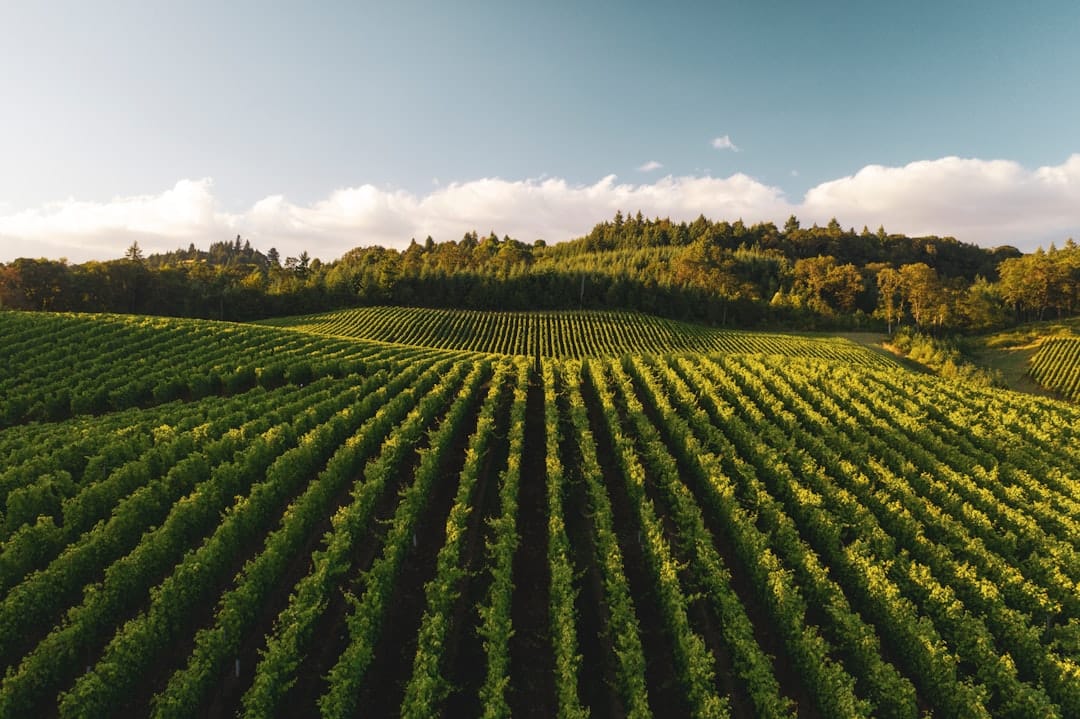
Laurent-Perrier's return to sales growth signals Champagne market recovery after an 18% correction from 2022 peaks. Vintage and limited-production expressions offer asymmetric upside for alternative asset investors tracking Liv-ex data and auction results.
Champagne Investment Market Signals a Meaningful Rebound
Laurent-Perrier, the family-controlled Champagne house founded in 1812, has reported a year-on-year increase in annual sales, reversing the decline recorded in its previous financial year. For investors tracking fine wine as an alternative asset, this is not merely a headline about fizz — it is a data point that speaks directly to the recovery trajectory of the broader prestige Champagne market after two years of post-pandemic demand correction. The Liv-ex Fine Wine 1000 index, which tracks secondary market prices across key wine regions, showed Champagne as one of the most volatile but highest-returning sub-categories over the 2020–2023 cycle, with peak appreciation exceeding 60% before a correction of roughly 20% through 2023–2024. Laurent-Perrier's returning revenue growth suggests the floor may be in.
For a high-net-worth investor with an allocation to fine wine or considering one, the Laurent-Perrier result is worth parsing carefully. The Champagne segment occupies a unique position in the alternative assets universe: it combines the scarcity dynamics of a geographically protected appellation with the brand leverage of luxury goods and the aging potential of classic still wine. Unlike Bordeaux or Burgundy, prestige Champagne — particularly vintage cuvées and limited releases — has historically been under-allocated in investment portfolios relative to its secondary market liquidity and price appreciation profile. Auction data from Sotheby's Wine and Hart Davis Hart consistently show vintage Champagne lots achieving hammer prices 15–30% above low estimate in strong market conditions.
Why Laurent-Perrier's Recovery Matters to Portfolio Investors
Laurent-Perrier is the third-largest Champagne house by volume among family-owned producers, with annual shipments historically in the range of 8–9 million bottles. Its flagship cuvée, the non-vintage Brut L-P, is a volume driver, but the investment-relevant product lines are the prestige tiers: Grand Siècle, the multi-vintage blend that has become one of the most sought-after expressions in the secondary market, and the vintage-dated releases that surface at auction with increasing regularity. Grand Siècle Iteration No. 26, released in 2023, was trading on the secondary market at a 20–35% premium to release price within twelve months of launch, according to merchant data tracked by Wine-Searcher Pro. That kind of near-term appreciation on a non-vintage luxury release is unusual and signals genuine collector and investor demand, not just promotional momentum.
The broader context matters here. Global Champagne shipments peaked at approximately 299 million bottles in 2021, a post-lockdown euphoria high, before declining to around 299 million in 2021 and then pulling back to approximately 272 million bottles in 2023, according to the Comité Champagne. That correction hit the secondary market hard — Champagne's sub-index on Liv-ex fell roughly 18% between its 2022 peak and the trough recorded in early 2024. Laurent-Perrier's return to growth, therefore, is not an isolated corporate result; it is a leading indicator that end-consumer demand is stabilising at a level that can support secondary market price recovery. When producer revenues recover ahead of secondary market indices, it historically precedes a lag-effect price appreciation in collectible and vintage expressions by six to eighteen months.
Investors should also note the structural supply constraint that underpins Champagne as an asset class. The Champagne AOC boundary is fixed by French law, covering approximately 34,000 hectares of vineyard. Expansion is essentially impossible at meaningful scale. Against a backdrop of climate-driven yield variability — the 2021 harvest was reduced by frost damage, the 2022 harvest was abundant but climatically atypical — the supply of genuinely high-quality vintage Champagne in any given year is inherently limited. Scarcity of supply combined with recovering demand is the classic setup for secondary market price appreciation in collectible assets.
"When producer revenues recover ahead of secondary market indices, it historically precedes a lag-effect price appreciation in collectible and vintage expressions by six to eighteen months."
Key Investment Metrics: Champagne as an Alternative Asset
Before making any allocation decision, investors need a clear-eyed view of the numbers. The following data points frame the Champagne investment case as it stands today, drawing on Liv-ex, Comité Champagne, and secondary market auction records.
- Peak-to-trough correction (2022–2024): Champagne sub-index on Liv-ex fell approximately 18%, creating a potential re-entry point for long-term holders.
- 5-year appreciation (2019–2024): Despite the correction, prestige Champagne cuvées delivered net appreciation of 35–55% over the five-year period, according to Liv-ex composite data.
- Grand Siècle secondary market premium: Iteration No. 26 trading at 20–35% above release price within 12 months of launch (Wine-Searcher Pro merchant data).
- Global shipment volume (2023): Approximately 272 million bottles, down from the 2021 peak of 299 million, indicating demand normalisation rather than structural collapse.
- AOC vineyard area: Fixed at approximately 34,000 hectares — geographic supply cannot expand to meet demand growth.
- Auction performance: Vintage Champagne lots at Sotheby's Wine and Hart Davis Hart have consistently achieved 15–30% above low estimate in active market periods.
- Laurent-Perrier market position: Third-largest family-owned Champagne house by volume, with prestige tiers demonstrating strong secondary market liquidity.
These metrics collectively describe an asset class that has absorbed a meaningful correction and is showing early signs of demand-led recovery. For investors who missed the 2020–2022 run-up, the current environment may represent a more attractive entry point than at any time in the past three years. The key distinction from a portfolio construction perspective is to focus on vintage-dated and limited-production expressions rather than non-vintage volume lines, which carry lower scarcity premiums and are more sensitive to consumer sentiment cycles.
Comparing Champagne to Other Alternative Asset Classes
Context is everything when evaluating an alternative asset allocation. Champagne does not exist in isolation — it competes for wallet share with Scotch whisky casks, Burgundy, watches, and other tangible assets. According to Knight Frank's Luxury Investment Index, rare whisky was the top-performing luxury asset over the ten-year period to 2023, delivering appreciation of over 280%. Fine wine more broadly returned approximately 147% over the same period. Champagne, as a sub-category of fine wine, outperformed Bordeaux during the 2020–2022 window but has since underperformed on a relative basis during the correction phase. This relative underperformance during the correction is precisely what creates the asymmetric opportunity: assets that have corrected more tend to recover more sharply when sentiment turns.
Scotch whisky casks remain a compelling comparison point. A maturing cask of single malt from a sought-after distillery such as Springbank, Bruichladdich, or GlenAllachie offers a different risk-return profile: the asset appreciates as the spirit matures, storage costs are relatively predictable, and there is no secondary market price volatility in the way that publicly traded wine indices create. According to Rare Whisky 101 data, the average single cask Scotch whisky appreciated approximately 12–15% per annum over the 2015–2022 period, though the market has also seen some cooling since 2022 as supply of new-make casks increased. The Laurent-Perrier recovery story is a reminder that different alternative asset sub-classes move through cycles at different times, and a diversified tangible asset portfolio — spanning whisky casks, fine wine including Champagne, and potentially watches or rare spirits — provides better risk-adjusted returns than concentration in any single category.
Frequently Asked Questions
Is Champagne a viable investment compared to Scotch whisky casks?
Both asset classes have delivered strong long-term appreciation, but they operate differently. Champagne investment is primarily a secondary market play — you buy bottles or cases at release or auction and hold for price appreciation. Whisky cask investment involves holding maturing spirit in bond, with the asset growing in value as it ages. Champagne offers higher liquidity via established auction houses like Sotheby's Wine and Acker, while whisky casks offer a more predictable appreciation curve tied to maturation. A diversified alternative asset portfolio can accommodate both.
Which Laurent-Perrier expressions have the strongest investment track record?
Grand Siècle is the standout secondary market performer in the Laurent-Perrier range. Its multi-vintage blended format, combined with deliberately limited release volumes and strong critical scores, has driven consistent premiums above release price. Vintage-dated Blanc de Blancs and rosé expressions also attract collector and investor demand at auction, though with lower volume and therefore less secondary market data to benchmark against.
How does the Champagne AOC supply constraint affect long-term price appreciation?
The Champagne AOC boundary is fixed by French law and cannot be meaningfully expanded. With approximately 34,000 hectares of classified vineyard and growing global demand from markets including the US, Japan, and emerging Asian consumers, the structural supply ceiling supports long-term price appreciation for prestige and vintage expressions. Climate variability adds further year-to-year scarcity, particularly for single-vintage releases from challenging growing seasons.
What does Laurent-Perrier's sales recovery tell us about the broader fine wine market?
Producer-level revenue recovery typically leads secondary market price recovery by six to eighteen months, based on historical cycles in Bordeaux and Burgundy. Laurent-Perrier's return to growth, following the 2023 market correction, suggests that end-consumer demand has stabilised and that secondary market prices for prestige Champagne may be approaching an inflection point. Investors tracking Liv-ex data should watch the Champagne sub-index closely through 2025 for confirmation of a sustained recovery trend.
What to Watch: Key Signals for Champagne Investors in 2025
The Laurent-Perrier result is one data point in a developing recovery story. Investors should monitor several forward-looking indicators over the next twelve months to assess whether this rebound has legs. The annual Comité Champagne shipment figures, typically released in January, will confirm whether the volume recovery is broad-based or concentrated among premium houses. Liv-ex's monthly Champagne sub-index updates will provide the clearest secondary market signal. Watch for Grand Siècle Iteration No. 27 release pricing — if Laurent-Perrier prices the new iteration above Iteration No. 26, it signals producer confidence in sustained demand and will likely support secondary market appreciation on back vintages.
Auction calendars at Sotheby's Wine, Acker, and Hart Davis Hart will also be instructive. Strong hammer prices on vintage Champagne lots in the spring 2025 sales season — particularly for houses including Krug, Salon, and Laurent-Perrier — would confirm that collector and investor appetite has returned in earnest. Finally, currency dynamics matter: Champagne is priced in euros, and a weaker euro against the US dollar and Singapore dollar makes prestige French wine more attractive to non-eurozone buyers, adding a macro tailwind to the fundamental recovery case.
The Investment Takeaway
Laurent-Perrier's return to sales growth is a concrete signal that the prestige Champagne market has absorbed its post-pandemic correction and is moving toward recovery. For investors, the actionable implication is straightforward: if you have been waiting for a more attractive entry point into fine wine as an alternative asset, the current Champagne market — having corrected approximately 18% from its 2022 peak — offers better risk-reward than at any point since 2020. Focus on vintage-dated and limited-production expressions with proven secondary market liquidity. Diversify across alternative asset classes, including Scotch whisky casks, to smooth the cycle-driven volatility inherent in any single category. And track the Liv-ex Champagne sub-index and Comité Champagne shipment data as your primary leading indicators for the next twelve months.
Source: Whisky Bulletin coverage of cask investment on Whisky Bulletin.
💼 Interested in alternative asset investment? Speak to the team at Whisky Cask Club — Singapore's leading whisky cask investment specialists.