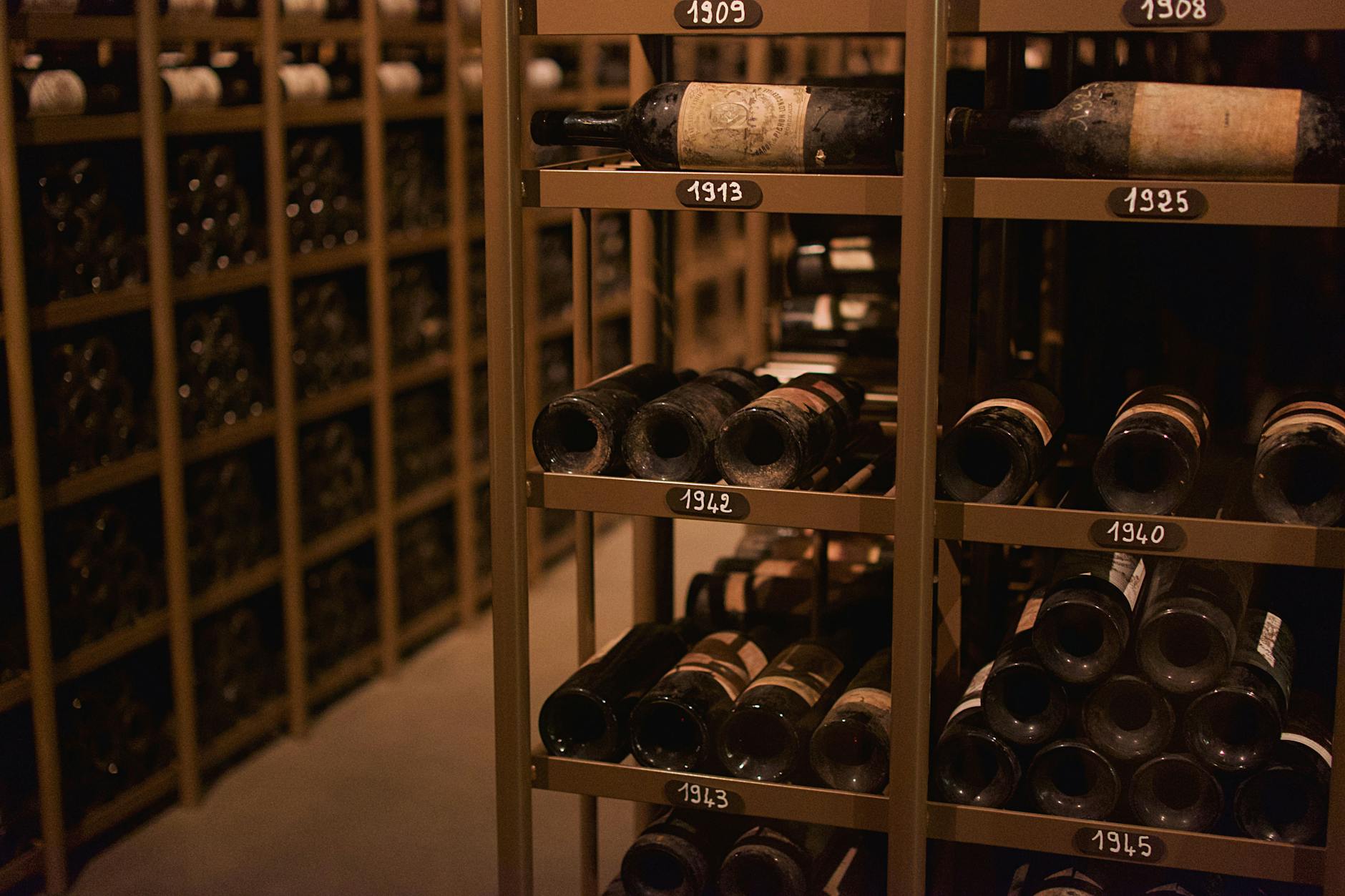
Champagne secondary market prices have stopped falling and entered a consolidation phase after a sharp correction. This stabilisation, with narrowing bid-ask spreads, signals the end of panic selling and presents a potential investment opportunity as demand remains and supply is finite.
{"title":"Champagne Secondary Market Prices: From Correction to Consolidation in 2026","html":"
What Is Happening to Champagne Secondary Market Prices Right Now?
Champagne secondary market prices have entered a consolidation phase after turbulent correction cycles the fine wine investment world has seen in recent memory. Following peak valuations recorded in late 2021 and early 2022 — when the Liv-ex Fine Wine 1000 index hit record highs and prestige cuvées commanded premiums — the market has spent the better part of two years unwinding excess. Data from Liv-ex now suggests that Champagne as a category has found a price floor, with trading volumes stabilising and bid-ask spreads narrowing across key labels including Dom Pérignon, Krug, and Louis Roederer Cristal. For investors watching this category, the shift from correction to consolidation is a meaningful signal — it is the market's way of saying the panic selling is over.
If you manage a portfolio with exposure to fine wine or are considering adding alternative assets, this matters directly to your allocation decisions. Champagne, unlike Burgundy or Bordeaux, has historically been underweighted in investment portfolios despite producing some of the world's most globally recognised luxury brands. The consolidation phase now emerging creates a potential re-entry window — valuations are off their highs, demand from Asia and the United States remains structurally intact, and the supply of aged prestige cuvées is, by definition, finite. The investor who waits for full recovery to re-enter will have already missed the best entry point. Understanding where prices stand today, and why they stabilised, is the first step toward a disciplined allocation decision.
"Champagne secondary market prices have found a floor — and for investors, a floor is where opportunity begins, not where it ends."
Why Did Champagne Prices Correct So Sharply After 2022?
The correction was a function of several converging forces, none of which were unique to Champagne but all of which hit the category harder than most. During the pandemic era, fine wine and spirits saw speculative capital flood in from investors seeking inflation hedges and non-correlated assets. Champagne prestige cuvées — particularly Dom Pérignon P2 2000, Krug 2008, and Cristal 2013 — saw secondary market prices climb 40% to 60% above their pre-pandemic levels on platforms including Wine-Searcher, Cavex, and the Liv-ex exchange. When interest rates rose sharply across the US, UK, and eurozone through 2023, discretionary and speculative capital rotated out of illiquid alternatives, and fine wine bore the brunt of that rotation. The Liv-ex Fine Wine 100 index fell approximately 18% from its 2022 peak to its trough in mid-2024, with Champagne among the hardest-hit sub-categories given the degree of speculative premium baked into prices at the top.
Supply dynamics also played a role. Unlike Scotch whisky casks, where annual production is capped by distillery capacity and maturation timelines, Champagne houses have the ability — within limits — to adjust disgorgement schedules and release volumes. Several prestige houses accelerated releases during the boom, adding secondary market supply at precisely the wrong moment. Auction houses including Sotheby's Wine and Hart Davis Hart recorded softening hammer prices through 2023 and into early 2024, with some high-profile lots of Dom Pérignon Rosé Vintage clearing 15% to 20% below their 2022 equivalents. That repricing, painful as it was for those who bought at peak, has created a structurally more attractive entry point for new capital.
What Does Consolidation Actually Mean for Champagne Investors?
Consolidation is not the same as recovery, and investors should be precise about the distinction. Consolidation means prices have stopped falling, trading activity has normalised, and the market is digesting its inventory overhang without further distress selling. Recovery means prices are actively appreciating again. The Champagne secondary market, as of mid-2026, is firmly in the former phase — which is historically where patient investors build positions ahead of the latter. According to Liv-ex market commentary, bid-ask spreads on top-tier Champagne have tightened meaningfully, a reliable technical indicator that buyers and sellers are converging on fair value rather than trading in a vacuum of uncertainty.
Key investment metrics for Champagne secondary market exposure currently look like this:
- Price correction from 2022 peak: Approximately 18–22% across prestige cuvée categories, per Liv-ex data
- Current consolidation range: Prices stable for 3–4 consecutive quarters as of Q2 2026
- Dom Pérignon Vintage 2013 secondary price: Trading approximately £280–£320 per bottle on the Liv-ex exchange, down from £380+ at peak
- Krug 2008 auction performance: Hammer prices at Sotheby's Wine averaging £180–£210 per bottle through late 2025 and early 2026, versus £260+ in 2022
- Cristal 2014 Liv-ex mid-price: Approximately £220 per bottle, representing a 19% discount to its 2022 high
- Champagne share of Liv-ex 1000 trading volume: Recovering toward 8–10% of total fine wine trade, up from a trough below 6% in 2024
These figures collectively point to a market that has repriced rationally rather than collapsed structurally. The underlying demand drivers — global luxury consumption, the prestige of the grandes marques, and the irreplaceable nature of aged vintage Champagne — remain intact. What has changed is that speculative excess has been wrung out, leaving a cleaner price base from which genuine appreciation can resume.
Is Champagne a Good Investment Compared to Other Alternative Assets?
Champagne is a credible but nuanced alternative asset, best understood within a broader fine wine and spirits portfolio rather than as a standalone allocation. Compared to Scotch whisky casks — where Rare Whisky 101 data shows the apex 1000 index appreciating over 500% across a decade — Champagne offers lower long-term capital appreciation but higher liquidity, given the depth of the global secondary market and the number of active trading platforms. For investors who prioritise liquidity alongside appreciation, Champagne sits in a more accessible tier than rare single malt casks or artist-specific fine art. Compared to Burgundy, which commands extraordinary premiums for top domaines like Domaine de la Romanée-Conti and Leroy, Champagne offers broader diversification across multiple houses and vintages without the extreme concentration risk of a single producer allocation.
The scarcity argument for Champagne investment is real but operates differently than for whisky. Vintage Champagne production is fixed at the point of harvest — a 2008 Krug will never be made again, and the number of bottles in existence can only decrease over time as consumption occurs. This supply attrition dynamic, combined with rising global demand for luxury goods from high-net-worth consumers in Asia and the Middle East, creates a long-term structural appreciation case that patient investors can exploit. The current consolidation phase simply means that case can now be made at more reasonable valuations than at any point since 2020.
What Should Investors Watch as Champagne Markets Move Forward?
Several forward-looking indicators will determine whether consolidation converts to recovery over the next 12 to 24 months. First, watch disgorgement release schedules from the major houses — if Dom Pérignon, Krug, and Pol Roger manage secondary supply carefully, the price floor will hold and appreciation will follow naturally. Second, monitor Asian demand recovery, particularly from Hong Kong and Singapore, where fine wine auction activity at Christie's and Bonhams has been rebuilding through 2025 and into 2026. Third, track the Liv-ex Fine Wine 100 index as a leading indicator — historically, Champagne secondary prices have lagged the broader index by two to three quarters, meaning a sustained Liv-ex recovery signals incoming Champagne appreciation. Investors who position ahead of that lag — rather than waiting for Champagne-specific headlines to confirm the trend — will capture the most meaningful upside.
The actionable insight here is straightforward: the consolidation phase in Champagne secondary markets is the window. Prestige cuvées from the 2008, 2012, and 2013 vintages — widely regarded by critics and merchants as exceptional years — are currently available at 18% to 22% discounts to their recent highs. That discount will not persist indefinitely once broader fine wine sentiment turns, and the technical indicators suggest that turn is already underway. Investors with fine wine mandates or alternative asset allocations should be reviewing Champagne exposure now, not after the recovery headlines arrive.
Frequently Asked Questions
What is the Champagne secondary market and how does it work?
The Champagne secondary market is the network of exchanges, auction houses, and merchant platforms where previously purchased bottles of Champagne are bought and sold between investors and collectors. Key platforms include Liv-ex, Wine-Searcher, Sotheby's Wine, and Hart Davis Hart. Prices on the secondary market can differ significantly from retail release prices, particularly for prestige cuvées from sought-after vintages, and these price differentials are where investment returns are generated.
Which Champagne labels perform best as investments?
Historically, the strongest secondary market performers have been prestige cuvées from Dom Pérignon, Krug, Louis Roederer Cristal, Bollinger RD, and Pol Roger Sir Winston Churchill. Vintage-specific releases from exceptional years — particularly 2002, 2008, and 2012 — have demonstrated the most consistent long-term price appreciation on platforms including Liv-ex and at major auction houses.
How does Champagne investment compare to whisky cask investment?
Whisky casks, particularly from sought-after Scotch distilleries, have historically delivered higher long-term capital appreciation than Champagne — Rare Whisky 101 data points to multi-hundred percent gains over decade-long holding periods. However, Champagne offers superior liquidity, lower minimum investment thresholds, and an established global auction infrastructure. The two assets complement each other within a diversified alternative portfolio.
What are the main risks of investing in Champagne on the secondary market?
Key risks include storage and provenance concerns — Champagne is sensitive to temperature and light, and poorly stored bottles lose value rapidly. Liquidity risk exists for less well-known labels or non-vintage bottles. Market sentiment risk, as demonstrated by the 2022–2024 correction, can produce sharp short-term drawdowns. Investors should work with reputable merchants and ensure all holdings are stored in bonded, climate-controlled facilities with full provenance documentation.
💼 Interested in alternative asset investment? Speak to the team at Whisky Cask Club — Singapore's leading whisky cask investment specialists.
","meta_title":"Champagne Secondary Market: Correction to Consolidation 2026","meta_description":"Champagne secondary market prices have stabilised after an 18–22% correction. Here's what investors need to know about re-entry timing and key labels.","focus_keyword":"Champagne secondary market","keywords":["fine wine investment","prestige cuvée prices","Dom Pérignon investment","Liv-ex fine wine index","Krug auction prices","alternative asset investment","Cristal secondary market","fine wine portfolio"],"tldr":"Champagne secondary market prices have stabilised after an 18–22% correction from 2022 peaks. Prestige cuvées from Dom Pérignon, Krug, and Cristal are trading at significant discounts. Consolidation signals a potential re-entry window for fine wine investors before recovery takes hold.","faqs":[{"q":"What is the Champagne secondary market and how does it work?","a":"The Champagne secondary market is the network of exchanges, auction houses, and merchant platforms where previously purchased bottles are bought and sold. Key platforms include Liv-ex, Sotheby's Wine, and Hart Davis Hart. Price differentials between retail and secondary market values are where investment returns are generated."},{"q":"Which Champagne labels perform best as investments?","a":"The strongest performers historically include Dom Pérignon, Krug, Louis Roederer Cristal, Bollinger RD, and Pol Roger Sir Winston Churchill, particularly from exceptional vintages such as 2002, 2008, and 2012."},{"q":"How does Champagne investment compare to whisky cask investment?","a":"Whisky casks have historically delivered higher long-term capital appreciation, with Rare Whisky 101 data pointing to multi-hundred percent gains over a decade. Champagne offers superior liquidity and lower entry thresholds. The two assets complement each other in a diversified alternative portfolio."},{"q":"What are the main risks of investing in Champagne on the secondary market?","a":"Key risks include storage and provenance issues, liquidity risk for lesser-known labels, and market sentiment risk — as demonstrated by the 18–22% correction from 2022 peaks. Investors should use bonded storage facilities and work with reputable merchants."}],"entities":{"people":["Richard Woodard"],"organizations":["Liv-ex","Sotheby's Wine","Hart Davis Hart","Christie's","Bonhams","Rare Whisky 101","Whisky Cask Club","Dom Pérignon","Krug","Louis Roederer","Bollinger","Pol Roger"],"places":["Hong Kong","Singapore","United States","United Kingdom"]}}
💼 Interested in alternative asset investment? Speak to the team at Whisky Cask Club — Singapore's leading whisky cask investment specialists.