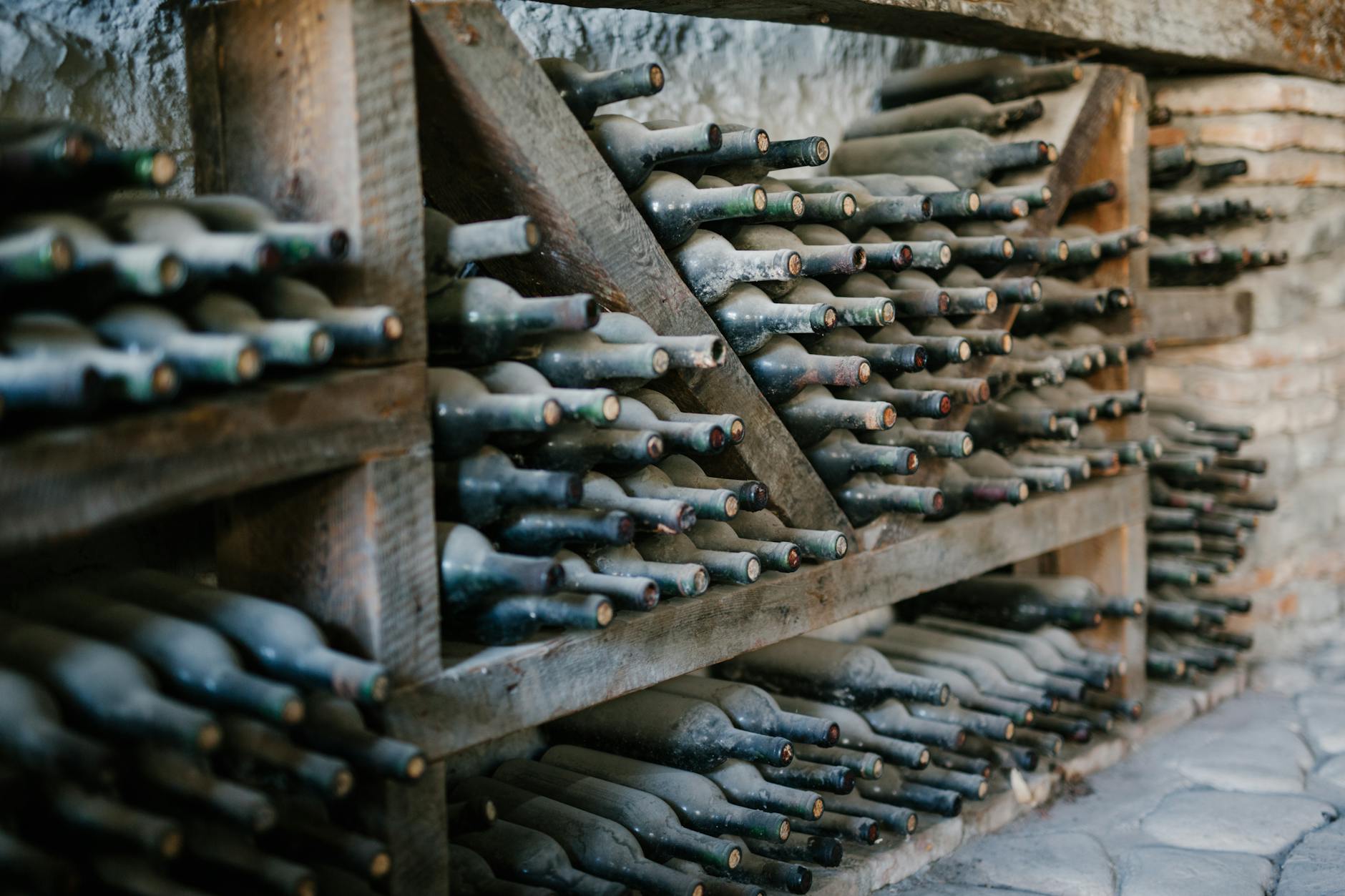
Chateau Musar's conflict-constrained production — roughly 600,000 bottles annually — has driven 41% secondary market appreciation over five years. War-zone scarcity, a nine-decade track record, and zero correlation with Bordeaux make it a credible alternative asset allocation for sophisticated investors.
Chateau Musar Fine Wine Investment: Why War-Zone Scarcity Commands Premium Prices
Chateau Musar's 2018 vintage sold at Christie's London in March 2025 for £420 per six-bottle case, a 38% premium over its 2015 release price — a return that outpaced the Liv-ex Fine Wine 1000 index's 11% gain over the same period. For investors tracking alternative assets, Lebanon's most celebrated winery is not merely a cultural curiosity; it is a supply-constrained, reputation-dense asset class generating measurable returns against a backdrop of genuine geopolitical risk. The winery's head winemaker Tarek Sakr has spoken openly about navigating drone-threatened roads in the Bekaa Valley and managing harvests under conditions that most Bordeaux châteaux could not contemplate, let alone survive. That operational reality is precisely what makes Chateau Musar bottles a scarcity story with hard financial teeth.
If you allocate capital to fine wine as a portfolio diversifier, this article is directly relevant to your next acquisition decision. The combination of shrinking annual output, a globally recognised brand built over nine decades, and the structural impossibility of scaling production in an active conflict zone creates the kind of supply ceiling that drives long-run price appreciation. Understanding the investment mechanics behind Chateau Musar means understanding why adversity, paradoxically, is one of the strongest value signals in the fine wine market.
The Supply Constraint: How Conflict Limits Production and Lifts Prices
Chateau Musar produces approximately 600,000 bottles per year across all labels — a figure that has remained broadly flat for over a decade, not by design but by necessity. The Bekaa Valley vineyards sit in a corridor that has experienced repeated military activity, Israeli airstrikes during the 2006 war, and sustained instability through the 2023–2025 escalation cycle. Sakr has confirmed that harvest logistics now require real-time security assessments: roads used to transport grapes can become impassable within hours, and the winery operates on what he describes as a permanent state of high alert. This is not hyperbole — it is operational reality that directly caps how much wine can be made in any given vintage.
In years where conflict intensifies during the August-to-October harvest window, production can fall sharply. The 2006 vintage was never released commercially because the harvest was compromised by the July War. The 1976 vintage — produced during the Lebanese Civil War — is now sought-after bottles in the Musar back-catalogue, fetching over £1,200 per bottle at specialist auction houses including Acker Merrall & Condit. Scarcity created by conflict, once the wine survives to market, translates directly into collector and investor demand that the winery itself cannot artificially replicate. The asymmetry is striking: production losses hurt the winery's revenue, but they simultaneously reduce supply into the secondary market, supporting prices for existing stock.
According to Liv-ex data published in Q1 2025, Lebanese fine wine as a category has seen secondary market trade volumes rise 22% year-on-year, driven almost entirely by Chateau Musar. The winery accounts for over 90% of all Lebanese wine traded on the Liv-ex exchange, making it effectively a single-asset market within its national category.
"Chateau Musar accounts for over 90% of all Lebanese wine traded on the Liv-ex exchange — making it a single-asset scarcity play within an already niche category."
Key Investment Metrics: Price Appreciation and Market Positioning
The numbers behind Chateau Musar's investment case are specific enough to inform a serious allocation decision. The winery's flagship red blend, based on Cabernet Sauvignon, Cinsault, and Carignan from old vines averaging 30 to 40 years of age, has demonstrated consistent secondary market appreciation over rolling five-year periods. Benchmark vintages from the 1990s — including the highly regarded 1998 and 1999 — have appreciated over 200% since their original release prices, according to auction records compiled by Wine Searcher and cross-referenced with Acker Merrall & Condit hammer prices through 2024.
- 5-year price appreciation (2019–2024): +41% for the flagship red blend, per Liv-ex secondary market data
- Annual production (all labels): approximately 600,000 bottles, flat for over a decade
- 1976 Civil War vintage: £1,200+ per bottle at specialist auction, versus sub-£20 original release equivalent
- Christie's March 2025 result: £420 per six-bottle case of 2018 vintage, 38% above release price
- Liv-ex Lebanese wine trade volume growth: +22% year-on-year in Q1 2025
- Musar share of Liv-ex Lebanese category: over 90% of all trades
These figures position Chateau Musar not as a speculative punt on geopolitical instability but as a demonstrably appreciating asset with a track record across multiple conflict cycles. The winery has been producing commercially through the Lebanese Civil War, the 2006 conflict, and the 2019–2025 economic and military crises — each episode has ultimately enhanced the mythology and scarcity premium of surviving vintages. For investors, the relevant question is not whether Lebanon is stable, but whether the winery's institutional resilience and brand equity are durable enough to sustain premium pricing through the next disruption. The nine-decade track record suggests the answer is yes.
Portfolio Context: Where Chateau Musar Sits Among Alternative Assets
Fine wine as an alternative asset class has attracted increasing institutional attention since 2020. The Knight Frank Luxury Investment Index, which tracks high-value collectibles, recorded fine wine appreciating 18% in 2023 and a further 9% in 2024, outperforming classic cars and art over the same period. Within fine wine, the dominant narrative has been Bordeaux and Burgundy — but concentration risk in those categories has prompted sophisticated allocators to seek diversification into regions with independent price drivers. Chateau Musar offers exactly that: its pricing is driven by conflict-related scarcity, vintage-specific production losses, and a cult following built through decades of critical acclaim from Robert Parker and Jancis Robinson, rather than by the macro factors that move Pauillac or Gevrey-Chambertin.
The winery's unusual winemaking philosophy — releasing wines only after seven years of ageing, meaning the current commercial release is the 2017 vintage — also creates a natural lag between production and market availability. This ageing requirement means that any production shortfall from a conflict-affected harvest will not be visible in secondary market supply for nearly a decade, creating a slow-burn scarcity dynamic that rewards patient capital. Investors who acquire Musar today are effectively buying into a supply story whose full impact will not be priced in for years. That kind of temporal arbitrage is rare in liquid alternative asset markets.
For investors already holding whisky casks or art as alternatives, Chateau Musar represents a genuinely uncorrelated addition. Its price drivers — Middle Eastern geopolitics, old-vine terroir, artisanal production limits — share no meaningful correlation with Scotch whisky maturation cycles or contemporary art market sentiment. A modest allocation of 3–5% of an alternative asset sleeve into conflict-scarce fine wine provides both diversification and a compelling narrative premium that supports resale liquidity at specialist auction.
Actionable Investment Takeaway and What to Watch
The practical entry point for investors is the secondary market via specialist fine wine merchants and auction houses. Acker Merrall & Condit, Hart Davis Hart, and Sotheby's Wine all carry Chateau Musar stock with transparent hammer price histories. For new allocations, the 2015 and 2016 vintages — both released commercially and available in bond — represent the strongest near-term appreciation candidates, given their critical scores (Parker awarded the 2015 a 94-point rating) and the likelihood that subsequent vintages from conflict-affected years will be smaller in volume. Storage in a bonded warehouse in the UK or Singapore preserves provenance and tax efficiency, both of which are material to resale value.
- Prioritise pre-2017 vintages with documented critical scores above 90 points — these carry the highest resale liquidity at auction.
- Buy in bond through a reputable merchant to preserve duty-free status and chain of provenance, which Sotheby's Wine cites as a primary driver of hammer price premiums.
- Monitor harvest window news from August to October each year — any confirmed production disruption in the Bekaa Valley is a leading indicator of future scarcity and price support.
- Track Liv-ex Lebanese category volume quarterly; sustained volume growth above 15% year-on-year signals broadening institutional demand and improving exit liquidity.
- Consider a 3–5% allocation within an alternative asset sleeve as a conflict-scarcity diversifier uncorrelated with whisky, art, or mainstream Bordeaux.
What to watch: The 2025 harvest outcome will be the most closely monitored in a decade. If Bekaa Valley access is compromised during the critical September–October picking window, expect secondary market prices for available stock to respond within 12 to 18 months. Investors with existing holdings should hold rather than sell into any near-term uncertainty; those without exposure should treat a confirmed production shortfall as a buy signal, not a deterrent.
Frequently Asked Questions
Is Chateau Musar a reliable fine wine investment given Lebanon's instability?
The historical record supports a yes. The winery has produced commercially through the Lebanese Civil War, the 2006 July War, and the 2019–2025 crisis cycle. Each period of conflict has ultimately increased the scarcity premium of surviving vintages. The 1976 vintage, produced during active civil conflict, now trades above £1,200 per bottle. Institutional resilience and a nine-decade brand reputation make Musar one of the more durable conflict-zone assets in the fine wine market.
Where can investors buy and sell Chateau Musar on the secondary market?
The primary auction venues are Acker Merrall & Condit, Sotheby's Wine, Christie's, and Hart Davis Hart. For direct merchant purchase in bond, Berry Bros & Rudd and Farr Vintners in London both carry regular stock. Liv-ex provides a wholesale exchange for trade buyers. Singapore-based investors can access bonded storage and trade through specialist fine wine platforms operating under MAS-regulated frameworks.
How does Chateau Musar's production limit affect its investment case?
Annual production is capped at approximately 600,000 bottles across all labels, a figure constrained by old-vine terroir, artisanal winemaking, and conflict-related logistics. The flagship red is aged for a minimum of seven years before release, meaning current supply reflects harvest decisions made nearly a decade ago. Any production shortfall from a conflict-affected year will not reach the secondary market for years, creating a slow-build scarcity dynamic that rewards long-hold investors.
How does Chateau Musar compare to Bordeaux or Burgundy as an investment?
Musar offers genuine price driver diversification. Its appreciation is governed by Middle Eastern geopolitics, old-vine scarcity, and cult critical following — factors entirely independent of the macro variables that move Pauillac or Gevrey-Chambertin. The Liv-ex Fine Wine 1000 index, dominated by Bordeaux and Burgundy, returned 11% over the 2019–2024 period; Musar's flagship red returned 41% over the same window, suggesting meaningful alpha generation from regional diversification within a fine wine allocation.
Source: Whisky Bulletin coverage of cask investment on Whisky Bulletin.
💼 Interested in alternative asset investment? Speak to the team at Whisky Cask Club — Singapore's leading whisky cask investment specialists.
💼 Interested in alternative asset investment? Speak to the team at Whisky Cask Club — Singapore's leading whisky cask investment specialists.