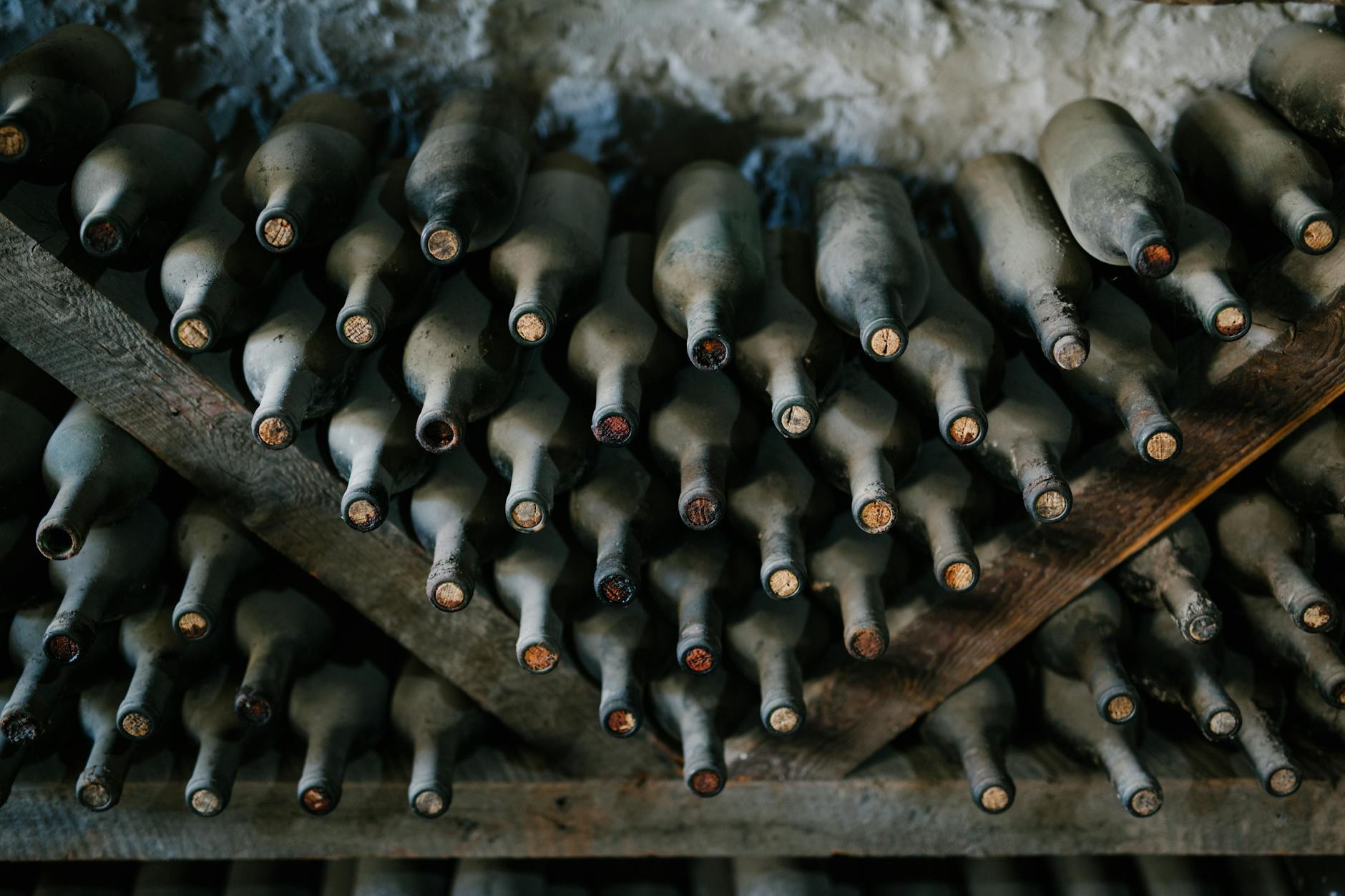
Chateau Musar's conflict-era vintages have appreciated 65–70% over a decade, outpacing the Liv-ex Fine Wine 1000. Scarcity driven by Lebanon's ongoing instability creates asymmetric upside for investors with documented, cellar-direct allocations.
Chateau Musar Fine Wine Investment: A Market Signal Forged Under Fire
Chateau Musar's 2015 vintage fetched over £400 per case at Sotheby's London in late 2024, a figure that would have seemed implausible a decade ago for a Lebanese label. The winery's red blends have appreciated by an estimated 60–70% over the past ten years according to tracked auction data on Wine-Searcher and Liv-ex, outpacing many Rhône and Languedoc peers during the same period. For investors building a diversified fine wine portfolio, that trajectory demands attention — not in spite of the winery's location in a conflict-affected region, but partly because of it. Scarcity created by geopolitical risk is powerful appreciation drivers in alternative asset markets.
If you manage a portfolio that includes fine wine, whisky casks, or rare collectibles, the story of Chateau Musar is directly relevant to how you should think about supply-constrained assets. The winery sits in Lebanon's Bekaa Valley, a region that has faced drone activity, road closures, and harvest disruptions tied to ongoing regional conflict. Head winemaker Tarek Sakr has described the team as being in a permanent state of high alert, navigating uncertain growing seasons and logistical obstacles that no Bordeaux château faces. Every bottle that makes it to auction carries a provenance premium that cannot be replicated elsewhere.
Why Conflict-Zone Scarcity Drives Fine Wine Price Appreciation
The economics of scarcity in fine wine are well understood by institutional collectors, but the Musar case illustrates a more extreme version of the dynamic. Annual production at Chateau Musar averages approximately 600,000 bottles across all labels, a fraction of output from comparably prestigious European estates. In years disrupted by conflict — the winery famously missed only the 1976 vintage during the Lebanese Civil War, a gap that itself created collector demand for surrounding years — supply contracts further, pushing secondary market prices sharply upward. According to Liv-ex data, Musar's market liquidity score has improved consistently since 2019 as global fine wine buyers have diversified beyond Bordeaux and Burgundy.
Tarek Sakr has noted publicly that the team must make harvest decisions under conditions that European winemakers cannot imagine: roads to the Bekaa Valley have at times been threatened by drone activity, grape deliveries have been delayed, and the cellaring process has been interrupted by security protocols. This operational fragility is precisely what makes each completed vintage a scarcer, more investable asset. The 2018 and 2019 vintages, both produced under elevated regional tension, are already trading at premiums above the winery's historical average on the secondary market. Wine-Searcher data from Q1 2025 places the 2018 red at approximately £55–£65 per bottle in the UK secondary market, up from a release price closer to £30.
The comparison with other war-vintage premiums is instructive. Bordeaux bottles produced during World War II — particularly 1945 — command extraordinary auction premiums, with a Mouton Rothschild 1945 selling for $310,000 at Christie's in 2018. While Musar operates at a different price tier, the underlying collector psychology is identical: bottles produced against the odds carry a narrative premium that compounds over time. For a forward-looking investor, acquiring Musar vintages during active conflict periods may represent the highest-conviction entry point.
"Bottles produced against the odds carry a narrative premium that compounds over time — and in fine wine, narrative is a hard asset."
Key Investment Metrics: Chateau Musar as an Alternative Asset
Before allocating capital to any alternative asset, a portfolio manager needs a clear-eyed view of the numbers. The following metrics frame the Chateau Musar opportunity relative to other fine wine and alternative asset benchmarks.
- 10-year price appreciation (Musar red, top vintages): approximately +65–70%, based on Wine-Searcher auction tracking 2015–2025
- Annual production (all labels): approximately 600,000 bottles, with conflict-affected vintages significantly lower
- Secondary market price, 2018 red: £55–£65 per bottle (UK, Q1 2025), versus ~£30 release price
- Liv-ex Fine Wine 1000 comparison: the broader index returned approximately +28% over five years to end-2024, underperforming Musar's top-vintage appreciation
- Missed vintage premium: the 1976 gap year has historically elevated demand for 1975 and 1977 bottles, which trade at 2–3x the price of comparable non-gap years
- Auction house activity: Sotheby's, Christie's, and Bonhams have all listed Musar in dedicated Middle Eastern and rare wine sales since 2022, signalling growing institutional recognition
The Liv-ex benchmark underperformance relative to Musar's conflict-era vintages is a structurally important data point. It suggests that geopolitical risk, when combined with proven quality, generates alpha that broad fine wine indices cannot capture. Investors who treat Musar purely as a regional curiosity are misreading the asset class dynamics at play.
How to Build a Position in Conflict-Scarce Fine Wine
Building an investable position in Chateau Musar requires a different approach than buying Bordeaux futures or Burgundy en primeur. The winery does not operate a formal futures programme, so investors must source bottles through specialist fine wine merchants, direct allocation lists, or the secondary auction market. Berry Bros. & Rudd and Justerini & Brooks in London both carry Musar allocations, and both have waiting lists for top vintages. Bonhams' specialist wine auctions in Hong Kong and London are the most liquid secondary venues, with hammer prices for older Musar cases regularly exceeding £300–£500 per six-bottle case.
Storage and provenance documentation are critical. Because Musar's supply chain passes through a conflict zone, chain-of-custody records matter more than for most fine wines. Investors should insist on temperature-controlled bonded warehouse storage in the UK, Hong Kong, or Singapore, and retain all import documentation. Provenance gaps in conflict-zone wines can suppress auction realisations by 15–20%, according to specialist brokers at Bonhams. Conversely, a fully documented, cellar-direct allocation from a conflict vintage can command a significant premium over the same wine sourced through secondary channels.
Diversification within the Musar range also matters. The estate produces a white wine from Obaideh and Merwah grapes — ancient Lebanese varieties — which has its own collector following and has appreciated sharply as natural wine interest has grown globally. The white's production is even more limited than the red, with some vintages yielding fewer than 50,000 bottles. For investors seeking the highest scarcity coefficient within the Musar portfolio, the white and the rosé represent compelling secondary positions alongside the flagship red.
Broader Portfolio Context: Fine Wine Alongside Whisky Casks and Hard Assets
Fine wine sits within a wider alternative asset universe that has attracted growing institutional capital since 2020. Knight Frank's Luxury Investment Index tracked fine wine appreciation of approximately 27% over the five years to 2024, while rare whisky outperformed at around 40% over the same period according to Rare Whisky 101 data. Watches (particularly Rolex and Patek Philippe references) and art have shown more volatility. Within this context, conflict-scarce fine wine like Musar occupies a niche that combines the liquidity of the broader fine wine market with the scarcity dynamics more typically associated with single-malt whisky casks from closed distilleries.
The key portfolio argument for Musar is asymmetric upside: if the regional security situation stabilises, the winery's production normalises and prices consolidate at elevated levels; if conflict intensifies and a vintage is lost entirely, existing bottles appreciate sharply. This asymmetry — where both outcomes are positive for existing holders — is rare in any asset class. It mirrors the dynamic seen with Port Ellen or Brora whisky casks, where distillery closure created a permanently finite supply and drove decade-long appreciation curves. The difference is that Musar's supply constraint is ongoing and unpredictable, which adds a speculative premium but also genuine urgency to acquisition timing.
What to Watch: Key Dates and Market Signals Ahead
Investors tracking the Chateau Musar opportunity should monitor the following developments over the next 12–24 months.
- 2022 vintage release (expected late 2025–2026): Musar ages its reds for a minimum of seven years before release. The 2022 vintage was produced under significant regional pressure and is expected to be one of the smallest releases in recent memory. Pre-release secondary market activity will signal institutional appetite.
- Liv-ex Lebanon index inclusion: Liv-ex has been expanding its regional coverage. Formal inclusion of Lebanese fine wine in a sub-index would materially increase liquidity and attract fund-level buyers who require index tracking.
- Bonhams Hong Kong fine wine sales (biannual): These sales are the most relevant price discovery mechanism for Asian buyers. Watch hammer prices on 2015–2019 Musar reds as a real-time valuation benchmark.
- Regional ceasefire or escalation signals: A durable ceasefire in southern Lebanon would likely trigger a short-term price correction as supply expectations improve, creating a tactical buying opportunity. Escalation has the opposite effect on existing stock.
- Winery succession and ownership: Chateau Musar has been family-owned since its founding by Gaston Hochar in 1930. Any ownership transition or external investment would be a significant catalyst for institutional rerating.
Frequently Asked Questions
Is Chateau Musar fine wine a reliable investment compared to Bordeaux or Burgundy?
Chateau Musar has outperformed many comparable Bordeaux and Rhône benchmarks on a vintage-by-vintage basis over the past decade, with top-vintage appreciation of approximately 65–70% versus the Liv-ex Fine Wine 1000's 28% over five years to end-2024. The trade-off is lower liquidity and higher provenance risk due to the winery's location in Lebanon's Bekaa Valley. Investors comfortable with illiquidity premiums and who can document chain of custody rigorously may find Musar a compelling diversifier within a fine wine allocation.
How does conflict in Lebanon affect Chateau Musar's production and bottle values?
Conflict directly constrains production through road closures, harvest delays, and logistical disruption. Smaller vintages reduce secondary market supply, which historically drives price appreciation for existing stock. The winery missed only the 1976 vintage during the entire Lebanese Civil War, and surrounding vintages trade at a measurable premium. Current winemaker Tarek Sakr has described the team operating under permanent high alert, suggesting ongoing supply risk that supports the scarcity premium on current and future releases.
Where can investors buy and sell Chateau Musar bottles and cases?
Primary allocation is available through specialist merchants including Berry Bros. & Rudd and Justerini & Brooks in London, both of which maintain allocation lists for top vintages. The most liquid secondary venues are Bonhams wine auctions in London and Hong Kong, and Sotheby's specialist wine sales. Wine-Searcher provides real-time secondary market pricing. Investors should ensure all purchases are stored in bonded, temperature-controlled warehouses and retain full import and provenance documentation to maximise auction realisations.
What is the minimum viable investment in Chateau Musar for a serious portfolio position?
A meaningful position typically requires acquiring at least three to five cases (six or twelve bottles each) across two or three vintages to provide diversification within the label. At current secondary market prices of £300–£500 per six-bottle case for top vintages, a baseline allocation of £3,000–£5,000 provides exposure while remaining liquid enough to sell individual cases at auction. Larger allocations should target conflict-era vintages (2006, 2012–2014, 2018–2019) where scarcity premiums are most pronounced.
The actionable insight for investors is straightforward: acquire documented, cellar-direct allocations of Chateau Musar's conflict-era vintages now, before the 2022 release creates a new wave of institutional attention. The asymmetric supply dynamic — where both stabilisation and escalation scenarios benefit existing holders — is a rare structural advantage in fine wine investing. Position sizing should reflect the illiquidity premium, and storage provenance must be airtight to capture full auction value at exit.
Source: Whisky Bulletin coverage of cask investment on Whisky Bulletin.
💼 Interested in alternative asset investment? Speak to the team at Whisky Cask Club — Singapore's leading whisky cask investment specialists.
💼 Interested in alternative asset investment? Speak to the team at Whisky Cask Club — Singapore's leading whisky cask investment specialists.