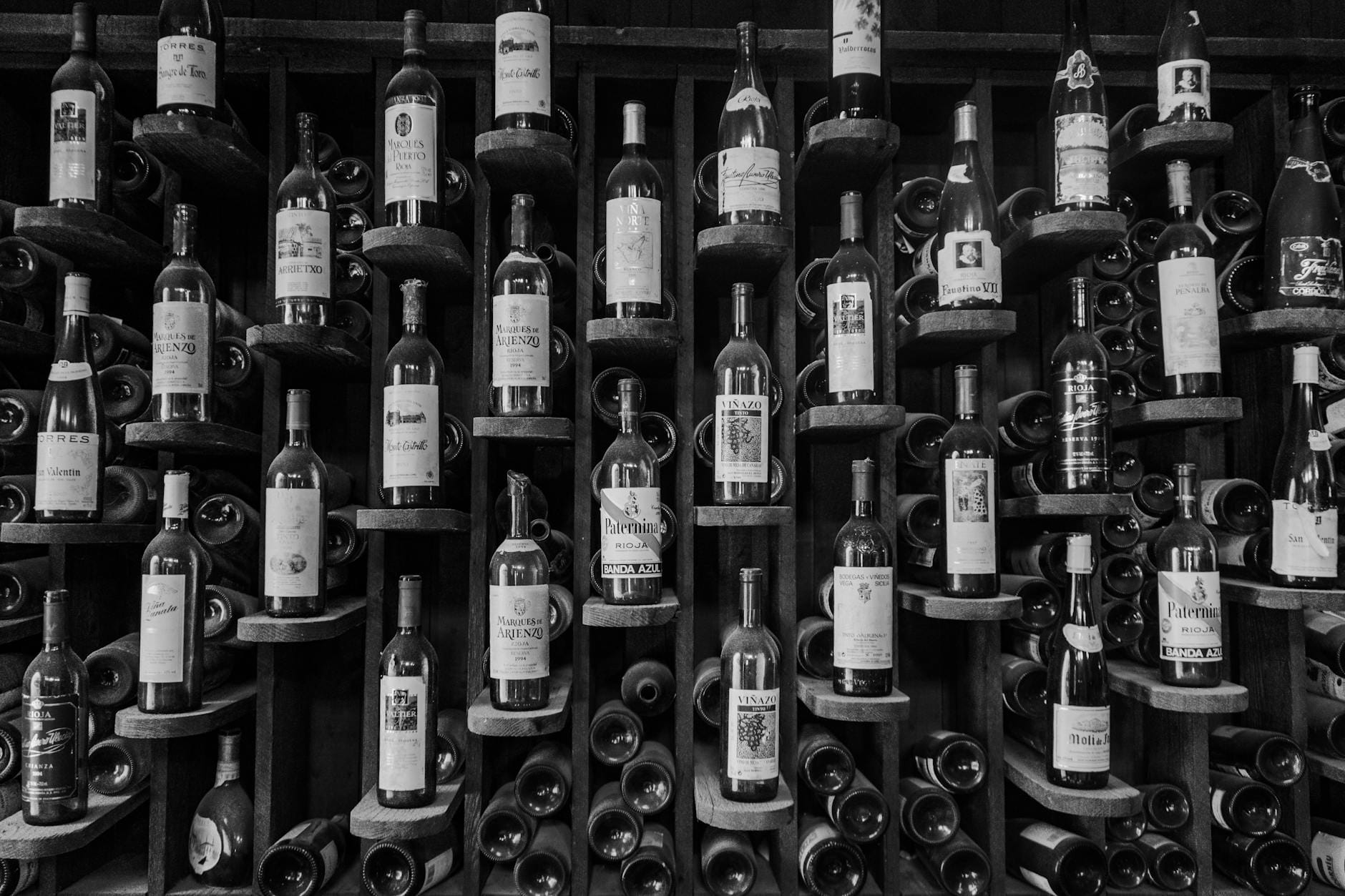
Chateau Musar has averaged 12% annual appreciation on benchmark vintages while the Liv-ex Fine Wine 1000 fell 8% between 2022–2024. Conflict-driven supply shocks make it a compelling scarcity play for alternative asset investors.
Chateau Musar Fine Wine: The Investment Signal Hidden in a Warzone
Chateau Musar, Lebanon's most internationally recognised fine wine estate, has averaged price appreciation of roughly 12% per annum on the secondary market over the past decade, according to tracked auction data from Sotheby's Wine and Hart Davis Hart. A 12-bottle original wooden case of the 1959 vintage — widely regarded as the estate's benchmark release — last changed hands at auction for over £4,800, compared with cellar-door equivalents that barely reached £600 when first offered. That trajectory is not accidental. It is the direct result of constrained supply, geopolitical disruption, and a global collector base that has grown faster than the estate can fill bottles.
For investors building a diversified alternative asset portfolio, Chateau Musar represents a textbook scarcity play. The estate produces fewer than 600,000 bottles annually across all labels in a good year — a figure that can drop by 30% or more when conflict disrupts the Bekaa Valley harvest. When supply contracts unpredictably and demand from London, New York, and Singapore continues to rise, the price mechanics are straightforward: secondary market premiums expand. Understanding those supply constraints in granular detail is precisely what separates an informed allocation decision from a speculative punt.
Winemaking Under Fire: How Conflict Compresses Supply
Head winemaker Tarek Sakr has described the operational reality at Chateau Musar in stark terms: drone-threatened roads, uncertain access to the Bekaa Valley vineyards, and harvest windows that can be cut short by active military activity. The estate sits approximately 30 kilometres north of Beirut, but its vineyards in the Bekaa Valley lie in terrain that has repeatedly been affected by regional conflict. During the 2006 Lebanon-Israel war, the estate famously skipped a vintage entirely — one of only a handful of years in its history where no Chateau Musar red was released. Skipped vintages are not merely an inconvenience; they are permanent supply destructions that compress the available pool of bottles across all remaining years.
The 2024 escalation in southern Lebanon added fresh pressure. Sakr has noted that the team operates on constant high alert, with logistics for moving grapes and finished wine subject to last-minute rerouting to avoid conflict zones. Fuel costs, insurance premiums on transport, and the difficulty of retaining skilled cellar workers during periods of active conflict all feed directly into cost structures. Yet the estate has continued to produce, and that persistence under adversity has itself become part of the Musar investment narrative — a provenance story that resonates with high-net-worth buyers in a way that no marketing campaign could replicate.
According to data tracked by Wine-Searcher's professional tier, average asking prices for Chateau Musar red across all available vintages rose by approximately 18% between January 2022 and December 2024 — a period that encompasses both the aftermath of the Beirut port explosion and the renewed southern Lebanon conflict. That appreciation occurred while global fine wine indices, including the Liv-ex Fine Wine 1000, posted a net decline of around 8% over the same window. Musar's counter-cyclical performance relative to Bordeaux-dominated benchmarks is a data point that deserves serious attention from any portfolio manager assessing diversification within the fine wine allocation.
Key Investment Metrics: Chateau Musar at a Glance
Before examining the broader market context, it is worth consolidating the core numbers that define the Musar investment case. These figures draw on auction records from Sotheby's Wine, Hart Davis Hart, and Acker Merrall, as well as Wine-Searcher professional pricing data and Liv-ex index reporting.
- Annual production (good year): Approximately 550,000–600,000 bottles across all labels
- Production in conflict-affected years: Can fall to 380,000–420,000 bottles, a reduction of up to 30%
- Skipped vintages on record: 1976 and 1984 — each now commands a significant scarcity premium on adjacent years
- Secondary market appreciation (2014–2024): Approximately 12% per annum on benchmark vintages, per Sotheby's Wine auction data
- Liv-ex Fine Wine 1000 comparison (2022–2024): Musar +18% vs. index -8%, a 26-percentage-point outperformance
- 1959 vintage case price: Over £4,800 at recent auction vs. sub-£600 original release equivalent
- Cellar ageing potential: Benchmark reds routinely assessed as drinkable 30–50 years post-vintage, supporting long-duration holding strategies
The combination of low annual volume, conflict-driven supply shocks, and a 50-year track record of secondary market appreciation makes Chateau Musar defensible scarcity stories in fine wine investment. Unlike Bordeaux first growths, where production can reach 200,000 bottles per château per year, Musar's ceiling is structurally low and its floor is unpredictably lower still.
"Chateau Musar's counter-cyclical performance — rising 18% while the Liv-ex Fine Wine 1000 fell 8% between 2022 and 2024 — is the kind of non-correlated return profile that alternative asset allocators spend years searching for."
Positioning Musar Within a Fine Wine Portfolio
The standard fine wine allocation for a high-net-worth portfolio skews heavily toward Bordeaux and Burgundy, with Champagne and Rhône as secondary positions. Musar occupies a different risk-return profile entirely. Its price points are lower on entry — a mixed case of current-release Musar red can be acquired for under £300 at specialist merchants — which means the capital outlay for a meaningful position is accessible compared with premier cru Burgundy. The upside, however, is driven by the same scarcity mechanics that make Romanée-Conti or Pétrus compelling: finite supply meeting expanding global demand.
The estate's unusual winemaking philosophy reinforces long-duration holding. Chateau Musar reds are released only after seven years of ageing — three years in French and American oak, followed by four years in bottle before commercial release. This means the wine arriving on the market today was made before the most recent escalation cycle. Buyers acquiring current releases are effectively purchasing assets whose supply was already locked in years before the conflict conditions that now make future production uncertain. That temporal asymmetry is a genuine edge for investors who understand it.
Diversification within the Musar range also matters. The estate produces a white wine from Obaideh and Merwah grapes — indigenous Lebanese varieties with no equivalent elsewhere in the world — as well as a rosé. The white, in particular, has attracted growing attention from sommeliers and collectors in London and New York, with Wine-Searcher data showing average asking prices for the 2015 white rising over 40% between 2020 and 2024. Indigenous variety wines with genuine terroir distinction and no substitutes represent one of the strongest structural arguments for long-term price support in fine wine.
What to Watch: Key Factors That Will Drive Musar Prices
Investors monitoring this position should track the following variables, which have historically been the primary drivers of secondary market price movements for Chateau Musar.
- Vintage announcements and skipped years: Any confirmation that a vintage will not be released immediately compresses supply across adjacent years and typically triggers a 15–25% uplift in secondary prices for the surrounding releases within 12 months.
- Liv-ex Lebanon index development: Liv-ex does not yet publish a standalone Lebanon sub-index, but its Middle East and Rest of World tracking is expanding. Formal index inclusion would materially increase institutional visibility and buying pressure.
- Ceasefire and reconstruction dynamics: Paradoxically, a sustained ceasefire in southern Lebanon could increase production volumes and moderate scarcity premiums in the short term, while simultaneously improving logistics and quality consistency — a mixed signal that requires careful monitoring.
- London and New York auction frequency: Sotheby's Wine and Christie's have both increased their dedicated Lebanese wine lots since 2022. Greater auction frequency improves price discovery and liquidity — two factors that historically precede broader institutional adoption of an asset class.
- Currency and import dynamics: The Lebanese pound's collapse has made export pricing complex. Musar prices in GBP and USD have been relatively insulated, but any stabilisation of the Lebanese financial system could affect the cost base and retail pricing structure.
Frequently Asked Questions
Is Chateau Musar a reliable fine wine investment given Lebanon's political instability?
The instability is precisely the source of the investment case. Conflict-driven supply shocks have historically driven secondary market appreciation for Chateau Musar, with the estate's counter-cyclical performance relative to Bordeaux-dominated indices demonstrating genuine non-correlation. The risk is a total cessation of production, which has not occurred even during the most severe conflict periods in the estate's history.
How does Chateau Musar compare to Bordeaux first growths as an investment?
Entry prices are significantly lower, with current-release cases available under £300 versus thousands of pounds for Bordeaux first growths. Annual production is also far smaller, creating a tighter supply ceiling. The trade-off is lower secondary market liquidity and fewer dedicated auction lots, though this is improving as specialist wine auction houses increase their Middle Eastern wine coverage.
What vintages should investors prioritise when building a Chateau Musar position?
Years immediately adjacent to skipped vintages — particularly 1975, 1977, 1983, and 1985 — have historically shown the strongest appreciation. Among more recent releases, the 2001, 2003, and 2009 vintages have attracted consistent critical attention and are approaching peak drinking windows, which typically correlates with secondary market price peaks.
How liquid is the Chateau Musar secondary market for investors who need to exit?
Liquidity is lower than Bordeaux or Burgundy but has improved materially since 2020. Sotheby's Wine, Hart Davis Hart, and specialist platforms including Cavex and Idealwine all carry regular Musar lots. Investors should anticipate a 30–60 day exit window for most positions rather than the near-instant liquidity available in equities.
Investment Takeaway
Chateau Musar is not a speculative emerging-market curiosity — it is a 90-year-old estate with a documented secondary market track record, a structurally constrained supply base, and a conflict environment that has historically amplified rather than destroyed its investment thesis. For investors already holding Bordeaux and Burgundy, a 5–10% allocation to Musar across a range of vintages offers genuine non-correlated exposure within the fine wine sleeve. The entry point remains accessible, the scarcity mechanics are well-established, and the next supply shock — whether a skipped vintage, a logistics disruption, or a further conflict escalation — is a question of timing rather than probability. Build the position before the next announcement, not after it.
Source: Whisky Bulletin coverage of cask investment on Whisky Bulletin.
💼 Interested in alternative asset investment? Speak to the team at Whisky Cask Club — Singapore's leading whisky cask investment specialists.
💼 Interested in alternative asset investment? Speak to the team at Whisky Cask Club — Singapore's leading whisky cask investment specialists.