TL;DR
Constellation Brands aims to improve its wine & spirits EBIT margins from ~23% by focusing on premium, higher-margin products. This corporate strategy validates the investment thesis for scarce, high-end wine and spirits as alternative assets.
Constellation's Margin Play: What Wine and Spirits Investors Should Watch
Constellation Brands, the $34 billion beverage conglomerate behind Robert Mondavi, Kim Crawford, and The Prisoner Wine Company, has signalled a clear intent to widen EBIT margins across its wine and spirits division. CFO Garth Hankinson told analysts the company sees a credible path to improved profitability over the "medium-term," a statement that carries significant weight for investors tracking the publicly traded fine wine and premium spirits market. With the wine and spirits segment generating approximately $1.5 billion in annual net sales but operating at materially thinner margins than Constellation's dominant beer portfolio — which boasts EBIT margins north of 39% — the gap represents both a challenge and a potential catalyst for value creation.
The timing is notable. Constellation's wine and spirits EBIT margin has hovered around 22-24% in recent quarters, a figure that trails the premium end of the drinks sector. Diageo, by comparison, consistently delivers operating margins above 30% across its spirits portfolio. Pernod Ricard operates in a similar band. For Constellation to close this spread, it will need to execute on premiumisation — shifting volume toward higher-margin labels — while rationalising its tail of lower-value SKUs. The company has already divested several mass-market wine brands in recent years, including the sale of roughly 30 labels to E. & J. Gallo Winery in 2021 for $810 million, a move that stripped out lower-margin volume and sharpened the portfolio's focus on bottles retailing above $11.
Why This Matters for Alternative Asset Investors
When a major publicly listed player signals margin expansion in premium wine and spirits, the ripple effects reach well beyond equity markets. Constellation's strategic pivot toward higher-priced, lower-volume products mirrors a broader industry trend that directly supports the investment thesis behind physical wine and spirits assets. Premiumisation compresses supply at the top end: fewer bottles produced, higher prices demanded, and stronger secondary-market performance for the wines and whiskies that institutional buyers covet. The Liv-ex Fine Wine 1000 index, a broad benchmark for the secondary wine market, has delivered annualised returns of approximately 8.4% over the past decade, outperforming several traditional fixed-income categories during the same period.
- Constellation's wine & spirits EBIT margin (FY2025): ~23%, with management targeting improvement toward the high twenties
- Premium wine segment growth: Wines priced above $15 at retail have grown at a 6-8% CAGR over the past five years, versus flat or declining volumes below $10
- Scotch whisky cask values: Average ex-distillery cask prices have risen 12-15% annually since 2019, according to industry broker data, driven by finite warehouse capacity and lengthening maturation cycles
- Global fine wine market size: Estimated at $340 billion, with the investable secondary market representing roughly $5 billion in annual traded value
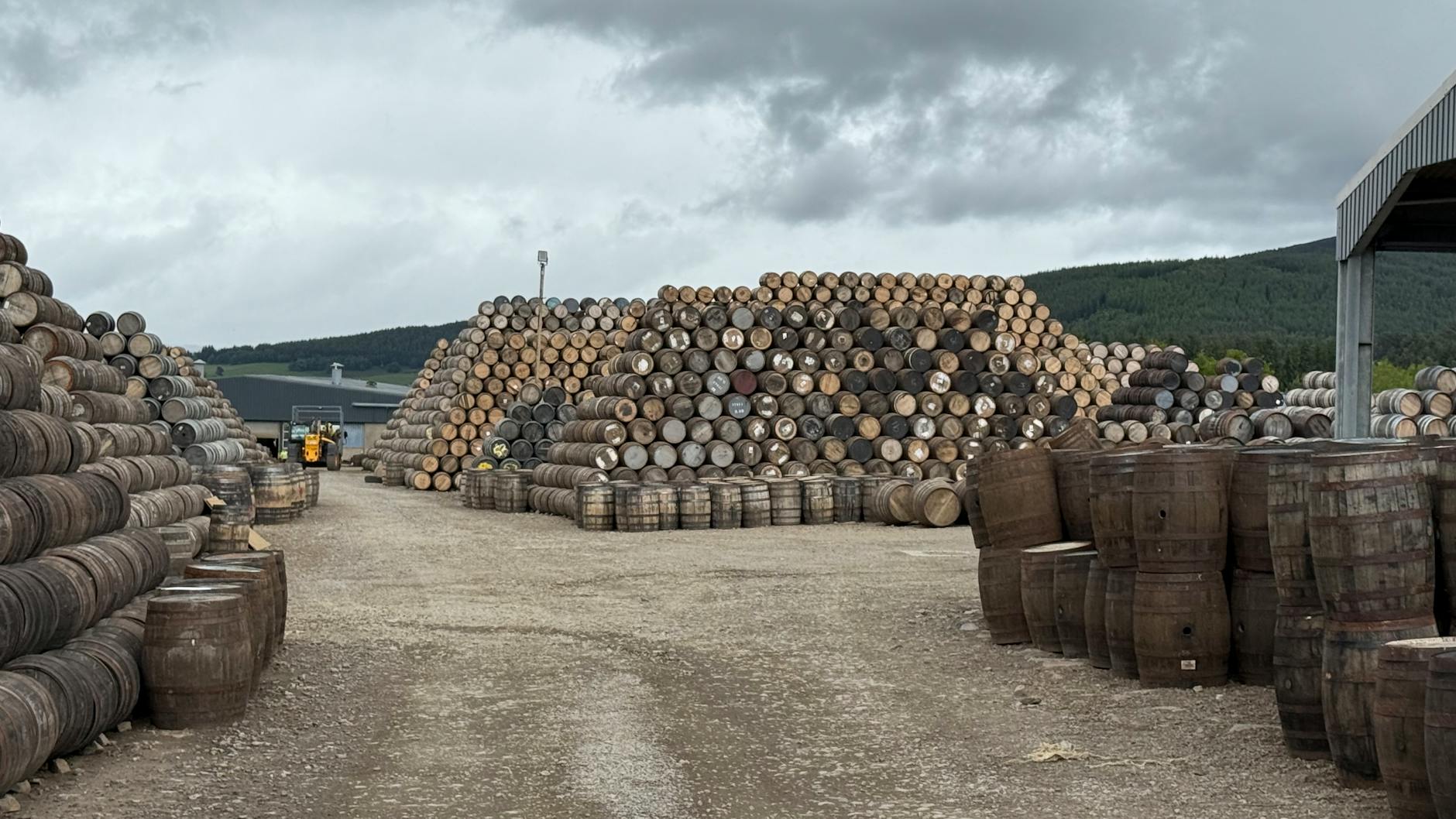
Constellation's margin ambitions also underscore a structural reality: producing premium aged spirits and fine wine is capital-intensive and time-constrained. A single barrel of bourbon requires a minimum of two years' maturation; Scotch whisky demands at least three, with the most sought-after expressions resting for 15 to 25 years. These biological constraints on supply cannot be engineered away, which is precisely why cask-level investment continues to attract sophisticated capital. When corporate players like Constellation publicly commit to premiumisation, they are effectively validating the scarcity premium that underpins alternative asset strategies in this sector.
Investment Takeaway
Constellation's margin improvement roadmap is a corporate confirmation of what alternative asset allocators already know: the value in wine and spirits sits at the premium end, and that value is growing. For investors considering direct exposure to physical spirits assets — particularly Scotch whisky casks — the macro backdrop remains supportive. Rising input costs, constrained warehousing, and lengthening maturation timelines all tighten supply at a moment when global demand for aged, premium spirits continues to climb. Investors should pay close attention to how Constellation executes its premiumisation strategy over the next 12 to 18 months. Success would further validate the pricing power embedded in scarce, aged inventory — the same pricing power that makes cask investment a compelling portfolio diversifier with low correlation to public equities. Those looking to build direct exposure to this asset class should seek specialist guidance on distillery selection, maturation profiles, and exit strategies.
💼 Interested in alternative asset investment? Speak to the team at Whisky Cask Club — Singapore's leading whisky cask investment specialists.
💼 Interested in alternative asset investment? Speak to the team at Whisky Cask Club — Singapore's leading whisky cask investment specialists.