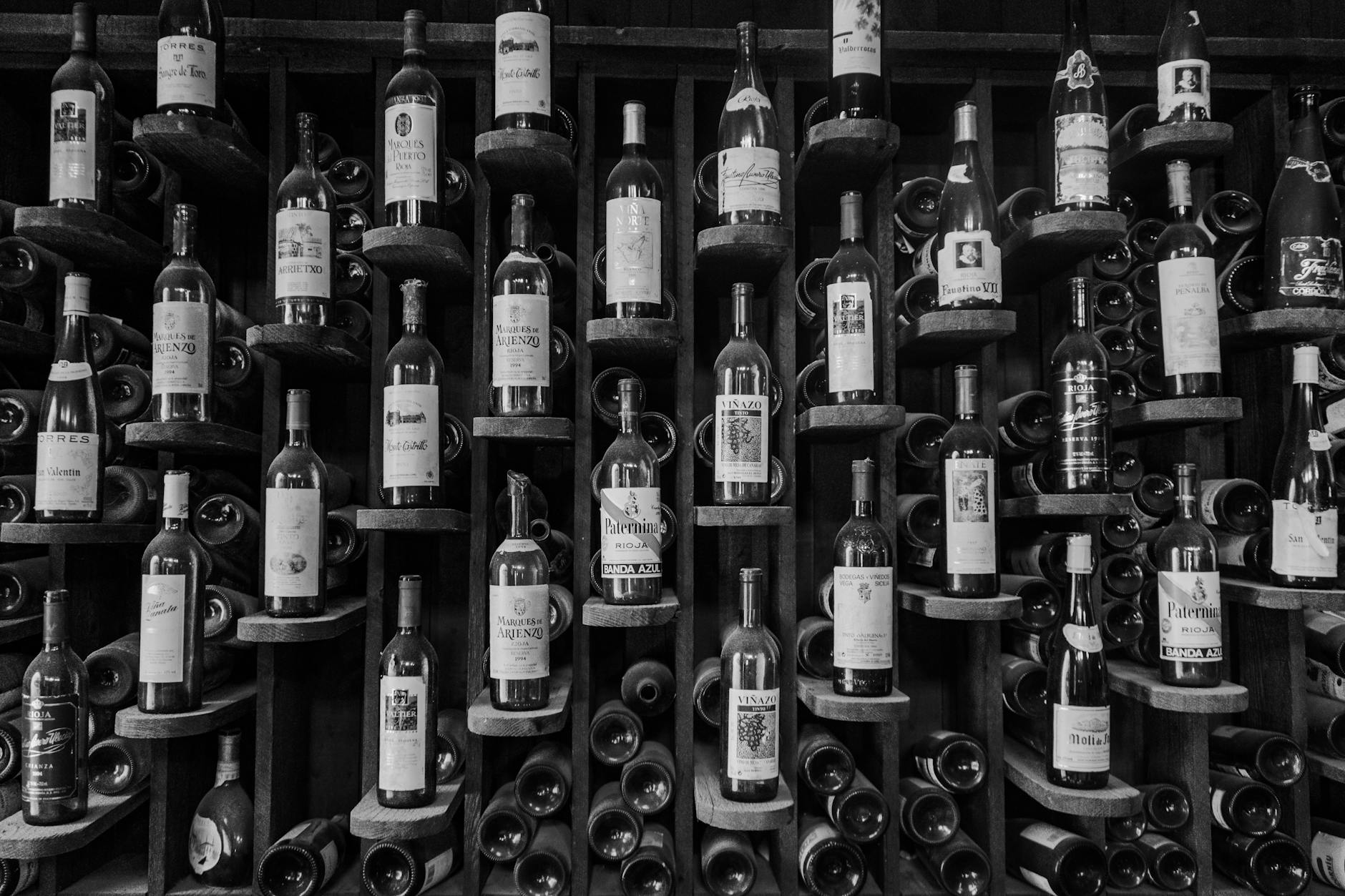
The Market Signal: Fine Wine Auctions Are Shifting — and Investors Should Pay Attention
The 2025 iDealwine Barometer has landed with data that reframes how serious investors should be thinking about fine wine as an asset class. According to the annual report — one of the most closely watched benchmarks in the European wine auction market — bidders are no longer restricting themselves to aged, cellar-ready bottles. Demand for younger vintages at auction has risen meaningfully, with buyers increasingly willing to acquire wines from the 2018–2022 window as speculative long-hold positions rather than immediate consumption plays. This is a structural shift, not a seasonal blip, and it carries direct implications for portfolio strategy.
iDealwine, which processed over €50 million in wine auction transactions in 2024, reported that organic and biodynamic wines are now commanding a growing share of hammer prices — a category that was largely absent from serious auction catalogues just five years ago. Wines certified under Demeter or Ecocert standards have seen price premiums of 12–18% over comparable conventional wines at equivalent quality tiers. That gap is widening. For investors building exposure to fine wine, ignoring the organic segment is increasingly a mispricing risk rather than a conservative stance.
Why This Matters: Scarcity, Demographics and the Organic Premium
The broadening of auction diversity — across regions, producers, and now certifications — reflects a fundamental demand-side evolution. Younger, high-net-worth buyers entering the auction market are not anchored to the traditional Bordeaux-Burgundy axis. iDealwine's data shows that Rhône Valley, Loire, and southern Italian appellations have posted double-digit volume growth at auction over the past three years, with some lesser-known Burgundy village appellations appreciating 30–40% between 2020 and 2024. This regional diversification mirrors what sophisticated collectors already know: concentration risk in Pauillac and Gevrey-Chambertin is real, and the alpha is increasingly found elsewhere.
The younger vintage trend is equally significant from a capital deployment perspective. Buying a 2020 Barolo or a 2021 Hermitage at auction today — before critical scores fully crystallise and before merchant allocation lists dry up — represents an entry point that simply did not exist in the traditional auction model. If those wines appreciate in line with historical vintage curves, investors could be looking at 40–60% gains over a 7–10 year hold period, based on comparable trajectories for wines of equivalent pedigree from previous decades.
- Organic wine auction premium: +12–18% over conventional equivalents at comparable quality tiers
- iDealwine 2024 transaction volume: Over €50 million
- Regional appreciation (2020–2024): Select Rhône and Loire appellations up 30–40%
- Projected return on younger vintage holds: 40–60% over 7–10 years based on historical vintage curves
- Fine wine as an asset class (global market size): Estimated at £4.3 billion annually, per Wine Lister and Liv-ex data
The Organic Segment: A Mispriced Growth Category
The rise of organic and biodynamic wines at auction is not a lifestyle trend dressed up as investment thesis — it is a supply-constrained, demand-expanding dynamic with measurable price consequences. Certified organic vineyard land in Burgundy and the Rhône is finite and costly to convert, with full certification requiring a minimum three-year transition period. This means supply cannot respond quickly to demand, which is the foundational condition for price appreciation in any asset class. Domaines such as Leflaive, Leroy, and Coulée de Serrant have long demonstrated that biodynamic provenance commands a structural premium, and that premium is now migrating down to smaller, emerging producers as buyers become more sophisticated.
Investment Takeaway: Rebalance Toward Diversity, Not Just Prestige
Investors with existing fine wine exposure should use the iDealwine data as a prompt to audit concentration risk. If your wine portfolio is weighted more than 60% toward First Growth Bordeaux and Grand Cru Burgundy, the emerging auction data suggests you are leaving return potential on the table. Allocating 15–20% toward certified organic producers, and a further 10–15% toward younger vintages from high-potential appellations — acquired now, before auction premiums fully reflect critical consensus — is a defensible, data-backed rebalancing strategy. The auction market is telling investors where demand is migrating. The question is whether portfolios are positioned to capture it before the repricing completes.
💼 Interested in alternative asset investment? Speak to the team at Whisky Cask Club — Singapore's leading whisky cask investment specialists.
💼 Interested in alternative asset investment? Speak to the team at Whisky Cask Club — Singapore's leading whisky cask investment specialists.
💼 Interested in alternative asset investment? Speak to the team at Whisky Cask Club — Singapore's leading whisky cask investment specialists.
💼 Interested in alternative asset investment? Speak to the team at Whisky Cask Club — Singapore's leading whisky cask investment specialists.
💼 Interested in alternative asset investment? Speak to the team at Whisky Cask Club — Singapore's leading whisky cask investment specialists.
💼 Interested in alternative asset investment? Speak to the team at Whisky Cask Club — Singapore's leading whisky cask investment specialists.