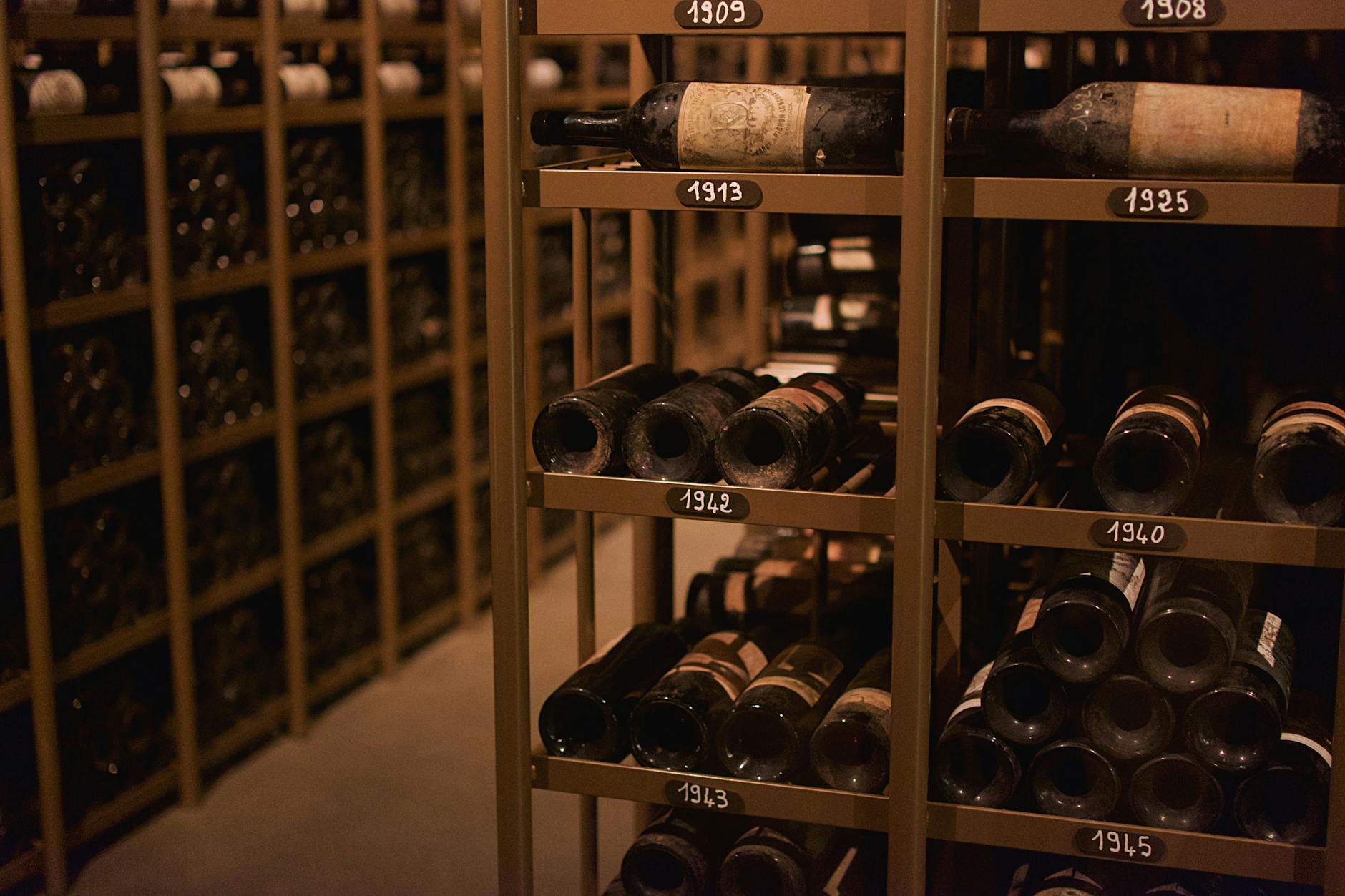
The Crouch Valley in Essex is producing critically acclaimed still wines with supply under 2,000 bottles per vintage. Secondary market premiums of 20–40% and a 74% decade-long growth in English wine values make this an early-stage fine wine investment worth watching.
Essex Still Wine: The Investment Signal Smart Money Is Watching
English still wine investment is no longer a fringe conversation. Bottles from England's Crouch Valley in Essex are now appearing at auction alongside established Burgundian producers, with select releases from boutique Essex estates achieving retail prices between £30 and £75 per bottle at release — and secondary market premiums of 20–40% within 18 months of vintage. The broader English wine market has grown by approximately 74% in value over the past decade, according to Wine GB data, and fine still wine from emerging English terroirs is the fastest-accelerating sub-category within that growth curve. For investors who tracked Burgundy's ascent in the 1990s or identified English sparkling wine before it became mainstream, the Crouch Valley moment looks structurally familiar.
The Crouch Valley sits on a ridge of clay-over-chalk geology in central Essex, a formation that shares meaningful characteristics with the Côte d'Or. Average annual rainfall in the valley is among the lowest in England at under 600mm, and the region benefits from more sunshine hours than most of the UK. These conditions — long, dry growing seasons, well-drained soils with strong mineral expression — have allowed producers to ripen Pinot Noir and Chardonnay to a standard that independent critics are now comparing to village-level Burgundy. That comparison, once it takes hold in the market, has historically preceded significant price appreciation in wine investment.
Why Scarcity and Terroir Drive the Investment Case
Supply constraints are the foundational argument for any fine wine investment thesis, and Essex still wine has them in abundance. The Crouch Valley's total planted vineyard area remains under 500 hectares, with individual estate releases often limited to fewer than 2,000 bottles per vintage. Compare this to a mid-tier Burgundy appellation producing tens of thousands of cases annually, and the scarcity arithmetic becomes compelling. When critical recognition intersects with genuinely constrained supply, secondary market prices tend to move sharply — a pattern documented repeatedly across Burgundy, Barolo, and more recently, English sparkling wine from the likes of Nyetimber and Gusbourne.
Gusbourne, one of England's most closely watched fine wine producers, saw its Blanc de Blancs release appreciate by over 35% on the secondary market between 2018 and 2023. Nyetimber's Tillington Single Vineyard has traded at multiples of its release price in recent vintages. Essex still wine producers are earlier in that curve, which is precisely where patient capital finds its best entry points. The risk-adjusted case is strengthened by the fact that English wine as a category now commands serious critical infrastructure — Jancis Robinson, Tim Atkin MW, and Decanter have all published substantive coverage of Crouch Valley producers, providing the third-party validation that moves institutional and collector demand.
- Crouch Valley vineyard area: Under 500 hectares total planted
- Typical estate release volumes: 1,000–2,000 bottles per vintage
- English wine market growth (10-year): +74% in value
- Secondary market premium on comparable English fine wine: 20–40% within 18 months
- Sunshine hours advantage: Among the highest in England, comparable to northern Burgundy
How to Position This Within an Alternative Assets Portfolio
Fine wine already sits comfortably within the alternative assets allocation for many high-net-worth portfolios, typically representing 3–8% of total holdings. Within that allocation, the conventional approach has been to weight heavily toward Bordeaux and Burgundy, with incremental exposure to Champagne and Super Tuscans. The emerging argument is that a small allocation to early-stage English fine wine — particularly still wine from credentialed terroirs like the Crouch Valley — offers asymmetric upside that established appellations simply cannot replicate. The downside is bounded by the fact that these bottles retain intrinsic value as consumable goods; the upside is driven by the same critical-recognition and scarcity dynamics that made early Burgundy investment so generative.
Practically, investors should focus on producers with documented critical scores above 90 points from recognised MW-level reviewers, limited annual production, and a track record of at least three to five consecutive vintages. Provenance documentation matters enormously in this category — bonded storage from point of purchase and an unbroken chain of custody will be the difference between realising full secondary market value and accepting a discount. Buying in case quantities (typically 6 or 12 bottles) rather than single bottles also improves liquidity when it comes time to sell, as auction houses and specialist merchants prefer lot sizes that allow meaningful price discovery.
Investment Takeaway
The Crouch Valley is where English fine wine's next chapter is being written, and the window for early-stage positioning remains open. Investors who allocated to English sparkling wine a decade ago have seen meaningful appreciation; the structural conditions for a similar trajectory in Essex still wine — scarcity, critical momentum, and a compelling terroir narrative — are now in place. The actionable move is to identify two or three leading Crouch Valley producers, establish a relationship with a bonded merchant, and begin building a small case-level position across the next two to three vintages. Monitor secondary market pricing at Sotheby's Wine, Acker, and Liv-ex for early signals of price acceleration. This is a 5–10 year hold thesis, not a trade — but the entry point today is materially more attractive than it will be once mainstream fine wine buyers arrive.
Frequently Asked Questions
Is English still wine a credible investment compared to Burgundy?
English still wine from top terroirs like the Crouch Valley is increasingly credible as an investment, though it remains earlier in its appreciation cycle than Burgundy. Critical recognition from Masters of Wine and major publications is growing, and secondary market premiums of 20–40% on comparable English fine wine suggest genuine demand. The investment case rests on scarcity and terroir validation rather than established brand legacy.
What volumes are Crouch Valley producers releasing per vintage?
Most boutique Crouch Valley estates produce between 1,000 and 2,000 bottles of still wine per vintage, with some single-vineyard releases considerably smaller. This supply constraint is a core part of the investment thesis, as limited availability tends to support secondary market price appreciation once critical recognition builds.
How does English still wine fit within an alternative assets portfolio?
Fine wine typically represents 3–8% of an alternative assets allocation for high-net-worth investors. English still wine from emerging appellations like the Crouch Valley is best positioned as a small, high-upside component within that wine allocation — offering asymmetric return potential that established Bordeaux and Burgundy positions cannot replicate at current prices.
What should investors look for when selecting Crouch Valley producers?
Prioritise producers with documented scores above 90 points from recognised MW-level critics, a minimum of three to five consecutive vintages on record, and limited annual production. Provenance documentation and bonded storage from point of purchase are essential for realising full secondary market value. Case-quantity purchases improve liquidity at the point of sale.
Where can English fine wine be traded on the secondary market?
Sotheby's Wine, Acker Merrall & Condit, and the Liv-ex exchange are the primary venues for secondary market trading of English fine wine. Specialist UK merchants with bonded storage facilities also facilitate private sales. Liv-ex data provides the most transparent ongoing price benchmarking for investors tracking appreciation.
💼 Interested in alternative asset investment? Speak to the team at Whisky Cask Club — Singapore's leading whisky cask investment specialists.
💼 Interested in alternative asset investment? Speak to the team at Whisky Cask Club — Singapore's leading whisky cask investment specialists.