A New Jersey father and daughter pleaded guilty to a $2m counterfeit art scheme involving forged Warhols, Picassos, and Banksys. For investors, the case quantifies the authentication risk embedded in art as an asset class and reinforces the value of rigorous provenance verification.
Counterfeit Art Fraud Exposes the $65 Billion Market's Deepest Vulnerability
The global art market generated an estimated $65 billion in sales in 2023, according to the Art Basel and UBS Global Art Market Report. For high-net-worth investors allocating capital to blue-chip works by artists such as Andy Warhol, Pablo Picasso, and Banksy, that figure represents both an opportunity and a warning. The guilty pleas entered by New Jersey residents Erwin Bankowski and his daughter Karolina Bankowska — who together orchestrated a $2 million counterfeit art scheme involving forged works attributed to Warhol, Picasso, Richard Mayhew, Banksy, and others — serve as a stark reminder that provenance verification is not a bureaucratic formality. It is the single most important variable in art as an investment class.
The Bankowski scheme involved commissioning counterfeit works and presenting them as authenticated originals, a method that exploits the art market's historical reliance on reputation, paperwork, and visual inspection rather than forensic science. The pair's ability to move $2 million in fraudulent inventory before being caught illustrates how sophisticated forgery operations can penetrate even experienced buyers. For investors, this case is not an outlier — it is a systemic risk indicator.
Why Forgery Risk Directly Impacts Art as an Alternative Asset
Art has delivered compelling returns for verified, blue-chip works. Warhol's Shot Sage Blue Marilyn sold at Christie's in May 2022 for $195 million, making it the most expensive work by an American artist ever sold at auction. Banksy's authenticated works have appreciated dramatically since 2019, with his Love is in the Bin — the piece that self-destructed at Sotheby's — selling for £18.6 million in 2021, up from its original £1.04 million hammer price in 2006. Picasso's market remains one of the most liquid in the secondary art world, with works regularly clearing eight figures at the major auction houses. These numbers are real, but they are entirely contingent on authenticity. A forged Warhol is worth nothing. A verified Warhol is worth millions. That gap is the investment risk the Bankowski case quantifies.
- Warhol authentication risk: The Andy Warhol Art Authentication Board dissolved in 2011, creating ongoing uncertainty for secondary market buyers
- Forgery prevalence: Industry estimates suggest 10–20% of works on the secondary market may have authenticity issues of some kind
- Banksy verification: Only works registered with Pest Control, Banksy's official authentication body, carry verifiable provenance
- Picasso market size: Picasso remains among the top three most-auctioned artists globally, with annual secondary market sales consistently exceeding $300 million
The Bankowski case also highlights the particular vulnerability of mid-market transactions — deals in the $50,000 to $500,000 range where buyers may lack the due diligence infrastructure of major institutions but are still committing significant capital. This is precisely the segment where sophisticated forgery operations concentrate their activity, because the sums are large enough to be profitable but small enough to avoid the intense scrutiny applied to nine-figure transactions.
How Investors Should Respond to Systemic Provenance Risk
The investment-grade art market is responding to fraud risk with structural changes that informed investors should track closely. Scientific authentication methods — including X-ray fluorescence, infrared reflectography, and carbon dating of materials — are becoming standard practice for serious buyers. Blockchain-based provenance registries, while still nascent, are gaining traction as a tamper-resistant record-keeping mechanism. Auction houses including Christie's, Sotheby's, and Phillips have each expanded their due diligence teams in recent years, and the Art Loss Register, which maintains the world's largest database of stolen and looted art, now processes over 350,000 inquiries annually.
For investors weighing an allocation to art, the Bankowski case reinforces a straightforward principle: the return profile of any individual work is inseparable from its provenance chain. A Warhol purchased through Christie's with full documentation, registered authentication, and a clean Art Loss Register check is a fundamentally different asset to a Warhol acquired through a private dealer with incomplete paperwork. The former commands a premium for a reason — that premium is the price of certainty, and certainty is what converts a decorative object into an investable asset.
Alternative Asset Allocation: Diversifying Beyond Art's Verification Challenges
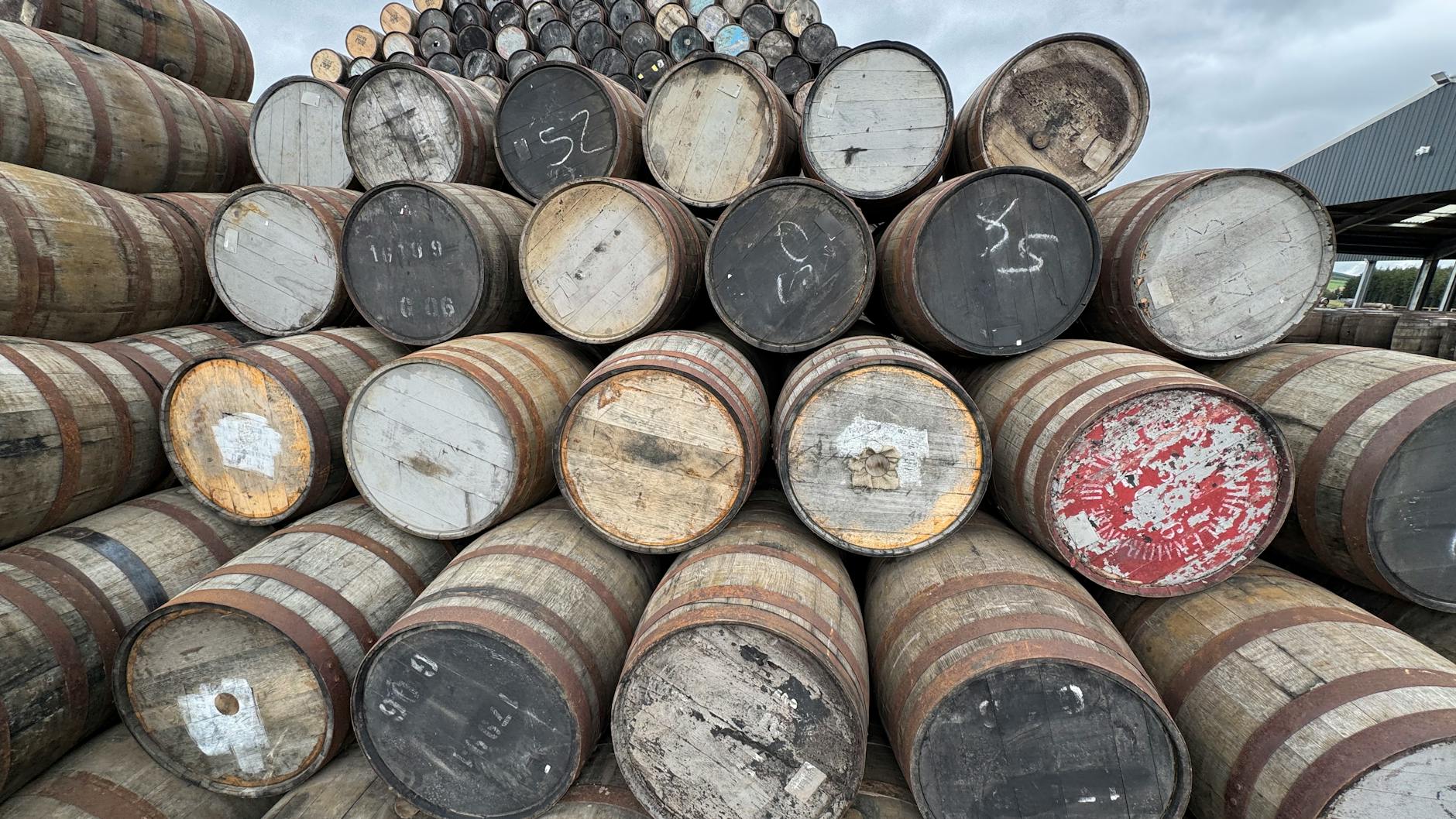
For investors who want exposure to tangible, appreciating alternative assets without the authentication complexity that defines the art market, other categories offer more transparent verification frameworks. Rare whisky casks, for instance, are traceable from distillery to bottling through documented fill records, independent warehousing certificates, and Scottish Whisky Association regulations. The Scotch whisky cask market has seen consistent demand growth, with rare single malt casks from distilleries such as Macallan, Springbank, and Port Ellen appreciating significantly over the past decade. Unlike art, where the authenticity of a single work can be disputed for years, a cask's provenance is embedded in its physical and regulatory documentation from the moment it is filled.
Diversified alternative asset portfolios that combine art — purchased with rigorous due diligence — alongside whisky casks, fine wine, and certified watches benefit from low correlation to public equity markets while spreading the idiosyncratic risks that cases like the Bankowski fraud illustrate. The lesson from New Jersey is not that art is uninvestable. It is that uninformed art investment is a different proposition entirely from the structured, verification-led approach that generates the headline auction returns most investors are targeting.
Frequently Asked Questions
How common is art forgery in the investment-grade market?
Industry estimates suggest that between 10% and 20% of works circulating on the secondary art market have some form of authenticity concern, ranging from misattribution to outright forgery. High-profile cases like the Bankowski scheme represent the most egregious end of a spectrum that also includes honest errors of attribution and incomplete provenance chains.
How can investors verify the authenticity of art before purchasing?
Serious buyers should commission independent scientific analysis, check the Art Loss Register, obtain a clean title search, and where possible secure authentication from the artist's foundation or estate. For Banksy works specifically, only pieces registered with Pest Control carry verifiable provenance. Purchasing through major auction houses provides an additional layer of institutional due diligence.
What happened in the Bankowski father-daughter art fraud case?
Erwin Bankowski and his daughter Karolina Bankowska, both of New Jersey, pleaded guilty to commissioning counterfeit artworks and passing them off as originals by artists including Andy Warhol, Pablo Picasso, Richard Mayhew, and Banksy. The scheme generated approximately $2 million in fraudulent proceeds before the pair were apprehended and charged.
Are whisky casks a safer alternative asset than art from a provenance perspective?
Whisky casks benefit from a more transparent and regulated provenance framework than art. Fill records, warehousing certificates, and Scottish Whisky Association regulations create a documented chain of custody from distillery to buyer. This does not eliminate all investment risk, but it substantially reduces the authentication uncertainty that characterises the art market.
What returns has blue-chip art delivered for investors?
Verified blue-chip art has delivered significant returns in the right conditions. Andy Warhol's Shot Sage Blue Marilyn sold for $195 million in 2022. Banksy's Love is in the Bin achieved £18.6 million in 2021, compared to a 2006 hammer price of £1.04 million. However, these returns are entirely contingent on authenticated provenance — a forged work carries zero investment value regardless of its visual resemblance to the original.
💼 Interested in alternative asset investment? Speak to the team at Whisky Cask Club — Singapore's leading whisky cask investment specialists.
💼 Interested in alternative asset investment? Speak to the team at Whisky Cask Club — Singapore's leading whisky cask investment specialists.