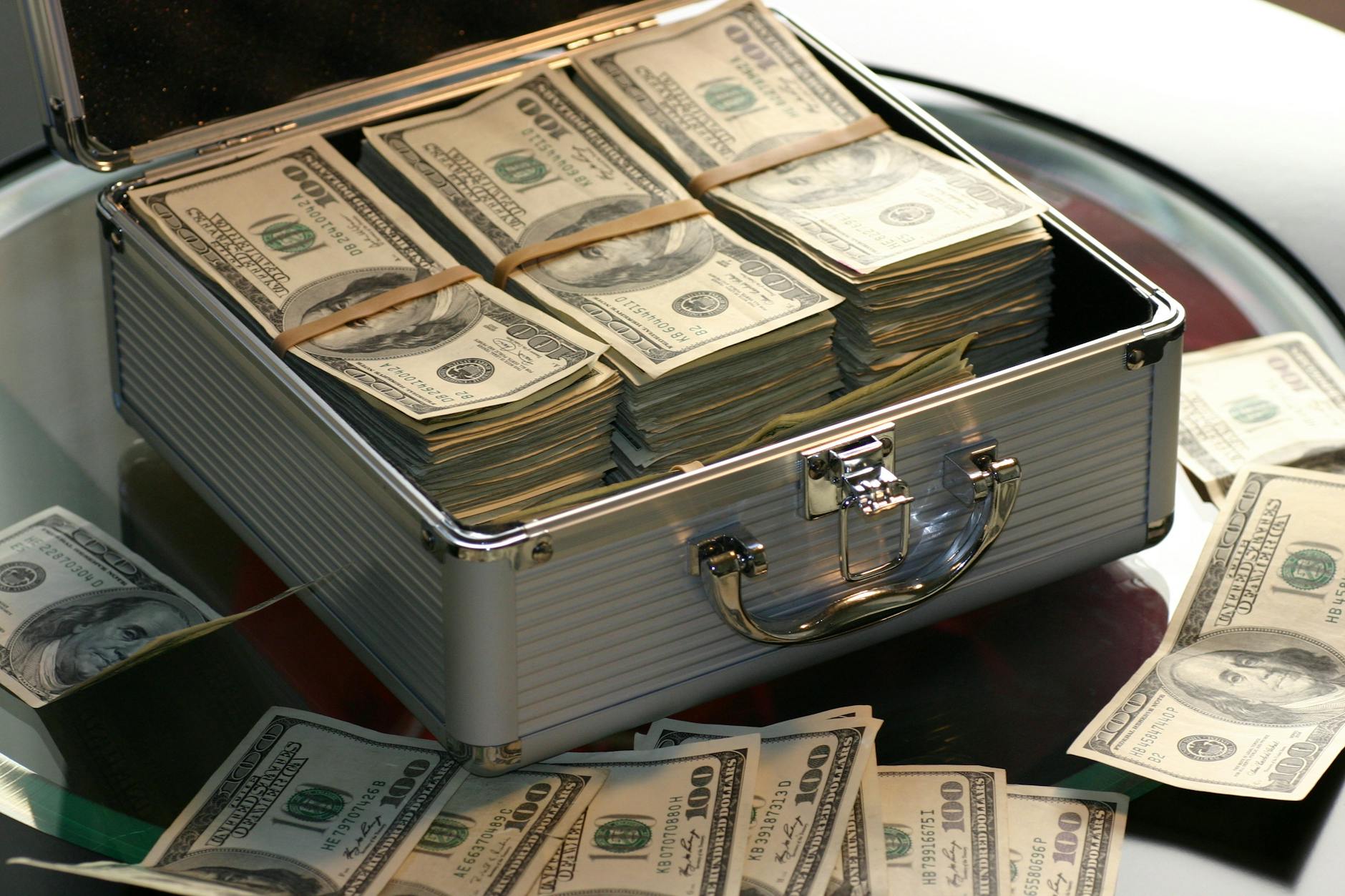
Studio 54 Fine Art's lean gallery model signals a structural shift in how art markets generate investor returns. Figurative contemporary works posted 28% appreciation over five years. Gallery sustainability is a first-order due diligence factor for any art allocation.
Fine Art Gallery Investment and the Rise of the Lean Operator
The global art market generated $65 billion in sales in 2023, according to the Art Basel and UBS Global Art Market Report — yet a growing share of that volume is being captured not by white-cube behemoths with nine-figure overhead, but by lean, operationally agile galleries that move faster, spend smarter, and court a younger, more data-literate collector base. Studio 54 Fine Art, founded by entrepreneur and self-described art-world outsider David Salle, has positioned itself at precisely this inflection point. Its model strips away the fixed costs of traditional gallery infrastructure and replaces them with flexible programming, digital-first reach, and a curated roster of emerging and mid-career artists whose secondary market trajectories are being tracked with the same rigour applied to any other alternative asset class.
For high-net-worth investors already allocating to whisky casks, fine wine, or vintage watches, the fine art gallery investment thesis deserves serious attention right now. The structural shift toward nimble gallery models is compressing the time between an artist's first institutional recognition and their first meaningful auction result — the window in which primary-market buyers have historically captured the most asymmetric upside. Understanding how operators like Studio 54 Fine Art are reshaping that window is directly relevant to any portfolio that includes art as an alternative asset.
Why the Traditional Gallery Model Is Under Financial Pressure
Legacy galleries carrying flagship premises in New York, London, and Hong Kong face annual rent bills that routinely exceed $1 million per location, according to industry estimates cited in the 2023 Baer Faxt dealer survey. Add staff costs, art fair participation fees — a single booth at Art Basel Miami Beach can run $75,000 to $150,000 before shipping and installation — and the capital requirements of holding inventory, and the fixed-cost burden becomes a significant drag on returns. For galleries representing artists whose works sell in the $10,000 to $100,000 range, the margin arithmetic is punishing.
Studio 54 Fine Art's approach sidesteps much of this overhead by operating with a reduced permanent footprint, leaning on pop-up programming, and using digital channels to drive primary sales. This is not a novel concept in isolation — online-only galleries have existed since the early 2010s — but the hybrid model, combining selective physical presence with digital infrastructure, is proving more durable than either extreme. Galleries that adopted hybrid models between 2020 and 2022 reported online sales averaging 37% of total revenue by 2023, up from under 10% pre-pandemic, according to the Art Basel/UBS report. That revenue diversification directly reduces the operational risk that has historically made gallery equity a poor investment and gallery-represented artists a volatile bet.
The investor implication is clear: galleries with lower fixed costs can afford to hold artist relationships through market downturns, provide more consistent price support at auction, and invest in the kind of institutional outreach — museum loans, critical essays, art fair placements — that builds the provenance trail that drives secondary market appreciation. A gallery that survives is a gallery that continues to steward an artist's market.
Which Artists Are Generating Investment-Grade Returns Right Now
Studio 54 Fine Art's founder has publicly noted an interest in artists working at the intersection of figuration and abstraction — a category that has significantly outperformed the broader contemporary art index over the past five years. According to Artprice's 2023 Contemporary Art Market Report, figurative works by artists aged 35 to 55 posted average auction price appreciation of 28% between 2018 and 2023, compared with 14% for the broader contemporary segment. That spread matters enormously when sizing an art allocation.
The gallery's emphasis on emerging and mid-career talent is also strategically sound from a return-on-capital perspective. Primary market purchases of works by artists who subsequently achieve major museum retrospectives have historically delivered 10x to 40x returns over 15-year holding periods, based on case studies tracked by ArtTactic's risk analysis platform. The challenge, of course, is selection — identifying which emerging artists will achieve that institutional recognition before the secondary market prices in the probability. Galleries with strong curatorial networks and a demonstrable track record of artist development are the key intermediary in that selection process.
Among the specific market signals worth monitoring: works by artists represented by lean, programme-focused galleries have shown stronger price consistency at auction than those from galleries that over-expand and subsequently contract. When a gallery closes or drops an artist, secondary market prices frequently correct by 20% to 40% in the 12 months following the announcement, according to data compiled by ArtTactic. Backing artists through galleries with sustainable business models is therefore not merely an ethical preference — it is a risk management decision.
"Primary market purchases of works by artists who subsequently achieve major museum retrospectives have historically delivered 10x to 40x returns over 15-year holding periods." — ArtTactic risk analysis data
Key Investment Metrics: Fine Art as an Alternative Asset
Before allocating to fine art through any channel — gallery primary purchases, auction secondary buys, or fractional ownership platforms — investors should benchmark against the following data points drawn from publicly available market research.
- Global art market size (2023): $65 billion in total sales — Art Basel/UBS Global Art Market Report
- Contemporary art 5-year appreciation (figurative works, 35–55 age cohort): +28% — Artprice Contemporary Art Market Report 2023
- Broader contemporary art segment 5-year appreciation: +14% — Artprice 2023
- Online gallery sales as share of total revenue (hybrid model galleries, 2023): 37%, up from under 10% pre-pandemic — Art Basel/UBS
- Art fair booth cost (Art Basel Miami Beach, single booth): $75,000–$150,000 before logistics — Baer Faxt 2023 dealer survey
- Secondary market price correction after gallery closure or artist drop: 20%–40% within 12 months — ArtTactic
- Estimated 15-year return on primary purchases (artists achieving major retrospectives): 10x–40x — ArtTactic case study data
The spread between figurative contemporary and the broader contemporary index — 14 percentage points over five years — is the core quantitative argument for selective, category-focused art investment rather than broad market exposure. Investors who treat art as a monolithic asset class will consistently underperform those who apply the same sector-rotation logic they use in equities or commodities.
How to Position a Fine Art Allocation Alongside Other Alternative Assets
Fine art shares several structural characteristics with other alternative assets that ByProvenance covers in depth: whisky casks, fine wine, and vintage watches all benefit from scarcity dynamics, long holding periods, and the compounding effect of provenance. Art, however, carries a unique additional variable — the artist's continued productivity, critical reception, and institutional relationships all materially affect the asset's value in ways that have no direct parallel in a whisky cask or a Patek Philippe reference. This makes gallery relationships, and the sustainability of those relationships, a first-order due diligence consideration rather than a secondary concern.
A practical allocation framework for a diversified alternative asset portfolio might treat fine art as a 5% to 15% sleeve, weighted toward primary market purchases of works by artists with demonstrated gallery support, at least one significant institutional exhibition in their biography, and a nascent but growing secondary market record. Works in the $20,000 to $150,000 price range offer the most liquidity optionality — large enough to attract serious auction house attention, small enough to find buyers in a downturn. Auction houses including Christie's, Sotheby's, and Phillips have all expanded their online bidding infrastructure since 2020, meaningfully improving liquidity at this price tier.
The emergence of galleries like Studio 54 Fine Art — operationally lean, digitally native, and focused on artists with genuine critical momentum rather than manufactured hype — represents a structural improvement in the primary market infrastructure available to serious art investors. The galleries most likely to steward artist markets through a full economic cycle are those with the lowest fixed-cost exposure and the strongest curatorial conviction. Identifying and building relationships with those galleries is itself a form of due diligence that pays dividends across an entire art allocation.
What to Watch: Key Signals for Fine Art Investors in the Next 12 Months
The following forward indicators are worth monitoring for anyone with an active or prospective fine art allocation heading into 2025 and 2026.
- Art Basel Hong Kong (March 2025): Asian collector demand has been the primary growth driver for contemporary art over the past three years. Booth sell-through rates and VIP preview volume will signal whether that demand has sustained through the broader luxury slowdown.
- Sotheby's and Christie's contemporary evening sale results (May and November 2025): Watch the buy-in rate for emerging and mid-career works — a buy-in rate above 25% signals a softening secondary market and potential primary market entry opportunity.
- Artprice's annual Artprice100 index rebalancing: This blue-chip art index tracks the 100 highest-selling artists at auction. New entrants to the index frequently see 15% to 30% price appreciation in the 12 months following inclusion.
- Gallery closure data (Baer Faxt annual survey, Q1 2025): A sustained increase in gallery closures would signal market stress and create secondary buying opportunities for works by orphaned artists with strong institutional records.
- Fractional art platform transaction volumes: Platforms including Masterworks have reported cumulative investor returns averaging 14.7% net annualised on exited positions. Sustained volume growth would confirm retail capital continuing to enter the asset class, providing a demand floor for primary market works.
Frequently Asked Questions
What is fine art gallery investment and how does it generate returns?
Fine art gallery investment refers to purchasing works through a gallery's primary market — typically at the artist's current price level — with the expectation of appreciation as the artist's career develops. Returns are generated when the work is resold at auction or privately at a higher price. The primary market advantage is access to works before auction price discovery, which is where the most significant upside has historically been captured. Returns of 10x to 40x over 15-year holding periods have been documented for artists who achieve major museum retrospectives, according to ArtTactic case study data.
How does a gallery's business model affect the investment value of the art it sells?
A gallery's financial sustainability directly affects its ability to support an artist's market over time. Galleries with high fixed costs — large permanent premises, extensive staff, heavy art fair schedules — are more vulnerable to closure during market downturns. When a gallery closes or drops an artist, secondary market prices for that artist's work frequently correct by 20% to 40% within 12 months, according to ArtTactic. Lean, hybrid-model galleries with lower overhead are better positioned to provide consistent market stewardship, which is a material factor in long-term price appreciation.
How does fine art compare to whisky casks or fine wine as an alternative asset?
Fine art, whisky casks, and fine wine all share scarcity dynamics, long holding periods, and provenance-driven value appreciation. Art carries additional idiosyncratic risk tied to the artist's career trajectory and critical reception, making gallery due diligence essential. Fine wine and whisky casks offer more predictable supply constraints and, in some cases, shorter liquidity cycles. A diversified alternative asset portfolio might allocate 5%–15% to fine art alongside whisky and wine positions, using art's higher return ceiling to offset its higher selection risk.
Which price range offers the best liquidity for fine art investors?
Works in the $20,000 to $150,000 range offer the most practical liquidity for alternative asset investors. This tier attracts competitive bidding at Christie's, Sotheby's, and Phillips — all of which have expanded online bidding infrastructure since 2020 — while remaining accessible to a broad enough buyer pool to support resale in most market conditions. Works below $10,000 are harder to place at major auction houses, while works above $500,000 require a significantly larger buyer pool to achieve competitive hammer prices.
Source: Whisky Bulletin coverage of cask investment on Whisky Bulletin.
💼 Interested in alternative asset investment? Speak to the team at Whisky Cask Club — Singapore's leading whisky cask investment specialists.