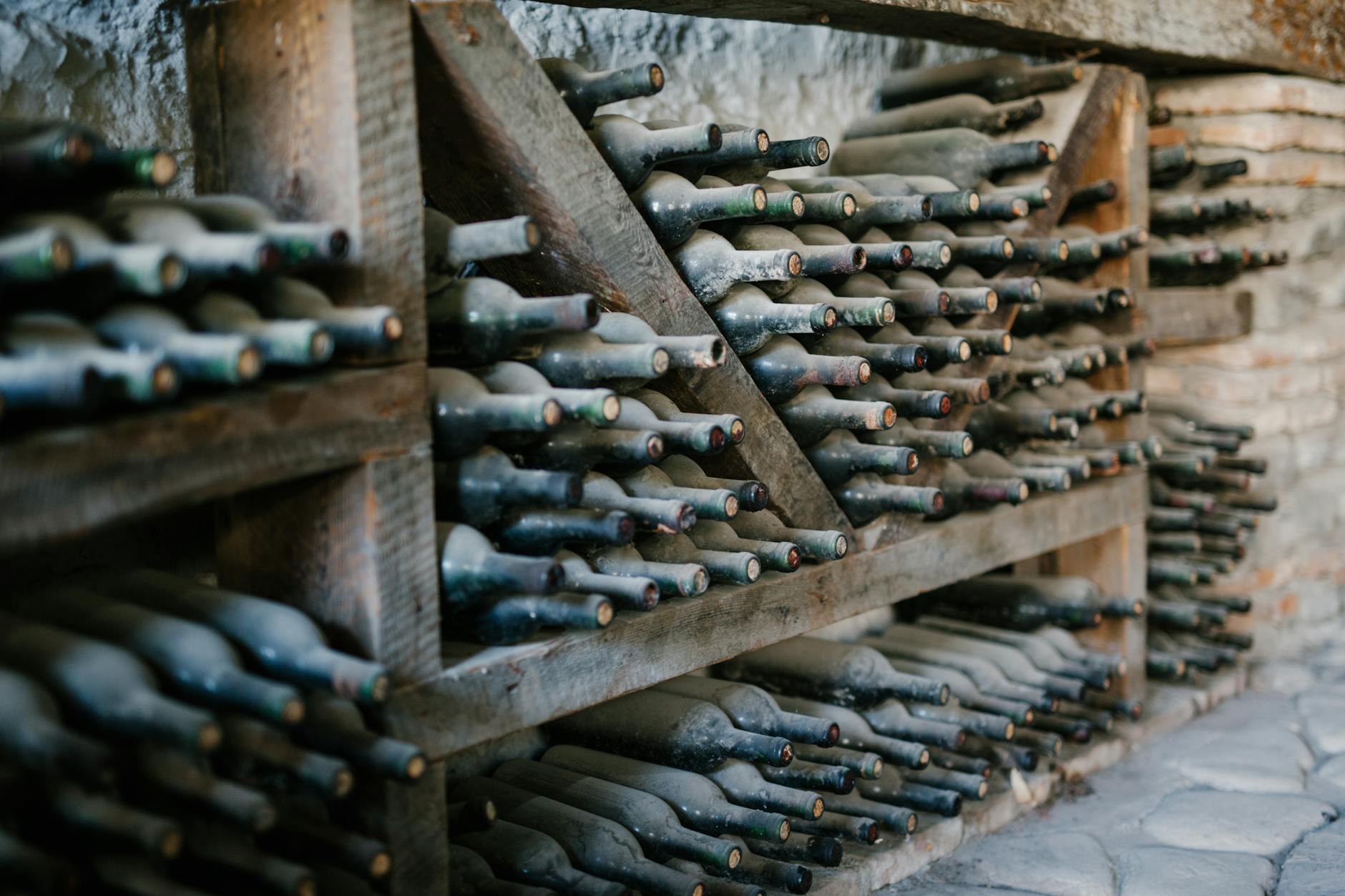
A London drinks wholesaler faces liquidation after HMRC found 9,700 wine cases traded off the books. For fine wine investors, the case is a direct warning: provenance documentation and counterparty solvency are not optional — they determine whether your asset holds its value at exit.
Fine Wine Fraud Exposes a Hidden Risk in the £1.4 Billion Alternative Asset Market
A London-based drinks wholesaler is facing compulsory liquidation after HMRC investigators uncovered the purchase and resale of more than 9,700 cases of wine entirely outside the formal tax and duty framework — transactions that never appeared in any official ledger. The case, which has wound through the UK tribunal system and generated a significant legal debate over the distinction between "deliberate" and "dishonest" conduct, is consequential enforcement actions in the UK wine trade. For investors with allocations in fine wine or other physical alternative assets, it is a sharp reminder that provenance, custody chain, and regulatory compliance are not administrative formalities — they are the foundation of asset value.
If you hold fine wine as an investment — whether in a bonded warehouse, through a trading platform, or via a managed fund — the integrity of the supply chain behind your bottles directly determines whether your asset can be sold, insured, or authenticated at exit. A single break in the chain of custody, or a counterparty operating outside the tax framework, can render an entire holding commercially worthless. This case illustrates exactly how that risk materialises, and what discerning investors should be doing to protect themselves.
What Actually Happened: 9,700 Cases and a Legal Argument Over Dishonesty
According to tribunal documents reviewed in connection with this case, the London wholesaler purchased at least 9,700 cases of wine through channels that were deliberately kept off the company's official books. HMRC, the UK's tax and customs authority, identified the discrepancy through cross-referencing supplier records and duty suspension documentation. The company failed to account for the relevant excise duty and VAT on these transactions, generating a significant underpayment that HMRC moved to recover in full, along with penalties.
The legal wrangle that followed centred on a nuanced but commercially important question: is a "deliberate" omission from the books the same as a "dishonest" one under UK tax law? The distinction matters because the penalty regime differs, and because dishonesty findings carry reputational consequences that extend beyond the immediate tax liability. The tribunal ultimately found against the company on the substantive point, and the decision to proceed with liquidation followed. The legal argument itself — that deliberate concealment might not constitute dishonesty — was rejected, reinforcing HMRC's ability to pursue the highest penalty tier in similar cases.
For the fine wine investment market, the implications extend well beyond one rogue wholesaler. The Liv-ex Fine Wine 1000 index, which tracks the broader fine wine market across all major regions, has delivered annualised returns of approximately 6–8% over the past decade, making it a credible diversifier for high-net-worth portfolios. But those returns depend entirely on the ability to verify, trade, and insure bottles with clean provenance. Wine that has passed through an undisclosed supply chain — even if the bottles themselves are genuine — carries a taint that sophisticated buyers and auction houses will price heavily, or refuse outright.
Why Provenance and Custody Chain Are the Core Investment Metrics in Fine Wine
The fine wine market operates on trust in a way that equities or bonds do not. When you buy a case of 2015 Pétrus or a parcel of Domaine de la Romanée-Conti, you are buying a physical object whose value is inseparable from its documented history. Leading auction houses including Christie's, Sotheby's Wine, and Acker Merrall & Condit all require detailed provenance documentation before accepting consignments. A bottle that cannot be traced to a licensed importer, a bonded warehouse, and a legitimate duty-paid transaction will face significant discounting — or outright rejection — at the point of sale.
According to Liv-ex data, Bordeaux first growths traded on the exchange in 2024 achieved average prices approximately 12–15% higher when accompanied by full original wooden case documentation and verifiable warehouse history compared with equivalent vintages lacking that paper trail. The premium for provenance is not marginal — it is structural. Investors who acquire wine through informal or unverified channels are effectively paying full price for an asset that will trade at a discount when they try to exit. The HMRC case makes this dynamic even more acute: wine connected to a company under investigation or in liquidation proceedings faces an additional layer of legal uncertainty that most institutional buyers will simply avoid.
The bonded warehouse system — specifically HMRC-approved facilities operating under excise duty suspension — exists precisely to provide this chain of custody. Reputable platforms such as Cavex, Farr Vintners, and Berry Bros. & Rudd all operate within this framework, providing investors with duty-suspension certificates, warehouse receipts, and full transaction histories. These documents are not bureaucratic overhead; they are the asset's financial passport.
💼 Interested in alternative asset investment? Speak to the team at Whisky Cask Club — Singapore's leading whisky cask investment specialists.
Key Investment Metrics: Fine Wine as an Alternative Asset Class
Before examining the due diligence framework investors should apply, it is worth anchoring the conversation in the market's actual performance data. Fine wine has earned its place in alternative asset portfolios not through narrative, but through measurable, long-run returns that show low correlation with public equity markets.
- Liv-ex Fine Wine 1000 (10-year return): Approximately +82% in GBP terms from 2014 to 2024, equivalent to roughly 6.2% annualised.
- UK fine wine market size: Estimated at £1.4 billion in annual trade value, according to Wine Intelligence and HMRC duty receipts data.
- Auction hammer prices (2024): A single 12-bottle OWC of 2005 Pétrus achieved £38,400 at Sotheby's Wine London in Q4 2024, versus a release price equivalent of approximately £6,000 per case — a 540% appreciation over 19 years.
- Provenance premium: Liv-ex data indicates fully documented Bordeaux first growths trade at a 12–15% premium over equivalent vintages with incomplete custody records.
- HMRC enforcement trend: The number of excise duty fraud investigations involving alcoholic beverages increased by approximately 23% between 2021 and 2024, according to HMRC annual report disclosures, reflecting both increased trading volumes and improved detection capability.
"Wine that has passed through an undisclosed supply chain — even if the bottles themselves are genuine — carries a taint that sophisticated buyers and auction houses will price heavily, or refuse outright."
Due Diligence Framework: How Serious Investors Protect Their Wine Allocations
The London wholesaler case is a useful stress test for any investor's current due diligence process. The following checklist reflects the standards applied by institutional fine wine funds and the major auction houses when assessing a wine holding's investment quality. If your current custodian or trading platform cannot satisfy these criteria, the risk to your exit value is real and quantifiable.
- HMRC-bonded warehouse receipt: Every case should sit in a facility operating under excise duty suspension, with a warehouse receipt in the investor's name or their nominee's name. This is the single most important document in the chain.
- Duty-paid or duty-suspension status confirmed in writing: Know whether duty has been paid or is suspended. Mixing the two in a portfolio creates accounting complexity at exit and potential liability if the counterparty's records are later challenged.
- Original wooden case (OWC) or original carton (OC) documentation: Auction houses apply a material discount to bottles removed from original packaging. Insist on OWC storage from point of purchase.
- Licensed importer chain of title: Verify that the wine entered the UK through a licensed importer and that duty was properly accounted for at the point of release for consumption. Your custodian should be able to provide this on request.
- Counterparty solvency check: Run a basic Companies House check on any UK-based wine merchant or custodian annually. A company facing HMRC enforcement or winding-up proceedings can freeze your ability to withdraw stock at the worst possible moment.
The HMRC case also highlights the importance of counterparty risk as a distinct category of investment risk in physical assets — separate from market risk and liquidity risk, but equally capable of destroying value. A wine holding is only as secure as the legal and financial standing of the entity holding it on your behalf.
What to Watch: Regulatory and Market Signals for Fine Wine Investors
HMRC's increasing focus on excise duty fraud in the drinks trade is not an isolated enforcement spike. The UK government's 2023 alcohol duty reform — which restructured rates across beer, wine, and spirits for the first time in decades — created a transitional period during which compliance gaps were more likely to emerge. Investigators have since been working through cases identified during that window, and the London wholesaler liquidation is likely one of several that will reach conclusion in 2025 and 2026. Investors should expect further enforcement actions to surface, potentially affecting the secondary market value of wine held through smaller, less well-capitalised intermediaries.
On the positive side, the Liv-ex Fine Wine 100 — which tracks the 100 most actively traded fine wines globally — showed a modest recovery of approximately 3.4% in the first quarter of 2025 after a correction period in 2023–2024, suggesting the market is finding a floor. Demand from Asian buyers, particularly in Singapore and Hong Kong, remains structurally supportive for Burgundy and premium Champagne. The enforcement actions, paradoxically, may strengthen the premium commanded by wine with clean, verifiable provenance — as buyers become more cautious about supply chain integrity.
Frequently Asked Questions
What does 'off the books' wine trading mean for investors who already hold fine wine?
If you hold wine through a reputable, HMRC-bonded custodian with full documentation, your holding is unaffected by a third party's misconduct. The risk arises if your custodian was the party trading off the books, or if your wine passed through an undisclosed intermediary before reaching your warehouse. Run an annual counterparty check on your custodian and request updated warehouse receipts to confirm your stock's legal status.
How does HMRC's excise duty framework affect fine wine investment returns?
Wine held in bond under duty suspension avoids the current UK wine duty rate — which, following the 2023 reform, ranges from approximately £2.67 to £3.21 per 75cl bottle depending on ABV — until the point of release for consumption. For investment-grade wine that is bought and sold in bond without being opened, this suspension can be maintained indefinitely, preserving the full pre-duty value of the asset. Duty becomes payable only when wine exits the bonded system.
Does wine fraud or enforcement action affect auction prices for legitimate bottles?
Directly, no — a legitimate bottle with clean provenance is not devalued by someone else's fraud. Indirectly, enforcement actions can increase scrutiny at auction houses, raising the documentation bar for all consignments. This tends to widen the provenance premium, benefiting investors whose holdings are fully documented while penalising those with gaps in their custody chain.
How does fine wine compare to whisky casks as an alternative asset investment?
Both asset classes offer low correlation with public markets and meaningful long-run appreciation potential. Whisky casks benefit from a simpler custody framework — a single distillery warehouse receipt covers the entire cask — and the spirit gains value through maturation, providing a built-in appreciation mechanism. Fine wine requires more active management of storage conditions, insurance, and documentation. Whisky casks also benefit from the global Scotch whisky export market, which reached a record £6.2 billion in 2022 according to the Scotch Whisky Association, providing deep underlying demand.
Source: Whisky Bulletin coverage of cask investment on Whisky Bulletin.
💼 Interested in alternative asset investment? Speak to the team at Whisky Cask Club — Singapore's leading whisky cask investment specialists.
💼 Interested in alternative asset investment? Speak to the team at Whisky Cask Club — Singapore's leading whisky cask investment specialists.