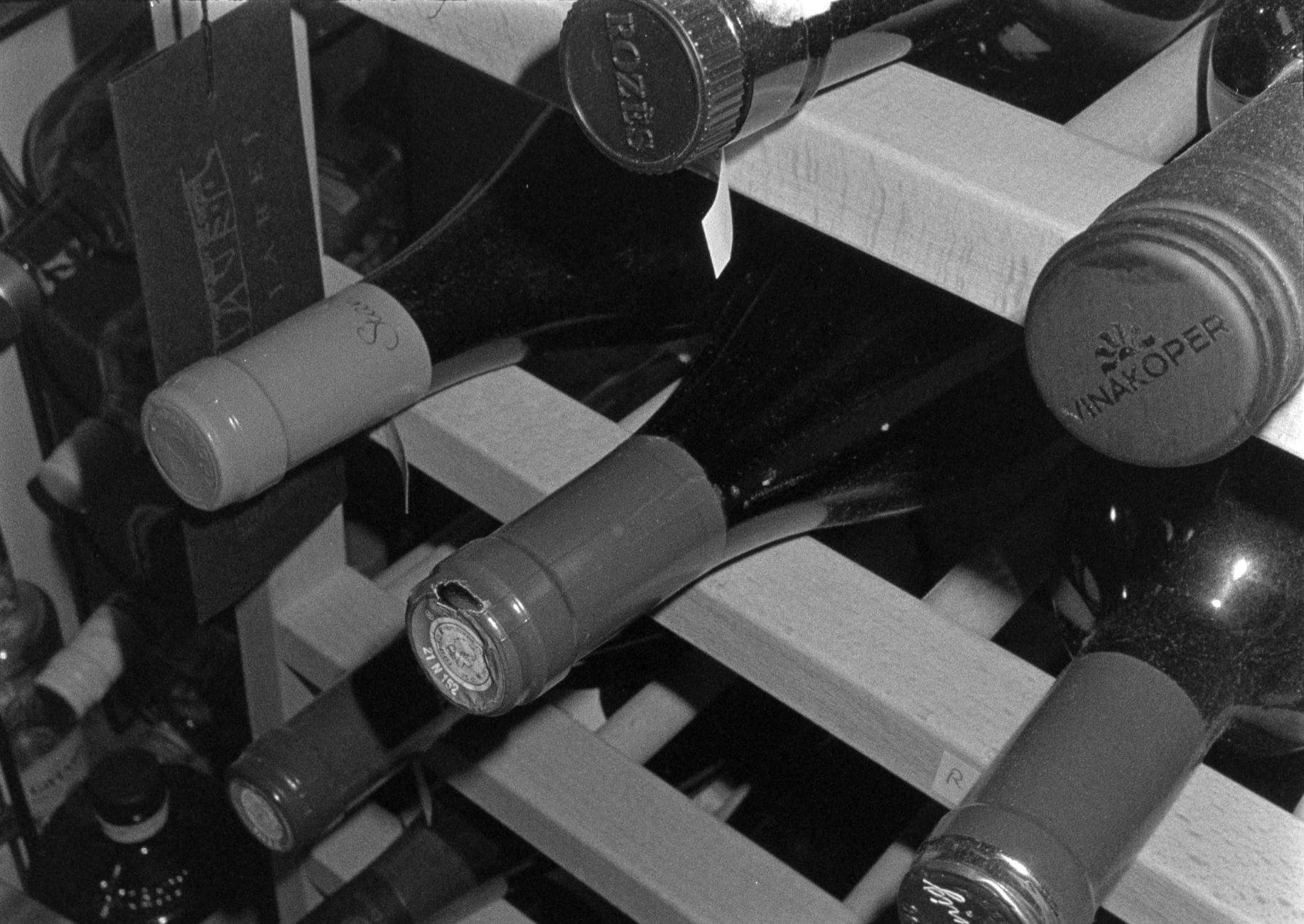
Fine wine's Gen Z problem is a structural demand failure, not a lifestyle trend. The Liv-ex Fine Wine 1000 fell 12% in 2023–2024. Ultra-scarce icons hold value; mid-market Bordeaux faces real headwinds. Whisky casks are outperforming as capital rotates.
Fine Wine Investment Faces a Structural Demand Problem
The Liv-ex Fine Wine 1000 index declined approximately 12% across 2023 and into 2024, marking the sharpest correction the benchmark has recorded since the post-2011 Bordeaux crash. For investors who allocated capital to fine wine expecting the asset class to behave like a one-way inflation hedge, that drawdown demanded an explanation. The industry's default answer — that younger consumers simply do not drink wine the way previous generations did — turns out to be incomplete at best and dangerously misleading at worst. The real story is a structural communication failure that is quietly repricing the demand side of the fine wine investment equation.
If you hold fine wine in a bonded warehouse, or you are considering an allocation to the asset class, this matters directly to your exit strategy. Fine wine is not a yield instrument — its return profile depends almost entirely on a functioning secondary market populated by buyers willing to pay a premium over time. When the pipeline of new buyers thins, prices compress. Understanding why that pipeline is thinning, and whether it is reversible, is the most important due diligence question a fine wine investor can ask right now.
What the Data Actually Shows About Gen Z and Wine
Wine Intelligence's 2024 Global Report estimated that regular wine drinkers in the 18–24 demographic fell by roughly 17% in the United States between 2021 and 2024, a decline that accelerated following the post-pandemic normalisation of on-trade spending. IWSR data corroborates the trend, showing still wine volumes in key Western markets contracting at a compound annual rate of around 2% since 2022. These are not trivial numbers for a category that depends on volume at the base of the market to sustain aspirational demand at the top. Prestige wine commands premium prices precisely because a broad consumer base aspires upward — strip out that base, and the premium tier loses its gravitational anchor.
However, the same IWSR data shows that Gen Z consumers are not abandoning alcohol uniformly. Spirits — particularly Japanese whisky, premium tequila, and single malt Scotch — are gaining share among the same cohort that is walking away from wine. Rare Whisky 101's Apex 1000 index, which tracks the secondary market value of the 1,000 most sought-after Scotch whiskies, returned approximately 8% in 2023 even as fine wine indices fell. That divergence is not coincidental. It reflects a category that has invested heavily in storytelling, scarcity signalling, and cultural relevance — precisely the tools wine has neglected.
The core issue is that wine has spent the better part of two decades optimising its language and marketing for an audience that already buys it, rather than building the next generation of buyers. Appellation rules, vintage charts, and 100-point scores are shorthand that means everything to a 55-year-old collector in London and almost nothing to a 26-year-old professional in Singapore or Seoul. For investors, this is not a cultural observation — it is a demand-side risk that needs to be priced into any long-horizon fine wine position.
"The Liv-ex Fine Wine 1000 fell approximately 12% in 2023–2024 — the sharpest correction since the post-2011 Bordeaux crash. The cause is not just macroeconomic; it is structural demand erosion at the consumer base."
How This Demand Shift Affects Fine Wine Valuations
Auction data from Christie's, Sotheby's, and Zachys tells a nuanced story. Trophy Burgundy — Domaine de la Romanée-Conti, Leroy, and Rousseau — has held its value better than Bordeaux first growths, with DRC's La Tâche averaging over £10,000 per bottle at major auctions through 2024. This resilience reflects ultra-scarcity rather than broad consumer demand: production at DRC is measured in the low thousands of cases per year, and the buyer pool is a small, wealthy cohort that is relatively insulated from generational consumption trends. But Bordeaux tells a different story. Château Lafite Rothschild 2012, once a speculative darling driven by Chinese buyer demand, has retraced significantly from its 2021 peak, with Liv-ex trade data showing average prices down over 20% from the highs. The lesson is that fine wine investment returns are increasingly bifurcating: ultra-scarce icons hold, while volume-produced prestige labels face structural headwinds.
The secondary market mechanics reinforce this bifurcation. Platforms like Wine-Searcher and Liv-ex's own exchange show liquidity concentrating in a narrower band of producers. Merchants report that the mid-market — classified Bordeaux châteaux outside the first growths, Rhône names, and mid-tier Burgundy — is experiencing the most pronounced softness. This is precisely the tier where many retail investors built positions during the 2020–2022 run-up, making the current environment a genuine stress test for portfolios assembled on momentum rather than scarcity fundamentals.
5 Key Investment Metrics for Fine Wine in 2025
- Liv-ex Fine Wine 1000 drawdown: Approximately -12% from peak (2023–2024), with Bordeaux 500 sub-index underperforming the broader benchmark by a further 4–5 percentage points.
- DRC La Tâche average auction price: Consistently above £10,000 per bottle at Christie's and Sotheby's through 2024, demonstrating icon-tier resilience.
- Gen Z wine participation decline: Down approximately 17% among US 18–24 drinkers between 2021 and 2024, per Wine Intelligence Global Report 2024.
- Rare Whisky 101 Apex 1000 return: Approximately +8% in 2023, outperforming fine wine indices during the same period, highlighting the alternative asset divergence.
- IWSR still wine volume CAGR: Approximately -2% per annum in core Western markets since 2022, signalling structural rather than cyclical volume contraction.
These five data points together construct a clear investment narrative. Fine wine is not a monolithic asset class — it is a spectrum running from ultra-scarce icons with defensible value to volume-prestige labels that are increasingly exposed to consumer base erosion. Investors need to audit their holdings against this spectrum before the next liquidity event forces the decision for them.
Where Smart Capital Is Rotating: Whisky Casks and Provenance Assets
The same high-net-worth investors who built fine wine allocations over the past decade are increasingly diversifying into Scotch whisky casks, where the demand dynamics are structurally different. Scotch whisky benefits from a young consumer base that actively engages with the category's heritage narrative — distillery releases from Macallan, Springbank, and Glenfarclas routinely sell out within hours of announcement, and the secondary market for allocated bottles has remained buoyant even as wine corrected. Whisky Cask Club, operating out of Singapore, has reported sustained demand from Asian investors specifically, a cohort that is simultaneously cooling on Bordeaux and warming to single malt as a provenance asset. The scarcity mechanics of a whisky cask — fixed supply, natural maturation, and regulatory minimum ageing requirements — provide the kind of supply constraint that fine wine's appellation system used to deliver before production volumes expanded.
Investors considering a rotation or a new allocation should weigh the following: whisky casks are illiquid over the short term but offer a maturing asset whose intrinsic value compounds with age, independent of secondary market sentiment. A cask of Speyside single malt purchased at new-make prices and held for 12 years can be bottled, sold through auction, or traded as a whole cask — providing multiple exit routes that fine wine's bottle-based market does not replicate. The Scotch Whisky Association reported that Scotch exports hit £6.2 billion in 2022, the highest figure on record, providing the macro tailwind that underpins cask valuations at the wholesale level.
What to Watch: Forward-Looking Signals for Fine Wine Investors
Several near-term catalysts will clarify whether fine wine's demand problem is cyclical or structural. First, watch Bordeaux en primeur campaign results for the 2024 vintage — pricing decisions by the châteaux will signal whether producers are willing to reset to market-clearing levels or continue defending prices that are increasingly disconnected from secondary market reality. Second, monitor Liv-ex membership data: if merchant activity on the exchange contracts further, it will confirm that mid-market liquidity is deteriorating beyond what the index drawdown already implies. Third, track Sotheby's and Christie's quarterly wine auction totals through the second half of 2025 — a sustained decline in hammer totals would indicate that even the trophy end of the market is feeling demand pressure. Any investor with a fine wine position representing more than 15% of their alternative asset allocation should treat these signals as active portfolio management triggers, not background noise.
Frequently Asked Questions
Is fine wine still a viable investment in 2025?
Fine wine remains viable at the ultra-scarce end of the market — producers like Domaine de la Romanée-Conti and a handful of icon Burgundy domaines have demonstrated price resilience even through the 2023–2024 correction. However, the mid-market faces genuine structural headwinds from declining consumer base participation and softening secondary market liquidity. Investors should concentrate positions in demonstrably scarce producers rather than holding broad classified Bordeaux exposure.
Why are Gen Z consumers avoiding wine, and does it matter for investors?
Wine Intelligence data shows a 17% decline in regular wine drinking among US 18–24 year olds between 2021 and 2024. The primary cause appears to be the industry's failure to build cultural relevance with younger consumers, rather than a blanket rejection of alcohol. For investors, this matters because a functioning fine wine market requires a broad aspirational consumer base to sustain demand at the prestige tier — erosion at the base eventually affects valuations at the top.
How do whisky casks compare to fine wine as an alternative investment?
Whisky casks offer a maturing, supply-constrained asset with multiple exit routes — whole cask sale, bottling, or auction. The Rare Whisky 101 Apex 1000 returned approximately 8% in 2023 while the Liv-ex Fine Wine 1000 fell around 12%, illustrating the divergence. Casks are illiquid over the short term but benefit from natural value appreciation through maturation, regulatory ageing requirements, and a younger, growing consumer base that fine wine currently lacks.
What are the key risks in fine wine investment right now?
The primary risks are secondary market illiquidity in the mid-tier, continued volume contraction in core consumer markets, and Bordeaux château pricing that has been slow to reset to market-clearing levels. Currency risk is also relevant for Asian investors holding GBP or EUR-denominated assets. Concentration in a narrow band of ultra-scarce producers mitigates some of these risks but introduces its own liquidity constraints at exit.
Source: Whisky Bulletin coverage of japanese whisky on Whisky Bulletin.
💼 Interested in alternative asset investment? Speak to the team at Whisky Cask Club — Singapore's leading whisky cask investment specialists.
💼 Interested in alternative asset investment? Speak to the team at Whisky Cask Club — Singapore's leading whisky cask investment specialists.