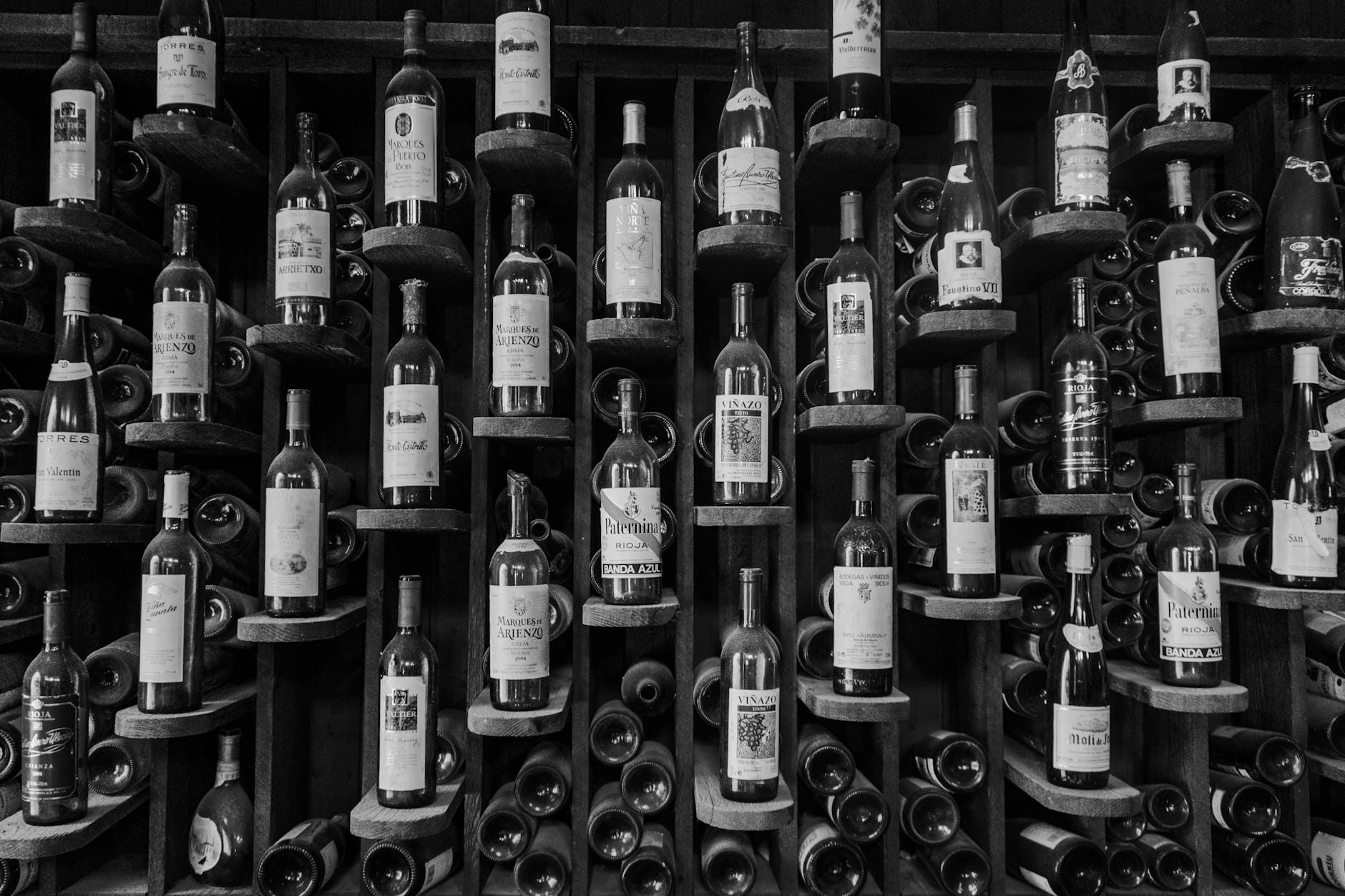
Despite the wellness movement and podcasters like Steven Bartlett amplifying anti-alcohol sentiment, investment-grade fine wine continues to appreciate. Liv-ex returned 8.6% over five years; DRC La Tâche 2015 gained over 130%. Supply constraints and institutional demand remain intact.
Fine Wine Investment Faces a Cultural Headwind — and That Creates Opportunity
Steven Bartlett, the 31-year-old entrepreneur and host of The Diary of a CEO — one of the world's most-downloaded podcasts with over 7 million monthly listeners — recently devoted an episode to the aftermath of drinking three glasses of wine. The episode described three days of cognitive fog, disrupted sleep, and diminished productivity. For the wellness industry, it was a marketing gift. For fine wine investors paying attention to sentiment cycles, it was something more useful: a signal.
If you manage a portfolio with meaningful alternative asset exposure, the accelerating cultural war on alcohol deserves your attention — not because it threatens fine wine values, but because the evidence suggests it may entrench them. Scarcity, prestige, and contrarian demand are the engines of fine wine appreciation. A shrinking casual consumer base does not erode investment-grade Burgundy or Bordeaux; it concentrates ownership among those who understand what they hold. The investors who misread cultural noise as fundamental market risk are the ones who sell at the wrong time.
What the Data Says About Fine Wine Price Appreciation
The Liv-ex Fine Wine 1000 — the broadest benchmark index tracking secondary market prices across the world's leading wine regions — returned approximately 8.6% over the five-year period to the end of 2024, outperforming many traditional fixed-income instruments over the same window. Burgundy, the index's strongest regional component, saw individual domaine releases appreciate far beyond that average. A case of Domaine de la Romanée-Conti La Tâche 2015 that traded at around £18,000 per case at release has changed hands at auction for upwards of £42,000, representing appreciation of more than 130% across the holding period.
Bordeaux first growths tell a similar story at scale. Château Pétrus 2000 achieved a hammer price of approximately £33,000 per case at Sotheby's London in 2023, against a release price that would have been a fraction of that figure two decades prior. Acker Merrall & Condit, one of the world's largest fine wine auction houses, reported total sales exceeding $100 million in 2023 alone, underlining the depth of institutional and high-net-worth demand that persists regardless of podcast wellness cycles. The secondary market for investment-grade wine is not driven by the same consumer who is reconsidering their Thursday night Pinot Grigio.
💼 Interested in alternative asset investment? Speak to the team at Whisky Cask Club — Singapore's leading whisky cask investment specialists.
Why the Wellness Movement Does Not Threaten Investment-Grade Wine
The conflation of mass-market alcohol consumption with investment-grade fine wine is persistent category errors in alternative asset analysis. When commentators cite falling alcohol consumption among 18-to-34-year-olds — a trend documented by the IWSR, which recorded a 5% volume decline in global alcohol consumption in 2023 — they are describing a demographic that was never the primary buyer of a £500 bottle of Montrachet. The buyers of investment-grade wine are concentrated in the upper wealth deciles, and that cohort has shown no meaningful retreat from the category.
In fact, the dynamics work in the opposite direction. As casual wine consumption softens, production of premium and ultra-premium wine has not meaningfully increased. Burgundy's Grand Cru vineyards are geographically fixed by French appellation law — there are only 33 Grand Cru appellations, covering roughly 560 hectares in total. Romanée-Conti itself covers just 1.8 hectares. No podcast episode changes those numbers. Supply constraints in fine wine are geological and regulatory, not subject to revision by wellness influencers.
"The buyers of investment-grade Burgundy are not the same people reconsidering their Thursday night glass of wine — and the vineyards producing it cannot expand to meet demand regardless of what happens to sentiment."
Consider the parallel with whisky cask investment. When health consciousness began suppressing volume sales of blended Scotch in key markets during the 2010s, the secondary market for aged single malt casks moved in the opposite direction. According to Rare Whisky 101 data, the apex 1000 index — tracking the most sought-after bottles — appreciated by over 185% between 2015 and 2020. Demand compression at the mass-market level coincided with intensifying scarcity and price appreciation at the top of the quality pyramid. Fine wine is following an analogous trajectory.
Key Investment Metrics: Fine Wine as an Alternative Asset
- Liv-ex Fine Wine 1000 five-year return (to end-2024): approximately +8.6%
- DRC La Tâche 2015 appreciation: from ~£18,000 at release to ~£42,000 at auction — over 130% gain
- Château Pétrus 2000 hammer price (Sotheby's London, 2023): approximately £33,000 per case
- Acker Merrall & Condit 2023 total auction sales: exceeding $100 million
- IWSR global alcohol volume decline (2023): approximately 5% — concentrated in mass-market segments
- Burgundy Grand Cru total area: approximately 560 hectares — fixed by appellation law, non-expandable
These figures are not incidental. They describe a market where the investment case rests on hard supply limits, durable collector and institutional demand, and a secondary auction infrastructure that has continued to grow in turnover even as wellness narratives have intensified. The correlation between podcast-driven wellness sentiment and investment-grade wine auction results is, empirically, close to zero.
The Contrarian Case: When Reputational Pressure Creates Entry Points
Experienced alternative asset investors will recognise a familiar pattern. When a category faces sustained negative cultural commentary — whether it is tobacco equities in the 1990s, fossil fuel assets in the 2010s, or alcohol in the 2020s — retail sentiment often suppresses prices in ways that create entry opportunities for patient capital. The wine industry has been slow to mount a coordinated rebuttal to the wellness movement, and that hesitancy has contributed to a narrative vacuum that podcasters like Bartlett are filling. But narrative and fundamental value are different instruments.
The investors best positioned to benefit are those who distinguish between the consumer alcohol market — which is genuinely facing structural headwinds from demographic change, low-alcohol product competition, and health awareness — and the investment-grade fine wine market, where the relevant variables are vintage quality, provenance documentation, storage conditions, and auction house depth. A well-cellared case of Château Lafite Rothschild 2010 does not become less valuable because a podcaster had a difficult morning. Provenance, condition, and scarcity remain the only variables that matter at the investment end of the market.
For investors considering entry or rebalancing, the current moment of heightened wellness discourse may represent a window before the wine industry finds its voice and corrects the narrative. The Bordeaux négociant system, the London fine wine merchant network, and the major auction houses — Christie's, Hart Davis Hart, Sotheby's Wine — all continue to report healthy buyer registration and strong hammer-to-estimate ratios. Sentiment is a lagging indicator in this market; fundamentals lead.
What to Watch: Key Signals for Fine Wine Investors
Forward-looking investors should monitor several indicators over the coming 12 to 18 months. First, the Liv-ex secondary market indices — particularly the Burgundy 150 and Bordeaux 500 sub-indices — will signal whether institutional demand is absorbing any softness in casual collector selling. Second, the major autumn auction seasons at Sotheby's, Christie's, and Acker Merrall & Condit will provide real-time data on hammer prices versus pre-sale estimates, which is the most reliable measure of active buyer competition. Third, watch for any movement in en primeur release pricing from the major Bordeaux châteaux — if producers sense demand softening, release price adjustments will appear there first.
Finally, track the regulatory environment. Several governments are considering mandatory health warning labelling on wine bottles, following Ireland's lead with legislation that came into force in 2026. While such measures affect retail consumer psychology, they have historically had negligible impact on investment-grade secondary market pricing — but they do generate media coverage that can temporarily distort sentiment and create buying windows for investors with longer time horizons.
Frequently Asked Questions
Does the anti-alcohol wellness trend actually reduce fine wine investment returns?
Based on available auction data, there is no evidence that wellness-driven sentiment has materially reduced returns on investment-grade fine wine. The Liv-ex Fine Wine 1000 returned approximately 8.6% over the five years to end-2024, and top Burgundy and Bordeaux assets have continued to appreciate at auction. The consumer market and the investment market are structurally distinct, with different buyer profiles and demand drivers.
What is the minimum entry point for fine wine as an investment?
Meaningful investment-grade fine wine exposure typically begins at £5,000 to £10,000 per case for premier cru Bordeaux and village-level Burgundy from strong vintages. Grand Cru Burgundy and ultra-premium assets such as DRC or Pétrus require significantly higher capital — often £20,000 to £50,000 per case — but have historically delivered the strongest long-term appreciation. Investors should also factor in bonded storage costs, insurance, and auction house commissions of typically 15-25% on the buyer side.
How does fine wine compare to whisky cask investment on a risk-adjusted basis?
Both asset classes share supply-constrained fundamentals and strong auction market infrastructure. Whisky casks offer the additional dynamic of natural maturation increasing value over time, with Rare Whisky 101 reporting over 185% appreciation in its apex 1000 index between 2015 and 2020. Fine wine offers greater liquidity through a deeper global secondary market, but whisky casks can offer higher absolute returns for patient investors willing to hold for 10 or more years. Portfolio diversification across both categories is increasingly common among high-net-worth alternative asset allocators.
Which auction houses are most important for fine wine price discovery?
Sotheby's Wine, Christie's, Acker Merrall & Condit, and Hart Davis Hart are the primary price-discovery venues for investment-grade fine wine globally. Acker reported over $100 million in total 2023 sales. Liv-ex aggregates secondary market data across merchant and auction transactions to produce its benchmark indices, making it the most comprehensive data source for investors tracking market-wide price movements rather than individual auction results.
Source: Whisky Bulletin coverage of cask investment on Whisky Bulletin.
💼 Interested in alternative asset investment? Speak to the team at Whisky Cask Club — Singapore's leading whisky cask investment specialists.
💼 Interested in alternative asset investment? Speak to the team at Whisky Cask Club — Singapore's leading whisky cask investment specialists.