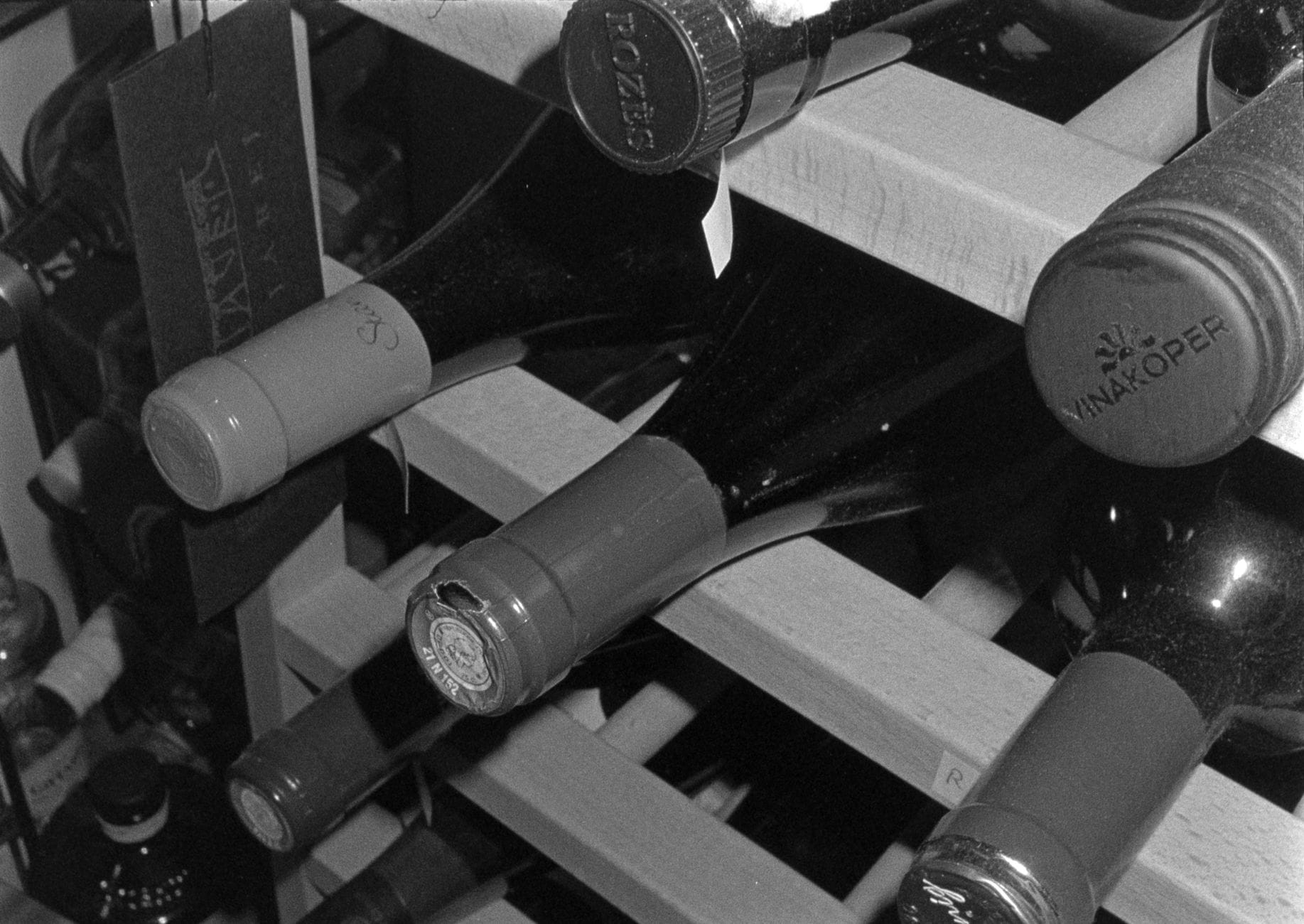
Jeroboams' new Exchange platform is reducing fine wine transaction costs and improving liquidity. Liv-ex data shows 10-year returns of ~67%, with Burgundy and Italian wines offering the strongest near-term investment case for alternative asset allocators.
Fine Wine Investment Signals a Structural Shift in How Capital Flows Into the Market
The Liv-ex Fine Wine 1000 index declined roughly 10% across 2023 and into 2024, yet trading volumes on specialist platforms held firm — a divergence that tells sophisticated investors something important about where durable demand is actually sitting. Jeroboams, the London-based fine wine merchant with roots stretching back to 1985, launched its Exchange platform in late 2024 and has spent the six months since quietly repositioning itself as a full-service investment and trading destination rather than a retail bottle shop. That repositioning matters to portfolio allocators because it signals a broader maturation of the fine wine market's infrastructure — the kind of structural deepening that historically precedes a new wave of institutional-grade capital. When the plumbing improves, liquidity improves, and when liquidity improves, risk-adjusted returns become easier to model.
For high-net-worth investors already holding fine wine as part of a 5–15% alternative assets sleeve, the emergence of credible secondary-market platforms is not a lifestyle story — it is a valuation and exit-strategy story. The ability to trade in and out of specific vintages or formats without going through a major auction house reduces transaction friction and, critically, compresses the bid-ask spread that has historically eaten into fine wine's headline returns. Jeroboams' Exchange is one of several platforms — alongside Liv-ex, Cavex, and WineTrade — competing to become the Bloomberg Terminal equivalent for fine wine, and the winner of that race will set pricing benchmarks for the entire asset class.
Why Jeroboams' Exchange Platform Changes the Fine Wine Liquidity Equation
Jeroboams operates eight retail shops across London and manages a substantial private client cellar advisory business, giving it a dual-sided marketplace advantage: it has both the buy-side relationships (private clients seeking to acquire) and the sell-side inventory (clients looking to realise gains or rebalance). The Exchange platform plugs those two pools together in real time, creating price discovery that was previously only available through major auction houses such as Christie's, Sotheby's, or Bonhams — all of which charge buyer's premiums of between 20% and 25% on hammer price. By routing trades through a proprietary exchange, Jeroboams can offer meaningfully lower transaction costs, which directly improves net returns for investors who trade actively.
According to Liv-ex data, Bordeaux still accounts for approximately 47% of all fine wine trades by value globally, but that share has been declining steadily since 2011 when it peaked above 90%. Burgundy now represents around 20% of trades, with Champagne, Rhône, and Italian wines — particularly Barolo and Brunello — absorbing much of the remainder. This diversification of demand is structurally positive for a platform like Jeroboams' Exchange because it widens the pool of tradeable assets and reduces concentration risk for investors building a fine wine portfolio. A merchant that can only move first-growth Bordeaux is a merchant with a narrowing addressable market; one that can trade across all major appellations is building a genuinely scalable exchange.
The platform's launch also coincides with a period of selective price recovery. Burgundy's Domaine de la Romanée-Conti La Tâche 2015 fetched £18,500 per bottle at a Sotheby's London sale in early 2025, while Pétrus 2000 continues to trade above £4,000 per bottle in the secondary market. These are not distressed assets — they are benchmarks that anchor the upper end of the fine wine investment universe and provide a reference point against which Exchange-listed wines can be priced with confidence.
"A modern fine wine merchant can't just sell people wine" — the strategic logic behind Jeroboams' Exchange is that data, advisory, and liquidity infrastructure are now as important to fine wine investors as the bottles themselves.
Key Investment Metrics: Fine Wine as an Asset Class in 2025
Before assessing whether to allocate to fine wine through a platform like Jeroboams' Exchange or through direct auction participation, investors should benchmark the asset class against its own historical performance and against comparable alternatives such as whisky casks, art, and watches.
- Liv-ex Fine Wine 1000 (10-year return to 2024): approximately +67%, equivalent to roughly 5.3% annualised — ahead of broad commodity indices but below equities in the same period.
- Peak-to-trough drawdown (2022–2024): approximately -12% on the Liv-ex 1000, demonstrating that fine wine carries meaningful downside risk during liquidity crunches.
- Bordeaux First Growths 20-year CAGR: approximately 8–10% according to Wine Owners data, with Pauillac and Pomerol appellations outperforming.
- Auction house buyer's premium: 20–25% at Christie's, Sotheby's, and Bonhams — the primary cost drag on secondary market returns.
- Storage cost benchmark: approximately £12–£18 per case per year in a bonded UK warehouse, a carrying cost that compounds meaningfully over a 10-year hold.
- Burgundy price appreciation (2015–2023): the Liv-ex Burgundy 150 index rose over 180% in eight years before retracing, according to Liv-ex market reports.
The core investment thesis for fine wine remains scarcity-driven: production from the most sought-after appellations is physically capped, global demand from Asia — particularly Hong Kong and Singapore — has structurally increased the buyer pool, and climate change is already compressing the number of exceptional vintages available in any given decade. Platforms that improve price transparency and reduce transaction costs are therefore not just operationally convenient — they are value-creating infrastructure for the asset class.
How Fine Wine Compares to Other Alternative Assets in 2025
Investors allocating to alternatives rarely do so in isolation — fine wine competes for wallet share with whisky casks, rare watches, art, and private credit. The comparison is instructive. According to the Knight Frank Luxury Investment Index, rare whisky appreciated 373% over the decade to 2023, making it the single best-performing luxury alternative asset over that period. Fine wine returned approximately 147% over the same decade on the same index — strong, but materially behind whisky. The gap reflects whisky's combination of absolute scarcity (closed distilleries, finite cask supply) and surging Asian demand, dynamics that fine wine shares but to a lesser degree given that vineyards can, in theory, expand output.
Watches, meanwhile, saw their Knight Frank index gains reverse sharply in 2022–2023 as the grey market for Rolex and Patek Philippe normalised post-pandemic. The Rolex Submariner that traded at 2.5x retail in 2021 had fallen back to 1.1–1.3x by mid-2024 according to Chrono24 market data. Fine wine's correction was more orderly, partly because its buyer base is more geographically diversified and partly because physical storage in bond removes the asset from casual speculative flipping. For investors seeking uncorrelated returns with genuine scarcity underpinning, fine wine and whisky casks remain the two most structurally sound alternative asset classes in the current environment.
What to Watch: Key Catalysts for Fine Wine Investment in the Next 12 Months
Several near-term catalysts will materially influence fine wine pricing and platform volumes over the next year. The 2024 Bordeaux en primeur campaign — tasted in spring 2025 and priced through summer — will be the first major pricing event since the market correction, and release prices relative to secondary market comparables will signal whether châteaux have genuinely reset expectations or are still pricing defensively. If en primeur prices come in 15–20% below secondary market equivalents for the same château's recent vintages, that would represent a genuine buying opportunity for investors with a five-year-plus horizon.
Beyond Bordeaux, watch for continued growth in Italian fine wine. Barolo from producers such as Giacomo Conterno, Bruno Giacosa, and Bartolo Mascarello has seen consistent secondary market appreciation of 8–12% annually over the past five years according to Liv-ex data, and these wines remain under-represented on most private client portfolios relative to their risk-return profile. The expansion of platforms like Jeroboams' Exchange into Italian and Rhône appellations will be a key indicator of whether the market is genuinely broadening or whether Burgundy and Bordeaux will continue to dominate price discovery.
- Monitor en primeur release pricing for the 2024 Bordeaux vintage in Q3 2025 — a discount to secondary market is the clearest buy signal in years.
- Track Liv-ex Fine Wine 1000 monthly data for signs of sustained recovery above the 200-day moving average.
- Assess platform transaction costs on Jeroboams Exchange versus auction house premiums before routing any secondary market trades.
- Consider Italian fine wine exposure — Barolo and Brunello remain undervalued relative to Burgundy on a price-per-point basis.
- Review storage and insurance costs annually; at £15 per case per year, a 20-case portfolio carries £300 in annual drag before any appreciation is realised.
Frequently Asked Questions
What is the Jeroboams Exchange platform and how does it work for investors?
Jeroboams Exchange is a secondary market trading platform launched by the London fine wine merchant Jeroboams in late 2024. It connects private clients looking to sell fine wine holdings with buyers seeking specific wines, vintages, or formats. The platform aims to offer lower transaction costs than traditional auction houses, where buyer's premiums of 20–25% significantly erode net returns. For investors, it provides a more liquid exit route for fine wine positions without the delay and cost of consigning to a major sale.
How does fine wine investment perform compared to whisky casks over a 10-year horizon?
According to the Knight Frank Luxury Investment Index, rare whisky returned approximately 373% over the decade to 2023, compared to approximately 147% for fine wine over the same period. Whisky's outperformance reflects tighter absolute supply constraints — particularly from closed distilleries — and stronger Asian demand growth. However, fine wine offers greater liquidity, a more established auction infrastructure, and lower entry-level investment thresholds, making it more accessible for investors building an initial alternative assets allocation.
What are the main cost drags on fine wine investment returns?
The three primary cost drags are auction house buyer's premiums (20–25% at Christie's, Sotheby's, and Bonhams), bonded warehouse storage costs (approximately £12–£18 per case per year in the UK), and insurance. Together, these can reduce a headline 8% annual appreciation to a net 5–6% return over a 10-year hold, depending on trade frequency. Platforms like Jeroboams Exchange that compress transaction costs therefore have a material positive impact on investor net returns.
Which fine wine appellations offer the strongest investment case in 2025?
Burgundy's Grand Cru tier — particularly Domaine de la Romanée-Conti, Armand Rousseau, and Leroy — has the strongest long-term appreciation track record, though entry prices are high and liquidity is concentrated in a small number of labels. Bordeaux First Growths offer deeper liquidity and a 20-year CAGR of 8–10%. Italian fine wine, specifically Barolo from Giacomo Conterno and Bruno Giacosa, is increasingly cited by Liv-ex analysts as offering the best current value on a price-per-point basis, with 8–12% annual appreciation over the past five years.
Source: Whisky Bulletin coverage of cask investment on Whisky Bulletin.
💼 Interested in alternative asset investment? Speak to the team at Whisky Cask Club — Singapore's leading whisky cask investment specialists.
💼 Interested in alternative asset investment? Speak to the team at Whisky Cask Club — Singapore's leading whisky cask investment specialists.