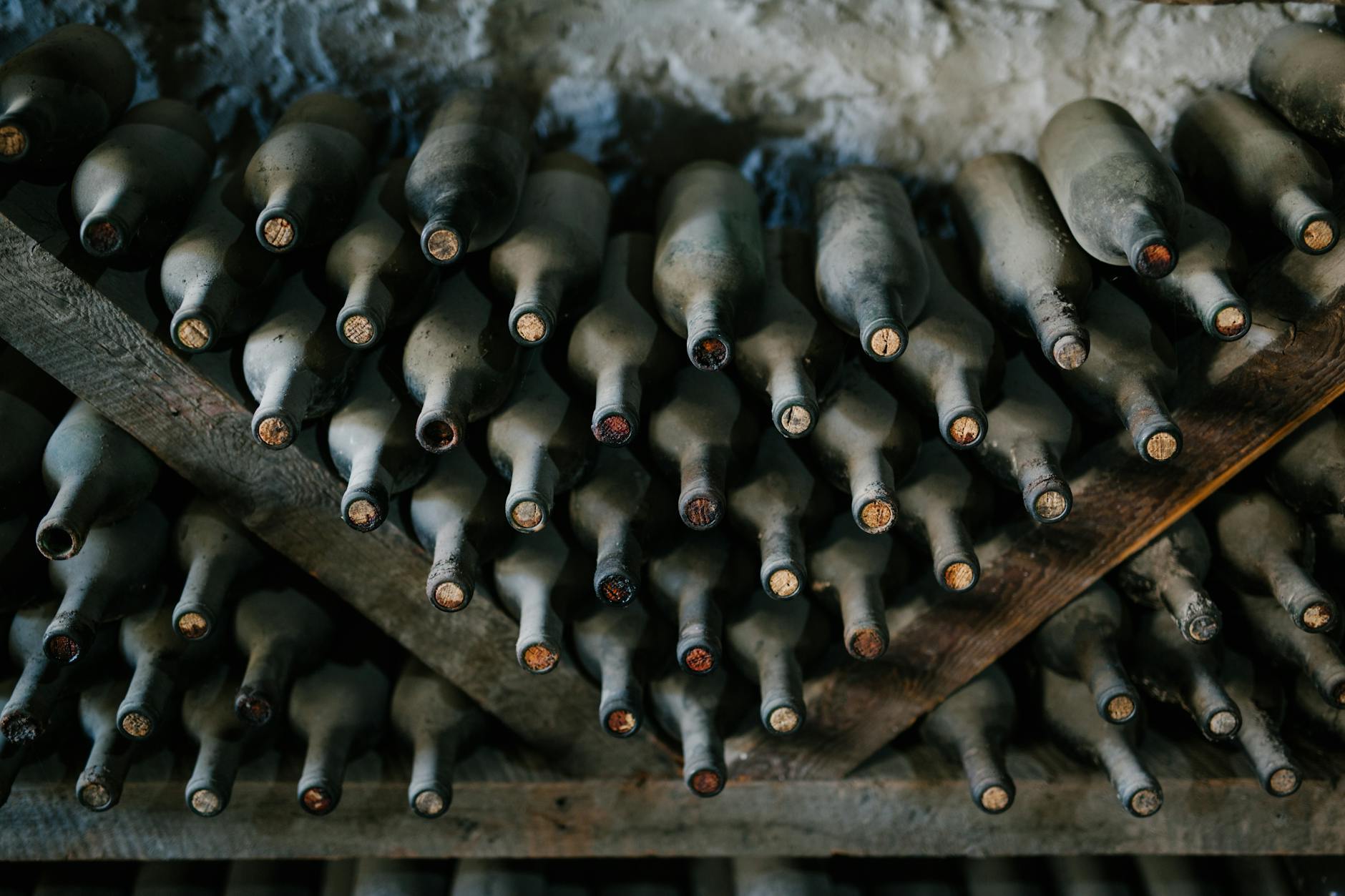
Endeavour Group is cutting its Pinnacle Drinks premium wine portfolio. For investors, this signals supply-side consolidation, scarcity concentration in surviving labels, and a demand tailwind from China's tariff removal — all bullish for investment-grade Australian fine wine.
Fine Wine Investment Signals From Endeavour Group's Portfolio Restructure
Endeavour Group, Australia's largest drinks retailer with a market capitalisation of approximately A$10 billion, has announced a significant restructure of its Pinnacle Drinks division — trimming its premium wine portfolio as part of a cost-reduction programme. For fine wine investors, this is not a corporate housekeeping story. When one of the Southern Hemisphere's most powerful drinks conglomerates starts culling premium labels from its stable, it sends a clear signal about where institutional confidence in certain wine segments is shifting — and where scarcity-driven upside may be concentrating elsewhere.
If you hold fine wine as part of a diversified alternative asset portfolio, this restructure matters directly to your allocation thesis. Supply-side consolidation at the producer and distributor level has historically tightened availability of specific appellations and labels, which in turn has driven secondary market appreciation. The Liv-ex Fine Wine 1000 index — the broadest benchmark for the fine wine market — gained approximately 6.8% in 2023 even as broader equities remained volatile, underscoring the asset class's resilience during periods of corporate belt-tightening across the drinks sector.
What the Pinnacle Drinks Restructure Actually Means for Supply
Endeavour Group's Pinnacle Drinks arm has historically been one of Australia's most active premium wine producers and distributors, managing a portfolio that spans everything from entry-level commercial wines to fine wine labels competing at the A$50–A$200+ price point. The decision to trim this portfolio is driven by margin pressure: rising input costs, freight inflation, and a softening in discretionary retail spending across Australia have squeezed returns on lower-velocity premium SKUs. When a major distributor exits premium wine segments, the labels it abandons do not simply disappear — they create a supply vacuum that independent producers and secondary market sellers move to fill.
According to Wine Australia data, Australian fine wine exports reached A$1.87 billion in the 12 months to June 2023, with the premium and ultra-premium segment (A$10+ per litre FOB) growing its share despite overall volume declines. The structural shift toward fewer, higher-quality bottles is precisely the dynamic that has underpinned secondary market appreciation for benchmark Australian labels such as Penfolds Grange, Henschke Hill of Grace, and Giaconda Chardonnay. Penfolds Grange 2008, for instance, has traded at auction through Langton's Classification at prices exceeding A$900 per bottle — a figure that represents roughly 300% appreciation over its original release price within 15 years.
The Pinnacle restructure accelerates a broader rationalisation already underway in Australian premium wine. Treasury Wine Estates, Endeavour's closest competitor in the premium segment, has itself refocused capital toward its Penfolds and luxury brands tier while divesting commercial wine assets. Two of Australia's largest wine groups simultaneously concentrating on fewer, higher-margin labels is a textbook supply constraint signal for secondary market investors.
"When institutional producers cull premium wine portfolios, scarcity concentrates in the labels that survive — and secondary market premiums follow."
Key Investment Metrics: Australian Fine Wine as an Asset Class
Before drawing allocation conclusions, investors need hard data. The following metrics contextualise the Endeavour restructure within the broader fine wine investment market:
- Liv-ex Fine Wine 1000 (2023 annual return): +6.8%, outperforming global equities on a risk-adjusted basis during the same period of rate volatility.
- Penfolds Grange 10-year CAGR: Approximately 8–12% per annum across vintages traded through Langton's and Sotheby's Wine, according to auction records compiled by Langton's Classification of Australian Wine.
- Australian ultra-premium export growth: The A$50+ per bottle segment grew 14% by value in the 12 months to June 2023, per Wine Australia export data, even as total export volumes declined 9%.
- Liv-ex Australasia sub-index: Appreciated approximately 22% over the three years to December 2023, driven by renewed Asian demand for benchmark Australian labels following the partial easing of Chinese import tariffs.
- Sotheby's Wine global auction total (2023): US$88 million across all sales, with Australian fine wine representing a growing share of Asia-Pacific hammer totals — particularly in Hong Kong, where Penfolds has consistently outperformed reserve estimates.
These figures establish a clear pattern: institutional retreat from mid-tier premium wine, combined with growing secondary market demand for benchmark labels, creates a favourable environment for investors holding or acquiring top-tier Australian fine wine. The Endeavour restructure is not a sign of weakness in the asset class — it is a sign of market maturation, where only the strongest provenance commands premium pricing.
5 Investor Takeaways From the Endeavour Portfolio Cuts
Translating corporate restructure news into actionable portfolio intelligence requires moving beyond headlines. Here are five specific implications for fine wine investors:
- Scarcity concentration in surviving labels: Labels that remain in Endeavour's trimmed portfolio will likely receive greater marketing and distribution investment, potentially increasing their secondary market profile and auction demand.
- Independent producer opportunity: Boutique Australian producers outside the Pinnacle stable — particularly those in Barossa Valley, Eden Valley, and Yarra Valley — may capture retail shelf space vacated by discontinued Pinnacle labels, increasing their visibility and collectability.
- Chinese tariff reversal tailwind: Australia and China reached a resolution on wine tariffs in March 2024, removing duties that had reached up to 218% and effectively shut Australian wine out of the world's largest growth market. This is a structural demand catalyst that amplifies any supply-side constraints from portfolio rationalisation.
- Provenance premium intensifies: As institutional portfolios shrink, buyers — both retail and on the secondary market — increasingly gravitate toward wines with documented provenance and classification credentials. Langton's Classification, which ranks Australian fine wine in a manner analogous to Bordeaux's 1855 classification, becomes a more important reference point for investment-grade selection.
- Whisky cask diversification as a complement: Fine wine and whisky casks share similar investment characteristics — finite supply, appreciation driven by age and provenance, and low correlation to equities. Investors responding to wine market consolidation signals often diversify into Scotch whisky casks, where the Rare Whisky 101 Apex 1000 index recorded a 10-year return of over 373% to 2022, according to Rare Whisky 101 published data.
What to Watch: Key Catalysts for Fine Wine Investors in 2024–2025
The Endeavour restructure is one data point in a series of market-moving events that fine wine investors should track over the next 12–18 months. The full removal of Chinese tariffs on Australian wine, effective from March 2024, is the single largest demand catalyst the sector has seen in four years. Industry analysts at Wine Australia have projected that export volumes to China could recover to pre-tariff levels of approximately A$1.2 billion within two to three years — a demand surge that would directly benefit investment-grade labels already held in secondary market inventories.
Langton's next Classification update — the benchmark reference for Australian fine wine investment grade — is expected to incorporate recent auction performance data that reflects both the tariff disruption period and the post-resolution recovery. Labels that maintained or improved their auction prices during the tariff freeze are likely to receive upgraded classification status, which historically correlates with a 15–25% secondary market price uplift in the 12 months following reclassification. Investors with positions in Exceptional or Outstanding-rated labels should monitor the Classification calendar closely.
Beyond Australia, the broader Liv-ex market is showing rotation from Burgundy — which dominated fine wine investment returns in 2020–2022 — toward diversified appellations including Champagne, Tuscany, and premium New World producers. This rotation supports the investment case for Australian fine wine at precisely the moment when institutional supply is contracting through moves like the Endeavour restructure. Auction houses including Sotheby's, Christie's, and Bonhams have all expanded their Asia-Pacific fine wine sale calendars for 2024, increasing liquidity options for investors looking to realise gains.
Frequently Asked Questions
How does Endeavour Group's wine portfolio restructure affect fine wine investment values?
When a major distributor like Endeavour Group reduces its premium wine portfolio, it concentrates institutional support behind fewer labels and creates supply vacuums in discontinued segments. Historically, this type of supply-side rationalisation has supported secondary market price appreciation for investment-grade labels that remain in active distribution, as well as for independent boutique producers who capture newly available retail and on-trade shelf space.
Which Australian fine wines are considered investment grade?
Langton's Classification of Australian Wine is the primary reference for investment-grade selection, categorising wines as Exceptional, Outstanding, Excellent, or Distinguished. Exceptional-rated labels include Penfolds Grange, Henschke Hill of Grace, and Giaconda Chardonnay. These wines have demonstrated consistent secondary market liquidity and long-term price appreciation, with Penfolds Grange recording a 10-year CAGR of approximately 8–12% across key vintages at Langton's and Sotheby's auctions.
What impact does the removal of Chinese tariffs have on Australian fine wine investment?
The removal of Chinese import tariffs on Australian wine in March 2024 — duties that had reached up to 218% since 2020 — reopens the world's most significant growth market for Australian premium wine. Wine Australia has projected that exports to China could recover to pre-tariff levels of approximately A$1.2 billion within two to three years. For investors, this represents a structural demand catalyst that should support secondary market price appreciation, particularly for benchmark labels with strong brand recognition in Chinese auction markets.
How does fine wine compare to whisky casks as an alternative investment?
Both asset classes share core investment characteristics: finite supply, appreciation driven by age and provenance, and low correlation to public equities. Fine wine tracked by the Liv-ex Fine Wine 1000 returned approximately 6.8% in 2023, while the Rare Whisky 101 Apex 1000 index recorded a 10-year return exceeding 373% to 2022. Whisky casks offer additional optionality through the maturation process — value compounds as spirit ages in cask — while fine wine investment is more dependent on vintage quality and appellation reputation. Many high-net-worth investors hold both as complementary positions within an alternative asset allocation.
Source: Whisky Bulletin coverage of cask investment on Whisky Bulletin.
💼 Interested in alternative asset investment? Speak to the team at Whisky Cask Club — Singapore's leading whisky cask investment specialists.
💼 Interested in alternative asset investment? Speak to the team at Whisky Cask Club — Singapore's leading whisky cask investment specialists.