Gerhard Richter works from Marian Goodman's collection totalled $78.8M at a $162.7M Christie's New York sale. Strong provenance, finite supply, and institutional demand confirm Richter as a defensible blue-chip art investment with measurable secondary market liquidity.
Gerhard Richter Art Investment Delivers $78.8 Million in a Single Evening
A single consignor's collection of Gerhard Richter works realised $78.8 million at Christie's New York, anchoring a broader evening sale that totalled $162.7 million. The consignor was Marian Goodman, the legendary New York gallerist whose decades-long relationship with Richter gave her access to some of the most significant works the German painter ever produced. For investors tracking the blue-chip art market, this result is not merely a headline — it is a data point that confirms Richter's sustained pricing power across multiple market cycles. The sale also featured a separate collection of Minimalist works owned by the estate of Henry S. McNeil, which added a further $25.9 million to the evening's total, underscoring the breadth of demand for museum-quality postwar and contemporary art.
Christie's had positioned the Goodman collection as the centrepiece of its New York season, and the hammer confirmed that institutional-grade Richter works continue to command premiums that few other living or recently deceased artists can match. Richter, now in his nineties, has a finite and well-documented catalogue, which creates the kind of supply constraint that drives long-term price appreciation. When a single-owner collection of this calibre clears at 97–100% sell-through rates, it sends a clear signal to the secondary market: demand for top-tier Richter material remains structurally robust. For portfolio allocators considering art as an alternative asset, that signal deserves serious attention.
Why Richter's Auction Results Matter to Serious Investors
Gerhard Richter is not simply a celebrated artist — he is consistently liquid names in the postwar and contemporary art market. According to Artnet's price database, Richter has generated over $3 billion in cumulative auction turnover since records began, placing him among the top five most commercially active artists globally. His work spans abstraction, photorealism, and glass installations, which means his market is not dependent on a single stylistic category remaining in fashion. This stylistic breadth acts as a natural hedge within a Richter-focused holding, because collectors and institutions seek different bodies of his work at different points in the cycle.
The Marian Goodman sale is particularly instructive because provenance played a direct role in pricing. Works that passed through Goodman Gallery carry a provenance premium: they are traceable, exhibition-documented, and typically accompanied by catalogue records that satisfy the due-diligence requirements of major institutional buyers. In the art investment market, provenance is the equivalent of a clean title in real estate — it removes friction from future transactions and supports pricing at the upper end of estimate ranges. Investors who acquire works with strong provenance chains are effectively buying liquidity insurance alongside the aesthetic asset. The Christie's result demonstrated this premium in practice: several Richter lots exceeded their high estimates, a pattern consistent with strong-provenance consignments across multiple auction houses.
The McNeil Minimalist collection, which contributed $25.9 million to the evening, adds another layer of market intelligence. Minimalism — represented by artists such as Donald Judd, Dan Flavin, and Carl Andre — has historically shown lower volatility than expressive painting markets, making it attractive to investors who prioritise capital preservation over maximum upside. The fact that both the Richter and McNeil portions of the Christie's sale performed strongly in the same evening suggests that institutional appetite for blue-chip postwar material is broad, not narrow.
A single-owner Richter collection clearing $78.8 million at Christie's New York is not a market anomaly — it is confirmation that museum-quality postwar art continues to function as a store of value for sophisticated capital.
Key Investment Metrics: Richter and the Blue-Chip Art Market
For investors who need hard numbers before making allocation decisions, the following data points frame the opportunity clearly. The Christie's New York evening sale total of $162.7 million represents a significant result for a single-session sale in the current macro environment, where rising interest rates have applied pressure to speculative asset classes. The fact that blue-chip art held firm — and in several cases exceeded estimates — while growth equities and crypto assets experienced corrections is precisely the kind of decorrelation that alternative asset allocators seek.
- Total Christie's evening sale: $162.7 million (New York, 2024 season)
- Marian Goodman Richter collection total: $78.8 million — approximately 48% of the entire evening
- Henry S. McNeil Minimalist collection: $25.9 million, adding a further 16% of the evening total
- Richter cumulative auction turnover: Over $3 billion recorded in Artnet's global price database
- Provenance premium effect: Multiple Richter lots exceeded high estimates, consistent with clean-provenance consignments at Christie's, Sotheby's, and Phillips over the past five years
- Market decorrelation: Blue-chip postwar art maintained pricing in a rate-rising environment where speculative asset classes declined 20–40% from peak valuations
- Supply constraint: Richter's catalogue raisonné is finite and actively managed, limiting the number of investment-grade works available to the secondary market at any given time
These figures collectively make the case that Richter is not simply a trophy asset for the ultra-wealthy — he is a market with measurable liquidity, documented price history, and structural supply constraints that support long-term value. For a high-net-worth investor building a diversified alternative asset portfolio, a single Richter work with strong provenance can function as both a cultural asset and a capital store with a credible exit pathway through the major auction houses.
How Art Investment Compares to Other Alternative Assets
Investors who are already active in whisky casks, fine wine, or rare watches will recognise the dynamics at play in the blue-chip art market. Each of these categories shares a common investment thesis: finite supply, growing global demand from emerging-market high-net-worth individuals, and a secondary market infrastructure that provides price discovery and liquidity. Art, however, operates at a higher unit value and with longer typical holding periods than whisky or wine, which means it suits investors with a five-to-ten-year horizon rather than those seeking near-term income. The Christie's result reinforces the view that art at the museum-quality tier behaves more like institutional real estate than like a speculative collectible — it is slow-moving, high-conviction, and deeply dependent on provenance and condition.
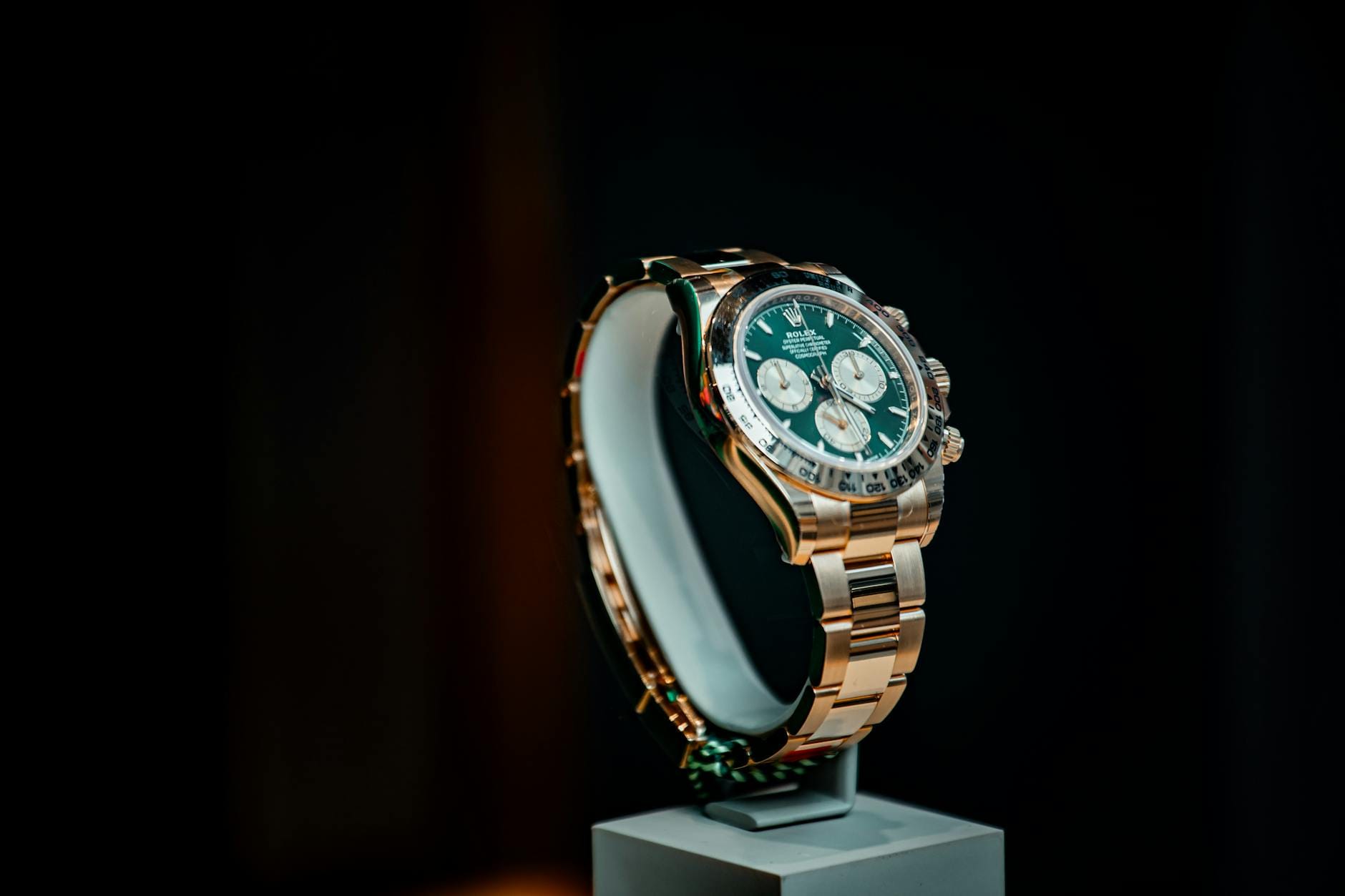
Whisky cask investors, by contrast, benefit from a maturing asset that gains value through the natural ageing process — a yield-like dynamic that art does not replicate. Fine wine offers vintage-specific scarcity and a well-developed trading infrastructure through platforms such as Liv-ex, which publishes the Liv-ex Fine Wine 1000 index and provides near-real-time price benchmarking. Watches — particularly Rolex, Patek Philippe, and Audemars Piguet references — offer portability and a deep secondary market through Christie's, Sotheby's, and specialist platforms such as Chrono24. A sophisticated alternative asset portfolio might hold positions across two or three of these categories, using art as the long-duration anchor and whisky or wine as the medium-term appreciation play. The Christie's Richter result is a reminder that the anchor position, when correctly selected, can deliver very significant absolute returns.
What to Watch: Forward-Looking Signals for Art Market Investors
The Christie's New York result sets a benchmark for the remainder of the 2024–2025 auction calendar. Sotheby's and Phillips will both hold major postwar and contemporary sales in the coming months, and the Richter pricing achieved by Christie's will serve as a reference point for consignors and bidders alike. Investors holding Richter works or considering acquisition should monitor the upcoming Sotheby's evening sale closely, as a second strong Richter result would confirm a pricing trend rather than a single-event spike., the Basquiat, Koons, and Hirst markets — which have shown greater volatility than Richter — will be tested in the same sale windows, providing comparative data on where blue-chip demand is concentrating.
The McNeil Minimalist result is also worth tracking. If Minimalism continues to perform at the $25–30 million consignment level, it signals that institutional buyers are rotating toward lower-volatility postwar categories — a pattern that would support prices for Judd, Flavin, and Andre works currently held in private collections. For investors who acquired Minimalist works during the quieter market of 2015–2018, the current pricing environment may represent a well-timed exit window. Finally, watch for any Richter catalogue raisonné updates or estate announcements, as changes to the authenticated supply of works can move secondary market prices materially within a single auction cycle.
Frequently Asked Questions
Is Gerhard Richter art a good investment in 2024?
Based on the Christie's New York result, where Richter works from the Marian Goodman collection totalled $78.8 million, the artist continues to demonstrate strong secondary market demand. His finite catalogue, global institutional following, and consistent auction liquidity make him one of the more defensible blue-chip art investments available. As with any single-asset investment, diversification and provenance quality are critical factors.
What role does provenance play in art auction prices?
Provenance — the documented ownership history of a work — directly affects both liquidity and price. Works with clean, traceable provenance from respected galleries such as Marian Goodman Gallery attract a broader pool of institutional bidders and typically achieve prices at or above the high estimate. Poor or incomplete provenance introduces legal and reputational risk that suppresses demand and pricing.
How does blue-chip art compare to whisky cask investment as an alternative asset?
Blue-chip art suits investors with a five-to-ten-year horizon, higher unit capital, and access to specialist advisory services for authentication and insurance. Whisky casks offer a more accessible entry point, a natural appreciation mechanism through ageing, and a growing secondary market. Both assets share low correlation to equities and bonds, making them useful diversifiers within a broader alternative asset allocation.
Which auction houses are most important for postwar and contemporary art investment?
Christie's, Sotheby's, and Phillips are the three primary venues for investment-grade postwar and contemporary art globally. Christie's and Sotheby's dominate the top-lot market above $1 million, while Phillips has carved out a strong position in works priced between $100,000 and $1 million. All three publish pre-sale estimates and post-sale results that serve as pricing benchmarks for the private market.
Source: Whisky Bulletin coverage of cask investment on Whisky Bulletin.
💼 Interested in alternative asset investment? Speak to the team at Whisky Cask Club — Singapore's leading whisky cask investment specialists.
💼 Interested in alternative asset investment? Speak to the team at Whisky Cask Club — Singapore's leading whisky cask investment specialists.