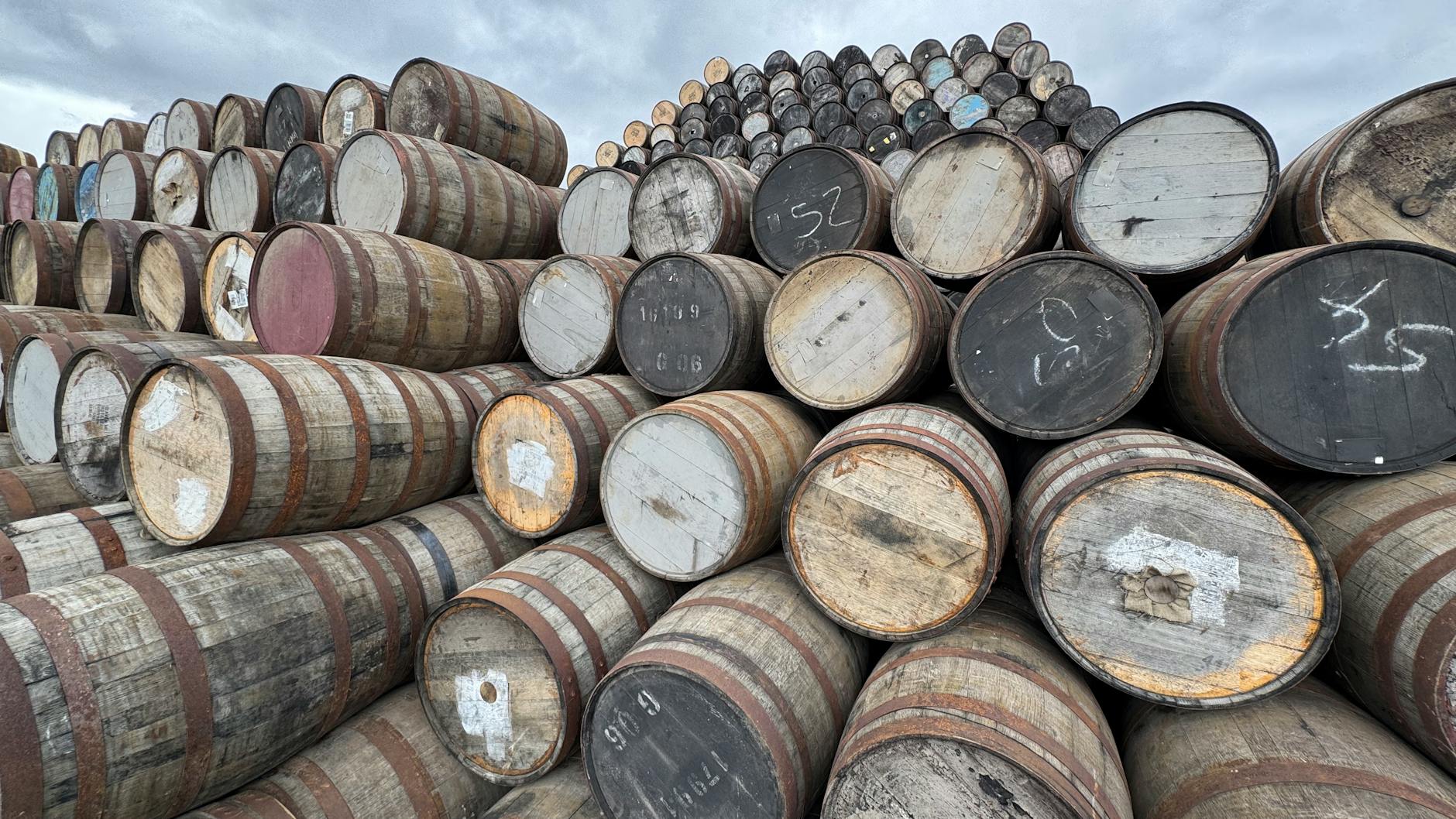
The Market Signal: Major Spirits Groups Flash Caution Flags
When two of the world's largest spirits conglomerates — Moët Hennessy and Pernod Ricard — both adopt a cautious tone about near-term recovery in the same earnings cycle, investors should pay close attention. Pernod Ricard reported a 17% decline in organic net sales for the first half of its 2024 fiscal year, while Moët Hennessy, the wines and spirits arm of LVMH, posted a 12% revenue decline across the same period. These are not rounding errors. They represent a structural softening in premium spirits demand that has now persisted for several consecutive quarters, driven by post-pandemic normalisation, consumer trade-down in key markets, and persistent macroeconomic pressure across the United States, China, and Europe.
The broader spirits industry has been grappling with what analysts describe as a prolonged destocking cycle. Retailers and distributors, who over-ordered during the supply-constrained boom years of 2020–2022, are still working through elevated inventory levels. Until those shelves clear, new orders remain suppressed. Both Moët Hennessy and Pernod have been explicit: they do not expect a meaningful volume recovery before the second half of 2025 at the earliest. For investors tracking the listed spirits sector, that timeline is sobering.
Why This Matters for Alternative Asset Investors
Here is where the investment calculus becomes genuinely interesting. The weakness in publicly traded spirits equities does not automatically translate into weakness across the whisky cask market — and in several important respects, the dynamics run in the opposite direction. When large producers face revenue pressure, they become more selective about releasing aged stock to market. Barrels that might otherwise have been bottled and sold are held back, reducing supply of aged whisky and creating tighter conditions for cask investors who already hold maturing stock.
The Scotch whisky cask market has demonstrated meaningful resilience through this period of corporate turbulence. According to Knight Frank's Wealth Report, rare whisky as an asset class appreciated approximately 373% over the decade to 2023, outperforming classic cars, fine wine, and art over the same horizon. More recently, single cask auction results have continued to attract strong hammer prices: a 30-year-old Speyside cask sold through a specialist broker in early 2024 achieved returns of approximately 14% annualised over its holding period. These are not outliers — they reflect a market underpinned by genuine scarcity and global demand.
- 10-year appreciation (rare whisky index): +373% to 2023 (Knight Frank Wealth Report)
- Scotch whisky export value (2023): £5.6 billion, according to the Scotch Whisky Association
- Average annualised cask return (specialist brokers): 8–15% depending on distillery, age, and cask type
- Key demand driver: Asian markets, particularly Singapore, China, and Japan, continue to absorb premium aged Scotch at pace
The supply side is equally compelling. Scotch whisky must be aged for a minimum of three years by law, and premium single malt expressions typically require 12 to 25 years of maturation. No amount of capital can accelerate that timeline. Meanwhile, several well-regarded distilleries have either closed or significantly reduced production in recent years — Brora, Port Ellen, and Dallas Dhu among them — making existing aged casks from these sites finite and increasingly valuable. The corporate caution being signalled by Pernod and LVMH does nothing to increase the supply of a 20-year-old Speyside or Highland cask. If anything, it tightens it.
Investment Takeaway
The softness in listed spirits equities is a signal worth reading carefully, but it should not be conflated with weakness in physical cask assets. For a high-net-worth investor seeking uncorrelated returns and genuine scarcity dynamics, the current environment may actually represent an entry point — not a reason to step back. Producers under margin pressure are less likely to flood the market with aged releases, which supports cask valuations for private holders. Investors should focus on distilleries with strong secondary market demand, casks aged between 8 and 15 years offering the optimal appreciation window, and jurisdictions like Scotland where the regulatory framework provides clear title and provenance. The listed spirits sector may still be searching for its floor. The cask market, structurally, is working from a different set of fundamentals entirely.
💼 Interested in alternative asset investment? Speak to the team at Whisky Cask Club — Singapore's leading whisky cask investment specialists.
💼 Interested in alternative asset investment? Speak to the team at Whisky Cask Club — Singapore's leading whisky cask investment specialists.
💼 Interested in alternative asset investment? Speak to the team at Whisky Cask Club — Singapore's leading whisky cask investment specialists.