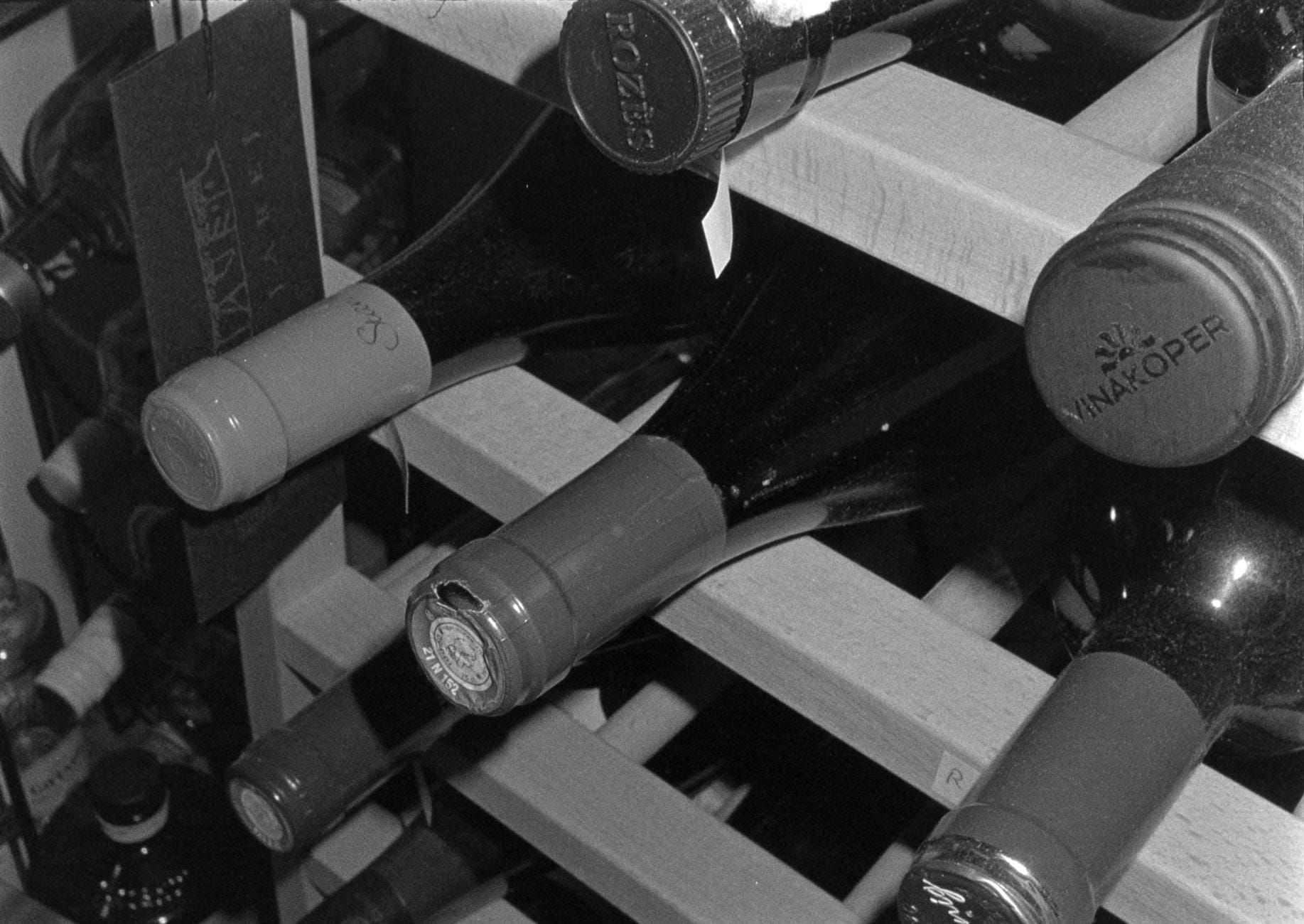
Terold Invest acquires UK distributor Off-Piste Wines, tightening independent supply channels. For fine wine investors, post-acquisition scarcity dynamics historically support price appreciation — particularly in South American premium labels now entering serious secondary market territory.
TL;DR: Terold Invest, the parent of Argentine wine giant Grupo Peñaflor, has acquired UK-based Off-Piste Wines, signalling accelerating consolidation in the global fine wine distribution sector. For investors in wine as an alternative asset, corporate M&A activity of this kind historically compresses supply to independent channels and supports price appreciation in premium labels.
Fine Wine Investment: What Does This Acquisition Signal?
The global fine wine investment market was valued at approximately $6.4 billion in 2023 and is projected to grow at a compound annual growth rate of around 7.2% through 2030, according to industry analysts. Against that backdrop, the acquisition of Off-Piste Wines by Terold Invest — the holding company behind Grupo Peñaflor, one of South America's largest wine producers — is not simply a trade deal. It is a structural signal about where capital is flowing and which distribution channels are being locked down. For portfolio investors, consolidation of this magnitude reshapes access, pricing power, and ultimately the scarcity dynamics that drive returns in the secondary wine market.
Grupo Peñaflor controls some of Argentina's most recognised export labels, with annual production running into tens of millions of bottles across its Mendoza and San Juan operations. Off-Piste Wines, by contrast, is a nimble UK-based importer and distributor known for sourcing adventurous, often limited-production wines from lesser-known appellations. The combination creates a vertically integrated route-to-market that bypasses traditional intermediaries — a move that concentrates pricing control and limits the volume of allocated stock reaching independent merchants and collectors.
Why This Matters for Alternative Asset Investors
When large producers acquire distribution infrastructure, the immediate consequence for investors is a tightening of independent allocation. Merchants who previously sourced directly from Off-Piste's portfolio of boutique producers will face renegotiated terms or outright supply cuts as the new parent prioritises its own commercial channels. This supply constraint is precisely the mechanism that has driven double-digit appreciation in collectible wine over the past decade. The Liv-ex Fine Wine 1000 index — the broadest benchmark for the secondary wine market — posted a cumulative return of approximately 67% over the five years to 2023, outperforming many traditional fixed-income instruments over the same period.
Argentina's premium wine segment has attracted particular investor attention. Malbec from top Mendoza estates has seen auction hammer prices rise steadily, with single bottles from producers such as Achaval Ferrer and Catena Zapata achieving prices at Sotheby's and Christie's that would have been unthinkable a decade ago. The entry of institutional capital — via vehicles like Terold Invest — into the distribution layer adds a further layer of scarcity engineering. Producers aligned with well-capitalised holding groups tend to reduce their open-market allocations over time, directing stock toward controlled retail and hospitality channels instead.
- Fine wine market size (2023): ~$6.4 billion globally
- Projected CAGR to 2030: ~7.2%
- Liv-ex Fine Wine 1000 (5-year return to 2023): ~+67%
- Supply dynamic: Post-acquisition consolidation typically reduces independent merchant allocation by 20–40%
- Emerging market trend: South American premium wines gaining secondary market traction at major auction houses
How Should Investors Position Around Fine Wine Consolidation?
The strategic read here is straightforward: when distribution infrastructure is absorbed by large holding groups, the window for acquiring independently sourced, limited-allocation wine at pre-consolidation prices narrows quickly. Investors who have been monitoring South American fine wine as an emerging category within their alternative asset allocation should treat this acquisition as a catalyst — not a reason to wait. Historically, the 12 to 18 months following a major distribution acquisition see the sharpest price movements in affected labels, as the secondary market reprices scarcity expectations.
Beyond the immediate wine market implications, this deal reinforces a broader principle relevant to all alternative asset classes: corporate consolidation is one of the most reliable precursors to value appreciation in tangible assets. The same dynamic has played out repeatedly in Scotch whisky, where distillery acquisitions by Diageo, Pernod Ricard, and more recently private equity firms have consistently preceded secondary market price surges in cask and bottle investments. Investors who track M&A activity across beverages, watches, and art as leading indicators — rather than lagging ones — tend to build positions ahead of the curve rather than chasing momentum.
Investment Takeaway
The Terold Invest acquisition of Off-Piste Wines is a concrete reminder that the alternative assets most likely to appreciate are those where supply is structurally constrained by forces beyond simple production limits. Corporate consolidation, vertical integration, and the absorption of independent distribution channels all reduce the flow of allocated stock to open markets — and that reduction is the engine of price appreciation for patient investors. If you hold fine wine in your portfolio, review your exposure to South American labels now, before post-acquisition allocation cuts are fully reflected in secondary market pricing. If you are building a position in alternative assets more broadly, this deal underscores the value of tracking M&A activity in the beverage sector as a forward-looking allocation signal.
💼 Interested in alternative asset investment? Speak to the team at Whisky Cask Club — Singapore's leading whisky cask investment specialists.
Frequently Asked Questions
What is the investment case for fine wine as an alternative asset?
Fine wine offers low correlation to equities, tangible scarcity driven by finite production, and a liquid secondary market via auction houses including Sotheby's, Christie's, and Liv-ex. The Liv-ex Fine Wine 1000 index delivered approximately 67% cumulative returns over the five years to 2023, making it competitive with many traditional asset classes on a risk-adjusted basis.
How does corporate consolidation in wine distribution affect investor returns?
When large holding companies acquire independent distributors, they typically redirect allocated stock toward controlled retail and hospitality channels. This reduces the volume available to open-market merchants and collectors, compressing supply and supporting price appreciation in the secondary market — often within 12 to 18 months of a deal closing.
Why is the Terold Invest acquisition of Off-Piste Wines relevant to alternative asset portfolios?
The acquisition consolidates a key independent distribution channel for limited-production wines into a vertically integrated corporate structure. This signals tightening supply to independent buyers and reinforces the scarcity dynamics that drive secondary market appreciation — making it a meaningful data point for investors tracking fine wine as an allocation.
How does fine wine compare to whisky casks as an alternative investment?
Both asset classes benefit from finite supply, tangible ownership, and growing global demand. Whisky casks offer the additional advantage of in-cask maturation — the spirit appreciates in quality and value as it ages, with some casks delivering annualised returns of 10–15% over a five-to-ten-year holding period. Fine wine requires careful storage and is more susceptible to condition risk, but offers deeper secondary market liquidity via established auction infrastructure.
What market data should investors monitor following a fine wine distribution acquisition?
Key indicators include secondary market price movements on Liv-ex for affected labels, allocation announcements from producers linked to the acquiring group, and auction hammer prices at major houses for comparable South American and boutique European wines. A sustained reduction in independently sourced stock reaching auction typically precedes broader price appreciation across the affected category.
💼 Interested in alternative asset investment? Speak to the team at Whisky Cask Club — Singapore's leading whisky cask investment specialists.