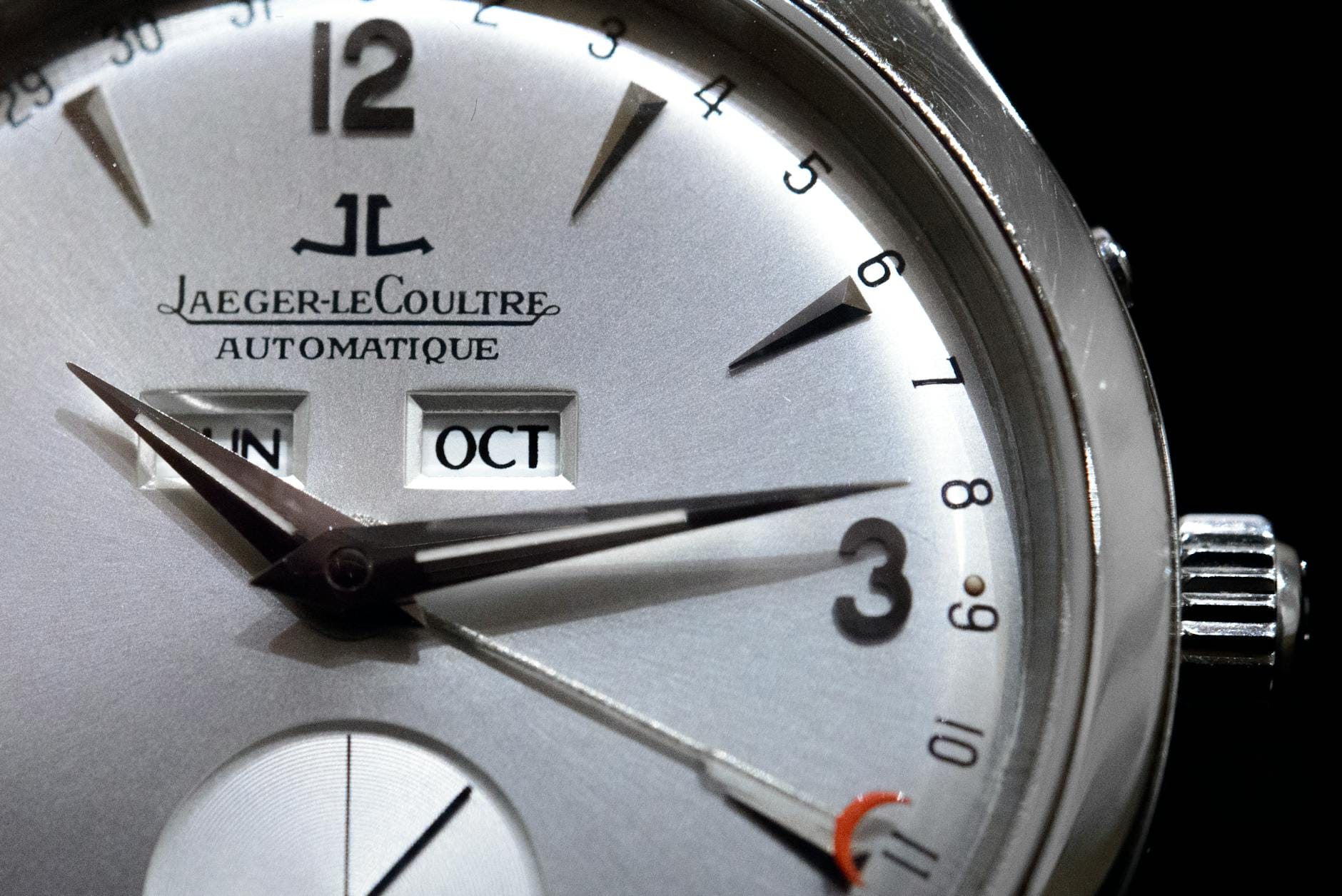
Hermès's H08 Squelette skeleton watch signals a brand inflection point. With H08 references already trading 30–50% above retail and skeleton complications commanding 20–40% auction premiums, the Squelette presents a credible asymmetric opportunity for watch investors.
Hermès Watch Investment: What the H08 Squelette Signals for the Market
Hermès watch investment has moved well beyond novelty status. The house's latest release — the H08 Squelette, a fully skeletonised iteration of its H08 sports watch line — is not merely a technical showcase. It is a market signal. Hermès timepieces have quietly posted some of the strongest secondary market appreciation among luxury watch brands over the past five years, with select references gaining between 40% and 120% above retail at auction. For investors tracking the $75 billion global luxury watch market, the H08 Squelette warrants serious attention.
The H08 collection launched in 2021 and immediately attracted a premium on the grey market, with certain references trading at 30% to 50% above their retail price within the first twelve months. Skeleton complications — where the movement is architecturally exposed through an open dial — command a further premium due to the additional manufacturing complexity involved. Movement finishing, hand-bevelling, and the engineering required to maintain structural integrity while removing material from the baseplate can add months to production time, directly constraining supply. That supply constraint is one of the most reliable drivers of secondary market value in horology.
Why This Matters to Watch Investors
Hermès is not a traditional watch manufacture in the way that Patek Philippe or A. Lange and Söhne are, but that perception is changing fast — and the gap between perception and reality is where investment opportunity lives. The brand has been developing its in-house movement capabilities for over a decade, and the H08 Squelette deploys a movement that demonstrates genuine horological ambition. When a fashion house credibly crosses into serious watchmaking territory, it unlocks a new tier of collector and investor demand, expanding the total addressable buyer pool and compressing supply even further.
- Secondary market premium (H08 at launch): +30% to +50% above retail within 12 months
- Skeleton complication premium: Typically adds 20% to 40% over non-skeleton equivalents at auction
- Global luxury watch market size: Approximately $75 billion, with secondary market growing at an estimated 8% to 10% annually
- Hermès watch revenue growth: The watches and clocks division posted double-digit growth in recent reporting periods, outpacing several legacy Swiss peers
The broader watch investment market has matured significantly since 2020, when pandemic-era liquidity drove speculative spikes across Rolex, Patek, and Audemars Piguet. That froth has largely corrected, but a more selective, fundamentals-driven market has emerged in its place. Brands with genuine scarcity, improving manufacture credentials, and strong brand equity are holding value more robustly than volume-driven references. Hermès checks all three boxes, and the H08 Squelette adds a fourth: technical prestige that attracts a new category of serious buyer.
How Skeleton Complications Drive Horological Value
Skeleton watches have historically commanded a durable premium at auction because they represent a convergence of artisanal craft and mechanical complexity. Houses like Jaeger-LeCoultre, Cartier, and Roger Dubuis have long used skeleton dials as centrepieces of their high-complication offerings, with auction results at Christie's and Phillips regularly confirming 25% to 60% premiums over equivalent non-skeletonised references. When Hermès brings this level of movement architecture to a sports watch silhouette — a category that already carries strong investor demand — the result is a watch that appeals across multiple buyer segments simultaneously.
Production numbers for the H08 Squelette have not been officially disclosed, but Hermès is known to produce watches in comparatively limited quantities relative to its Swiss competitors. The brand's watchmaking operation in Biel, Switzerland, operates with a discipline that prioritises quality over volume. Limited production combined with rising brand credibility and the inherent complexity of skeleton finishing creates the supply-demand imbalance that underpins secondary market appreciation. Investors who secured H08 references at retail in 2021 and 2022 have already seen meaningful returns; the Squelette represents the next inflection point in that trajectory.
Investment Takeaway
The H08 Squelette is a strong candidate for watch investors seeking exposure to a brand at an inflection point. Hermès is transitioning from perceived fashion house to credible manufacture, and that transition — when it crystallises in the market's collective view — tends to produce sharp upward reratings in secondary market pricing. Investors should monitor auction results at Phillips, Christie's, and Sotheby's over the next 12 to 18 months for early data on where the Squelette settles relative to retail. Acquiring at or near retail now, before that data becomes widely available, is consistent with the asymmetric risk-reward profile that sophisticated alternative asset investors seek. Diversification across watch references, whisky casks, and other hard assets with genuine scarcity dynamics remains the most resilient strategy for alternative portfolio construction.
Frequently Asked Questions
Is the Hermès H08 Squelette a good investment watch?
Based on the H08 collection's secondary market history — trading at 30% to 50% above retail within its first year — and the additional premium that skeleton complications command at auction, the H08 Squelette presents a credible investment case. Investors should track early auction results to confirm price discovery before committing significant capital.
How do skeleton watches perform at auction compared to standard references?
Skeleton complications typically command a 20% to 40% premium over equivalent non-skeletonised references at major auction houses including Christie's, Phillips, and Sotheby's. The additional manufacturing complexity and lower production volumes are the primary drivers of this premium.
What is the size of the luxury watch secondary market?
The global luxury watch market is estimated at approximately $75 billion, with the secondary market segment growing at 8% to 10% annually. Platforms such as Chrono24, WatchBox, and the major auction houses have significantly improved liquidity for investors seeking exit options.
How does Hermès compare to traditional watch investment brands like Patek Philippe?
Patek Philippe and Rolex remain the benchmark for watch investment due to decades of documented appreciation data. Hermès represents an earlier-stage opportunity — higher potential upside as brand credibility grows, but with less historical data to anchor valuation. Investors comfortable with emerging-brand risk may find the asymmetry attractive.
What other alternative assets complement a watch investment portfolio?
Whisky casks, fine wine, and art have historically shown low correlation to equity markets and to each other, making them effective diversifiers alongside watches. Whisky casks in particular offer a yield-like dynamic as the spirit matures and increases in value, with some casks appreciating 10% to 15% annually over a ten-year holding period.
💼 Interested in alternative asset investment? Speak to the team at Whisky Cask Club — Singapore's leading whisky cask investment specialists.
💼 Interested in alternative asset investment? Speak to the team at Whisky Cask Club — Singapore's leading whisky cask investment specialists.