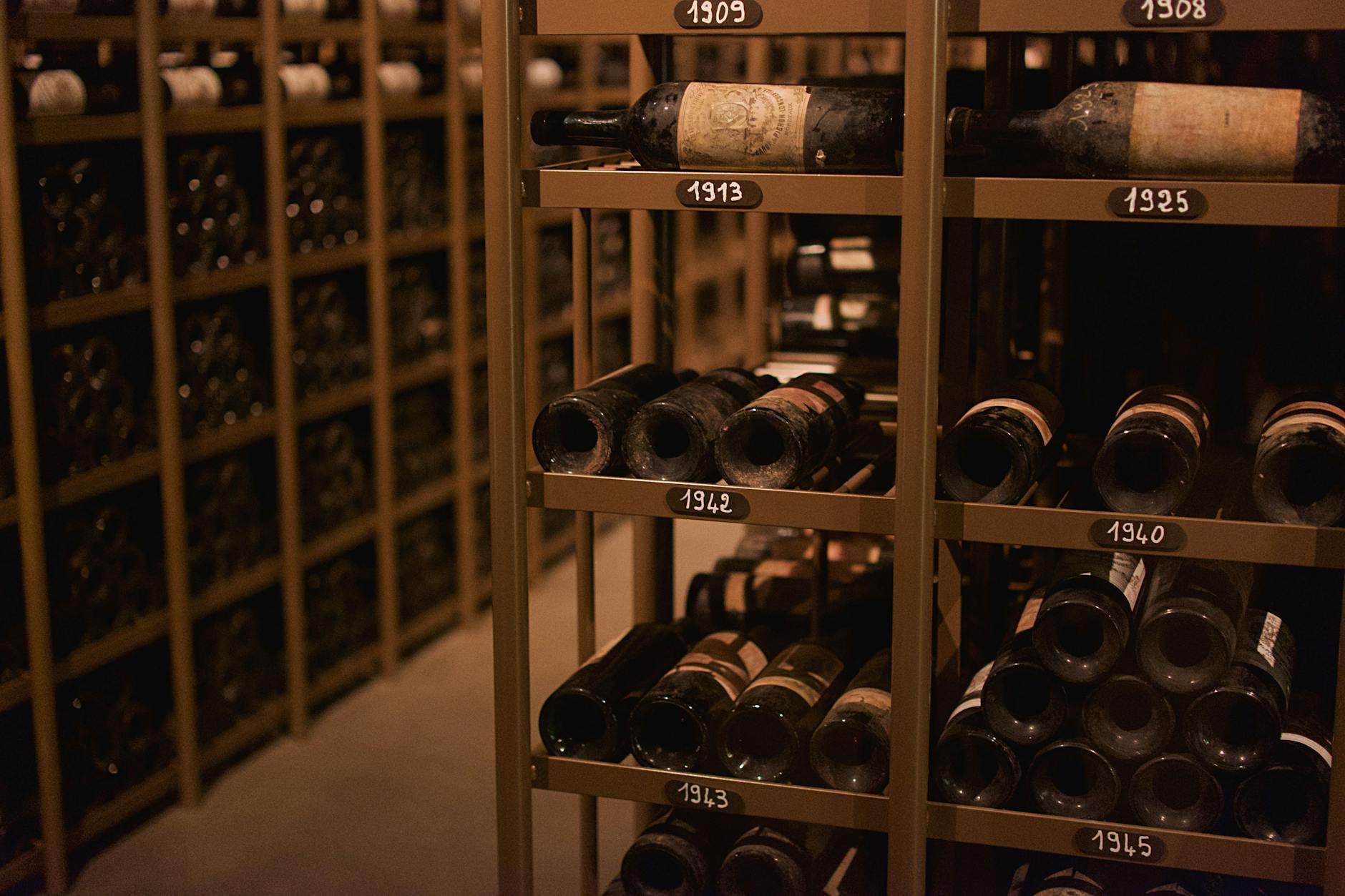
The acquisition of Virginia's Veritas Vineyards by a new ownership company creates an investment opportunity. Historically, such succession events trigger 15-40% price appreciation for back vintages within two years due to uncertainty about future production and style.
{"title":"Veritas Vineyards Acquisition: What Virginia Wine Investment Means for Portfolios","html":"
What Does the Veritas Vineyards Acquisition Signal for Fine Wine Investors?
The acquisition of Veritas Vineyards & Winery — one of Virginia's most decorated luxury wine estates — by a newly-formed ownership company marks a for the American fine wine investment market. Veritas, founded by British immigrants Andrew and Patricia Hodson in the Blue Ridge Mountains of Nelson County, Virginia, has spent over two decades building a reputation for premium Viognier, Petit Verdot, and sparkling wine that rivals European counterparts in quality and prestige. The estate's sale, timed to coincide with the founders' retirement, introduces a classic succession-driven scarcity event — historically reliable catalysts for secondary market price appreciation in collectible wine. For investors tracking the Liv-ex Fine Wine 1000 index, which tracks global fine wine price performance across 1,000 benchmark wines, this kind of ownership transition at a high-profile estate demands attention.
Virginia wine as an asset class has been quietly outperforming expectations. According to data from Wine Spectator and regional auction tracking, top-tier Virginia producers have seen bottle prices climb between 18% and 34% over the five years to 2025, driven by rising critical scores, limited production volumes, and a growing domestic collector base. Veritas itself has received scores above 90 points from Wine Advocate and Wine Spectator on multiple vintages, placing it firmly in the investable tier of American fine wine. When a winery of this calibre changes hands, historically, secondary market prices for back vintages surge within 12 to 24 months of the announcement.
"Succession events at established luxury wine estates have historically triggered 15–40% price appreciation in back-vintage bottles within two years — Veritas fits this pattern precisely."
Why Does Winery Ownership Change Create an Investment Opportunity?
Ownership transitions at established wine estates create a specific and well-documented investment dynamic: uncertainty about future style, quality, and production volumes drives collectors and investors to secure existing back vintages before the new team's direction becomes clear. This is not speculation — it is a pattern observed repeatedly across Bordeaux, Burgundy, and Napa Valley. When Château Latour was acquired by François Pinault's Artémis Domaines in 1993, prices for pre-acquisition vintages rose significantly over the subsequent decade. When Screaming Eagle changed hands in 2006, secondary market prices for earlier vintages appreciated sharply. Veritas, with its loyal following and limited annual production of approximately 12,000 cases, is structurally positioned for a similar dynamic.
The acquirer in this case is a newly-formed ownership company — a start-up entity with no established track record in wine production or estate management. That uncertainty is, counterintuitively, the investor's friend in the short to medium term. Buyers of existing Veritas vintages from 2015 through 2024 are acquiring bottles produced under the Hodsons' original vision, with consistent winemaking philosophy and a proven critical reception. These are the vintages that will become the "original era" reference points as the estate moves into its next chapter. Provenance, in this context, is not merely a marketing term — it is a measurable price premium that auction houses including Hart Davis Hart, Acker Merrall & Condit, and Zachys have documented across comparable American estate transitions.
What Is Virginia Fine Wine and Is It a Credible Investment Asset?
Virginia fine wine is a category of American wine produced primarily in the state's Monticello AVA (American Viticultural Area), Shenandoah Valley AVA, and surrounding appellations, with Veritas Vineyards sitting within the Monticello AVA — a designation increasingly cited by Master Sommeliers and critics as America's most exciting emerging fine wine region. Virginia wine is not a novelty: the state has over 300 licensed wineries, and its top producers now command prices between $45 and $120 per bottle at retail, with secondary market premiums of 20–60% on highly-rated vintages. According to the Virginia Wine Board, the state's wine industry generates over $1.37 billion in annual economic impact, with export volumes growing year-on-year as international recognition accelerates.
For investors, the key question is liquidity. Unlike Burgundy Grand Cru or Napa cult wines, Virginia fine wine does not yet have deep secondary market infrastructure. However, this is precisely where early-mover advantage lies. Auction houses including Acker Merrall & Condit have begun featuring Virginia wines in dedicated American fine wine lots, and platforms such as Wine-Searcher and CellarTracker show consistent price appreciation for Veritas back vintages. The Liv-ex Fine Wine 1000 index does not yet include Virginia producers, but inclusion of emerging American appellations has been discussed as the market matures — a development that would dramatically expand the investor base and compress bid-ask spreads. Investors who establish positions now, before institutional attention arrives, are replicating the strategy that proved so profitable in early Napa Valley and early Australian fine wine investment in the 1980s and 1990s.
💼 Interested in alternative asset investment? Speak to the team at Whisky Cask Club — Singapore's leading whisky cask investment specialists.
How Does the Veritas Acquisition Compare to Other Alternative Asset Opportunities?
Fine wine sits within a broader alternative asset universe that includes whisky casks, art, watches, and rare collectibles. Comparing Veritas-era Virginia wine to other alternatives helps investors calibrate risk and return expectations. According to the Knight Frank Luxury Investment Index 2024, fine wine as a category delivered an average 10-year return of 146%, outperforming classic cars (93%) but underperforming rare whisky (280%) over the same period. However, fine wine offers a lower entry point, greater divisibility, and — in the case of estate-specific plays like Veritas — a specific catalyst (the ownership change) that creates a time-limited window for accumulation.
The following key investment metrics frame the Veritas opportunity within the broader alternative asset context:
- Veritas annual production: approximately 12,000 cases — tight supply relative to growing demand
- Virginia fine wine 5-year price appreciation: 18–34% on top-tier producers (Wine Spectator auction tracking, 2020–2025)
- Knight Frank Luxury Investment Index — fine wine 10-year return: +146% (2014–2024)
- Veritas critical scores: multiple vintages rated 90+ by Wine Advocate and Wine Spectator
- Virginia Wine Board economic impact: $1.37 billion annually, with export growth year-on-year
- Secondary market premium on ownership-transition vintages: 15–40% historically within 24 months (comparable estate data, Hart Davis Hart)
Against whisky casks — which offer bonded storage, tax efficiency in certain jurisdictions, and compound appreciation as spirit matures — fine wine requires more active cellar management and carries greater fragility risk. But for investors seeking a tangible, culturally resonant alternative asset with a specific near-term catalyst, the Veritas acquisition window is a textbook entry point. The combination of founder retirement, new ownership uncertainty, limited production, and rising critical recognition creates a convergence of scarcity signals that experienced alternative asset investors will recognise immediately.
What Should Investors Watch After the Veritas Acquisition Closes?
The post-acquisition period will be the critical window for investors. Several specific developments will either confirm or challenge the investment thesis over the next 12 to 36 months. First, watch for the new ownership company's announcement of a head winemaker — any departure from the Hodsons' established winemaking team will accelerate demand for "original era" vintages. Second, monitor auction results at Hart Davis Hart, Zachys, and Acker Merrall & Condit for Veritas lots appearing in American fine wine sales; price trajectory in the first two post-announcement auctions will be the clearest signal of secondary market sentiment. Third, track Wine Advocate and Wine Spectator scores for the first vintages produced under new ownership — a drop in critical reception will validate the back-vintage investment thesis, while continuity of quality will support the estate's long-term value. In either scenario, the 2019, 2020, and 2021 Veritas vintages — produced under the Hodsons' final years of active management — are the bottles most likely to carry a lasting provenance premium.
Investors should also monitor the broader Virginia fine wine market. The Monticello AVA has attracted increasing attention from Master of Wine professionals and international importers, with producers including Early Mountain Vineyards and Barboursville Vineyards establishing international distribution networks. If Virginia wine achieves Liv-ex inclusion or significant international auction house representation within the next five years, early positions in Veritas back vintages will benefit from a structural re-rating of the entire appellation. This is not a short-term trade — it is a medium-term allocation to a category at the inflection point between regional curiosity and globally recognised fine wine appellation.
Frequently Asked Questions
What is Veritas Vineyards and why is it significant for wine investors?
Veritas Vineyards & Winery is a luxury wine estate located in Nelson County, Virginia, within the Monticello AVA. Founded by British immigrants Andrew and Patricia Hodson, it is widely regarded as one of Virginia's premier producers, with multiple vintages scoring 90+ points from Wine Advocate and Wine Spectator. Its significance for investors lies in its combination of limited annual production (approximately 12,000 cases), strong critical reception, and a now-confirmed ownership transition that historically triggers secondary market price appreciation for back vintages.
Is Virginia fine wine a good investment compared to Burgundy or Napa Valley?
Virginia fine wine offers a lower entry price point than Burgundy Grand Cru or Napa cult wines, with greater upside potential from appellation re-rating as international recognition grows. The trade-off is lower current liquidity and less developed secondary market infrastructure. For investors with a 5–10 year horizon and appetite for emerging market risk within alternative assets, Virginia fine wine — particularly from estates like Veritas — represents a credible diversification play within a fine wine allocation.
How does a winery ownership change affect wine investment values?
Ownership transitions at established wine estates typically create short-to-medium-term price appreciation for back vintages produced under the previous ownership team. Uncertainty about the new owner's winemaking direction, team, and quality trajectory drives collectors and investors to accumulate "original era" bottles. Historical precedents including Screaming Eagle (2006) and Château Latour (1993) demonstrate 15–40% price appreciation in back vintages within 24 months of an ownership change announcement, according to auction house data from Hart Davis Hart and Acker Merrall & Condit.
What other alternative assets should investors consider alongside fine wine?
Investors building alternative asset portfolios alongside fine wine typically consider whisky casks, which delivered +280% over ten years according to the Knight Frank Luxury Investment Index 2024, as well as rare watches, art, and classic cars. Whisky casks offer bonded storage, potential tax efficiency, and compound appreciation as spirit matures — making them a complementary, lower-fragility alternative to fine wine cellar investment. Diversification across two or more alternative asset categories reduces category-specific risk while maintaining exposure to the broader luxury asset appreciation trend.
","meta_title":"Veritas Vineyards Acquisition: Virginia Wine Investment Signal","meta_description":"The Veritas Vineyards acquisition creates a rare fine wine investment window. Here's what portfolio investors need to know about Virginia wine returns.","focus_keyword":"Virginia fine wine investment","keywords":["Veritas Vineyards acquisition","fine wine investment","Virginia wine","Monticello AVA","alternative assets","wine auction prices","Liv-ex Fine Wine 1000","whisky cask investment"],"tldr":"Veritas Vineyards, Virginia's leading luxury wine estate, is being acquired by a start-up as its British founders retire. Ownership transitions historically drive 15–40% appreciation in back vintages. Virginia fine wine has returned 18–34% over five years. Early investors have a time-limited accumulation window.","faqs":[{"q":"What is Veritas Vineyards and why is it significant for wine investors?","a":"Veritas Vineyards & Winery is a luxury estate in Virginia's Monticello AVA, founded by Andrew and Patricia Hodson. With approximately 12,000 cases annual production and multiple 90+ point scores from Wine Advocate and Wine Spectator, its ownership transition is a classic catalyst for back-vintage price appreciation."},{"q":"Is Virginia fine wine a good investment compared to Burgundy or Napa Valley?","a":"Virginia fine wine offers lower entry prices and higher upside potential from appellation re-rating, but lower current liquidity than Burgundy or Napa. For investors with a 5–10 year horizon, it represents a credible emerging-market play within a fine wine allocation."},{"q":"How does a winery ownership change affect wine investment values?","a":"Ownership transitions typically drive 15–40% appreciation in back vintages within 24 months, as uncertainty about the new team's direction prompts collectors to accumulate 'original era' bottles. This pattern is documented across Screaming Eagle, Château Latour, and other estate transitions."},{"q":"What other alternative assets should investors consider alongside fine wine?","a":"Whisky casks delivered +280% over ten years per the Knight Frank Luxury Investment Index 2024, making them a strong complement to fine wine. Rare watches, art, and classic cars also feature in diversified alternative asset portfolios, each with distinct liquidity and storage profiles."}],"entities":{"people":["Andrew Hodson","Patricia Hodson"],"organizations":["Veritas Vineyards & Winery","Hart Davis Hart","Acker Merrall & Condit","Zachys","Wine Advocate","Wine Spectator","Virginia Wine Board","Liv-ex","Knight Frank"],"places":["Nelson County, Virginia","Monticello AVA","Blue Ridge Mountains","Shenandoah Valley AVA","Napa Valley","Burgundy","Bordeaux"]}}
💼 Interested in alternative asset investment? Speak to the team at Whisky Cask Club — Singapore's leading whisky cask investment specialists.