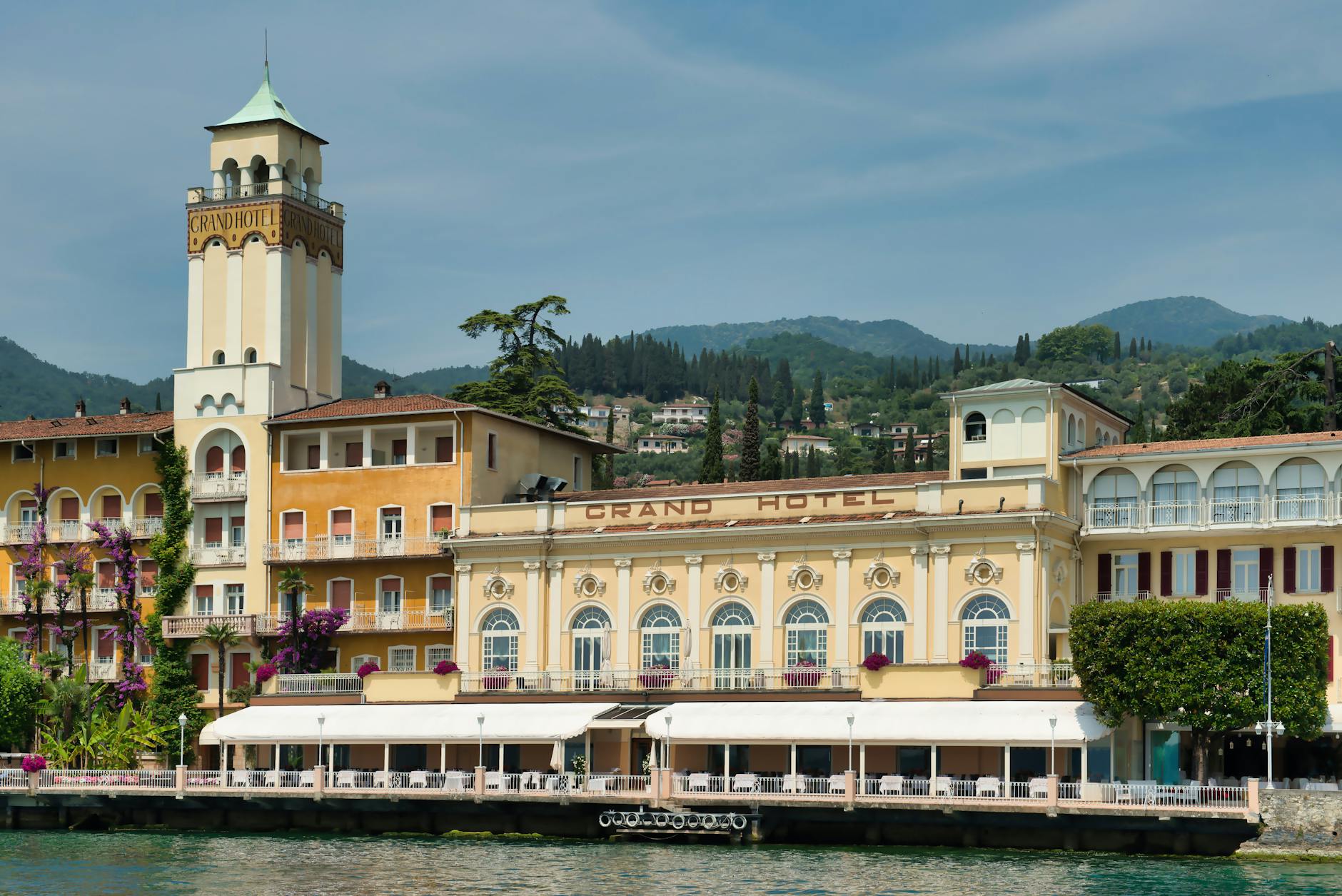
Casabianca, a new art-hotel on Lake Como featuring Kiefer and Kounellis works, illustrates how private collectors are generating yield from art assets. Arte Povera and German Neo-Expressionist works show strong appreciation fundamentals, while art-integrated properties command 18–25% rate premiums over comparables.
Art-Backed Real Estate: What the Casabianca Opening Signals for Investors
Art-integrated hospitality is no longer a branding exercise — it is becoming a measurable asset class. The opening of Casabianca on Lake Como, a 1930s villa transformed into a hotel and art hub by the De Santis family, arrives at a moment when the intersection of trophy real estate and institutional-grade art collections is attracting serious capital. The global art market recorded sales of $65 billion in 2023 according to the Art Basel and UBS report, with private and semi-private collections embedded in hospitality venues commanding a growing premium. Investors tracking alternative assets should read this opening not as a lifestyle story, but as a signal about where value is concentrating.
The De Santis family collection, which anchors Casabianca's cultural identity, features works by Jannis Kounellis and Anselm Kiefer — two artists whose market trajectories offer concrete data points. Kiefer's auction results have climbed sharply over the past decade, with major canvases regularly clearing €1 million to €4 million at houses including Sotheby's and Christie's. Kounellis, a founding figure of Arte Povera, has seen institutional demand strengthen post-mortem, with works appreciating an estimated 30 to 45 percent in the five years following his death in 2017. Embedding such works in a functioning hospitality property creates a dual-return structure: the art appreciates on its own fundamentals while simultaneously driving room-rate premiums and occupancy uplift.
Why Art-Integrated Hospitality Matters to a Portfolio
The mechanics here are straightforward for any investor who has tracked the luxury hospitality sector. Properties with credible, curated art collections consistently outperform comparable properties on average daily rate. A 2022 analysis by Knight Frank found that ultra-prime properties with significant art or cultural programming commanded rate premiums of 18 to 25 percent over comparables in the same geography. Lake Como itself is one of Europe's most supply-constrained luxury destinations — planning restrictions, heritage protections, and limited lakefront footage mean new inventory is structurally scarce. Casabianca enters a market where demand from ultra-high-net-worth travellers continues to outpace supply.
The scarcity argument extends to the art itself. Arte Povera works by artists of Kounellis's stature are finite in number and increasingly held by institutions, reducing the float available to private buyers. Kiefer's large-format works, similarly, are absorbed rapidly by major collectors and museums. When a private family collection of this calibre is placed in a semi-public setting — accessible through hotel stays rather than auction — it creates a new category of experiential scarcity that sophisticated buyers are willing to pay for. This dynamic has already played out at properties such as Hauser & Wirth's Durslade Farm in Somerset and the Berggruen Institute's Villa Aurora in Los Angeles, both of which have demonstrated that art-hospitality hybrids can sustain premium pricing through economic cycles.
- Kiefer auction appreciation (10-year): estimated +120% for major works
- Kounellis post-mortem appreciation (5-year): +30–45%
- Lake Como luxury hospitality rate premium vs. Italian average: approximately 3–4x
- Art-integrated property ADR premium: 18–25% over comparable non-art properties (Knight Frank, 2022)
- Global art market size (2023): $65 billion (Art Basel/UBS)
How Should Investors Position Around This Trend?
The Casabianca model points toward a broader structural shift: family offices and private investors are increasingly using art not merely as a store of value but as an operational asset that generates yield through hospitality, licensing, and cultural programming. For investors who cannot access trophy real estate on Lake Como directly, the relevant takeaway is to track the underlying art market dynamics that make such projects viable. Arte Povera, German Neo-Expressionism, and post-war Italian art remain undervalued relative to their institutional footprint when compared to American post-war equivalents — a gap that auction data suggests is narrowing.
Diversification across alternative asset classes remains the most defensible strategy. Art, fine wine, rare whisky casks, and trophy real estate share common investment characteristics: hard asset status, low correlation to public equities, and supply constraints that support long-term appreciation. Investors already active in whisky casks or fine wine will recognise the same scarcity logic at work in a curated art collection embedded in a restricted-supply property market. The De Santis family's decision to open Casabianca to paying guests is, in investment terms, a yield-generation strategy layered onto a long-duration asset — a structure that deserves attention from any portfolio manager thinking beyond conventional allocations.
Investment Takeaway
The opening of Casabianca is a case study in how private collectors are monetising long-held art positions without liquidating them. For investors, the actionable insight is twofold. First, Arte Povera and German Neo-Expressionist works by artists with strong institutional demand — Kounellis, Kiefer, and their contemporaries — represent a segment of the art market with credible appreciation fundamentals and limited new supply. Second, the art-hospitality hybrid model is producing measurable rate premiums in supply-constrained luxury markets, making it a viable structure for family office capital seeking yield from alternative assets. Watch for similar projects in other restricted European markets — the Alps, the Amalfi Coast, the Algarve — as the template becomes more widely adopted by private collectors seeking to activate, rather than simply hold, their collections.
💼 Interested in alternative asset investment? Speak to the team at Whisky Cask Club — Singapore's leading whisky cask investment specialists.
Frequently Asked Questions
What is Casabianca on Lake Como?
Casabianca is a hotel and art hub opened by the De Santis family in a 1930s villa on Lake Como, Italy. The property houses a significant private art collection featuring works by major artists including Jannis Kounellis and Anselm Kiefer, positioning it as both a luxury hospitality venue and a cultural destination.
Why do Jannis Kounellis and Anselm Kiefer matter as investment-grade artists?
Both artists have demonstrated consistent auction appreciation and strong institutional demand. Kounellis, a central figure in the Arte Povera movement, saw works appreciate an estimated 30 to 45 percent in the five years after his death in 2017. Kiefer's large-format canvases regularly achieve €1 million to €4 million at major auction houses, with a 10-year appreciation estimated at over 120 percent for significant works.
How does art integration affect hotel pricing and returns?
Research by Knight Frank in 2022 found that ultra-prime properties with credible art or cultural programming commanded average daily rate premiums of 18 to 25 percent over comparable properties in the same market. This creates a dual-return structure: the art appreciates independently while driving measurable revenue uplift through the hospitality operation.
What makes Lake Como a supply-constrained market?
Lake Como is subject to strict heritage protections and planning restrictions that severely limit new development on the lakefront. Combined with sustained demand from ultra-high-net-worth international travellers, this structural supply constraint supports long-term price appreciation for existing properties and keeps luxury hospitality rates at three to four times the Italian national average.
How does art investment compare to other alternative assets like whisky casks?
Art, whisky casks, fine wine, and trophy real estate share core investment characteristics: hard asset status, low correlation to public equity markets, and appreciation driven by supply constraints rather than earnings multiples. The scarcity logic underpinning a finite Arte Povera collection is structurally similar to that of a limited-production Scotch whisky — both benefit from inelastic supply meeting growing demand from wealthy buyers globally.
💼 Interested in alternative asset investment? Speak to the team at Whisky Cask Club — Singapore's leading whisky cask investment specialists.