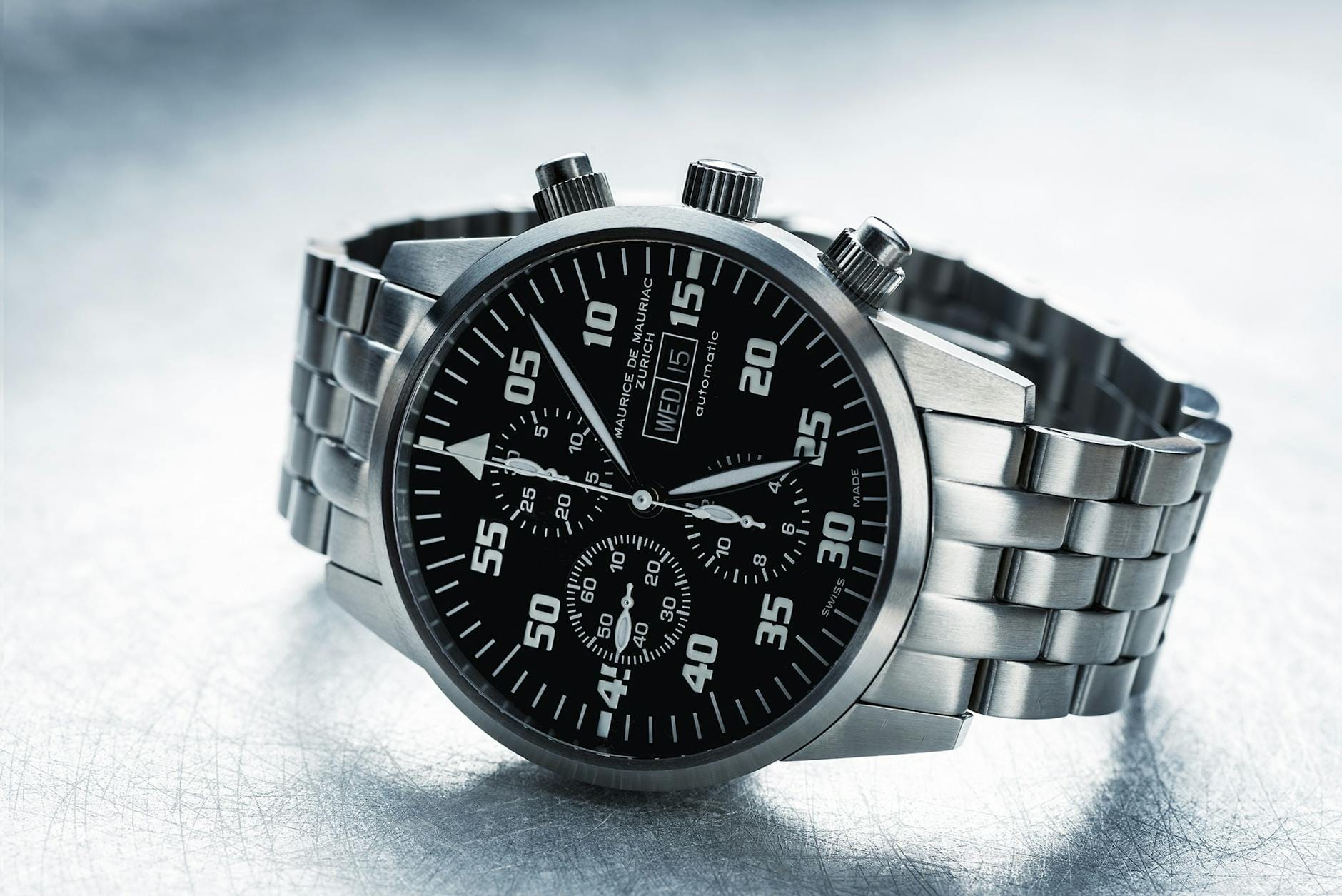
Anoma launches its first permanent watch line with the A1 Abyss and Stone. For investors, this validates brand longevity and crystallises scarcity on earlier limited editions — making prior releases stronger secondary market holds while new entries offer stable retail-anchored entry points.
Anoma A1 Core Collection: What the Investment Case Looks Like
The independent watch market has delivered some of the strongest risk-adjusted returns in the alternative asset space over the past decade, with the Knight Frank Luxury Investment Index tracking a 147% appreciation in rare timepieces over ten years to 2023. Against that backdrop, Anoma's decision to transition its A1 platform from limited-run releases into a permanent core collection — anchored by the new A1 Abyss and A1 Stone — is a structural signal worth analysing. For investors tracking the micro-brand segment, permanence is a double-edged sword: it removes the artificial scarcity of a one-time drop, but it also validates a brand's commercial durability in a way that short runs never can. The question is whether the A1 Core Collection represents a maturing investment thesis or a dilution of earlier scarcity value.
Anoma built its reputation through deliberately constrained releases. The original A1, the Slate edition, and the Optical Art series were all produced in small batches, creating the kind of supply friction that secondary market premiums depend on. Early A1 examples have traded hands at meaningful premiums to retail, consistent with the broader pattern seen in micro-brands that achieve cult status before scaling — a trajectory that parallels early Fears, Ming, or Baltic before those brands expanded their lines. The introduction of a permanent collection signals that Anoma has sufficient demand to justify ongoing production, which is a materially different commercial proposition and one that investors in the brand's earlier pieces should track carefully.
Why Scarcity Dynamics Still Favour Early Adopters
The A1 Abyss and A1 Stone are positioned as the foundation of Anoma's permanent lineup, but permanence in independent watchmaking rarely means mass production. Independent brands operating at this tier typically produce between 200 and 1,000 units annually across all references — a figure that remains orders of magnitude below the output of mainstream Swiss houses. Rolex, for context, produces an estimated 800,000 to one million watches per year; Anoma's entire catalogue likely represents a rounding error by comparison. That structural scarcity keeps the secondary market tight even as a permanent line removes the urgency of a limited drop.
From an investment mechanics standpoint, the shift to a core collection introduces price anchor stability. When a reference is available indefinitely at retail, the secondary market has a ceiling — buyers will not pay a sustained premium above retail if they can simply purchase new. However, for the earlier limited editions — the original A1, Slate, and Optical Art — the calculus changes. Those pieces are now definitively closed chapters in the brand's history, and their collectibility is crystallised. Investors holding those references have a clearer exit narrative: they own the pre-permanence era of a brand that has since validated its commercial standing. That is a compelling provenance story, and provenance drives secondary market premiums across every alternative asset class, from whisky casks to first-edition prints.
How the A1 Core Collection Fits an Alternative Asset Portfolio
Independent watches occupy a specific niche within the broader alternative asset framework. Unlike blue-chip references from Patek Philippe or Audemars Piguet — where auction data from Christie's, Phillips, and Sotheby's provides transparent price discovery — micro-brand pieces trade primarily through grey market platforms such as Chrono24, WatchBox, and dedicated forums. This opacity cuts both ways: it limits liquidity but also insulates pricing from the volatility that affects more publicly traded luxury assets. The A1 Abyss retails in a price band consistent with Anoma's previous releases, placing entry-level acquisition costs within reach of investors building a diversified alternative portfolio without committing the six-figure sums required for trophy Rolex or Patek references.
The broader watch investment market provides useful context. The WatchCharts Overall Market Index, which tracks secondary market pricing across major references, declined approximately 30% from its 2022 peak through 2023 as pandemic-era speculation unwound. However, independent and micro-brand pieces demonstrated relative resilience during that correction, with the most design-distinct references holding value better than mainstream sports watches that had been flipped aggressively. Anoma's A1 platform, with its architecturally distinctive dial geometry and strong design identity, sits in the category most likely to retain collector interest through market cycles.
Investment Takeaway
For investors already holding earlier Anoma limited editions, the launch of the A1 Core Collection is net positive: it confirms brand longevity and closes the scarcity window on prior releases, strengthening their secondary market narrative. For those considering entry into the Anoma ecosystem now, the A1 Abyss and A1 Stone offer a lower-risk entry point with retail price stability, though the upside is more modest than a closed limited run. The actionable position is to monitor secondary market pricing on the original A1 and Slate editions over the next 12 to 18 months — if the brand continues to build commercial momentum, those early references are likely to see renewed demand from collectors who missed the initial drops and now recognise Anoma as an established name rather than a speculative bet. Position sizing should reflect the illiquidity premium inherent in micro-brand watches: treat these as three-to-five-year holds minimum, with exit via established grey market platforms rather than auction, where buyer's premiums erode returns on lower-value lots.
- Micro-brand annual production: typically 200–1,000 units across all references
- 10-year luxury watch appreciation: +147% (Knight Frank Luxury Investment Index, 2023)
- Secondary market correction: WatchCharts index down ~30% from 2022 peak, with independent brands showing relative resilience
- Recommended hold period: 3–5 years minimum for micro-brand references
💼 Interested in alternative asset investment? Speak to the team at Whisky Cask Club — Singapore's leading whisky cask investment specialists.
Frequently Asked Questions
What is the Anoma A1 Core Collection and why does it matter to investors?
The Anoma A1 Core Collection — comprising the A1 Abyss and A1 Stone — is the brand's first permanent lineup, replacing its previous strategy of small-batch limited releases. For investors, this signals commercial validation and closes the scarcity window on earlier limited editions, which may strengthen their secondary market value over time.
How does permanence affect the secondary market value of Anoma watches?
A permanent retail listing creates a price ceiling on secondary market trades for the new core references, since buyers can purchase new rather than pay a premium. However, earlier limited editions — the original A1, Slate, and Optical Art — become definitively scarce, potentially increasing their collectibility and secondary market premiums as the brand grows in recognition.
What returns have independent watches delivered compared to mainstream luxury brands?
The Knight Frank Luxury Investment Index recorded 147% appreciation in rare timepieces over ten years to 2023. Independent and micro-brand watches demonstrated relative resilience during the 2022–2023 market correction, which saw the WatchCharts Overall Market Index decline approximately 30% from its peak, with design-distinct references holding value better than mainstream sports watches.
What is the recommended investment approach for micro-brand watches like Anoma?
Investors should treat micro-brand watches as illiquid, long-duration holdings with a minimum three-to-five-year horizon. Exit is best achieved through established grey market platforms such as Chrono24 or WatchBox rather than major auction houses, where buyer's premiums can significantly erode returns on lower-value lots. Position sizing should reflect the asset's illiquidity relative to more liquid alternatives.
How does Anoma's production scale compare to mainstream Swiss watchmakers?
Independent brands at Anoma's tier typically produce between 200 and 1,000 units annually across all references. Rolex, by comparison, produces an estimated 800,000 to one million watches per year. This structural scarcity underpins secondary market tightness even for permanent lines, as supply remains constrained relative to growing demand from collectors and investors.
💼 Interested in alternative asset investment? Speak to the team at Whisky Cask Club — Singapore's leading whisky cask investment specialists.