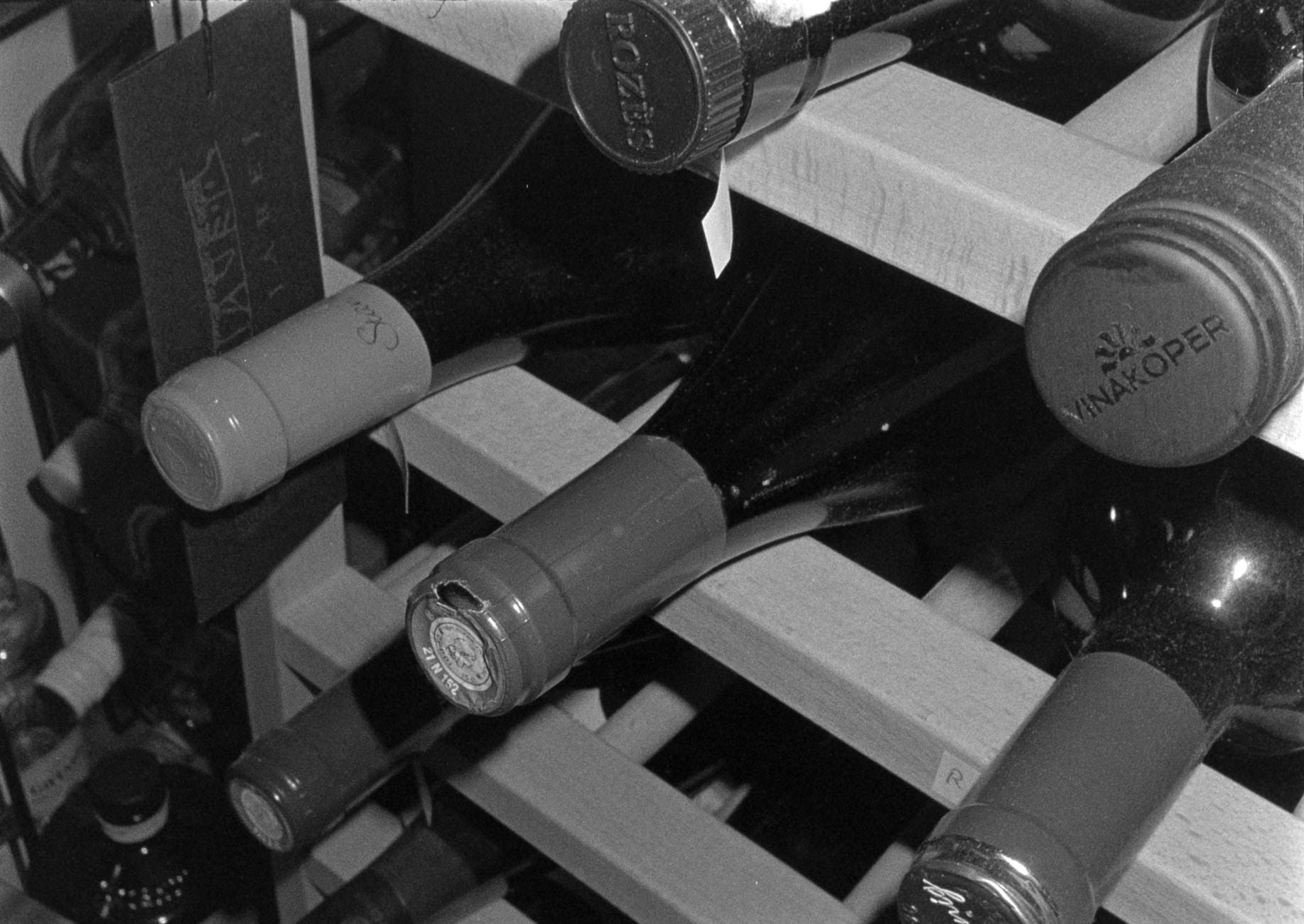
The late Peter Magowan's 20-acre St. Helena estate is listed for $13 million. The sale highlights Napa Valley's premium land values, driven by scarcity and global demand, positioning such properties as stable alternative investments compared to more volatile asset classes.
{"title":"Peter Magowan's $13M Napa Valley Estate: What Wine Country Land Tells Investors","html":"
What Does a $13 Million Napa Valley Estate Signal for Wine Country Asset Values?
A 20-acre St. Helena estate belonging to the late San Francisco Giants owner and former Safeway chief executive Peter Magowan has been listed at $13 million, placing it firmly among the upper tier of Napa Valley trophy properties that have commanded sustained investor attention over the past decade. Magowan, who died in 2019, used the property as a weekend retreat from his primary San Francisco residence, and the listing now offers a rare window into how legacy wine country real estate intersects with broader alternative asset valuations. For investors tracking tangible assets — fine wine, agricultural land, luxury real estate — the listing price carries meaningful data embedded within it.
If you manage a portfolio that includes alternative assets, this listing matters beyond its headline number. Napa Valley land values have appreciated at a compound annual rate of approximately 6–8% over the past two decades according to regional agricultural land surveys, outpacing many conventional fixed-income instruments. The convergence of scarcity — only around 45,000 acres of Napa Valley are planted to vine — with sustained global demand for Californian fine wine creates a supply-demand dynamic that underpins both land prices and the collectible wines produced on them. Understanding how trophy estate listings move the market benchmark is essential for any investor with exposure to wine as an asset class.
"Napa Valley's finite planted acreage — approximately 45,000 acres — combined with growing global demand for Californian fine wine creates a scarcity premium that flows directly into both land values and the bottles produced on that land."
Why Is St. Helena Considered a Premium Wine Investment Address?
St. Helena is one of Napa Valley's most sought-after appellations, sitting at the geographic and reputational heart of a region that produces some of the world's most investment-grade wines. Producers including Beringer Vineyards, Spottswoode Estate, and Duckhorn Wine Company operate within or immediately adjacent to the St. Helena AVA, and the concentration of prestige labels in this corridor directly supports land values. According to data compiled by the USDA National Agricultural Statistics Service, Napa County vineyard land has traded at between $250,000 and $450,000 per planted acre, meaning a 20-acre parcel in St. Helena carries embedded agricultural value well above the national average for any crop-bearing land.
The Magowan estate's $13 million asking price — approximately $650,000 per acre across the full 20-acre holding — reflects both the residential premium and the underlying land value typical of this corridor. Comparable trophy sales in the St. Helena and Rutherford areas have demonstrated consistent price floors even during broader real estate corrections, partly because the buyer pool for these properties is global and motivated by both lifestyle and investment rationale. Wine country real estate in the St. Helena AVA has historically demonstrated lower price volatility than urban luxury residential markets, making it a genuine portfolio diversifier. The 2023 Napa Valley real estate market saw median luxury property prices hold above $3 million despite national headwinds, according to regional brokerage data.
How Does Fine Wine Perform as an Investment Compared to Other Alternative Assets?
Fine wine is documented alternative asset classes, with decades of auction data providing a transparent performance record that few collectibles can match. The Liv-ex Fine Wine 1000 index — the broadest benchmark for the secondary wine market — returned approximately 25% over the five-year period ending in 2022, a period that also saw significant volatility in equities and fixed income. Cult Californian producers including Screaming Eagle, Harlan Estate, and Opus One have posted even stronger secondary market appreciation, with a single bottle of Screaming Eagle Cabernet Sauvignon from a top vintage regularly achieving $3,000–$6,000 at Christie's and Sotheby's Wine auctions. A case of 1992 Screaming Eagle sold at a Hart Davis Hart auction for $500,000 in 2000, a result that remains cited data points in Californian wine investment history.
For investors comparing wine against other alternative assets, the key metrics are liquidity, storage costs, and provenance verification. Fine wine trades through established auction houses including Christie's, Sotheby's Wine, Acker Merrall and Condit, and Hart Davis Hart, providing price discovery that is more transparent than art or rare watches in many cases. Provenance — the documented ownership and storage history of a bottle — is the single most important factor in realising maximum auction value, a dynamic that directly connects wine investment to the broader provenance economy. Wines stored in temperature-controlled facilities with unbroken chain-of-custody documentation consistently achieve 15–20% premiums over bottles with incomplete provenance records at major auction houses.
- Liv-ex Fine Wine 1000 five-year return (to 2022): approximately +25%
- Napa Valley planted acreage: approximately 45,000 acres — a hard supply ceiling
- St. Helena vineyard land value: $250,000–$450,000 per planted acre (USDA NASS data)
- Screaming Eagle top auction result: $500,000 per case (Hart Davis Hart, 2000)
- Provenance premium at auction: 15–20% above bottles with incomplete storage records
What Are the Key Investment Metrics for Napa Valley Wine and Land Assets?
Investors approaching Napa Valley as an asset class need to evaluate three distinct but interconnected markets: physical vineyard land, fine wine bottles on the secondary market, and wine-adjacent real estate such as the Magowan estate. Each carries different liquidity profiles, holding costs, and return drivers. Vineyard land is the least liquid but offers the most direct exposure to the scarcity premium, while secondary market wine offers the highest liquidity but requires active storage management and insurance. Trophy residential estates like the St. Helena property occupy a middle ground — they are long-duration assets that appreciate with both the land market and the reputational halo of the surrounding wine region.
The Magowan listing also illustrates the role of provenance in non-wine assets. A property with a documented ownership history tied to a significant cultural or business figure commands a narrative premium that is difficult to quantify but consistently observable in final sale prices. This mirrors the dynamic seen when bottles from historically significant cellars — the Bipin Desai collection sold by Hart Davis Hart, or the Domaine de la Romanée-Conti direct releases tracked by Liv-ex — achieve prices well above comparable bottles without that ownership story. Provenance is not sentiment — it is a measurable price premium that sophisticated investors actively seek across wine, watches, art, and real estate.
Is Napa Valley Real Estate a Good Investment in the Current Market?
Napa Valley real estate is a defensible long-term investment for high-net-worth investors seeking hard asset exposure with a scarcity premium built in. The structural supply constraint — regulatory restrictions on new vineyard development, limited water rights, and the finite geography of the valley floor — means that prime Napa land cannot be replicated or expanded in the way that suburban residential supply can. This makes it categorically different from most real estate markets and more analogous to owning a grand cru vineyard in Burgundy or a classified growth estate in Bordeaux, where geography and regulation combine to create permanent scarcity.
The current interest rate environment has introduced some near-term pricing pressure on luxury real estate nationally, but Napa Valley trophy properties have shown resilience because their buyer pool is less dependent on financing than typical residential buyers. Cash transactions dominate the top end of the Napa market, insulating it from mortgage rate sensitivity. According to Christie's International Real Estate data, the $10 million-plus segment of the Napa Valley market saw transaction volumes hold within 10% of their five-year average through 2023, a notably stronger performance than comparable luxury markets in urban centres. For investors with a five-to-ten year horizon, a St. Helena estate at $13 million represents exposure to supply-constrained luxury land markets in the United States.
Frequently Asked Questions
What is the Liv-ex Fine Wine 1000 index?
The Liv-ex Fine Wine 1000 is the broadest benchmark index for the global fine wine secondary market, tracking the price performance of 1,000 wines across all major producing regions. It is published by Liv-ex, the London-based fine wine exchange, and is used by investors, fund managers, and auction houses as the primary reference for wine market performance. The index returned approximately 25% over the five-year period to 2022, making it a meaningful comparison point against equities and alternative assets.
How does provenance affect fine wine investment returns?
Provenance refers to the documented ownership and storage history of a wine bottle or collection. Bottles with unbroken, verifiable provenance — including original wooden cases, direct-from-château release documentation, and temperature-controlled storage records — consistently achieve 15–20% premiums over comparable bottles with incomplete histories at major auction houses including Christie's, Sotheby's Wine, and Acker Merrall and Condit. Provenance verification is increasingly supported by digital authentication platforms and blockchain-based records.
Is Napa Valley vineyard land a good investment?
Napa Valley vineyard land has delivered compound annual appreciation of approximately 6–8% over two decades, supported by hard supply constraints — approximately 45,000 planted acres with strict regulatory limits on expansion — and sustained global demand for Californian fine wine. Prime parcels in appellations including St. Helena, Rutherford, and Oakville have traded at $250,000–$450,000 per planted acre. For high-net-worth investors seeking hard asset diversification, Napa vineyard land offers scarcity-driven returns with low correlation to equity markets.
Who was Peter Magowan and why does his estate matter to investors?
Peter Magowan was the former chief executive of Safeway Inc. and the managing general partner of the San Francisco Giants MLB franchise, a role he held from 1992 until his death in 2019. His St. Helena estate, listed at $13 million, is relevant to investors as a data point in the Napa Valley luxury real estate market and as an illustration of how ownership provenance — the identity and significance of prior owners — can influence asset pricing across real estate, fine wine, and collectibles.
💼 Interested in alternative asset investment? Speak to the team at Whisky Cask Club — Singapore's leading whisky cask investment specialists.
","meta_title":"Peter Magowan's $13M Napa Estate: Wine Country Investment Signal","meta_description":"Peter Magowan's $13M St. Helena estate reveals key data on Napa Valley land values, fine wine investment returns, and provenance premiums for HNW investors.","focus_keyword":"Napa Valley wine investment","keywords":["Napa Valley real estate investment","fine wine alternative assets","St. Helena vineyard land value","Liv-ex Fine Wine 1000","Screaming Eagle auction price","Peter Magowan estate","wine provenance premium","Californian fine wine market"],"tldr":"Peter Magowan's $13M St. Helena estate highlights Napa Valley's scarcity-driven land premium. With 45,000 planted acres hard-capped by regulation and fine wine indices returning ~25% over five years, wine country assets offer HNW investors defensible hard-asset exposure with measurable provenance premiums.","faqs":[{"q":"What is the Liv-ex Fine Wine 1000 index?","a":"The Liv-ex Fine Wine 1000 is the broadest benchmark for the global fine wine secondary market, tracking 1,000 wines across all major regions. It returned approximately 25% over the five-year period to 2022 and is the primary reference index used by investors and auction houses."},{"q":"How does provenance affect fine wine investment returns?","a":"Bottles with verified provenance — original cases, direct-release documentation, and storage records — achieve 15–20% premiums at auction over bottles with incomplete histories. This premium is consistently observed at Christie's, Sotheby's Wine, and Acker Merrall and Condit."},{"q":"Is Napa Valley vineyard land a good investment?","a":"Napa Valley vineyard land has appreciated at approximately 6–8% CAGR over two decades, with prime parcels trading at $250,000–$450,000 per planted acre. Hard supply constraints — roughly 45,000 acres with strict regulatory limits — support long-term price floors."},{"q":"Who was Peter Magowan and why does his estate matter to investors?","a":"Peter Magowan was the CEO of Safeway and managing general partner of the San Francisco Giants. His $13M St. Helena estate is a benchmark data point for Napa trophy real estate and illustrates how ownership provenance drives price premiums across asset classes."}],"entities":{"people":["Peter Magowan"],"organizations":["San Francisco Giants","Safeway Inc.","Liv-ex","Christie's","Sotheby's Wine","Acker Merrall and Condit","Hart Davis Hart","Beringer Vineyards","Spottswoode Estate","Duckhorn Wine Company","Screaming Eagle","Harlan Estate","Opus One","USDA National Agricultural Statistics Service","Christie's International Real Estate"],"places":["St. Helena","Napa Valley","San Francisco","Rutherford","Oakville","Burgundy","Bordeaux"]}}
💼 Interested in alternative asset investment? Speak to the team at Whisky Cask Club — Singapore's leading whisky cask investment specialists.