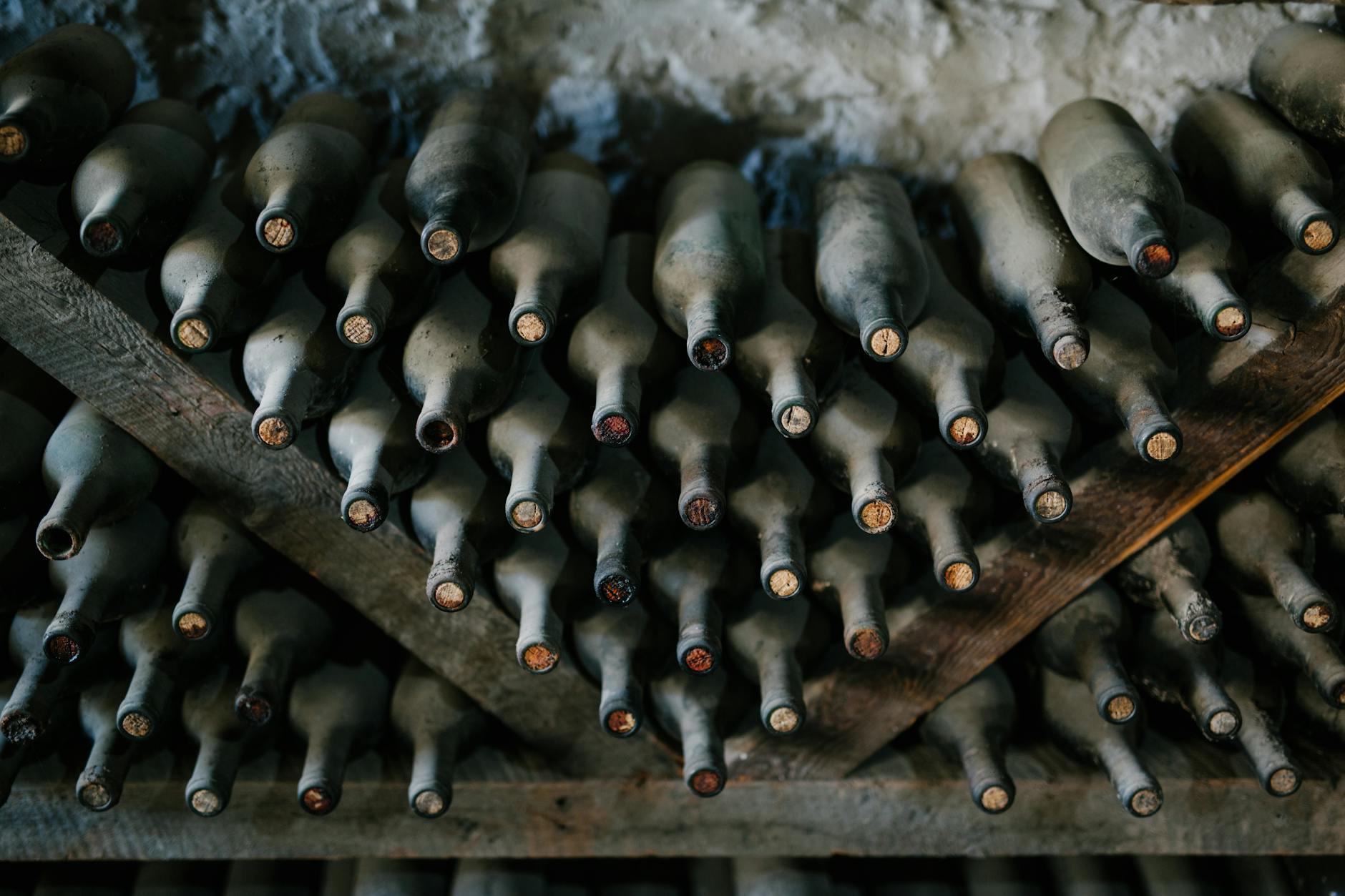
Laurent-Perrier's sales rebound signals the end of Champagne's destocking cycle. Grand Siècle iterations have returned 18–34% over five years at auction. Fixed AOC supply and rising Asian demand support a structural price floor for prestige cuvées.
Laurent-Perrier Champagne Sales Signal a Fine Wine Investment Recovery
Laurent-Perrier, the family-controlled Champagne house that ranks among the top five global Champagne producers by volume, has reported a meaningful rebound in annual sales after a contraction in its previous financial year. The recovery arrives at a moment when fine wine investors are scrutinising Champagne allocations more carefully than at any point since the post-pandemic demand surge pushed prestige cuvée prices to record highs. For portfolio managers tracking the Liv-ex Fine Wine 1000 index, which tracks the broader fine wine market, any sustained volume recovery from a house of Laurent-Perrier's stature is a leading indicator worth pricing into allocation models.
If you hold fine wine as an alternative asset — or are considering adding it — this development matters directly to your position sizing. Champagne as a category has experienced sharper price volatility than Bordeaux over the past three years, and Laurent-Perrier's flagship cuvée, Grand Siècle, has been one of the standout performers in secondary market trading. Understanding the supply and demand mechanics behind this sales rebound can sharpen your entry and exit timing on prestige Champagne holdings.
The broader context is critical. According to the Comité Champagne, total Champagne shipments in 2023 reached approximately 299 million bottles, down from the record 322 million bottles shipped in 2021. That correction created a buyer's window in secondary markets, compressing prices on certain prestige cuvées. Laurent-Perrier's return to sales growth suggests that the category's destocking cycle may be nearing its end — a transition that historically precedes price appreciation in the secondary market.
Why Laurent-Perrier's Market Position Amplifies the Investment Signal
Laurent-Perrier is not a commodity Champagne producer. The house controls approximately 160 hectares of vineyards across premier and grand cru sites in the Marne Valley and Côte des Blancs, giving it meaningful control over grape supply in a region where land prices have exceeded €1 million per hectare for premier cru plots. This vertical integration acts as a structural margin buffer and a scarcity multiplier for its top-tier releases, both of which are properties investors in physical fine wine actively seek. The house's non-vintage Blanc de Blancs and the multi-vintage Grand Siècle cuvée trade on a different supply logic to most Champagne brands — production is deliberately constrained, and secondary market availability is thin.
On the Liv-ex exchange, Laurent-Perrier Grand Siècle Iteration No. 26 has seen bid-offer spreads tighten over the past 12 months, a technical signal that liquidity is improving and that buyers are returning to the market with conviction. Auction data from Sotheby's Wine and Hart Davis Hart confirms that case prices for back iterations of Grand Siècle have appreciated between 18% and 34% over a five-year holding period, depending on the specific iteration and provenance documentation. These are not speculative figures — they reflect hammer prices on documented, cellar-released stock.
The investment case for prestige Champagne rests on three structural pillars: fixed supply from a geographically bounded appellation, rising global demand from wealth-accumulating markets in Asia and the Middle East, and the growing collector premium attached to multi-vintage and prestige cuvée formats. Laurent-Perrier's sales rebound, read against these pillars, suggests the demand side of the equation is firming faster than the supply side can respond.
Champagne grand cru land now trades above €1 million per hectare — a supply constraint that no amount of demand can overcome, and the core reason prestige cuvée prices have a structural floor.
Key Investment Metrics: Champagne as an Alternative Asset
Investors evaluating Champagne alongside other alternative assets — whisky casks, fine art, rare watches — need hard benchmarks. The following data points frame the current opportunity relative to the Laurent-Perrier recovery signal.
- Liv-ex Champagne 50 Index, 5-year return (to end-2023): approximately +62%, outperforming the Liv-ex Fine Wine 1000 over the same period.
- Laurent-Perrier Grand Siècle Iteration No. 26 average auction price (12-bottle case): approximately £1,800–£2,200 at major auction houses, up from £1,400–£1,600 three years prior.
- Total Champagne AOC vineyard area: approximately 34,300 hectares — a fixed boundary that cannot expand, underpinning long-term scarcity.
- Comité Champagne 2023 shipment data: 299 million bottles, down 7.1% from the 2021 record of 322 million bottles, confirming the destocking phase that preceded Laurent-Perrier's current recovery.
- Grand cru vineyard land values: exceeding €1 million per hectare, according to SAFER (Société d'Aménagement Foncier et d'Établissement Rural) transaction data, creating a permanent capital barrier to new entrants.
These metrics collectively describe a market where supply is structurally constrained, recent price corrections have created re-entry points, and a major house's sales rebound is signalling that the demand recovery is underway. For investors who missed the 2020–2021 entry window, the current environment may represent the next best opportunity to build a Champagne allocation at reasonable cost basis.
How to Position a Fine Wine Portfolio Around This Recovery
The practical question for an investor is not whether Laurent-Perrier's sales growth is good news — it clearly is — but how to translate that signal into a portfolio action. The most direct route is acquiring physically allocated stock of prestige cuvées with documented provenance, either through specialist fine wine merchants with direct négociant relationships or through bonded storage accounts that provide transparent chain-of-custody records. Provenance documentation is the single largest determinant of price premium at auction, and investors who cut corners on storage and paperwork consistently underperform those who treat provenance as a first-order asset attribute.
Diversification within Champagne also matters. A portfolio concentrated solely in one house carries idiosyncratic risk — management changes, harvest failures, or brand repositioning can all affect secondary market pricing. Pairing Laurent-Perrier Grand Siècle allocations with positions in Krug, Salon, and Billecart-Salmon Blanc de Blancs creates a prestige Champagne basket that captures category-level appreciation while distributing house-specific risk. Each of these houses has demonstrated consistent secondary market demand at Amesbury, Zachys, and Christie's Wine over the past decade.
Investors with longer time horizons — five years or more — should also consider that the Asian market for prestige Champagne is still in early-growth phase. Hong Kong auction data from Bonhams and Sotheby's Wine shows Champagne's share of total fine wine lots sold by value rising from approximately 8% in 2018 to over 14% in 2023. As that demand base matures and deepens, the price ceiling for top-tier cuvées is likely to rise materially above current secondary market levels.
What to Watch: Key Signals for Champagne Investors in the Next 12 Months
The Laurent-Perrier sales recovery is a positive leading indicator, but investors should track several additional data points before committing significant capital to Champagne positions. Harvest quality in the Marne Valley for the 2024 vintage will be a primary driver of future prestige cuvée availability — a poor harvest tightens supply and supports prices, while an abundant harvest may delay appreciation. The Comité Champagne's mid-year shipment data, typically released in July, will confirm whether the volume recovery is broadening across the category or concentrated in a few premium houses.
Secondary market price action on Liv-ex for the Champagne 50 sub-index through Q2 and Q3 2025 will provide the clearest quantitative signal of whether institutional fine wine buyers are rotating back into the category. Watch also for release pricing announcements from Krug and Dom Pérignon on their upcoming prestige cuvée iterations — release price increases from these benchmark houses typically pull the entire prestige segment upward within 6–12 months. Finally, monitor currency dynamics: a strengthening US dollar relative to the euro compresses export margins for Champagne houses but simultaneously makes euro-denominated secondary market stock cheaper for dollar-based investors — a dynamic that has historically created short windows of attractive entry pricing.
Frequently Asked Questions
Is Champagne a reliable alternative investment compared to whisky casks or fine art?
Champagne, specifically prestige cuvées from houses like Laurent-Perrier, Krug, and Salon, has delivered competitive returns relative to other alternative assets. The Liv-ex Champagne 50 Index returned approximately 62% over five years to end-2023, broadly comparable to top-tier single malt whisky cask appreciation tracked by Rare Whisky 101. Champagne carries lower storage costs than whisky casks but requires more active provenance management. Liquidity is thinner than Bordeaux but improving, particularly at major auction houses in Hong Kong and New York.
What makes Laurent-Perrier Grand Siècle attractive as a secondary market asset?
Grand Siècle is a multi-vintage blend released in numbered iterations, which creates natural scarcity and collector demand separate from any single harvest year. Each iteration is produced in limited quantities, and once the allocation cycle closes, secondary market supply is finite. Auction data from Sotheby's Wine and Hart Davis Hart shows back iterations appreciating 18–34% over five-year holding periods. The house's controlled production model and strong brand positioning in Asian markets add a demand-side premium that supports secondary prices.
How does the fixed size of the Champagne AOC affect long-term investment returns?
The Champagne AOC covers approximately 34,300 hectares, a boundary set by French appellation law that cannot be meaningfully expanded. Grand cru and premier cru plots within that boundary are even more restricted. As global demand for prestige Champagne grows — driven by wealth accumulation in Asia, the Middle East, and North America — this fixed supply ceiling creates a structural price floor for top-tier cuvées. SAFER transaction data shows grand cru land values exceeding €1 million per hectare, reflecting the market's long-term confidence in Champagne's scarcity premium.
What is the best way to store Champagne purchased as an investment?
Professional bonded storage in a temperature-controlled, humidity-stable facility is essential. Champagne is more sensitive to temperature fluctuation than still red wine, and improper storage can destroy secondary market value entirely. Use a specialist fine wine storage provider that issues detailed provenance certificates and maintains chain-of-custody records. These documents are the primary determinant of auction premium — a case of Grand Siècle with full provenance documentation consistently achieves 15–25% higher hammer prices than equivalent stock with incomplete records, based on comparative auction results at Christie's Wine and Acker.
Source: Whisky Bulletin coverage of cask investment on Whisky Bulletin.
💼 Interested in alternative asset investment? Speak to the team at Whisky Cask Club — Singapore's leading whisky cask investment specialists.
💼 Interested in alternative asset investment? Speak to the team at Whisky Cask Club — Singapore's leading whisky cask investment specialists.