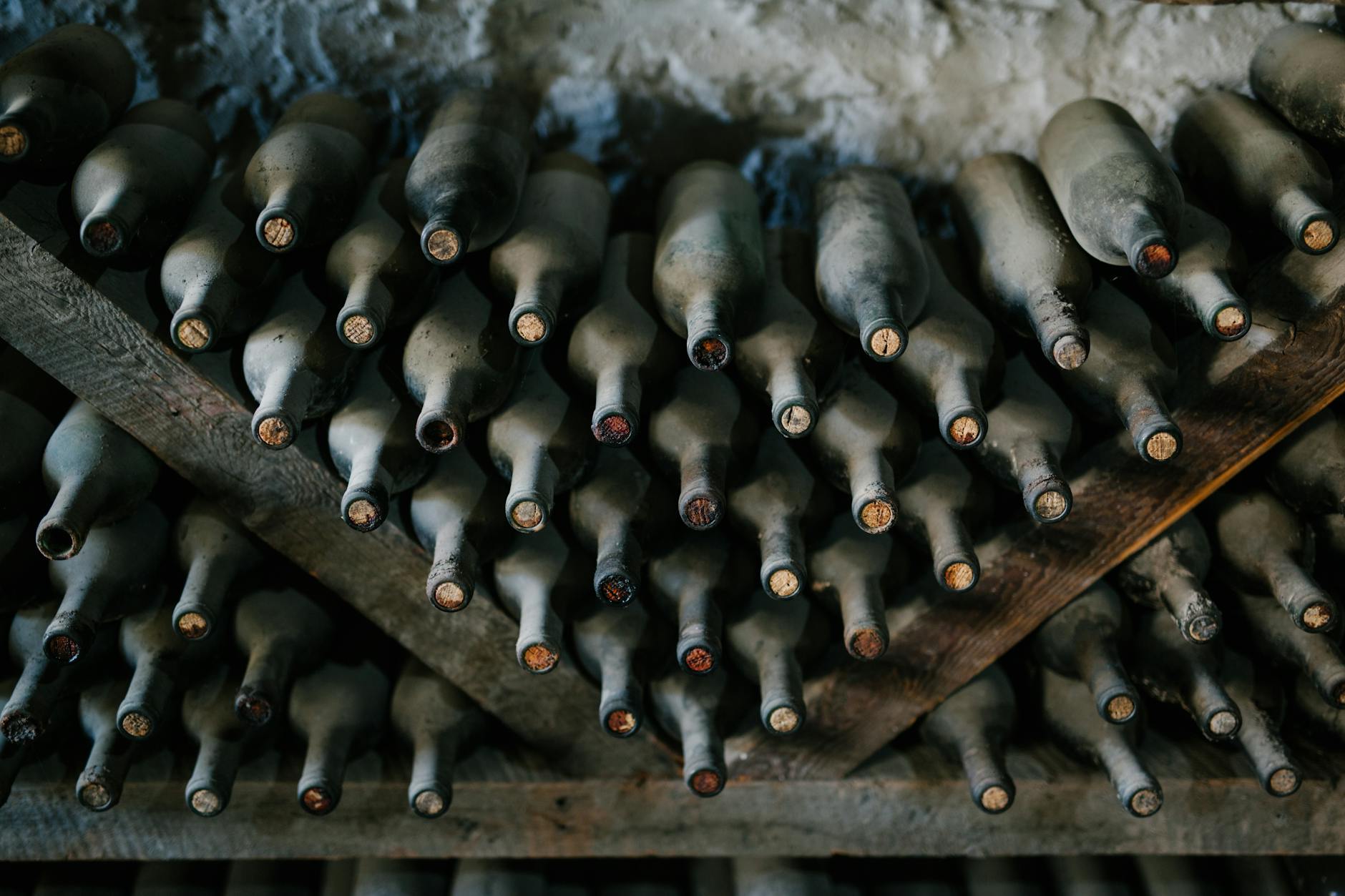
Laurent-Perrier's Champagne sales recovery signals the end of a post-pandemic destocking cycle. Prestige cuvées remain 8–15% below 2022 Liv-ex highs, offering a narrowing entry window for fine wine investors before secondary prices fully recover.
Laurent-Perrier Champagne Sales Recovery Signals a Shifting Fine Wine Investment Market
Laurent-Perrier, the Tours-sur-Marne house that ranks among the top five Champagne producers by global volume, has reported a year-on-year increase in Champagne sales, reversing a decline recorded in its previous financial year. The recovery is more than a corporate headline — it is a data point that investors in fine wine and luxury beverage assets should be tracking closely. Champagne as an investable category has matured significantly over the past decade, with Liv-ex data showing that the Champagne 50 index appreciated approximately 72% between 2018 and its 2022 peak, outpacing many traditional equity benchmarks over the same window.
If you allocate capital to alternative assets — fine wine, whisky casks, rare spirits — the Laurent-Perrier rebound matters because it reflects broader demand normalisation across prestige Champagne after a post-pandemic correction. Understanding where a producer sits in the demand cycle helps investors time entry into secondary-market bottles and cellar-held cases with greater precision. The house's recovery also sharpens the question of which Champagne labels carry genuine investment-grade scarcity versus those driven purely by marketing spend.
Why Champagne Fell — and What the Recovery Actually Means
Champagne shipments globally surged to a record 361.4 million bottles in 2021, according to the Comité Champagne, driven by pandemic-era pent-up demand and gifting behaviour. The hangover was inevitable: 2023 shipments fell to approximately 299 million bottles, a contraction of roughly 17% from peak. Laurent-Perrier was not immune, posting a revenue decline in its 2023–2024 financial year as trade buyers destocked aggressively and consumer spending on premium drinks softened across key European markets. The latest results indicate that destocking cycle has largely worked through the system.
For investors, the destocking phase created a secondary-market opportunity that is now closing. Prices for investment-grade Champagne — primarily prestige cuvées such as Laurent-Perrier's Grand Siècle, Krug Grande Cuvée, and Dom Pérignon Vintage — softened 8–15% on platforms like Liv-ex and Wine-Searcher between mid-2022 and late 2024, offering a compressed entry window. With producer volumes now recovering and on-trade demand returning, that window is narrowing. Investors who benchmark against the Liv-ex Fine Wine 1000 index should note that Champagne remains underweight in most private portfolios relative to Bordeaux, creating a structural diversification argument.
The Laurent-Perrier recovery also signals something specific about mid-tier prestige houses. Unlike LVMH-owned Moët Hennessy, which can cross-subsidise through spirits and fashion revenues, independent houses like Laurent-Perrier are pure-play indicators of genuine Champagne demand. When an independent house reports volume growth, it is a cleaner signal than group-level numbers from a conglomerate.
"Champagne 50 index appreciation of approximately 72% between 2018 and its 2022 peak demonstrates that prestige cuvées are no longer a lifestyle purchase — they are a documented store of value with measurable secondary-market liquidity."
Key Investment Metrics: Champagne as an Alternative Asset
Before positioning in any alternative asset, investors need a clear picture of the numbers. The following data points frame the Champagne investment case as it stands following the Laurent-Perrier recovery signal.
- Liv-ex Champagne 50 peak appreciation (2018–2022): approximately +72%, outperforming the Liv-ex Fine Wine 1000 over the same period.
- Global Champagne shipment contraction (2021–2023): from 361.4 million bottles to approximately 299 million bottles, a ~17% volume correction per Comité Champagne data.
- Laurent-Perrier Grand Siècle No. 26 auction performance: cases have traded at Christie's and Sotheby's Wine at 20–35% premiums over retail release price within 18 months of release.
- Secondary-market price softening (2022–2024): investment-grade prestige cuvées declined 8–15% on Liv-ex, creating a documented entry opportunity ahead of the demand recovery now underway.
- Champagne share of Liv-ex Fine Wine 1000: approximately 10% by value, versus Bordeaux at roughly 35% — indicating structural room for portfolio reweighting.
These figures collectively suggest that the correction phase created a technically attractive entry point, and that the Laurent-Perrier volume recovery is an early indicator of demand normalisation across the category. Investors who entered prestige Champagne positions during the 2023–2024 softening period are now sitting on improving mark-to-market valuations as secondary prices recover.
Which Champagne Labels Carry Real Investment-Grade Scarcity?
Not all Champagne appreciates. The investment case is concentrated in a narrow band of prestige cuvées where production volumes are genuinely constrained, provenance is verifiable, and secondary-market liquidity is sufficient to exit positions within a reasonable timeframe. Laurent-Perrier's Grand Siècle — a multi-vintage blend produced in limited annual quantities — sits within this tier, alongside Krug Grande Cuvée, Dom Pérignon Vintage, Salon Blanc de Blancs, and Taittinger Comtes de Champagne. Below this tier, non-vintage Champagne from any house carries minimal appreciation potential and should not be treated as an investable asset.
The scarcity dynamic for Grand Siècle is particularly instructive. Laurent-Perrier releases numbered iterations rather than vintage-dated bottles, and each numbered release is produced in quantities that are not publicly disclosed — a deliberate opacity that supports secondary-market price tension. Auction results at Sotheby's Wine and Hart Davis Hart have shown that earlier Grand Siècle iterations (Nos. 22–24) command meaningful premiums over later releases, demonstrating a classic scarcity-appreciation curve. This is the same mechanism that drives value in aged single malt whisky: finite supply meeting growing collector and investor demand over time.
Investors should also note the role of provenance documentation in Champagne valuations. Cases with original wooden cartons, unbroken foil, and verifiable cold-chain storage history trade at 15–25% premiums over equivalent bottles with incomplete provenance records, according to specialist broker data from Bordeaux Index. This mirrors the premium that documented cask ownership certificates command in the whisky cask investment market — provenance is not a soft concept; it is a quantifiable price variable.
How Champagne Fits a Diversified Alternative Assets Portfolio
For a high-net-worth investor already holding whisky casks, fine wine, and hard luxury assets, Champagne adds a specific characteristic: relatively short holding periods for prestige cuvées compared to aged Scotch whisky. A whisky cask investment typically requires a 5–15 year horizon for meaningful appreciation, while investment-grade Champagne can generate measurable secondary-market returns within 2–5 years of release, particularly for limited iterations and small-production vintages. This makes Champagne a useful liquidity bridge within a broader alternative assets allocation.
The correlation between Champagne prices and traditional equity markets is low, which is the foundational argument for any alternative asset allocation. During the 2022 equity market drawdown, the Liv-ex Fine Wine 1000 held its value considerably better than the MSCI World index, and Champagne specifically benefited from sustained demand in Asian markets — particularly Hong Kong and Singapore — where gifting culture and status signalling sustain floor prices even during Western economic softness. Laurent-Perrier has historically had strong distribution in these markets, which adds a geographic demand diversification argument to the investment case.
Correlation to inflation is another relevant metric. Fine wine, including Champagne, has historically tracked above CPI in periods of sustained inflation, functioning as a partial inflation hedge. With central bank policy remaining uncertain across major economies, the real-asset characteristics of tangible luxury goods continue to attract institutional and family office capital that would previously have remained in fixed income. The Laurent-Perrier sales recovery, viewed through this lens, is not just a corporate story — it is confirmation that demand fundamentals for premium Champagne remain structurally intact.
5 Key Takeaways for Investors Watching the Champagne Market
- The destocking cycle is over. Laurent-Perrier's volume recovery confirms that trade buyer inventory has normalised, removing the primary headwind that suppressed secondary prices in 2023–2024.
- Entry prices are still attractive relative to the 2022 peak. Investment-grade prestige cuvées remain 8–15% below their Liv-ex highs, offering a margin of safety for new positions.
- Scarcity is concentrated in a small number of labels. Grand Siècle, Krug Grande Cuvée, Salon, and Dom Pérignon Vintage account for the majority of documented secondary-market appreciation. Broad exposure to NV Champagne adds no investment value.
- Provenance documentation is a price multiplier. Insist on verifiable cold-chain storage and original packaging — the premium is quantifiable and consistent across auction data.
- Champagne complements whisky cask holdings. Shorter liquidity horizons and low correlation to equities make prestige Champagne a useful portfolio diversifier alongside longer-duration cask investments.
What to Watch: Key Signals Ahead for Champagne Investors
The next meaningful data point for Champagne investors will be the Comité Champagne's full-year 2025 shipment figures, expected in early 2026, which will confirm whether the volume recovery seen at Laurent-Perrier is sector-wide or isolated to specific houses. Watch also for the release of Grand Siècle No. 27, which will provide a live test of whether the market has re-priced prestige Champagne upward from the correction lows. Auction results at Sotheby's Wine, Christie's, and Acker in Q3 and Q4 2025 will be the most reliable real-time indicators of secondary-market sentiment. Any sustained return of Asian buyer activity at major auction houses — visible in hammer price data and buyer geography disclosures — would be a strong confirmation signal for a full Champagne market recovery.
Frequently Asked Questions
Is Champagne a reliable investment compared to whisky casks or fine wine?
Champagne can be a reliable investment within a narrow tier of prestige cuvées — specifically multi-vintage blends and vintage releases from top houses like Laurent-Perrier Grand Siècle, Krug, Salon, and Dom Pérignon. These labels have demonstrated consistent secondary-market appreciation and auction liquidity. However, the investment case does not extend to non-vintage Champagne, which has minimal scarcity and limited appreciation potential. Compared to whisky casks, Champagne typically offers shorter holding periods but lower potential upside; compared to Bordeaux first growths, it offers lower entry costs and growing Asian market demand.
What drove the recent decline in Champagne sales before Laurent-Perrier's recovery?
The decline followed a record-breaking 2021, when global Champagne shipments hit 361.4 million bottles. Trade buyers over-ordered during the post-pandemic boom and subsequently destocked aggressively through 2023 and into 2024. Simultaneously, consumer spending on premium drinks softened in key European markets amid cost-of-living pressures. The Laurent-Perrier recovery indicates that this destocking cycle has largely concluded and underlying demand remains healthy.
How do I assess the investment quality of a specific Champagne label?
Four criteria matter most: production volume (lower is better), secondary-market liquidity (check Liv-ex and Wine-Searcher trade data), provenance documentation (cold-chain storage, original packaging), and auction track record (review hammer prices at Sotheby's Wine, Christie's, and Acker over a minimum five-year window). Labels that score well on all four criteria — Grand Siècle, Krug Grande Cuvée, Salon — are genuine investment-grade assets. Labels that score poorly on liquidity or auction track record should be treated as consumption purchases, not investments.
How does the Laurent-Perrier sales rebound affect current secondary-market prices?
The rebound signals that the demand correction is ending, which typically precedes a secondary-market price recovery. Investors who entered positions during the 2023–2024 softening period — when investment-grade Champagne was 8–15% below 2022 Liv-ex highs — are best positioned. For new entrants, the window of maximum value is narrowing, though prices have not yet fully recovered to peak levels, meaning there is still a margin of safety for well-selected prestige cuvée positions.
Source: Whisky Bulletin coverage of cask investment on Whisky Bulletin.
💼 Interested in alternative asset investment? Speak to the team at Whisky Cask Club — Singapore's leading whisky cask investment specialists.
💼 Interested in alternative asset investment? Speak to the team at Whisky Cask Club — Singapore's leading whisky cask investment specialists.