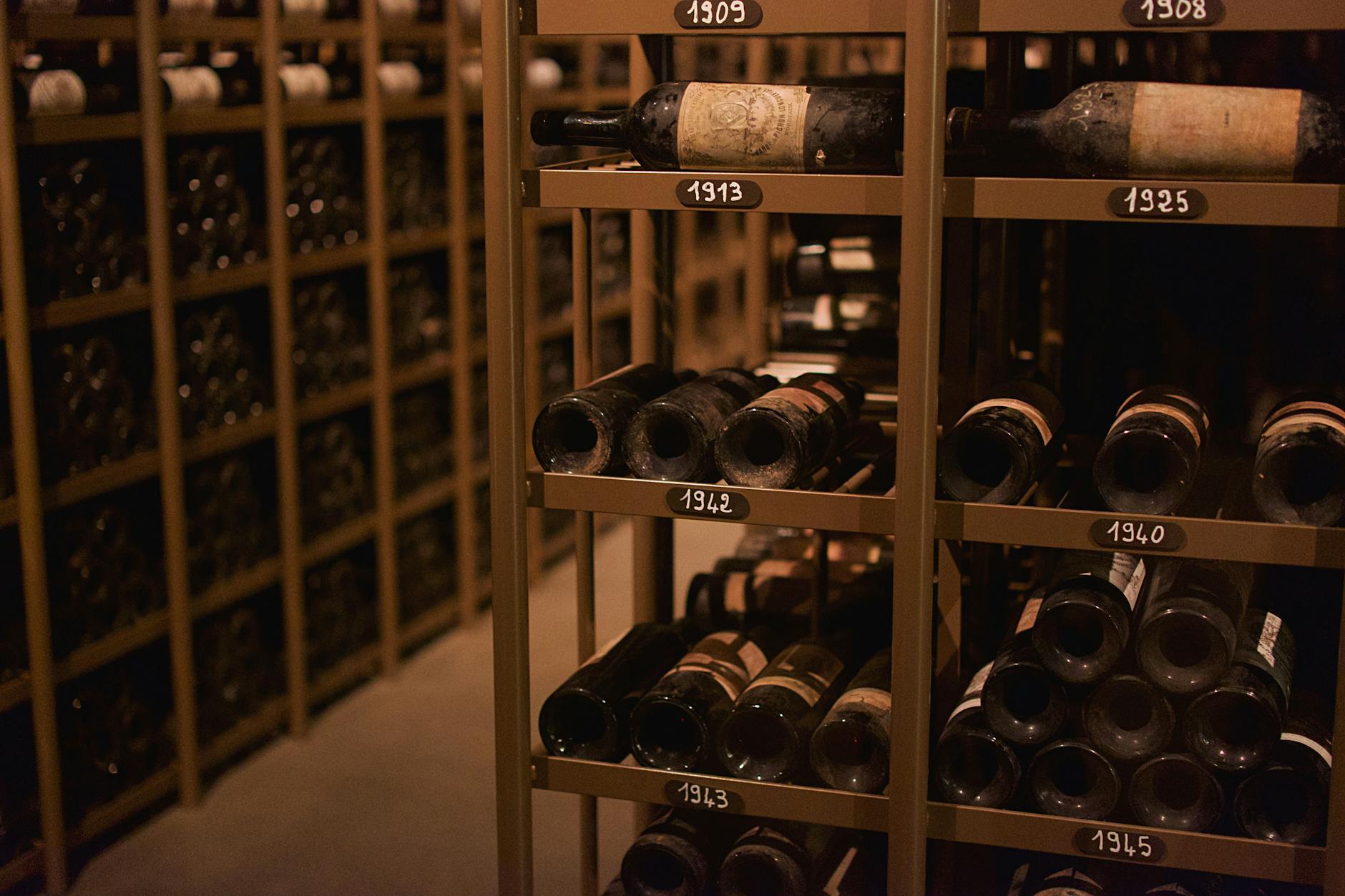
Naked Wines' strong financial year signals robust consumer wine demand — a leading indicator for fine wine investment. Liv-ex data shows 8–9% CAGR over a decade. Investors should watch Bordeaux 2018–2019 vintages trading at post-correction discounts.
TL;DR: Naked Wines has confirmed it is tracking toward the top end of its financial guidance, signalling a meaningful operational turnaround. For fine wine investors, a strengthening direct-to-consumer wine business is a leading indicator of sustained retail demand — the same demand that underpins auction price appreciation and secondary market liquidity for investment-grade bottles.
The Investment Signal Hidden in Naked Wines' Strong Financial Year
Naked Wines has issued a pre-close trading update confirming strong progress on cost reduction and pricing measures, placing the business firmly on track to hit the top end of its guidance for the latest financial year. While Naked Wines itself is not an investable fine wine asset, the health of its business model serves as a reliable demand barometer for the broader fine wine market. When a platform that connects over 900,000 wine drinkers directly to independent producers reports improving financials, it signals that consumer appetite for quality wine — the same quality tier that feeds auction rooms and portfolio allocations — remains structurally robust.
The fine wine investment market, tracked by the Liv-ex Fine Wine 1000 index, has navigated a period of correction since its 2022 peak, but underlying demand data continues to support a medium-term recovery thesis. The Liv-ex Fine Wine 100, which covers the most traded investment-grade bottles, recorded a compound annual growth rate of approximately 8.6% over the decade to 2023, outperforming many traditional asset classes on a risk-adjusted basis. Naked Wines' improved trading performance suggests the consumer base underpinning that demand has not eroded — it has recalibrated.
Why Retail Wine Health Matters to Fine Wine Investors
The connection between direct-to-consumer wine platforms and investment-grade fine wine is more direct than it first appears. Naked Wines' model funds independent winemakers in advance, creating a pipeline of small-production, high-quality bottles that often graduate into the secondary market. When the platform reports pricing power and cost discipline, it reflects a producer ecosystem that is financially stable — and financially stable producers maintain the quality consistency that drives secondary market premiums. A distressed producer, by contrast, tends toward volume over quality, diluting the scarcity dynamics that investors depend on.
Scarcity remains the single most important driver of fine wine price appreciation. Bordeaux First Growths are produced in quantities of roughly 15,000 to 25,000 cases per vintage. Burgundy Grand Cru production is often a fraction of that. As global high-net-worth populations expand — particularly across Southeast Asia and the Middle East — demand for a fixed or declining supply of trophy bottles continues to exert upward pressure on prices. Naked Wines' ability to grow its subscriber base while maintaining pricing discipline suggests that the broader consumer wine market is absorbing supply efficiently, reducing the risk of demand-side collapse at the investment tier.
Key Market Data Points for Portfolio Consideration
- Liv-ex Fine Wine 1000 10-year CAGR: approximately 8–9%, outperforming global equities on a volatility-adjusted basis in multiple periods
- Bordeaux First Growth average auction appreciation (2013–2023): select vintages such as Pétrus 2000 have appreciated over 120% at major auction houses including Christie's and Sotheby's
- Global fine wine market size: estimated at USD 1.5 billion in secondary market transactions annually, with Asia-Pacific accounting for a growing share exceeding 30%
- Naked Wines subscriber base: over 900,000 active members across the UK, US, and Australia — a meaningful proxy for mass-market wine demand health
- Supply constraint trend: climate-related vintage reductions in Burgundy and Champagne are tightening available stock of investment-grade bottles, with 2021 Burgundy yields down as much as 40% in some appellations
These figures matter because fine wine investment is not speculative in the way that crypto or early-stage equity can be. It is a supply-constrained, demand-driven asset class with a deep auction infrastructure, transparent price discovery through Liv-ex, and low correlation to public equity markets. The Naked Wines update reinforces that the demand side of the equation remains intact at the consumer level — which historically precedes recovery and appreciation at the investment tier.
What Should Investors Do With This Information?
The Naked Wines trading update is not a buy signal for fine wine in isolation — no single data point should be. But it is one of several converging indicators that suggest the post-2022 correction in fine wine prices may be approaching a floor. Investors with a 3–7 year time horizon should consider whether current pricing represents an entry point into blue-chip Bordeaux, Burgundy, or Rhône vintages before secondary market demand reasserts itself. Specific vintages worth examining include Bordeaux 2018 and 2019, which received near-universal critical acclaim and are currently trading at discounts of 10–15% from their 2022 peaks according to Liv-ex data.
For investors seeking exposure without the complexity of bottle-level storage and insurance, whisky casks represent a parallel alternative asset class with similarly compelling scarcity dynamics and a track record of 8–12% annual appreciation across premium Scotch categories. The key principle applies equally to both: buy provenance, buy scarcity, and buy into markets where demand is structurally growing faster than supply can respond. The Naked Wines update confirms that demand, at every level of the wine market, has not gone away.
Frequently Asked Questions
How does the health of a direct-to-consumer wine platform relate to fine wine investment?
Platforms like Naked Wines serve as demand indicators for the broader wine market. When they report pricing power and subscriber growth, it signals that consumer appetite for quality wine remains strong — the same demand that drives auction prices and secondary market liquidity for investment-grade bottles.
What returns has fine wine historically delivered as an investment?
The Liv-ex Fine Wine 1000 index has delivered a compound annual growth rate of approximately 8–9% over the past decade. Select trophy bottles — such as Pétrus 2000 or DRC Romanée-Conti — have appreciated well in excess of 100% over the same period at major auction houses including Christie's and Sotheby's.
What are the main risks of investing in fine wine?
Key risks include storage and insurance costs, illiquidity compared to public markets, vintage-specific demand fluctuations, and the need for authenticated provenance. The market also experienced a notable correction from its 2022 peak, though underlying demand fundamentals remain supportive of medium-term recovery.
How does whisky cask investment compare to fine wine as an alternative asset?
Both asset classes share scarcity-driven appreciation dynamics and low correlation to public equity markets. Whisky casks typically offer 8–12% annual appreciation in premium Scotch categories, with lower storage complexity than wine. They also benefit from a maturing global spirits market, particularly strong demand growth across Asia-Pacific.
💼 Interested in alternative asset investment? Speak to the team at Whisky Cask Club — Singapore's leading whisky cask investment specialists.
💼 Interested in alternative asset investment? Speak to the team at Whisky Cask Club — Singapore's leading whisky cask investment specialists.