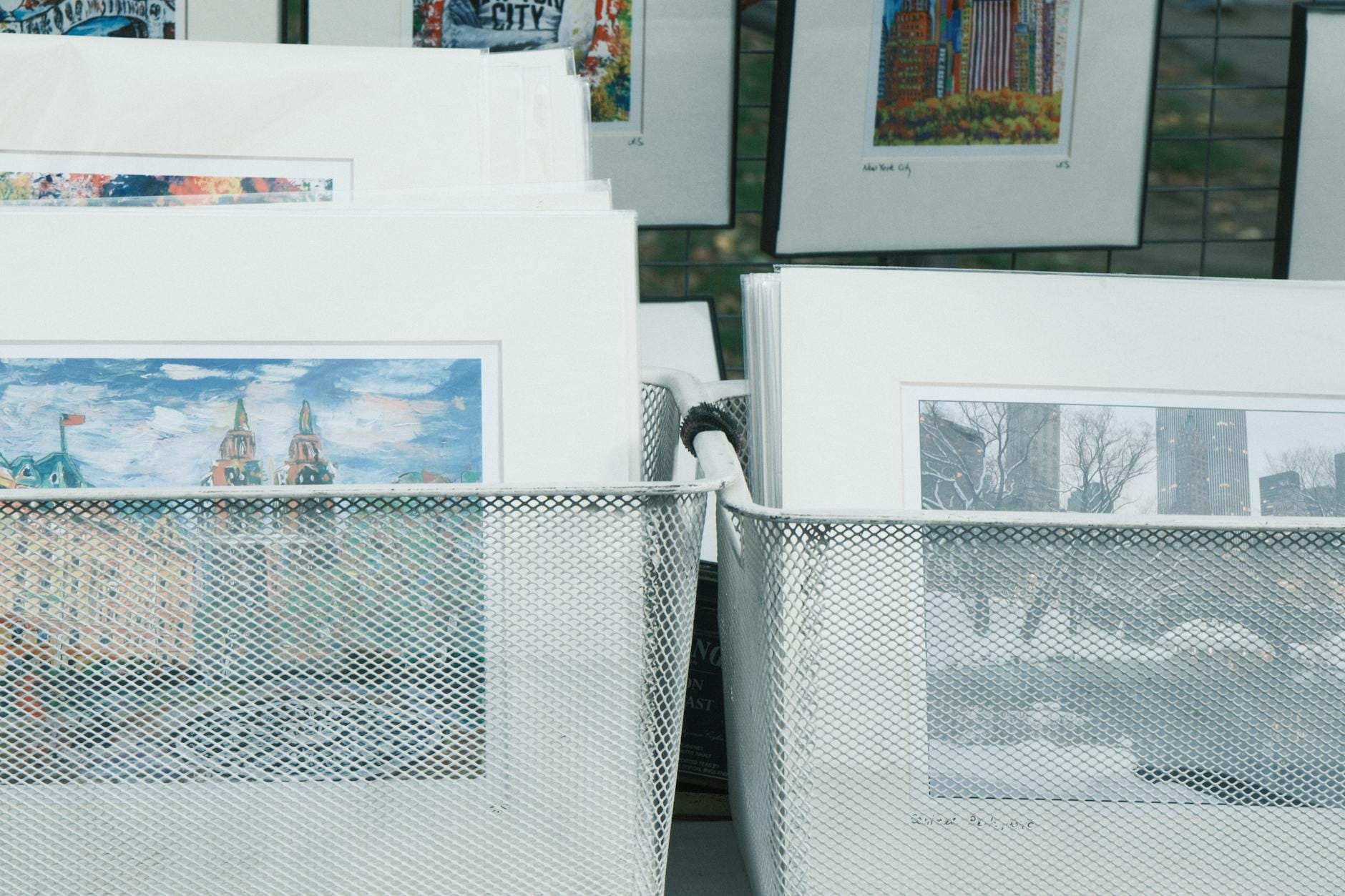
New York Art Week is a live test of art market health after a 7% decline in 2023. Sell-through rates and mid-market hammer prices will signal whether the correction has run its course and if art remains a viable alternative investment allocation.
New York Art Week: What Does It Signal for Art as an Investment?
New York Art Week — the annual convergence of major fairs, auctions, and gallery openings that draws collectors, advisors, and institutional buyers from across the globe — is shaping up to be a genuine stress test for the art market's recent momentum. After a period of post-pandemic exuberance that saw global art auction sales reach approximately $17.6 billion in 2022, the market has been recalibrating. In 2023, global auction revenues declined by roughly 7% year-on-year, according to the Art Basel and UBS Global Art Market Report, with total sales settling closer to $65 billion across all channels. For investors with allocations in fine art or those considering an entry point, this week's results will carry significant weight.
Dealers and advisors who spoke ahead of the week's events were cautiously optimistic but notably more measured than in prior years. The consensus is that sales are strengthening, but buyer behaviour has shifted decisively toward works with clear provenance, strong exhibition histories, and verifiable price records. Speculative flipping — a hallmark of the 2020–2022 boom — has largely retreated, replaced by a more disciplined, fundamentals-driven approach. For sophisticated investors, that is not a warning sign. It is a maturation signal.
Why the Art Market's Current Dynamics Matter to Portfolio Investors
The art market's recalibration has created a more attractive risk-adjusted environment for serious buyers. When speculative froth exits a market, what remains tends to be more durable: blue-chip works by established artists with decades of auction history, strong institutional demand, and genuine scarcity. The supply of works by artists such as Jean-Michel Basquiat, whose paintings have averaged over $10 million at auction in recent years, is finite and shrinking as major pieces enter permanent museum collections. That structural supply constraint is a core driver of long-term price appreciation.
Data from Artprice's 2023 annual report shows that the top 100 artists by auction revenue account for the majority of market value, and that concentration has intensified. The Mei Moses All Art Index, which tracks repeat-sale auction data, has historically shown art appreciating at approximately 7–8% annually over long periods — broadly comparable to equities, but with a low correlation to traditional financial markets. That low correlation is precisely what makes art attractive as a portfolio diversifier, particularly during periods of equity volatility or currency uncertainty.
- Global art market size (2023): approximately $65 billion across all channels
- Auction revenue decline (2022–2023): approximately 7% year-on-year
- Long-term art appreciation (Mei Moses Index): approximately 7–8% per annum
- Top 100 artists: account for the majority of total auction market value
- Scarcity dynamic: museum acquisitions permanently remove major works from the secondary market
What New York Art Week's Results Will Reveal
The major auction houses — Christie's, Sotheby's, and Phillips — will all hold significant evening and day sales during New York Art Week, with total estimates across the major houses expected to run into the hundreds of millions of dollars. The sell-through rates and hammer prices achieved relative to pre-sale estimates will be the key metrics to watch. A strong sell-through rate above 80% would signal healthy demand and suggest the market correction has largely run its course. Conversely, a wave of passed lots or works hammering well below low estimate would indicate that price discovery is still ongoing and that buyers retain significant negotiating leverage.
Advisors are particularly focused on the mid-market segment — works priced between $500,000 and $5 million — which has historically been the most sensitive to macroeconomic conditions. High-net-worth buyers in this bracket are more exposed to interest rate environments and liquidity concerns than ultra-high-net-worth collectors acquiring nine-figure trophies. If the mid-market holds firm this week, it would be a meaningful indicator that broader demand is resilient and that the asset class is not solely dependent on a handful of mega-wealthy buyers to sustain valuations.
Investment Takeaway: Positioning Around Art Market Momentum
For investors already holding art or considering an allocation, New York Art Week offers a live data set that is worth monitoring closely. Strong results across multiple categories — Post-War and Contemporary, Impressionist, and Emerging — would validate the case for maintaining or increasing exposure. Weak results, particularly in the mid-market, would suggest waiting for further price normalisation before committing capital. Either way, the strategic logic for art as an alternative asset remains intact: genuine scarcity, low correlation to public markets, and a long-term appreciation trend that has historically outpaced inflation.
Investors who prefer alternative assets with more transparent pricing mechanisms and lower barriers to entry may also want to consider adjacent categories such as rare whisky casks, fine wine, or vintage watches — all of which share art's core investment attributes of scarcity and provenance-driven value, but with more liquid secondary markets and clearer valuation frameworks. Diversification across multiple alternative asset classes remains the most robust strategy for managing idiosyncratic risk while capturing the appreciation potential that hard, scarce assets have consistently delivered over time.
Frequently Asked Questions
How large is the global art market and how has it performed recently?
The global art market generated approximately $65 billion in total sales across all channels in 2023, down roughly 7% from the record levels seen in 2022. Despite this correction, the long-term trend remains positive, with the Mei Moses All Art Index showing average annual appreciation of approximately 7–8% over multi-decade periods.
What makes fine art a viable alternative investment?
Fine art offers genuine scarcity — particularly for works by deceased or historically significant artists — combined with low correlation to traditional financial markets such as equities and bonds. This makes it a useful portfolio diversifier. Works with strong provenance and exhibition histories have consistently held and grown their value over long time horizons.
What should investors watch for during New York Art Week?
The key metrics are sell-through rates at the major auction houses (Christie's, Sotheby's, Phillips) and hammer prices relative to pre-sale estimates. A sell-through rate above 80% would indicate healthy demand. Investors should also watch the mid-market segment — works priced between $500,000 and $5 million — as this is most sensitive to broader macroeconomic conditions.
How does art compare to other alternative assets like whisky casks or fine wine?
Art shares core investment attributes with whisky casks and fine wine — scarcity, provenance-driven value, and long-term appreciation — but typically has higher entry costs and less liquid secondary markets. Whisky casks and fine wine offer more transparent pricing and lower minimum investments, making them accessible to a broader range of alternative asset investors.
Is now a good time to invest in fine art?
The post-2022 correction has removed speculative excess from the market and created more rational pricing, particularly for mid-market works. Investors with a long time horizon and a focus on blue-chip works with strong provenance may find current conditions attractive. However, monitoring New York Art Week's results will provide a clearer picture of where demand is consolidating.
💼 Interested in alternative asset investment? Speak to the team at Whisky Cask Club — Singapore's leading whisky cask investment specialists.
💼 Interested in alternative asset investment? Speak to the team at Whisky Cask Club — Singapore's leading whisky cask investment specialists.