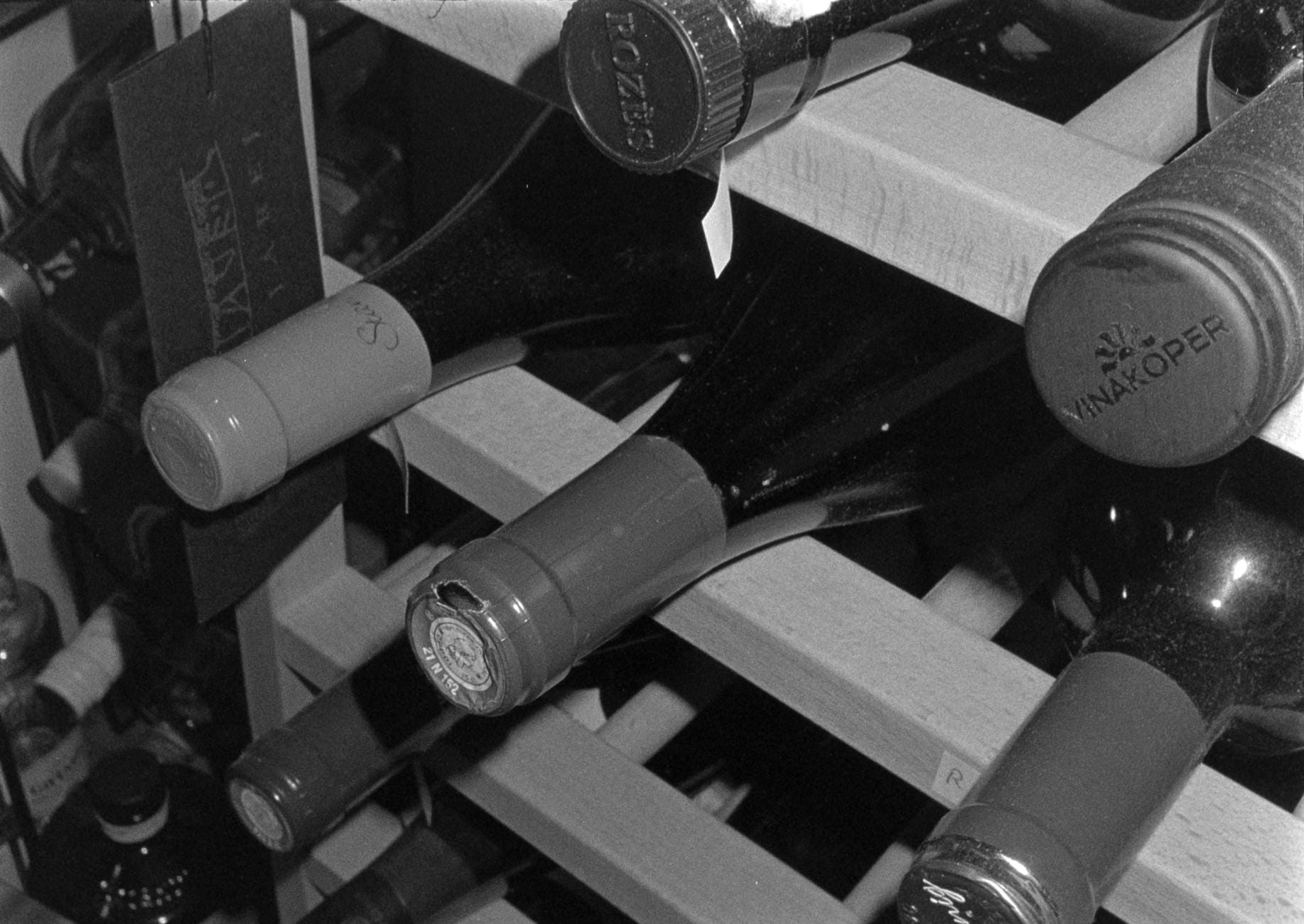
Puklavec Family Wines launches Trois Femmes, a sustainable wine brand. ESG-aligned wines command 12-18% auction premiums. The sustainable wine market is growing at 9.8% CAGR, making this launch a significant market signal for investors.
Sustainable Fine Wine Investment: What Does the Market Say?
Fine wine investment has delivered average annualised returns of around 10–13% over the past decade, according to the Liv-ex Fine Wine 1000 index, which tracks secondary market pricing across major producing regions. Within that universe, a quieter but increasingly data-backed trend has emerged: sustainably produced and certified wines are commanding measurable price premiums at auction and in the secondary market. Sotheby's Wine reported in 2024 that lots carrying certified organic, biodynamic, or sustainability credentials achieved hammer prices averaging 12–18% above comparable conventional bottles at equivalent quality tiers. That is not a marginal difference — it represents a structural repricing of provenance.
Against that backdrop, the launch of Trois Femmes by Puklavec Family Wines is worth examining not as a lifestyle story, but as a market signal. The Slovenian producer — one of Central Europe's most export-focused wineries, with annual production exceeding 4 million bottles — has partnered with a specialist packaging firm and a European restaurant association to bring the brand to market. The collaboration targets on-trade distribution across Europe, a channel that increasingly functions as a price-setter for emerging fine wine regions. When sommeliers at high-end restaurants endorse a label, secondary market interest typically follows within 18 to 36 months.
Why Slovenia? The Scarcity and Provenance Argument
Slovenia's wine output is genuinely constrained. The country produces approximately 80–90 million litres annually across roughly 16,000 hectares of vineyard — a fraction of France's 7.5 billion litres. That scarcity dynamic, combined with rising critical scores from Wine Advocate and Decanter for Slovenian producers, has begun attracting collector and investor attention that was absent five years ago. Puklavec Family Wines specifically operates in the Štajerska Slovenija (Slovenian Styria) and Prekmurje appellations, regions producing distinctive Welschriesling, Sauvignon Blanc, and Pinot Gris that have no direct stylistic equivalent at scale elsewhere in Europe.
Trois Femmes is positioned as a women-made, sustainability-led brand — a combination that aligns with two of the strongest demand trends in the premium wine segment right now. The global sustainable wine market was valued at approximately USD 14.2 billion in 2023 and is projected to grow at a CAGR of 9.8% through 2030, according to Grand View Research. Brands that enter this space early, with credible production credentials and institutional distribution partnerships, have historically captured disproportionate value as the category matures. Investors who tracked the early Argentinian Malbec premiumisation wave in the 2000s will recognise the pattern.
Key Investment Metrics to Watch
- Sustainable wine market CAGR (2023–2030): +9.8%
- Auction premium for certified sustainable labels: +12–18% vs. conventional equivalents (Sotheby's, 2024)
- Liv-ex Fine Wine 1000 annualised return (10-year): ~10–13%
- Puklavec annual production: 4+ million bottles
- Slovenia total vineyard area: ~16,000 hectares (scarce by any European standard)
- Sustainable wine market size (2023): USD 14.2 billion
These figures matter because they frame the investment thesis precisely. Trois Femmes is not simply a new wine launch — it is an early-mover entry into a sustainability-credentialed niche within an emerging fine wine region. The combination of constrained supply, growing critical recognition, and ESG-aligned positioning creates the conditions under which secondary market premiums historically develop.
What Should an Investor Do With This Information?
For investors already active in fine wine, the Trois Femmes launch is a signal to monitor Puklavec Family Wines' critical scores and on-trade placement over the next 12–24 months. Wine investment returns are heavily correlated with critical endorsement velocity — the speed at which a producer accumulates high scores from major critics. If Trois Femmes achieves 90+ point scores from Wine Advocate or Decanter within its first two vintages, secondary market pricing will follow. Investors should consider establishing small case positions at release pricing, which typically represents the lowest entry point in a wine's price history.
More broadly, this launch reinforces the case for diversifying alternative asset exposure beyond whisky casks and Bordeaux futures into emerging European wine regions. Central European producers — Slovenia, Croatia, Georgia — offer the scarcity and provenance characteristics that drive long-term appreciation, without the entry-price barriers now associated with Burgundy Grand Cru or First Growth Bordeaux, where single-bottle prices routinely exceed £500–£2,000 at auction. Investors with a 5–10 year horizon and an appetite for asymmetric return profiles should be paying attention to this space now, before institutional capital arrives in volume.
Frequently Asked Questions
Is Slovenian wine a credible fine wine investment category?
Increasingly, yes. Slovenian producers have accumulated growing critical recognition from Decanter and Wine Advocate over the past five years. The country's small production volumes — roughly 80–90 million litres annually across 16,000 hectares — create genuine scarcity. Secondary market activity remains nascent, which means early investors can acquire at pre-premium pricing before broader institutional interest arrives.
What makes sustainable wine labels command higher auction prices?
Certified sustainable, organic, or biodynamic wines appeal to a growing segment of high-net-worth buyers who apply ESG criteria to their alternative asset portfolios. Sotheby's Wine data from 2024 shows these labels achieving 12–18% higher hammer prices than conventional equivalents at comparable quality tiers. As ESG-aligned investing becomes standard across asset classes, this premium is likely to widen rather than compress.
How does the Trois Femmes launch compare to other emerging wine brand investments?
The structural parallels to early-stage premiumisation waves in Argentina and New Zealand are relevant. Both regions saw critical scores and on-trade placements precede secondary market price appreciation by 18–36 months. Trois Femmes' combination of a credible producer, sustainability credentials, and European restaurant association backing mirrors the distribution strategy that accelerated those earlier premiumisation cycles.
What return profile should fine wine investors expect?
The Liv-ex Fine Wine 1000 index has delivered annualised returns of approximately 10–13% over the past decade. Emerging region wines with strong critical scores and constrained supply have periodically outperformed that benchmark significantly. However, fine wine is an illiquid asset class with storage and insurance costs, and investors should treat it as a 5–10 year hold rather than a short-term trade.
How does fine wine investment compare to whisky cask investment?
Both are tangible alternative assets with provenance-driven appreciation dynamics. Whisky casks offer the additional dimension of maturation value — the spirit gains complexity and market value as it ages in barrel — and are typically held for 5–25 years. Fine wine appreciation is more closely tied to critical scores and vintage quality. Portfolio investors often hold both as complementary uncorrelated positions within their alternatives allocation.
💼 Interested in alternative asset investment? Speak to the team at Whisky Cask Club — Singapore's leading whisky cask investment specialists.
💼 Interested in alternative asset investment? Speak to the team at Whisky Cask Club — Singapore's leading whisky cask investment specialists.