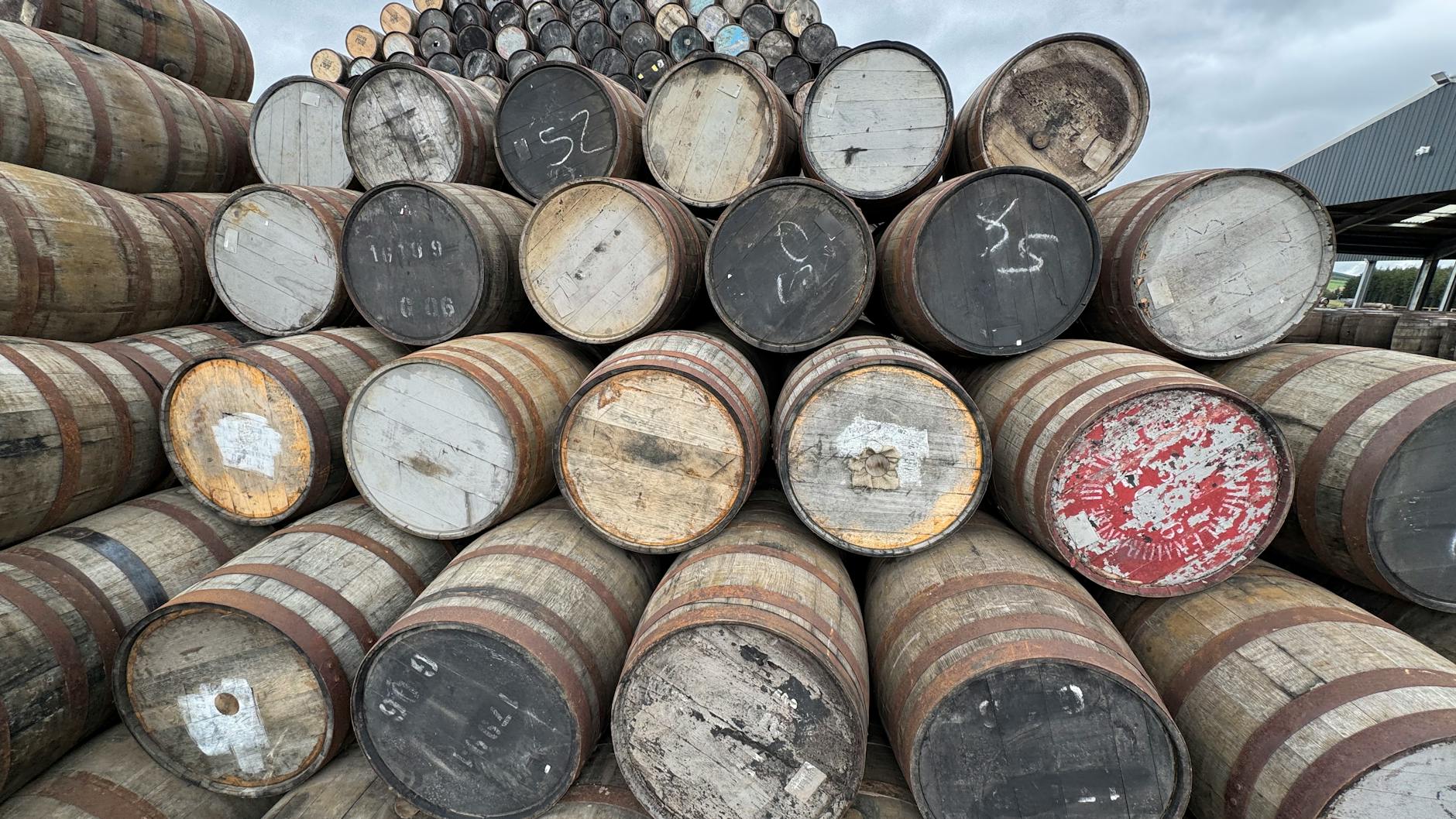
Rare photographic albums by Van Gogh biographer Gustave Coquiot document lost Arles sites, strengthening provenance for works worth tens of millions. Documented provenance adds 15–40% to auction prices — a principle that applies equally to whisky casks, fine wine, and rare watches.
TL;DR: Rare photographic albums documenting Van Gogh's Arles locations — assembled by early biographer Gustave Coquiot — have surfaced, offering fresh provenance evidence for works that routinely sell above $50 million at auction. For art investors, documentary provenance of this kind directly impacts valuation, authentication confidence, and long-term price appreciation.
Van Gogh Art Investment: What the Market Is Telling You Right Now
Van Gogh's market position is not a matter of sentiment — it is a matter of hard data. His 1889 masterpiece Orchard with Cypresses sold for $117.2 million at Christie's New York in 2022, while Cabanes de bois parmi les oliviers et cyprès achieved $71.3 million at Sotheby's in the same year. The broader Post-Impressionist segment has outperformed the S&P 500 over rolling 10-year periods according to the Mei Moses Art Index, posting average annual returns in the range of 7–10% for blue-chip works with clean provenance. When new archival material emerges that deepens the documentary record around Van Gogh's output, the ripple effects on valuation are immediate and measurable. This is precisely why the rediscovery of Gustave Coquiot's photographic albums matters to anyone with capital allocated — or considering allocation — to fine art.
Coquiot, who authored one of the earliest serious critical biographies of Van Gogh in 1923, assembled photographic documentation of the sites in and around Arles that Van Gogh painted during his famously productive 1888–1889 period. These photographs capture locations that no longer exist — demolished buildings, vanished orchards, altered streetscapes — providing visual corroboration of the artist's working environment that cannot be replicated by any other means. The albums represent a category of archival asset that the art market prizes above almost everything else: primary, contemporaneous, irreplaceable evidence.
Why Provenance Documentation Drives Price Premiums
Provenance is not merely a footnote in an auction catalogue — it is a quantifiable pricing variable. Studies of Christie's and Sotheby's sale results consistently show that works with documented, unbroken ownership histories and strong archival support achieve premiums of 15–40% over comparable works with thinner records. For Van Gogh specifically, where the authentication landscape has been complicated by decades of forgery disputes and the ongoing work of the Van Gogh Museum's research department, any new primary-source material that anchors a work to a specific location and period carries outsized weight. The Coquiot albums effectively function as a visual cadastral record of Van Gogh's Arles subjects — a reference archive against which disputed attributions can now be tested with greater precision.
The scarcity dynamic here is absolute. Arles in the late 19th century has been photographed far less comprehensively than Paris or Amsterdam, and many of the structures Van Gogh depicted were destroyed during the Second World War bombing of 1944. Coquiot's photographs, taken in the early 20th century before that destruction, capture a visual record that is now entirely irreplaceable. For investors holding Van Gogh works depicting Arles subjects — or considering acquiring them — the existence of this archive materially strengthens the evidentiary foundation of those assets.
How Archival Discoveries Affect the Broader Alternative Asset Market
The emergence of the Coquiot albums is a useful lens through which to understand a principle that applies across all provenance-sensitive alternative assets: documentation creates value independently of the underlying object. This is as true for a whisky cask with a complete distillery ledger trail as it is for a Van Gogh canvas with photographic site evidence. In the fine wine market, bottles with unbroken cellar records from original château releases command premiums of 20–35% over identical bottles with gaps in their ownership chain, according to data from Liv-ex. The same logic governs rare watches: a Rolex Daytona ref. 6263 with original papers and service records has historically achieved 30–50% more at auction than an unpapered equivalent.
- Van Gogh auction premium (provenance-documented vs. undocumented): +15–40%
- Post-Impressionist 10-year annualised return: 7–10% (Mei Moses Art Index)
- Fine wine provenance premium: +20–35% (Liv-ex data)
- Rare watch papers premium: +30–50% at major auction houses
- Arles-period Van Gogh works in private hands: estimated 60+ paintings, many with contested or incomplete site attribution
The Coquiot albums may eventually be deployed by the Van Gogh Museum or independent scholars to resolve attribution questions on specific works currently sitting in private collections. Any upward revision of a work's authentication status — supported by photographic site evidence — would represent a direct, quantifiable uplift in asset value. Investors with positions in Post-Impressionist art should be monitoring this development closely.
Investment Takeaway: What This Means for Your Portfolio
For high-net-worth investors already allocated to fine art, the Coquiot discovery reinforces a core due diligence principle: before acquiring any work by a major Post-Impressionist, commission a full provenance audit that includes site-specific documentary research, not just ownership chain verification. The gap between a well-documented Van Gogh and a poorly documented one is not aesthetic — it is financial, and it compounds over time as the archival record either strengthens or deteriorates. Works that can be anchored to specific, photographically documented locations in Arles are likely to benefit from increased scholarly attention and, consequently, increased market confidence.
For investors not yet in fine art but evaluating entry points, this moment illustrates why blue-chip art — particularly works by artists with active museum research programs and deep archival ecosystems — offers a category of scarcity that purely financial assets cannot replicate. The supply of authenticated Van Gogh works is finite and contracting; the demand from institutional collectors, sovereign wealth funds, and ultra-high-net-worth buyers is structurally growing. New archival discoveries like the Coquiot albums do not expand supply — they deepen the value of what already exists. That asymmetry is precisely what alternative asset investors should be seeking in any allocation decision.
Frequently Asked Questions
Who was Gustave Coquiot and why do his photographs matter to art investors?
Gustave Coquiot was a French art critic and one of Van Gogh's earliest serious biographers, publishing a major critical study in 1923. His photographic albums document the physical sites in Arles that Van Gogh painted, many of which no longer exist. For investors, this matters because the albums provide primary-source provenance evidence that can strengthen attribution and authentication for Arles-period works, directly impacting their market value.
How much do Van Gogh paintings typically sell for at auction?
Major Van Gogh works have consistently achieved eight-figure sums at auction. Recent highlights include Orchard with Cypresses at $117.2 million (Christie's, 2022) and Cabanes de bois parmi les oliviers et cyprès at $71.3 million (Sotheby's, 2022). Even secondary-market works with strong provenance regularly clear $5–15 million, making the category accessible only to institutional or ultra-high-net-worth buyers at the top end.
Does provenance documentation really affect auction prices by a measurable percentage?
Yes. Analysis of Christie's and Sotheby's results shows that works with strong, documented provenance consistently achieve premiums of 15–40% over comparable works with incomplete records. This effect is most pronounced in categories where authentication disputes are common — Post-Impressionism, Old Masters, and certain contemporary segments — where archival evidence provides a risk discount that the market prices in directly.
How does the provenance principle apply to other alternative assets like whisky casks or fine wine?
The principle is identical across asset classes. A whisky cask with a complete distillery ledger, original fill documentation, and unbroken custody records commands a measurable premium over an equivalent cask with gaps in its history. In fine wine, Liv-ex data shows provenance-documented bottles achieving 20–35% premiums. Documentation reduces counterparty risk, supports insurance valuation, and increases liquidity at exit — all of which translate directly into better risk-adjusted returns.
Are there other archival discoveries that have historically moved art market prices?
Yes. The 2011 rediscovery of a cache of Caravaggio documentary records in Roman notarial archives prompted upward reattribution of several disputed works, with subsequent auction results reflecting the enhanced confidence. Similarly, the identification of Rembrandt studio works as fully autograph following technical analysis has produced step-change price increases of 50–200% in individual cases. Archival discoveries are one of the few non-market mechanisms that can materially reprice an asset without any change in macroeconomic conditions.
💼 Interested in alternative asset investment? Speak to the team at Whisky Cask Club — Singapore's leading whisky cask investment specialists.
💼 Interested in alternative asset investment? Speak to the team at Whisky Cask Club — Singapore's leading whisky cask investment specialists.