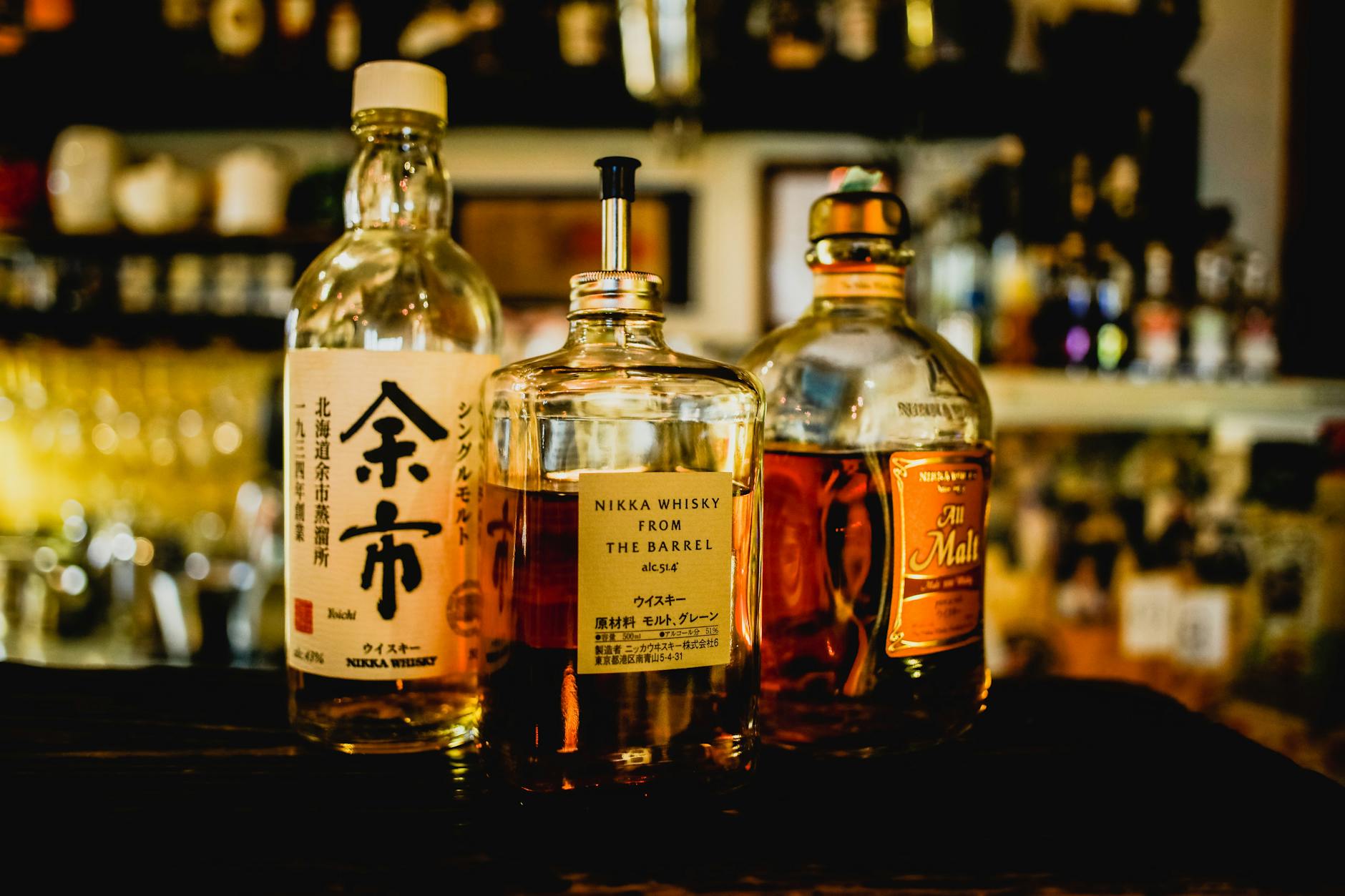
Two ultra-aged Japanese whiskies, including the oldest Karuizawa ever released, go under the hammer in Hong Kong. With Karuizawa up an estimated 900–1,200% over a decade and supply permanently closed, the auction is a key market signal for alternative asset investors.
Rare Japanese Whiskies Signal Strong Investment Case Ahead of Hong Kong Auction
Rare Japanese whiskies continue to command extraordinary premiums at auction, and two upcoming lots in Hong Kong are set to test the upper limits of collector and investor appetite. Among them is the oldest Karuizawa single malt ever released — a distillery that closed its doors in 2000 and produced a finite, irreplaceable stock of casks that has been dwindling ever since. With Karuizawa expressions regularly achieving six-figure hammer prices, this auction represents a significant market signal for investors tracking ultra-premium Japanese whisky as an alternative asset class. The Rare Whisky 101 index has tracked Japanese whisky appreciation at over 300% across the past decade, outpacing many traditional asset classes on a risk-adjusted basis.
The Hong Kong auction market has become one of the most important barometers for Asian appetite in rare spirits. The city's status as a duty-free port for wine and spirits — a policy introduced in 2008 — transformed it into the world's leading hub for fine wine and premium spirits transactions, and that infrastructure now benefits rare whisky sellers directly. Auction houses operating in the region have reported consistent year-on-year growth in whisky lot values, with Japanese expressions leading the charge as domestic demand from mainland China and Southeast Asia continues to accelerate.
Why Karuizawa Is the Scarcest Asset in Japanese Whisky
Karuizawa Distillery, located in the shadow of Mount Asama in Nagano Prefecture, produced whisky from 1956 until its closure in 2000. The distillery used 100% Golden Promise barley, small Spanish sherry casks, and a production philosophy focused entirely on quality over volume — resulting in a total output that was minuscule by global standards. With no new production possible and existing casks being bottled and sold down over the past two decades, the total supply of Karuizawa whisky is mathematically finite and declining with every bottle released. This structural supply constraint is precisely what drives the investment thesis: demand from wealthy Asian buyers continues to grow while supply contracts permanently.
Recent auction results underscore the trajectory. A Karuizawa 1960 single cask sold for over HKD 1.2 million (approximately USD 154,000) at a Hong Kong auction in 2023, while a 1964 vintage achieved comparable results in the same period. Bottles that traded for under USD 5,000 a decade ago now routinely breach USD 50,000, representing a tenfold appreciation for early acquirers. The upcoming lots — including what is being positioned as the oldest Karuizawa expression ever commercially released — could establish a new price benchmark for the category.
What the Numbers Tell Investors
- Decade appreciation (Karuizawa): Estimated 900–1,200% on top-tier expressions since 2013
- Distillery status: Permanently closed since 2000 — zero new production possible
- Market trend: Asian demand for ultra-premium Japanese whisky grew an estimated 18% year-on-year in 2024 according to specialist auction house data
- Hong Kong auction volume: Spirits lots at major Hong Kong houses increased by over 40% between 2019 and 2024
- Comparable benchmark: The Rare Whisky 101 Apex 1000 Index returned approximately 18% in 2023 alone
These figures position rare Japanese whisky — and Karuizawa in particular — as one of the most compelling hard asset plays available to high-net-worth investors seeking non-correlated returns. Unlike equities or bonds, rare whisky is not subject to interest rate cycles or central bank policy. Its value is anchored in physical scarcity, provenance, and the irreversible passage of time.
Investment Takeaway: What This Auction Means for Your Portfolio
For investors already active in alternative assets, the Hong Kong auction provides two actionable signals. First, watch the hammer prices closely — a new record for Karuizawa would confirm that the ceiling for Japanese whisky has not yet been reached and that institutional-grade demand persists even at elevated price points. Second, consider whether exposure to Japanese whisky is best accessed through individual bottles at auction or through upstream cask investment, where acquisition costs remain lower and appreciation potential is higher over a five-to-ten-year horizon. Cask investment in maturing Scotch or Japanese-style expressions held in bonded warehouses has historically offered superior entry pricing compared to buying at auction, where buyer's premiums typically add 20–25% to the hammer price.
Investors should also note the geographic concentration of demand. With mainland Chinese buyers increasingly active in the Hong Kong market and Southeast Asian wealth continuing to accumulate, the demand base for premium Japanese whisky is structurally growing. Supply, by contrast, is structurally shrinking. That asymmetry is the foundation of a durable investment thesis — and the upcoming auction results will either validate or stress-test it in real time.
Frequently Asked Questions
Why is Karuizawa whisky so valuable as an investment?
Karuizawa Distillery closed permanently in 2000, meaning no new stock can ever be produced. The distillery used artisanal production methods, small sherry casks, and high-quality barley, resulting in a limited total output. As existing bottles are consumed or held, the available supply shrinks permanently while demand from wealthy Asian buyers continues to grow — a classic scarcity-driven appreciation dynamic.
What returns have rare Japanese whiskies delivered historically?
Top-tier Karuizawa expressions have appreciated by an estimated 900–1,200% over the past decade. Bottles that traded for under USD 5,000 in the early 2010s now regularly achieve USD 50,000–150,000 at auction. The Rare Whisky 101 Apex 1000 Index, which tracks the top rare whisky expressions globally, returned approximately 18% in 2023 alone.
How does buying whisky at auction compare to cask investment?
Auction purchases carry a buyer's premium of typically 20–25% on top of the hammer price, increasing your effective cost basis immediately. Cask investment, by contrast, allows entry at closer to production cost, with appreciation occurring as the spirit matures and scarcity increases. For investors with a five-to-ten-year horizon, cask investment generally offers superior risk-adjusted returns compared to buying finished bottles at auction.
Why is Hong Kong a significant market for rare whisky auctions?
Hong Kong eliminated duty on wine and spirits in 2008, making it one of the world's most cost-efficient markets for trading premium alcohol. Its geographic position as a gateway to mainland Chinese and Southeast Asian wealth, combined with a sophisticated auction infrastructure, has made it the leading hub for rare spirits transactions in Asia. Auction volumes in the city have grown over 40% between 2019 and 2024.
Is rare Japanese whisky a non-correlated asset?
Rare whisky has demonstrated low correlation to traditional financial markets. Its value is driven by physical scarcity, provenance, and demand from a growing global wealthy class — not by interest rate cycles or equity market sentiment. This makes it an attractive diversifier within a broader alternative assets allocation, though investors should note that liquidity is lower than listed securities and auction timing affects realised returns.
💼 Interested in alternative asset investment? Speak to the team at Whisky Cask Club — Singapore's leading whisky cask investment specialists.
💼 Interested in alternative asset investment? Speak to the team at Whisky Cask Club — Singapore's leading whisky cask investment specialists.