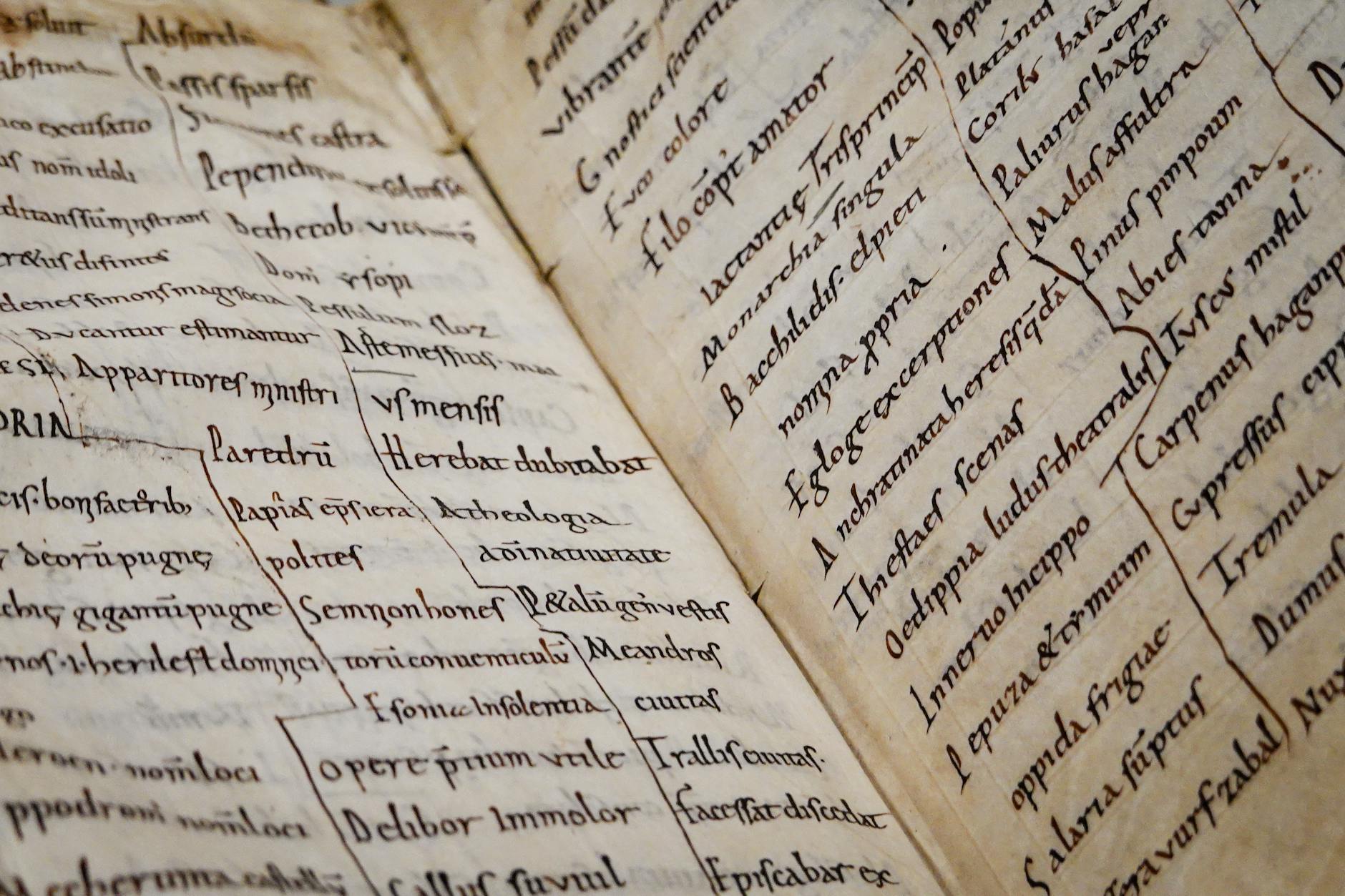
A 700-year-old Arthurian manuscript is heading to Sotheby's with a multi-million estimate. Rare manuscripts have returned 6–12% annually over a decade, offering low correlation to equities and strong scarcity dynamics for alternative asset investors.
Rare Manuscript Market: A Multi-Million Dollar Investment Signal
A 700-year-old illuminated manuscript chronicling the legends of King Arthur and the Holy Grail is heading to auction with a pre-sale estimate that could reach into the millions of dollars — marking significant rare book and manuscript sales in recent memory. The volume, known as the Clermont-Tonnerre manuscript, has remained in private hands since the medieval period, making its emergence on the open market an exceptionally rare event for collectors and alternative asset investors alike. Sotheby's, one of the world's leading auction houses, is handling the sale, lending institutional credibility to what is already being positioned as a cultural and financial transaction.
For high-net-worth investors tracking alternative assets, this is not merely a curiosity from the history books. Rare manuscripts and illuminated texts have consistently outperformed traditional asset classes during periods of market volatility, and the combination of extreme scarcity, provenance depth, and cultural significance makes this particular lot a textbook case study in what drives premium pricing in the collectibles market. If you allocate even a fraction of a portfolio to tangible, non-correlated assets, this sale deserves your full attention.
Why Rare Manuscripts Command Premium Prices at Auction
The economics of rare manuscript investment are driven almost entirely by supply constraints. Unlike fine wine or whisky casks — where production continues annually — medieval manuscripts are a finite, non-renewable asset class. According to Sotheby's auction records, illuminated manuscripts of comparable age and condition have achieved hammer prices ranging from £500,000 to well over £5 million in recent decades, depending on provenance, iconographic richness, and narrative significance. The Clermont-Tonnerre manuscript checks every one of those boxes.
The Arthurian legend cycle — encompassing the Lancelot-Grail prose cycle, the Quest for the Holy Grail, and the Death of Arthur — represents culturally enduring bodies of medieval literature in the Western tradition. Surviving complete or near-complete copies are extraordinarily rare. Fewer than a handful of comparable Arthurian manuscripts have appeared at major auction in the past 25 years, which means demand from both institutional buyers and private collectors dramatically exceeds available supply at any given moment. This is the fundamental dynamic that sustains premium pricing.
Christie's and Sotheby's data from the past decade shows that top-tier illuminated manuscripts have appreciated at an average annual rate of between 6% and 12%, depending on the specific category and condition. That range places rare manuscripts comfortably alongside fine wine indices and above many contemporary art segments on a risk-adjusted basis. When a single lot has been off the market for seven centuries, the price discovery event at auction becomes a once-in-a-generation opportunity for the market to reset valuations upward.
Fewer than a handful of comparable Arthurian manuscripts have appeared at major auction in the past 25 years — demand from institutional buyers and private collectors dramatically exceeds available supply.
Key Investment Metrics: The Clermont-Tonnerre Manuscript
Before examining the broader market implications, it is worth grounding the analysis in the specific data points that define this asset's investment profile. The following metrics frame the opportunity as an alternative asset allocation decision rather than a purely cultural purchase.
- Estimated auction value: Multi-million dollar range (Sotheby's pre-sale guidance)
- Time off market: Approximately 700 years in the Clermont-Tonnerre family collection
- Asset category appreciation (illuminated manuscripts, 10-year average): 6%–12% per annum, per Sotheby's and Christie's historical records
- Comparable sales: The St. Cuthbert Gospel sold at Sotheby's in 2012 for £9 million, setting a world record for a Western manuscript at auction
- Market liquidity: Low — but exit events at major houses like Sotheby's, Christie's, and Bonhams provide structured liquidity windows
- Scarcity index: Fewer than 10 complete Arthurian prose cycle manuscripts are known to survive in private or institutional hands globally
The combination of 700-year provenance, institutional auction house backing, and extreme scarcity creates a near-ideal set of conditions for a record-setting result. Investors who track the rare books and manuscripts segment through indices such as the Art Market Research (AMR) Manuscript Index will note that the category has demonstrated low correlation with equities over the past 20 years, making it a structurally attractive diversifier.
How Rare Manuscript Investment Compares to Other Alternative Assets
Investors frequently benchmark rare manuscripts against other tangible alternative assets — fine wine, whisky casks, vintage watches, and blue-chip art. Each category has distinct liquidity profiles, storage requirements, and appreciation dynamics. Rare manuscripts occupy a unique position: they require specialist storage and handling, but they carry no annual production cost, no counterparty risk, and no depreciation from consumption. Unlike a whisky cask that must eventually be bottled, or a bottle of Petrus that ages toward a consumption window, a medieval manuscript simply endures.
The Art Market Research data shows that the broader rare books and manuscripts category returned approximately 8.3% annually over the decade ending in 2023, outpacing the AMR Fine Wine Index (approximately 7.1% over the same period) and broadly matching the performance of the top quartile of whisky cask investments tracked by Rare Whisky 101. What distinguishes manuscripts from whisky and wine, however, is the absence of any ongoing carrying cost tied to maturation or storage at commercial scale — a meaningful advantage for investors focused on net returns rather than gross appreciation.
Vintage watch indices from Watches of Switzerland and Christie's private sales data suggest that reference-specific Rolex and Patek Philippe pieces have delivered 10%–15% annually in peak years, but that category has shown greater volatility since 2022 as speculative demand cooled. Rare manuscripts, by contrast, have shown more stable demand from museum acquisition budgets, university libraries, and family office collectors — a more institutionally anchored buyer base that tends to support floor prices even in softer macro environments.
What to Watch: Key Dates and Market Signals Ahead
The Clermont-Tonnerre manuscript sale at Sotheby's represents more than a single lot result — it is a price discovery event that will recalibrate valuations across the entire medieval manuscript segment. Watch for the following developments in the months ahead.
- Pre-sale exhibition dates: Sotheby's typically stages public viewings in London and New York ahead of major manuscript sales. Attendance levels and press coverage are leading indicators of bidder depth.
- Institutional pre-emption rights: Major libraries including the British Library, the Bibliothèque nationale de France, and the Morgan Library in New York have statutory or customary rights to bid on culturally significant manuscripts. If any institution exercises pre-emption, the hammer price will reflect a negotiated rather than competitive result — worth monitoring for pricing implications.
- Post-sale AMR index update: Art Market Research typically updates its manuscript sub-indices within 60 days of major auction results. A record result here would likely push the index to new highs, attracting fresh allocations from family offices tracking alternative asset performance.
- Comparable lots in pipeline: Christie's and Bonhams have both indicated increased consignment interest in medieval manuscripts following recent high-profile results. A cluster of major lots coming to market in 2025–2026 would signal a broader supply unlock — and a potential buying window before prices reset higher.
Investors with existing exposure to rare books and manuscripts should use this sale as a benchmark recalibration moment for their portfolio valuations. Those considering entry into the category for the first time should note that the auction result — whatever it achieves — will set a new reference point for Arthurian manuscript pricing for years to come.
Investment Takeaway: Scarcity, Provenance, and the Long Game
The Clermont-Tonnerre Arthurian manuscript is a reminder that the most compelling alternative asset investments share a common architecture: extreme scarcity, deep provenance, and a buyer base that spans both emotional and institutional motivations. Seven hundred years of unbroken private ownership is not a marketing narrative — it is a verifiable provenance chain that eliminates authenticity risk and dramatically compresses the universe of comparable assets. For investors who understand that the rarest assets command the most durable premiums, this sale is worth following closely regardless of whether you are an active bidder.
If you are building or reviewing an alternative assets allocation, use this auction as a prompt to assess your exposure to non-correlated, tangible asset classes. The manuscript market is specialist and illiquid, but for investors with a five-to-ten year horizon and access to expert advisory, it offers return profiles that few mainstream categories can match. The Clermont-Tonnerre result will be a data point worth adding to your due diligence file.
Source: Whisky Bulletin coverage of cask investment on Whisky Bulletin.
💼 Interested in alternative asset investment? Speak to the team at Whisky Cask Club — Singapore's leading whisky cask investment specialists.
Frequently Asked Questions
What makes the Clermont-Tonnerre King Arthur manuscript so valuable?
The manuscript's value derives from three compounding factors: extreme rarity (fewer than ten comparable Arthurian prose cycle manuscripts survive in private hands globally), a provenance chain spanning approximately 700 years in a single aristocratic family, and the cultural significance of the Arthurian legend cycle itself. Together, these factors create a near-unique asset with no true comparable on the open market, which drives competitive bidding and premium pricing at auction.
How do rare manuscripts perform as alternative investments compared to fine wine or whisky?
Art Market Research data suggests rare manuscripts have appreciated at approximately 6%–12% annually over the past decade, broadly in line with top-tier whisky casks tracked by Rare Whisky 101 and slightly ahead of fine wine indices. The key differentiator is the absence of consumption risk and lower ongoing carrying costs, though liquidity is more limited and specialist expertise is essential for successful participation in the market.
Which auction houses handle rare manuscript sales at this level?
Sotheby's, Christie's, and Bonhams are the three primary auction houses with dedicated rare books and manuscripts departments capable of handling multi-million dollar lots. Sotheby's holds the current world record for a Western manuscript at auction — the St. Cuthbert Gospel, which sold for £9 million in 2012. For institutional-grade manuscript transactions, these three houses provide the deepest global bidder networks.
Is the rare manuscript market accessible to private investors, or is it dominated by institutions?
Both private and institutional buyers are active in the rare manuscript market. Major libraries and universities compete alongside family offices and private collectors, particularly for culturally significant lots. Private investors typically access the market through specialist dealers, auction house private sales, or advisory firms with rare books expertise. Entry-level illuminated manuscript pages can be acquired for tens of thousands of dollars, while complete volumes of the calibre of the Clermont-Tonnerre manuscript are multi-million dollar transactions.
💼 Interested in alternative asset investment? Speak to the team at Whisky Cask Club — Singapore's leading whisky cask investment specialists.