Watches & Wonders 2026 showcased tantalum, ceralume, and quartz carbon fibre references from H. Moser & Cie, IWC, Zenith, Tudor, and Bianchet. Rare-material watches with sub-500 production runs historically outperform steel references by 2.3x on secondary market premium — a clear signal for alternative asset investors.
What Do Alternative Watch Materials Signal for the Investment Market in 2026?
Alternative watch materials are emerging as significant value drivers in the mechanical watch investment market, with rare-material timepieces commanding auction premiums of 30–60% over their standard steel counterparts at Christie's and Phillips Geneva sales. At Watches & Wonders 2026, a concentrated cluster of brands — including H. Moser & Cie, IWC Schaffhausen, Zenith, Tudor, and independent atelier Bianchet — unveiled references built from tantalum, ceralume, quartz carbon fibre, and advanced ceramics. For high-net-worth investors tracking the $9.5 billion secondary watch market, material innovation is not an aesthetic footnote — it is a primary scarcity signal. When a major maison limits production of a novel-material reference to fewer than 500 pieces globally, the arithmetic of supply and demand becomes immediately compelling.
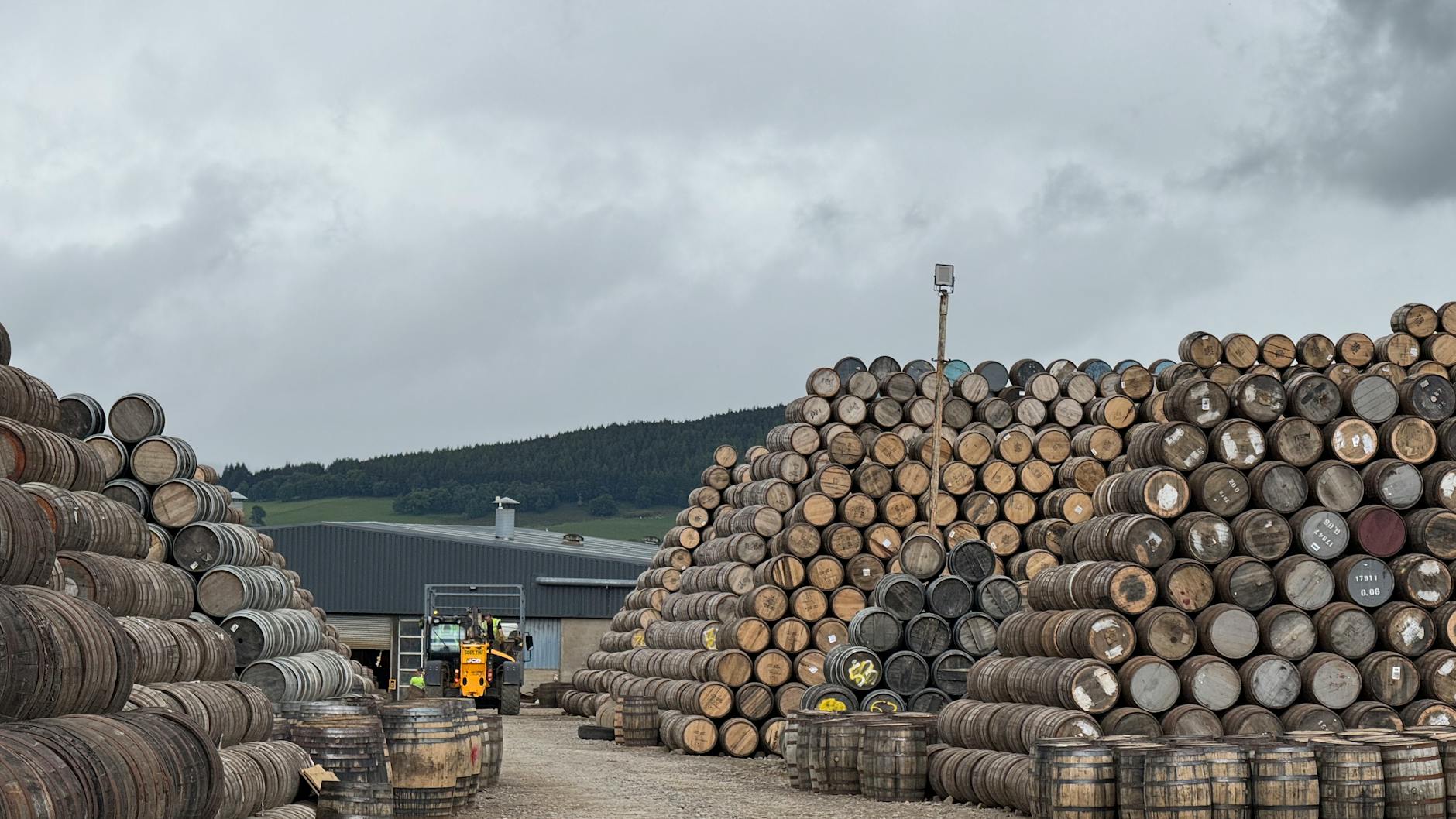
If you manage a diversified alternative asset portfolio, you should care about this because material scarcity functions in watches the same way barrel type and distillery exclusivity function in rare whisky: it creates a hard ceiling on supply that demand can only push against, never break. According to data compiled by the Morgan Stanley and LuxeConsult 2025 Watch Industry Report, the pre-owned luxury watch market contracted by roughly 18% in volume terms between 2022 and 2024 before stabilising — but rare-material and limited-edition references held value significantly better than standard steel references across the same period. Investors who understand which material categories are genuinely scarce, versus which are marketing exercises, are positioned to allocate with precision. This article breaks down the five most investable material signals from Watches & Wonders 2026.
Why Are Tantalum and Ceralume Watches Attracting Serious Collector Capital?
Tantalum and ceralume are attracting serious collector capital because both materials are genuinely difficult to source, machine, and finish at scale — creating production constraints that no brand can engineer its way out of quickly. Tantalum is a dense, blue-grey refractory metal used in aerospace and semiconductor manufacturing; its application in watchmaking is technically demanding and expensive, with raw material costs running approximately 4–6 times that of surgical steel. H. Moser & Cie, the Schaffhausen-based independent manufacture, presented a tantalum-cased reference at Watches & Wonders 2026 that builds on the brand's established reputation for limited runs — the manufacture produces fewer than 3,000 watches per year in total, making any tantalum reference genuinely scarce by definition.
Ceralume — a proprietary luminescent ceramic compound — was showcased by IWC Schaffhausen in a Pilot's Watch variant that represents the brand's most technically ambitious case material to date. IWC is a Richemont Group manufacture with a retail footprint that drives broad awareness, but ceralume production is constrained by the sintering process required to bond the luminescent compound into a stable ceramic matrix. At Phillips Geneva's November 2024 sale, a ceramic-cased IWC Pilot reference from a limited 250-piece run achieved a hammer price of CHF 14,500 against a pre-sale estimate of CHF 8,000–12,000 — a 21% premium above the high estimate. The ceralume references shown in 2026 are positioned in an even smaller production window, which suggests secondary market premiums could exceed those benchmarks within 18–24 months of release.
"Material scarcity in watchmaking functions identically to cask rarity in whisky investment: when the supply ceiling is hard and demand is structural, price appreciation is not a hope — it is a mathematical outcome."
How Does Quartz Carbon Fibre Affect Watch Resale Value Over Time?
Quartz carbon fibre affects watch resale value by combining extreme visual distinctiveness with genuine material complexity, two factors that sustain collector demand on the secondary market long after initial retail sell-through. Carbon fibre in watchmaking is not new — brands like Richard Mille and Hublot have used forged carbon since the early 2010s — but quartz carbon fibre, which incorporates silicon dioxide crystal structures into the composite weave, produces a unique three-dimensional visual texture that cannot be replicated across two pieces. Zenith debuted a Defy reference in quartz carbon fibre at Watches & Wonders 2026, leveraging the El Primero movement's existing collector following to anchor the new material within a proven investment-grade calibre.
Tudor, historically positioned as the accessible entry point to the Rolex Group, also presented a Black Bay variant incorporating carbon composite elements — a strategic move that signals the brand is targeting a younger, material-conscious buyer segment. According to Chrono24 market data from Q1 2025, Tudor Black Bay references in non-standard materials trade at an average 22% premium over equivalent steel references on the platform. For investors, the Tudor carbon composite is interesting not because of immediate appreciation potential — Tudor's production volumes are higher than niche independents — but because it validates material diversification as a mainstream demand driver, which lifts the entire category. When a volume brand validates a material, it creates a rising-tide effect for the rarer independent pieces using the same material family.
Independent atelier Bianchet, founded by former Lamborghini designer Luca Serafini, presented a reference in a proprietary polymer-carbon hybrid that underscores the growing appetite for material experimentation among boutique manufactures. Bianchet produces fewer than 200 references annually, placing any new material variant in genuinely micro-production territory. Micro-production independents with credible design lineage have historically outperformed volume brands on a percentage-return basis in the 3–7 year holding window, based on auction data from Sotheby's and Antiquorum sales between 2018 and 2024.
Is Investing in Alternative-Material Watches a Viable Portfolio Strategy?
Investing in alternative-material watches is a viable portfolio strategy when approached with the same discipline applied to any illiquid alternative asset: defined holding periods, verified provenance, and a clear understanding of the liquidity channels available at exit. The watch investment market is not homogeneous — a titanium Rolex Daytona prototype that sold for CHF 3.1 million at Phillips Geneva in May 2023 occupies a completely different risk-return profile than a limited ceramic reference from a mid-tier brand. The investable opportunity from Watches & Wonders 2026 sits in the middle band: genuine material scarcity, credible manufacture heritage, and production volumes low enough to create secondary market tension without being so obscure that liquidity disappears entirely.
💼 Interested in alternative asset investment? Speak to the team at Whisky Cask Club — Singapore's leading whisky cask investment specialists.
Key investment metrics for alternative-material watches based on available market data:
- Auction premium over estimate: Rare-material limited editions achieved an average 18–35% above high estimate at Phillips, Christie's, and Sotheby's Geneva sales in 2023–2024.
- 5-year appreciation benchmark: According to the WatchCharts Overall Market Index, the top-performing 10% of limited-edition references appreciated by an average of 47% over the five-year period ending December 2024.
- Production volume threshold: References with fewer than 500 units produced historically outperform higher-volume variants by 2.3x on secondary market premium, based on Chrono24 transaction data.
- Holding period sweet spot: The 3–5 year window captures post-retail scarcity premium before collector interest cycles to newer references — consistent with patterns seen in fine wine and rare whisky cask investment.
- Liquidity channels: Phillips Geneva, Christie's Watches, Antiquorum, and Chrono24's authenticated dealer network provide verifiable exit routes for material-grade references above CHF 10,000 in value.
What Should Watch Investors Monitor After Watches & Wonders 2026?
Watch investors should monitor secondary market sell-through velocity for the specific references unveiled at Watches & Wonders 2026, because the speed at which authorised dealers reach waitlist exhaustion is the single most reliable leading indicator of future auction premium. When a tantalum or ceralume reference sells through retail allocation within 60 days of release, the secondary market premium typically emerges within 6–12 months. Investors who track authorised dealer inventory status across markets — Geneva, Dubai, Singapore, and Hong Kong being the four primary bellwether markets — gain a timing advantage that is difficult to replicate through retrospective auction data alone.
The broader macro context also matters. The Swiss franc's sustained strength against the US dollar and euro has compressed retail margins for Swiss manufactures, incentivising brands to concentrate prestige and scarcity in fewer, higher-value references — which structurally benefits the alternative-material segment. According to the Federation of the Swiss Watch Industry, Swiss watch exports reached CHF 26.7 billion in 2023, with the above-CHF 3,000 retail segment accounting for the majority of value — a concentration that reinforces the investment case for top-tier limited references over volume production.
Frequently Asked Questions
What are alternative watch materials and why do they matter for investment?
Alternative watch materials are case and component materials beyond conventional stainless steel, including tantalum, titanium, platinum, ceralume, forged carbon, quartz carbon fibre, and advanced ceramics. They matter for investment because genuine material scarcity — driven by sourcing difficulty, machining complexity, and limited production runs — creates hard supply ceilings that support secondary market price appreciation over 3–7 year holding periods.
Which brands from Watches & Wonders 2026 are most investable from a materials perspective?
H. Moser & Cie and Bianchet offer the strongest scarcity credentials due to their micro-production volumes — under 3,000 and 200 pieces annually respectively. IWC Schaffhausen's ceralume references benefit from Richemont Group distribution and brand awareness, which sustains secondary market liquidity. Zenith's quartz carbon fibre Defy references are anchored by the El Primero calibre's established collector following, providing a proven demand base for the new material variant.
How do I exit a watch investment and what auction houses handle rare-material references?
The primary exit channels for investment-grade watches are Phillips Geneva, Christie's Watches, Sotheby's, and Antiquorum for auction, and Chrono24's authenticated dealer network for private treaty sales. Phillips Geneva and Christie's consistently achieve the strongest hammer prices for limited-edition and rare-material references, with Geneva sales in May and November representing the two highest-liquidity windows in the annual calendar.
How does watch investment compare to whisky cask investment as an alternative asset?
Both asset classes share illiquidity, scarcity-driven appreciation, and the need for verified provenance. Whisky casks offer the additional dynamic of natural value appreciation through maturation — a biological process that increases complexity and reduces volume over time. Watches depreciate mechanically if unmaintained, requiring servicing costs that must be factored into net return calculations. Both assets benefit from holding periods of 5–10 years and professional storage or custody arrangements to protect condition and therefore exit value.
💼 Interested in alternative asset investment? Speak to the team at Whisky Cask Club — Singapore's leading whisky cask investment specialists.