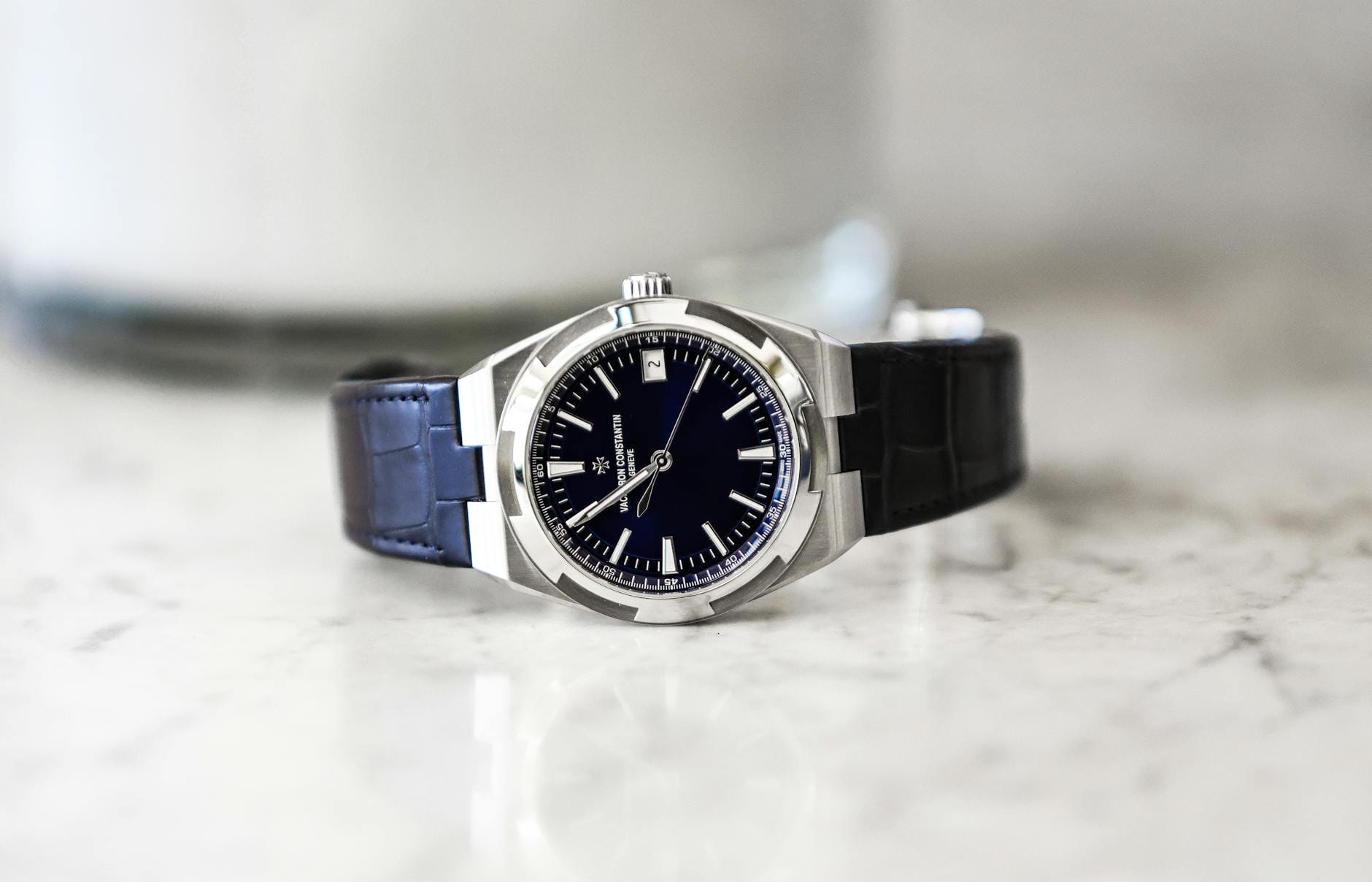
Integrated bracelet watches have delivered 200–400% appreciation over a decade. Watches & Wonders 2026 confirms sustained institutional demand. Investors should prioritise foundational references with proven scarcity mechanics and consider secondary market entry after 18-month price discovery on new releases.
Integrated Bracelet Watches as Investment Assets: What the Watches & Wonders 2026 Wave Signals
Integrated bracelet watches have delivered some of the most compelling return profiles in the alternative asset space over the past decade. The Audemars Piguet Royal Oak 15202ST, for example, traded at retail around CHF 20,000 in 2015 and was consistently achieving auction hammer prices above CHF 80,000 by 2023 — a 300% appreciation over eight years. The Patek Philippe Nautilus 5711/1A, discontinued in 2021, now commands secondary market premiums of 200–400% above its last retail price of approximately CHF 34,000, with examples regularly clearing CHF 100,000 at Christie's and Phillips. Against that backdrop, the sheer volume of new integrated bracelet references unveiled at Watches & Wonders 2026 is not just a design story — it is a supply-side signal with direct portfolio implications.
Why the 1970s Blueprint Still Drives Premium Valuations
The integrated bracelet category was essentially invented between 1972 and 1978, when Gerald Genta's designs for the Royal Oak and Nautilus, alongside Vacheron Constantin's 222 and the IWC Ingenieur, established a template that fused case and bracelet into a single architectural statement. These originals are now blue-chip assets. A Vacheron Constantin 222 in steel sold at Phillips Geneva in 2024 for CHF 189,000 against a pre-sale estimate of CHF 60,000–80,000 — a result that underscores how foundational references command extraordinary scarcity premiums. The Girard-Perregaux Laureato, once overlooked, has seen auction appreciation of roughly 120% since 2019 as collectors and investors recognised its provenance.
What Watches & Wonders 2026 demonstrated is that major maisons are doubling down on the category rather than pivoting away from it. New integrated bracelet references were presented by brands including Rolex, Bulgari, Chopard, and several independent houses, expanding the investable universe considerably. For investors, this raises a critical question: does increased supply dilute the scarcity premium that has driven historical returns, or does it validate the category's durability and attract fresh capital?
Supply, Scarcity and the Secondary Market Mechanics
The watch investment market is estimated at approximately USD 20–25 billion annually on the secondary market, according to data aggregated by WatchCharts and Morgan Stanley's luxury research division. Within that market, integrated bracelet sports watches consistently outperform dress watches and complicated pieces on a risk-adjusted basis, largely because their demand base spans both serious collectors and status-driven buyers — two distinct pools of capital competing for the same limited inventory. Annual production of flagship integrated bracelet references remains tightly controlled; the Royal Oak 15202 series, for instance, is produced in quantities estimated at under 2,000 units per year globally, against demand that exceeds that figure many times over.
The new models presented at Watches & Wonders 2026 will not immediately relieve that supply pressure. Lead times at authorised dealers for desirable integrated bracelet references already stretch to three to five years in many markets, and grey market premiums on newly released references typically peak within 12–24 months of launch before stabilising. Investors who can access allocation at or near retail — through established dealer relationships or auction house estimates — are effectively entering positions with a built-in margin of safety.
- Royal Oak 15202ST secondary market premium (2023): approximately +300% above 2015 retail
- Nautilus 5711/1A post-discontinuation premium: 200–400% above last retail price
- Vacheron 222 auction result (Phillips 2024): CHF 189,000 vs CHF 34,000 original retail estimate
- Secondary watch market size: USD 20–25 billion annually
- Girard-Perregaux Laureato appreciation since 2019: approximately +120%
Investment Takeaway
The integrated bracelet watch category has proven it is not a passing trend — it is a structurally supported asset class with identifiable scarcity mechanics, a deep secondary market, and a track record of outperformance across multiple market cycles. The breadth of new releases at Watches & Wonders 2026 confirms institutional appetite among the maisons themselves, which is historically a leading indicator of sustained consumer and collector demand. For investors building a tangible alternative assets allocation, the priority should be identifying first-generation or early-generation references from the founding houses — Royal Oak, Nautilus, 222 — where production is finite and the historical record is established. Newer references from credible houses presenting at Watches & Wonders 2026 warrant monitoring for the first 18 months post-launch, with secondary market entry considered once price discovery stabilises. Diversification across two or three references, rather than concentration in a single model, reduces event risk from brand-level decisions such as discontinuation or design revision. As with whisky casks and fine wine, the underlying principle is consistent: provenance, scarcity, and time in market are the variables that compound.
💼 Interested in alternative asset investment? Speak to the team at Whisky Cask Club — Singapore's leading whisky cask investment specialists.
Frequently Asked Questions
What makes integrated bracelet watches a strong alternative investment?
Integrated bracelet watches combine controlled production volumes with sustained global demand across collector and status-buyer segments. Flagship references from houses like Audemars Piguet and Patek Philippe have delivered 200–400% appreciation over 8–10 year holding periods, outperforming many traditional asset classes on a risk-adjusted basis.
How does Watches & Wonders 2026 affect the secondary market for these watches?
New releases expand the investable universe but rarely dilute premiums on established references. Grey market prices on desirable new models typically peak within 12–24 months of launch. The event signals continued institutional commitment from major maisons, which historically supports long-term demand and valuation floors across the category.
Which integrated bracelet watch references have the strongest investment track record?
The Audemars Piguet Royal Oak 15202ST, Patek Philippe Nautilus 5711/1A, and Vacheron Constantin 222 have the most documented appreciation histories. The GP Laureato has also emerged as a strong performer since 2019, with approximately 120% appreciation on the secondary market.
What is the typical holding period for a watch investment to generate meaningful returns?
Most analysts and auction house data suggest a minimum holding period of five to eight years for integrated bracelet watches to realise significant appreciation above transaction costs. Shorter-term flipping is possible around discontinuation events, but carries higher execution risk and requires strong market access.
How does watch investment compare to whisky cask investment as an alternative asset?
Both asset classes share key characteristics: finite supply, tangible ownership, and appreciation driven by time and provenance. Whisky casks offer the additional dynamic of liquid volume change and maturation premium over time, while watches offer higher liquidity on the secondary market. A diversified alternative assets portfolio may benefit from exposure to both categories.
💼 Interested in alternative asset investment? Speak to the team at Whisky Cask Club — Singapore's leading whisky cask investment specialists.