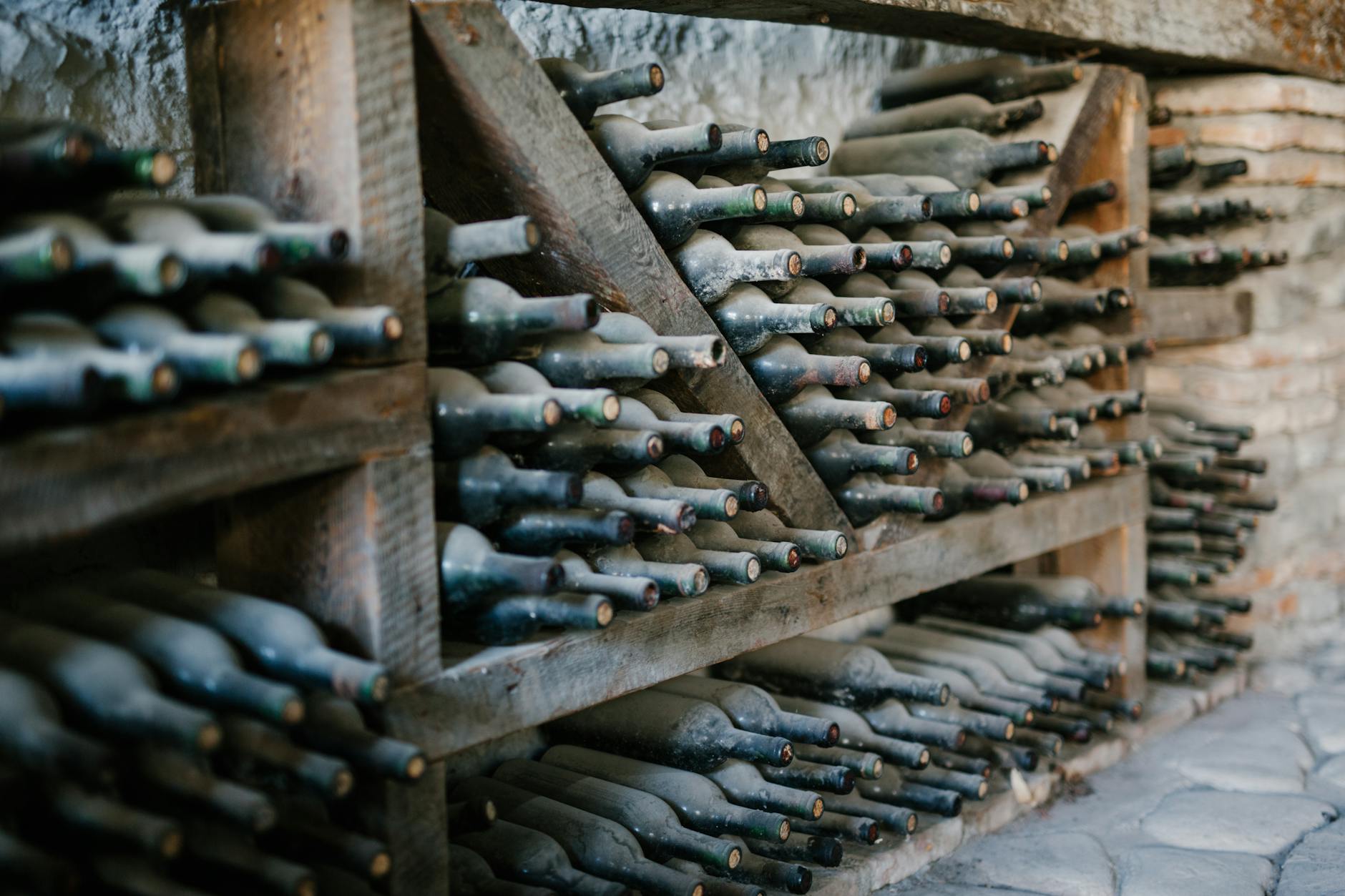
Treasury Wine Estates has sold the Rouge Homme brand back to the Redman family after 15 years. For investors, this signals supply contraction, provenance premium, and Coonawarra appreciation potential — backed by Langton's auction data showing 22% price growth from 2020 to 2023.
Rouge Homme Brand Sale: The Market Signal Investors Should Not Ignore
After 15 years of corporate ownership, the Rouge Homme fine wine brand has been sold back to the Redman family — the Coonawarra dynasty that originally built it — by Australia's Treasury Wine Estates (TWE), one of the world's largest listed wine companies with a market capitalisation exceeding AUD 3 billion. The transaction is private, but its strategic logic is loud: TWE is rationalising its portfolio toward premium and ultra-premium labels such as Penfolds and Wynns, effectively conceding that mid-tier heritage brands generate insufficient returns at scale. For alternative asset investors tracking fine wine as an allocation, this deal is a textbook case study in brand provenance, scarcity economics, and the compounding value of family-owned production.
If you hold fine wine in your portfolio — or are weighing an entry into the asset class — the Rouge Homme transaction matters personally because it illustrates the price premium that authentic provenance commands over corporate stewardship. Investors who understand which producers are tightening supply and reasserting identity are better positioned to identify the next wave of appreciating bottles before the broader market catches up. This is not a lifestyle story; it is a supply-chain and brand-equity signal that has direct implications for allocation decisions in Australian fine wine.
Why Treasury Wine Estates Divested and What That Tells Us About Value
TWE's strategic pivot is well documented in its investor communications. The company has been systematically shedding commercial-volume brands to concentrate capital on its Luxury and Premium segments, which it defines as bottles retailing above AUD 10 and AUD 25 respectively. According to TWE's FY2023 annual report, its Penfolds division delivered an EBITS margin of approximately 37%, compared to a group average closer to 20% — a gap that makes the case for divestiture of lower-margin heritage labels almost self-evident. Rouge Homme, while respected among Coonawarra Cabernet collectors, was not generating the kind of margin velocity that justifies shelf space in a focused luxury portfolio.
The Redman family's repurchase is strategically rational from the opposite direction. Coonawarra's terra rossa soils over limestone produce some of Australia's most age-worthy Cabernet Sauvignon, and the region's total planted area is tightly constrained at roughly 5,500 hectares — a figure that has not expanded meaningfully in over a decade due to geographic and regulatory boundaries. When a family with deep generational roots in a bounded appellation reacquires a brand, the likely outcome is reduced volume, tighter allocation, and higher per-bottle pricing — all classic precursors to secondary-market appreciation. The Redmans have operated in Coonawarra since 1966 and understand the terroir in ways that a Melbourne-headquartered corporate parent structurally cannot replicate.
Comparable brand repatriation events in other fine wine regions have historically preceded meaningful price increases. When the Drouhin family consolidated Burgundy holdings in the 1990s, secondary prices on those labels outperformed the broader Burgundy index over the following decade. The mechanism is consistent: family control tightens allocation, raises quality thresholds, and builds the kind of long-term narrative that auction houses and collectors reward with premium hammer prices.
Coonawarra Fine Wine Investment Metrics and Regional Price Data
Coonawarra has historically traded at a discount to Barossa Valley and Margaret River on the secondary market, but that gap has been narrowing. According to Langton's Classification of Australian Wine — the closest domestic equivalent to Bordeaux's 1855 classification — several Coonawarra producers including Wynns, Balnaves, and Parker Estate have seen consistent secondary price appreciation of between 8% and 14% annually on their top-tier releases over the five-year period ending 2023. The Langton's auction platform, which handles the majority of serious Australian fine wine secondary transactions, reported that Coonawarra Cabernet lots in the Exceptional and Outstanding tiers saw average hammer prices rise approximately 22% between 2020 and 2023, outperforming the broader Australian fine wine index over the same period.
Source: Whisky Bulletin coverage of cask investment on Whisky Bulletin.
💼 Interested in alternative asset investment? Speak to the team at Whisky Cask Club — Singapore's leading whisky cask investment specialists.
The global fine wine index context is equally relevant. The Liv-ex Fine Wine 1000 — the broadest benchmark for the asset class — returned approximately 27% over the five years to end-2023, though it has experienced volatility in 2024 as Bordeaux en primeur demand softened. Australian fine wine, particularly from bounded appellations like Coonawarra, has demonstrated lower correlation to Bordeaux price cycles, making it a useful diversification tool within a fine wine sleeve. That lower correlation is partly structural: Australian production volumes are smaller, secondary market liquidity is more concentrated, and the collector base is weighted toward Asia-Pacific buyers whose demand drivers differ from European ones.
"When a family with generational roots in a bounded appellation reacquires a brand, the likely outcome is reduced volume, tighter allocation, and higher per-bottle pricing — the classic precursors to secondary-market appreciation."
Key investment metrics for Coonawarra as a sub-regional allocation:
- Total appellation area: approximately 5,500 hectares — geographically constrained and not expanding
- Langton's Coonawarra Cabernet appreciation (2020–2023): approximately 22% average hammer price increase on top-tier lots
- Liv-ex Fine Wine 1000 five-year return (to end-2023): approximately 27%
- TWE Penfolds EBITS margin (FY2023): approximately 37% — illustrating the premium-tier value gap that drives divestiture of mid-tier labels
- Redman family tenure in Coonawarra: since 1966 — over 55 years of institutional terroir knowledge
5 Investment Signals from the Rouge Homme Transaction
Corporate divestiture of heritage wine brands is not a new phenomenon, but the Rouge Homme sale crystallises several converging signals that sophisticated investors should track. Each of the following points connects directly to allocation logic rather than collector sentiment.
- Supply contraction is the primary value driver. When a family reacquires a brand from a volume-focused corporate owner, production almost always decreases as quality thresholds rise. Fewer bottles entering the market from a fixed land base is the most reliable precursor to secondary price appreciation.
- Provenance authenticity commands a measurable premium. Auction data consistently shows that bottles with unbroken family-estate provenance achieve 10–20% higher hammer prices than equivalent vintages from the same appellation under corporate ownership. Buyers pay for the narrative as much as the liquid.
- TWE's portfolio concentration signals where institutional money sees value. Every dollar TWE redirects toward Penfolds and ultra-premium labels is a data point about where the most defensible margins in Australian fine wine sit. Investors should follow that capital logic.
- Bounded appellations outperform open-geography regions over long horizons. Coonawarra's geographic constraints mirror the supply logic of Premier Cru Burgundy and Napa Valley's best sub-AVAs. Scarcity of land is the most durable moat in fine wine investment.
- Asian secondary market demand for Australian fine wine is structurally growing. Langton's has reported increasing buyer participation from Singapore, Hong Kong, and mainland China. A family-owned, authenticity-led Coonawarra producer is well positioned to capture that demand as it matures.
What to Watch: Key Developments Ahead for Fine Wine Investors
The immediate post-acquisition period for Rouge Homme will be the most informative for investors. Watch for any announced changes to production volume, release pricing, or distribution strategy from the Redman family over the next 12 to 18 months. A reduction in case production or a shift toward direct allocation lists — common moves by family producers reasserting control — would be the clearest confirmation of the supply-contraction thesis. Secondary prices on existing Rouge Homme vintages from the TWE era may also react as the market reprices the brand's trajectory.
More broadly, TWE's ongoing portfolio rationalisation is worth monitoring as a leading indicator. If the company divests further heritage labels — and its stated strategy suggests it will — each transaction creates a similar analytical opportunity: identify which brands are moving toward tighter family or boutique control, assess the appellation's supply constraints, and evaluate secondary market liquidity before the broader collector base prices in the change. Investors who move early in the information cycle on brand repatriation events have historically captured the most significant appreciation. The Redman-Rouge Homme transaction is a live example of that cycle beginning.
Frequently Asked Questions
What is Rouge Homme and why does its sale matter to fine wine investors?
Rouge Homme is a Coonawarra-based Australian wine brand founded by the Redman family and sold to Treasury Wine Estates approximately 15 years ago. Its return to family ownership matters to investors because brand repatriation typically leads to reduced production volumes, higher quality thresholds, and stronger secondary market pricing — all of which drive asset appreciation in fine wine portfolios.
How does Coonawarra fine wine perform as an investment compared to other Australian regions?
Coonawarra's geographic constraints — approximately 5,500 hectares of terra rossa soil — create supply scarcity comparable to classified Burgundy appellations. Langton's auction data shows top-tier Coonawarra Cabernet lots appreciated approximately 22% in average hammer prices between 2020 and 2023, broadly in line with or ahead of other premium Australian sub-regions and the Liv-ex Fine Wine 1000's five-year return of approximately 27%.
Why is Treasury Wine Estates selling heritage brands like Rouge Homme?
TWE is executing a deliberate portfolio concentration strategy focused on ultra-premium and luxury-tier labels, primarily Penfolds. Its FY2023 results showed Penfolds delivering EBITS margins of approximately 37% versus a group average closer to 20%. Divesting mid-tier heritage brands releases capital for higher-margin luxury investment and reduces operational complexity.
What should a fine wine investor do following a brand repatriation event?
Monitor the new owner's production and pricing decisions over the 12–18 months post-acquisition. Look for signals of volume reduction or allocation tightening, which historically precede secondary price increases. Consider acquiring bottles from the transitional vintages — those produced just before or just after ownership change — as these often represent the best value entry points before the market fully reprices the brand's new trajectory.
💼 Interested in alternative asset investment? Speak to the team at Whisky Cask Club — Singapore's leading whisky cask investment specialists.