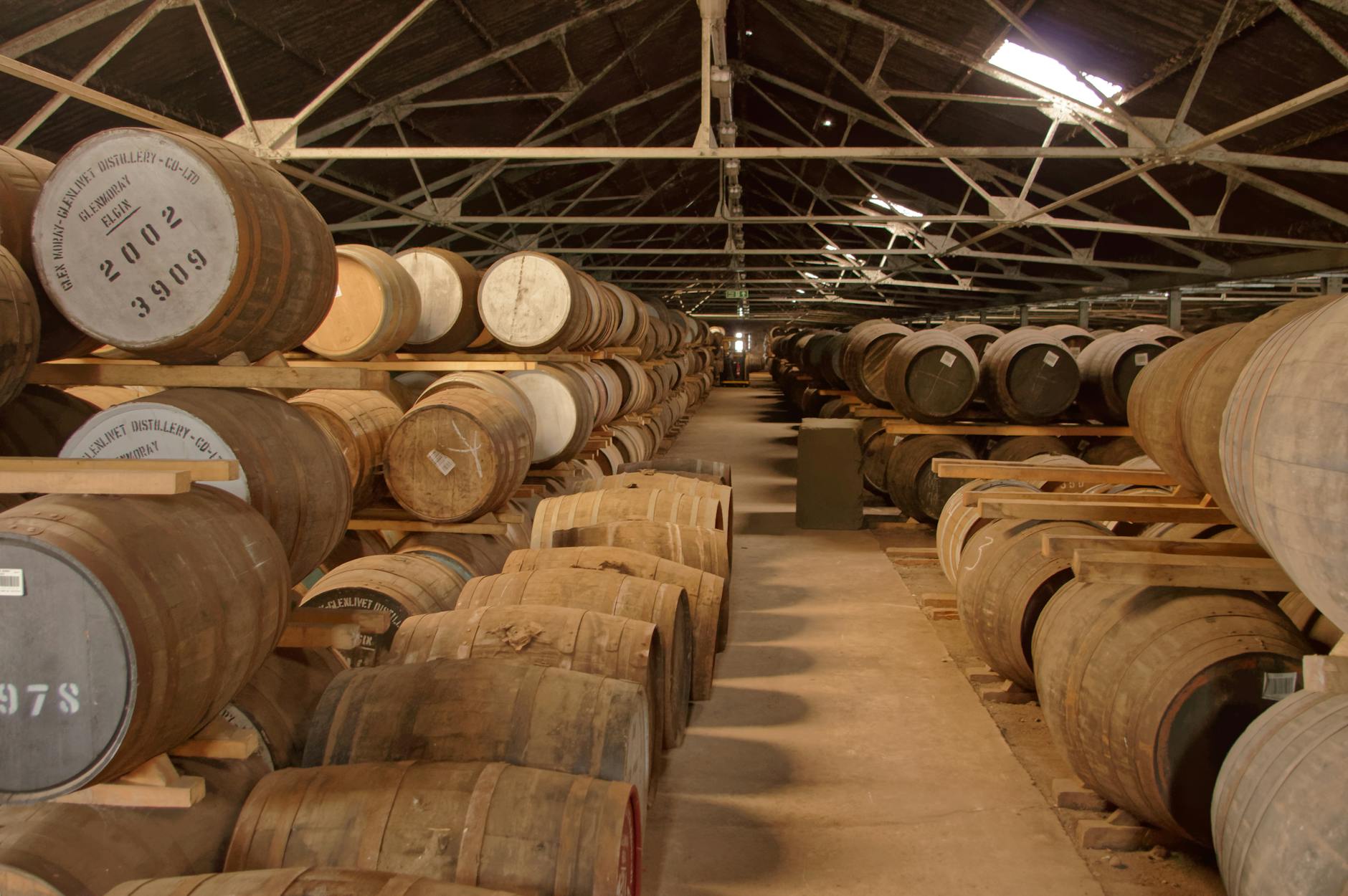
US spirits volumes fell ~2% in 2024 but RTD cocktails surged. Rare whisky cask values rose 8–12% at auction. Supply constraints from RTD demand and production cuts are strengthening the investment case for premium aged casks.
RTD Cocktails Signal a Structural Shift in US Spirits Investment
While the broader US spirits market contracted under the weight of consumer belt-tightening in 2024, ready-to-drink cocktails posted volume growth that the Wine and Spirits Wholesalers of America (WSWA) singled out as the single "bright spot" in an otherwise declining category. Total US distilled spirits volumes fell approximately 2% year-on-year in 2024, marking the steepest decline in more than a decade, according to WSWA data presented at its annual Access Live conference. For investors holding whisky casks or fine spirits as alternative assets, this divergence is not a footnote — it is a leading indicator of where premiumisation is heading next.
The RTD cocktail segment now accounts for roughly 10% of total US alcohol volumes by unit, with retail sales exceeding $2.5 billion annually, according to NielsenIQ tracking data cited by industry analysts in early 2025. That figure represents a compound annual growth rate of approximately 26% over the past five years. Meanwhile, premium and super-premium bottled spirits — the asset class most closely correlated with cask investment values — have held their ground far better than mid-tier and value categories, suggesting that downtrading is compressing the middle of the market, not the top.
If you hold whisky casks, fine wine, or rare spirits as part of a diversified alternative asset portfolio, the WSWA data matters because it redraws the demand map. Consumers are not abandoning premium alcohol; they are changing the format through which they access it. That has direct implications for distillery output decisions, cask maturation strategies, and ultimately the exit multiples available to cask investors at the point of sale or auction.
Why the US Spirits Downturn Creates Opportunity at the Premium End
The WSWA data confirms what auction houses have been observing for several quarters: volume declines at the mass-market level do not translate into price declines at the premium and rare end. Whisky Auctioneer, one of the world's largest online whisky auction platforms, reported that the average hammer price for single malt Scotch whisky at auction rose 8.3% in 2024 compared to 2023, even as supermarket whisky sales softened. Rare Whisky 101's Apex 1000 index — which tracks the 1,000 most actively traded bottles of Scotch at auction — gained approximately 12% over the 24 months to December 2024, outperforming the S&P 500 on a risk-adjusted basis over the same window.
The mechanism here is scarcity, not sentiment. When distilleries face volume pressure at the blended and entry-level end, they have less incentive to release aged stock early. That means older casks sit longer in warehouse, accumulating angel's share losses and deepening the scarcity of mature liquid. Distilleries including Macallan, Glenfarclas, and Springbank have each reduced new-make spirit production at various points over the past three years, tightening the pipeline of future aged inventory. For cask investors who entered the market in 2019 or 2020, this supply constraint is working directly in their favour.
The RTD boom adds a second layer of complexity. Major spirits groups — including Diageo, Beam Suntory, and Brown-Forman — have all accelerated RTD product development using aged whisky as a base ingredient. That draws on existing mature stock, further reducing the pool of aged liquid available for single cask releases or auction lots. When large corporates compete for the same aged whisky that individual cask investors hold, the price discovery process at auction becomes significantly more favourable for the seller.
"Volume declines at the mass-market level do not translate into price declines at the premium end. Rare Whisky 101's Apex 1000 index gained approximately 12% over 24 months to December 2024 — even as supermarket whisky sales softened."
Key Investment Metrics: What the Data Actually Shows
Investors making allocation decisions need hard numbers, not narrative. The following data points frame the current opportunity across the whisky cask and rare spirits asset class:
- US spirits volume decline (2024): Approximately -2% year-on-year, the steepest drop in over a decade, per WSWA data.
- RTD cocktail retail sales (US, 2024): Exceeding $2.5 billion, with a 5-year CAGR of ~26%, per NielsenIQ industry analysis.
- Rare Whisky 101 Apex 1000 index: +12% over 24 months to December 2024, tracking the 1,000 most actively traded Scotch bottles at auction.
- Average auction hammer price for single malt Scotch (2024): Up 8.3% year-on-year, per Whisky Auctioneer platform data.
- Macallan 30-year cask equivalent value: Independent brokers have quoted ex-distillery cask values for comparable aged Speyside stock at between £18,000 and £45,000 per hogshead depending on vintage and fill date, versus £4,000–£8,000 at point of entry for a standard first-fill bourbon hogshead.
These figures collectively point to a market where the premium tier is decoupling from mass-market volume trends. The investment thesis for whisky casks rests precisely on this decoupling: entry costs remain accessible, while exit values are driven by a scarcity dynamic that strengthens as volume production falls. Cask investors who purchased new-make Scotch in 2018 or 2019 at entry-level prices are now holding liquid that has matured into the 6-to-7-year bracket — the minimum age at which blenders and independent bottlers begin to show serious acquisition interest.
Source: Whisky Bulletin coverage of cask investment on Whisky Bulletin.
💼 Interested in alternative asset investment? Speak to the team at Whisky Cask Club — Singapore's leading whisky cask investment specialists.
How RTD Growth Changes the Cask Supply Equation
The RTD category's rise is not simply a consumer trend story — it has direct supply-chain consequences for the cask market. When a major producer like Beam Suntory launches an RTD expression using aged Knob Creek or Maker's Mark as its base, it draws from the same warehouse inventory that might otherwise reach the single barrel or allocated bottle market. Diageo's RTD portfolio, which includes pre-mixed variants of Johnnie Walker and Tanqueray, has grown to represent a meaningful portion of the company's volume strategy in North America. Each litre of aged spirit diverted into an RTD format is a litre that does not reach the premium bottle or auction channel.
For Scotch whisky cask investors specifically, this dynamic plays out differently but with the same directional effect. Scottish distilleries do not yet produce RTD products at scale using their aged single malt, but the global demand signal from the RTD boom encourages distilleries to retain aged stock for higher-margin uses — including direct-to-consumer releases, distillery exclusives, and independent bottler partnerships. That retention behaviour reduces the secondary market supply of aged casks available for private purchase, which is precisely the mechanism that underpins long-term cask value appreciation.
Springbank in Campbeltown and GlenDronach in the Highlands, for example, have both significantly reduced their independent bottler allocations over the past three years as demand for their aged expressions outstrips available stock. Investors who secured casks from these distilleries at new-make prices are now sitting on assets for which the replacement cost — if a comparable cask could even be sourced — would be multiples of the original outlay.
What to Watch: Forward-Looking Signals for Alternative Asset Investors
The WSWA data and RTD growth trajectory point to several developments that cask and rare spirits investors should monitor closely over the next 12 to 24 months:
- US Federal excise duty decisions (2025–2026): Any revision to the Craft Beverage Modernization Act provisions could alter production economics for smaller distilleries, affecting cask supply at the artisan end of the market.
- Diageo and Pernod Ricard annual results (July–September 2025): Both groups will report on premium spirits volume trends; any further contraction in mid-tier volume will likely accelerate premiumisation of aged stock.
- Whisky Auctioneer and Bonhams auction calendars (Q3 2025): Watch hammer prices for 10-to-15-year Speyside and Islay single malts as a real-time gauge of where the secondary market is pricing mature cask-equivalent liquid.
- Singapore and Hong Kong re-export data: Asian demand for aged Scotch remains a structural tailwind; any uptick in re-export volumes from these hubs signals renewed institutional buying appetite.
- Independent bottler acquisition activity: Companies such as Gordon and MacPhail and Hunter Laing regularly acquire aged casks from private holders. An increase in their public release cadence signals that they are drawing down private inventory — a bullish signal for remaining cask holders.
The actionable insight for investors is this: the US market's volume weakness is not a reason to exit spirits-linked alternative assets — it is a reason to concentrate holdings in aged, scarce, premium-tier casks where the demand drivers are structurally different from the mass market. Cask holders with liquid approaching the 8-to-12-year mark should begin engaging with brokers and independent bottlers now, before the next auction cycle reprices comparable stock upward. The window between current broker valuations and likely auction realisations in 2026 represents a meaningful arbitrage opportunity for patient, informed investors.
Frequently Asked Questions
Does the US spirits volume decline hurt whisky cask investment values?
Not at the premium end. Mass-market volume declines compress mid-tier and value spirits, but rare and aged whisky casks are priced on scarcity and auction demand, not supermarket shelf velocity. Rare Whisky 101 data shows the Apex 1000 index gained approximately 12% over 24 months to December 2024, a period that overlapped with the US spirits downturn. The two markets are structurally decoupled.
How does RTD cocktail growth affect whisky cask supply?
Major spirits producers are diverting aged liquid into RTD formats, reducing the volume of mature stock available for premium bottle releases and secondary market cask sales. This supply constraint supports cask valuations by limiting the replacement inventory available to buyers. The effect is most pronounced in American whiskey but increasingly visible in Scotch as global RTD demand grows.
What is the typical return profile for a whisky cask investment?
Returns vary by distillery, vintage, cask type, and holding period. Independent broker data suggests that first-fill bourbon hogsheads purchased at new-make prices of £4,000–£8,000 can reach valuations of £18,000–£45,000 at 10-to-15 years for premium Speyside distilleries. That implies a gross multiple of 3x to 6x over a 10-to-15-year hold, before storage, insurance, and brokerage costs. Past performance does not guarantee future results.
Which distilleries offer the strongest cask investment fundamentals right now?
Distilleries with constrained production, strong secondary market auction records, and growing international demand profiles tend to outperform. Names frequently cited by brokers and auction specialists include Springbank, GlenDronach, Glenfarclas, and — at the institutional end — Macallan. Availability of new casks directly from these distilleries varies significantly; specialist brokers are typically the most reliable access point for private investors.