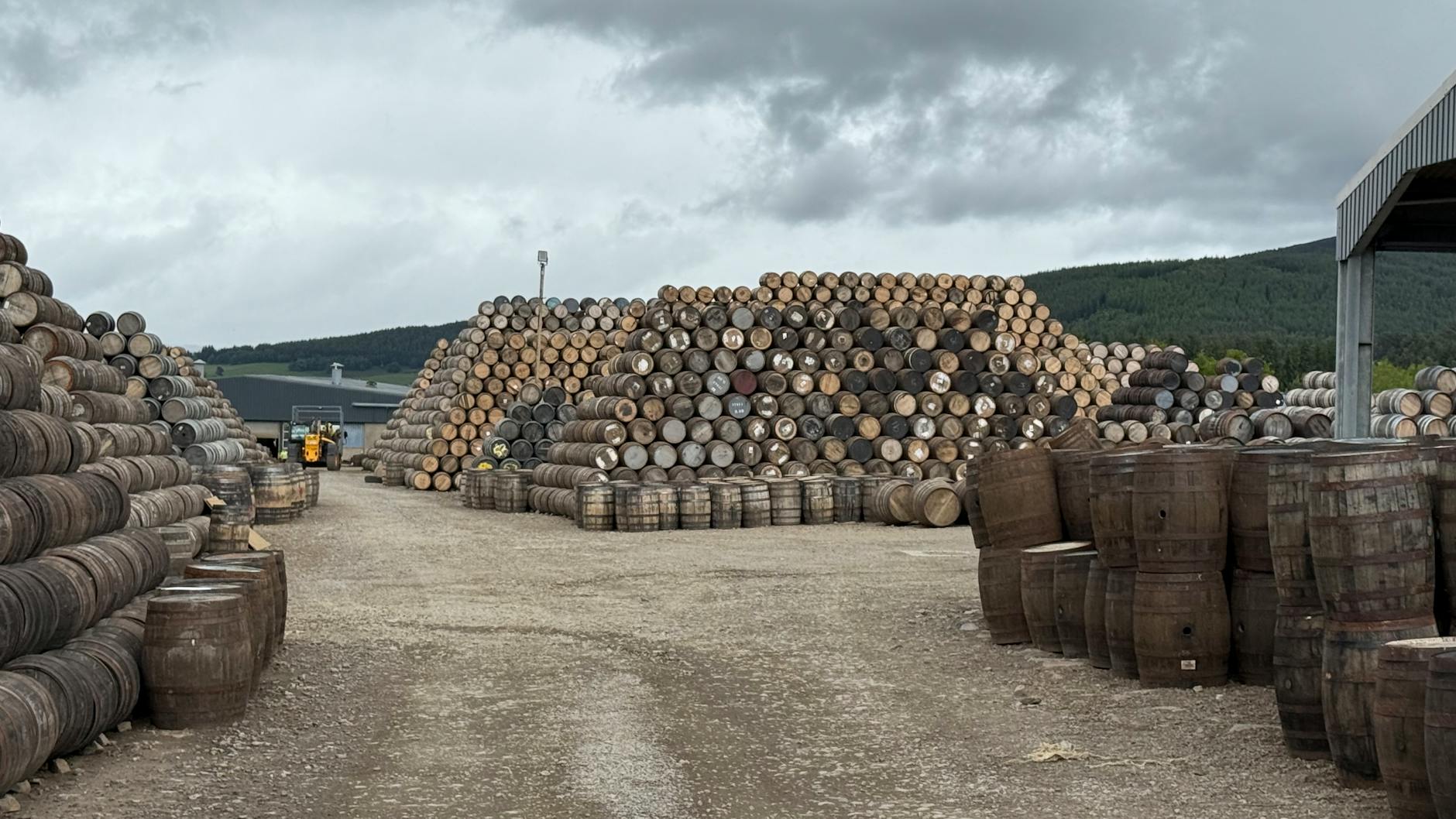
Sazerac's $15 billion bid for Brown-Forman and move on John Distilleries signal major spirits consolidation. This reduces independent cask supply, tightening inventory and historically driving up secondary market prices for whisky casks and bottles within 12-24 months.
Key Takeaways
- Sazerac has tabled a $15 billion offer for Brown-Forman, owner of Jack Daniel's and Woodford Reserve
- Sazerac is simultaneously in reported talks to expand its stake in India's John Distilleries, a major player in Indian single malt
- Large-scale spirits M&A reduces the number of independent distilleries, constraining future cask supply
- Whisky cask values have appreciated an average of 10–15% annually over the past decade, according to Knight Frank's Luxury Investment Index
- Consolidation events have historically triggered price spikes in secondary cask and bottle markets within 12–24 months
What Does Sazerac's $15 Billion Bid Signal for Whisky Investors?
Sazerac's reported $15 billion approach for Brown-Forman is one of the largest proposed transactions in spirits industry history. Brown-Forman's portfolio includes Jack Daniel's Tennessee Whiskey, Woodford Reserve, Old Forester, and Benriach Scotch — brands that collectively generate billions in annual revenue and hold some of the most strategically valuable aged whisky inventory on the planet. If the deal proceeds, it would give Sazerac — already the owner of Buffalo Trace, Pappy Van Winkle, and Blanton's — an extraordinary concentration of American whisky heritage under one roof.
For cask investors, the implications are immediate and material. When ownership of major distilleries consolidates, production priorities shift. New owners rationalise output, mothball lower-margin expressions, and redirect aged stock toward premium lines. This reduces the volume of independently available mature casks in the secondary market, which in turn applies upward pressure on prices for casks already held outside corporate inventories. Investors sitting on aged American or Scotch whisky casks could find their assets appreciating faster than baseline projections anticipated.
Why Does the John Distilleries Move Matter?
The parallel move on John Distilleries adds another dimension to the investment thesis. John Distilleries, the Bangalore-based producer behind Paul John Single Malt, has become one of the most critically acclaimed Indian whisky operations in the world. Paul John expressions have scored consistently above 90 points from major whisky critics, and Indian single malt exports have grown at a compound annual rate exceeding 20% over the past five years, driven by demand across Europe, the US, and Southeast Asia.
Sazerac increasing its stake in John Distilleries would accelerate that brand's global distribution reach considerably. But it would also bring Indian single malt cask supply under tighter corporate control. The window for independent investors to access early-stage Indian single malt casks — before institutional ownership dominates the category — may be narrowing. Indian whisky is still in a relatively early phase of international recognition, which historically is the optimal entry point for cask investment: before scarcity is widely priced in.
How Does M&A Activity Affect Cask and Bottle Valuations?
The historical record is instructive. When Diageo acquired Casamigos for $1 billion in 2017, secondary market prices for competing aged tequila and premium spirits spiked within 18 months as consumers and investors anticipated supply rationalisation. Similarly, the consolidation of Scotch whisky distilleries under LVMH and Diageo in the 1990s and 2000s preceded sustained appreciation in independent bottler stocks and private cask values. Knight Frank's Luxury Investment Index has tracked rare whisky appreciating 373% over the past decade — outperforming art, wine, watches, and classic cars over the same period.
The mechanism is straightforward: fewer independent owners means fewer casks reaching the open market, fewer independent bottlings, and greater scarcity for collectors and investors seeking non-corporate provenance. Each major M&A transaction in the spirits sector is, functionally, a supply reduction event for the alternative asset market.
What Is the Investment Takeaway?
Investors should treat the Sazerac-Brown-Forman and John Distilleries developments as a forward-looking supply signal, not merely a corporate news story. The window to acquire aged American whisky casks — particularly from distilleries that may fall under new ownership structures — and early-vintage Indian single malt casks is likely to tighten over the next 12 to 24 months. Allocating to whisky casks now, before consolidation fully reprices the market, positions investors ahead of the supply compression curve.
Diversification across geographies — American bourbon, Scotch single malt, and emerging Indian single malt — offers both appreciation potential and a hedge against single-market regulatory or production risk. With M&A activity signalling that the world's largest spirits operators are aggressively acquiring the best assets, independent cask investors have a narrow but well-defined opportunity to act before institutional capital closes the gap.
Frequently Asked Questions
How does spirits industry consolidation affect whisky cask investment values?
When major distilleries are acquired by large corporations, production priorities shift and fewer casks reach the independent secondary market. This supply reduction typically drives up valuations for casks already held outside corporate inventories, benefiting private cask investors.
Is Indian single malt whisky a viable investment category?
Yes. Indian single malt, led by producers like Paul John, has seen export growth exceeding 20% CAGR over five years and critical scores consistently above 90 points. It remains in an early phase of international recognition, which historically represents an optimal entry point before scarcity premiums are fully priced in.
What has been the historical return on whisky cask investment?
Knight Frank's Luxury Investment Index tracks rare whisky appreciating 373% over the past decade, outperforming art, wine, classic cars, and watches. Average annual appreciation across the broader cask market has ranged between 10% and 15% per year, though individual cask performance varies by distillery, age, and category.
Why is the Sazerac-Brown-Forman deal significant for alternative asset investors?
Brown-Forman controls some of the most strategically valuable aged whisky inventory in the world, including Jack Daniel's and Woodford Reserve. A change of ownership at this scale typically triggers supply rationalisation, reducing independently available mature casks and pushing secondary market prices higher within 12 to 24 months.
When is the right time to invest in whisky casks relative to M&A activity?
The optimal entry point is before consolidation is fully priced into the market — ideally when M&A activity signals future supply constraints but before those constraints materialise. The current Sazerac activity suggests that window is open now, particularly for American bourbon and Indian single malt casks.
💼 Interested in alternative asset investment? Speak to the team at Whisky Cask Club — Singapore's leading whisky cask investment specialists.
💼 Interested in alternative asset investment? Speak to the team at Whisky Cask Club — Singapore's leading whisky cask investment specialists.