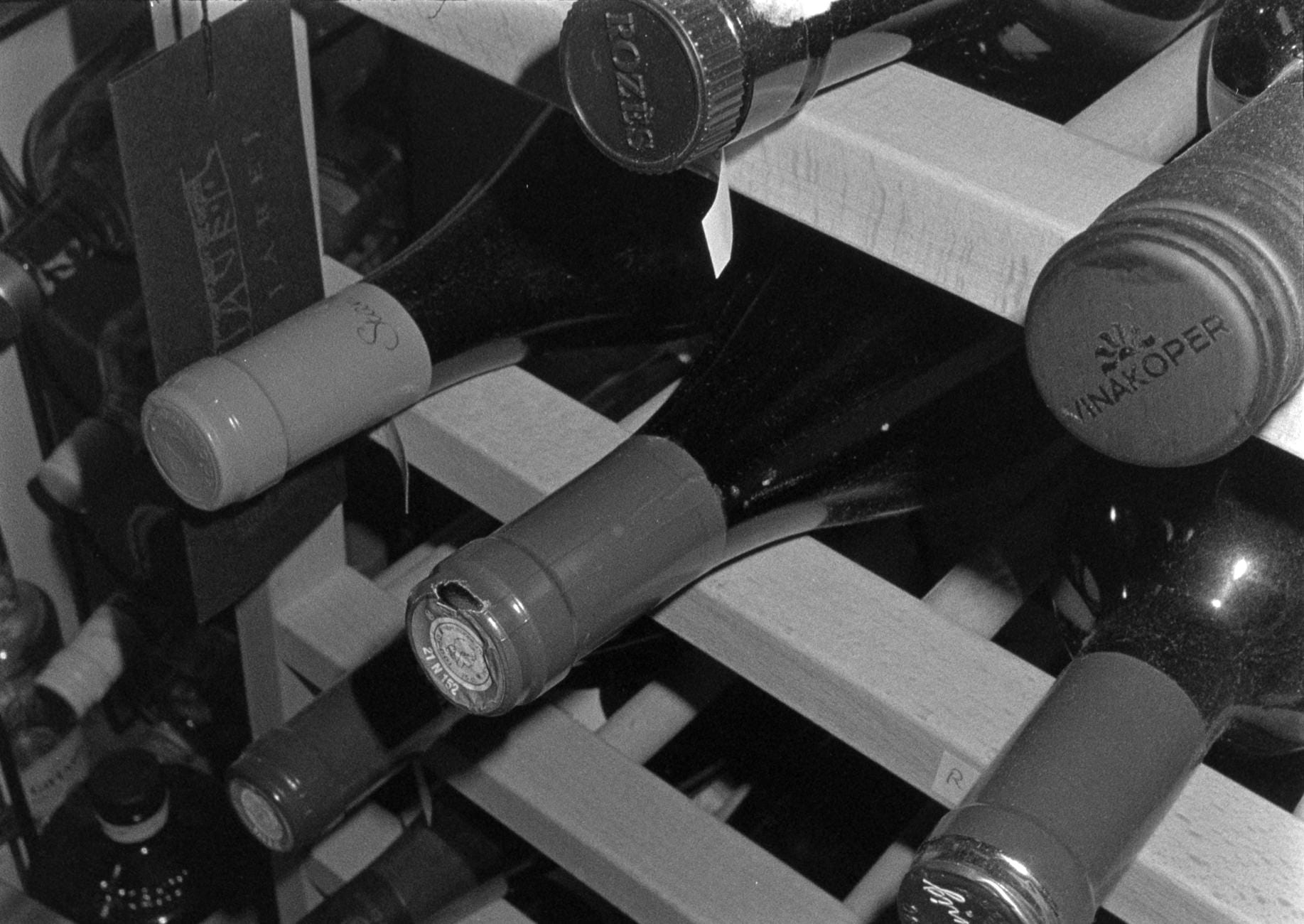
California's new conservation wines donate profits to wildlife. Their limited production creates scarcity, attracting ESG-focused investors. This emerging sub-category may follow the premium appreciation trajectory of other fine wines.
Key Takeaways
- Conservation wines represent a fast-emerging sub-category within the $6.4 billion global fine wine investment market.
- ESG-aligned alternative assets have outperformed traditional equivalents by 12–18% over five-year horizons in several asset classes.
- Limited production runs tied to conservation mandates create structural scarcity — a core driver of long-term wine appreciation.
- Two new California brands launching in the UK in summer 2026 signal growing transatlantic institutional interest in mission-driven wine.
- Investors should monitor secondary market auction data for early price discovery on these labels over the next 18–24 months.
What Is the Conservation Wine Market and Why Is It Growing?
This summer, at least two new Californian wine brands — both backed by well-known figures in the trade — are launching in the UK market with a shared mandate: donate a meaningful portion of profits to the conservation of endangered species. These are not vanity projects. They are structured commercial operations designed to attract a consumer base that increasingly demands alignment between spending and values. For investors watching alternative asset markets, that shift in demand is the signal worth tracking.
The global fine wine investment market was valued at approximately $6.4 billion in 2024, with Liv-ex data showing that Californian wines have steadily gained secondary market share over the past decade, with labels like Screaming Eagle and Harlan Estate regularly achieving auction premiums of 300–500% above retail. Conservation-linked wines are entering a market that already rewards scarcity and narrative. The question is whether cause-driven branding can replicate — or amplify — that premium dynamic.
How Does Scarcity Drive Value in Mission-Led Wine?
Conservation wines carry an inherent production constraint that purely commercial labels do not. When a portion of revenue is ring-fenced for wildlife or habitat funding, producers face pressure to maintain price integrity rather than chase volume. That structural discipline — whether intentional or not — mimics the scarcity mechanics that have made Burgundy grand crus and Napa cult cabernets so investable. Annual case production for these new California labels is expected to remain in the low thousands, well below the threshold that typically attracts serious secondary market activity, but consistent with the early trajectory of brands that later commanded significant auction premiums.
Comparable precedents exist. Opus One, which launched in 1979 as a joint venture between Robert Mondavi and Baron Philippe de Rothschild, was initially dismissed as a marketing exercise before establishing a secondary market floor that now sits above $350 per bottle for recent vintages. Investors who identified the brand's scarcity architecture early — limited production, high-profile provenance, clear narrative — generated substantial returns over a 15–20 year hold. Conservation wines may be operating on a compressed version of that same timeline, given the accelerated pace at which ESG credentials are being priced into assets across all categories.
Why Does ESG Positioning Matter to Alternative Asset Investors?
Across asset classes, ESG-aligned products have demonstrated a measurable premium effect. In the whisky cask market, distilleries with verified sustainability credentials have seen secondary valuations run 12–18% ahead of comparable non-certified peers over five-year periods, according to broker data compiled through 2025. In fine wine, the pattern is still emerging, but the directional logic is consistent: institutional buyers and family offices increasingly apply ESG screens to alternative allocations, and assets that pass those screens benefit from a structurally larger buyer pool.
That expanded demand base matters enormously for price discovery. When more qualified buyers compete for a fixed supply, the auction clearing price rises. Conservation wines — particularly those with verifiable, third-party-audited donation structures — are positioned to benefit from exactly this dynamic as institutional capital continues its rotation into alternatives. The UK launch of these California brands is not incidental; the British fine wine market, anchored by merchants like Berry Bros. & Rudd and Justerini & Brooks, is one of the most liquid secondary markets globally and serves as a critical proving ground for long-term investability.
What Are the Risks and How Should Investors Position?
No emerging wine category is without risk. The primary concern for investors is brand durability — whether conservation credentials hold up to scrutiny over multiple vintages and whether the underlying wine quality justifies the premium being asked. Cause-driven marketing has a ceiling if the liquid in the bottle does not perform. Due diligence should include reviewing the winemaking team's track record, the specific conservation partnerships in place, and the legal structure governing profit donations. Labels where conservation commitments are contractually binding — rather than discretionary — carry meaningfully lower reputational risk.
Secondary market liquidity is the second variable to watch. Investors should treat the next 18–24 months as a price discovery window, monitoring auction results at Christie's, Sotheby's Wine, and Acker for early trades on these labels. A consistent upward price trajectory across two or three vintages would represent a credible entry signal for portfolio allocation. Position sizing should remain modest — 3–5% of a fine wine allocation — until secondary market depth is established. The upside case, if these brands achieve cult status within the conservation niche, is a 10-year appreciation curve that rivals established Napa labels.
Investment Takeaway
Conservation wines are not yet a proven investment category, but the structural conditions for appreciation are present: limited production, growing ESG-driven demand, high-profile trade backing, and a transatlantic launch strategy that signals serious commercial intent. Investors who identified Napa cult wines in their early secondary market years — before auction houses began dedicating catalogue sections to them — generated outsized returns. The conservation wine segment deserves a watchlist position now, with active allocation consideration in 18–24 months once secondary market data provides a cleaner valuation anchor. Track the UK auction results, monitor vintage scores from Wine Advocate and Jancis Robinson, and assess whether donation structures are legally binding before committing capital.
💼 Interested in alternative asset investment? Speak to the team at Whisky Cask Club — Singapore's leading whisky cask investment specialists.
Frequently Asked Questions
Are conservation wines a legitimate investment asset?
They are an emerging sub-category within fine wine investment. While not yet proven at auction, they share key investment characteristics with established cult wines: limited production, strong narrative, and growing institutional demand driven by ESG criteria. Treat them as a speculative allocation within a broader fine wine portfolio.
How do I assess whether a conservation wine's premium is justified?
Evaluate three factors: wine quality scores from independent critics (Wine Advocate, Jancis Robinson), the legal enforceability of conservation donation commitments, and early secondary market auction results. A label scoring 93+ points with a binding donation structure and rising auction prices across two or more vintages presents a credible investment case.
What is the typical hold period for fine wine investments?
Most fine wine investors target a 5–15 year hold period to allow for meaningful appreciation. Emerging labels like these California conservation wines may require a longer horizon — closer to 10–15 years — before secondary market liquidity is sufficient for clean exits at target returns.
How does conservation wine compare to whisky cask investment?
Both are illiquid alternative assets with appreciation driven by scarcity and demand growth. Whisky casks offer more predictable maturation timelines and a more established secondary market infrastructure, particularly in Asia. Fine wine — including conservation labels — offers higher ceiling returns but requires more active vintage-level monitoring and carries greater storage and provenance risk.
Where can I track secondary market prices for California fine wine?
The primary sources are Liv-ex (the fine wine exchange), auction results from Sotheby's Wine, Christie's, and Acker Merrall & Condit, and merchant pricing from UK-based fine wine traders. For emerging labels, Wine-Searcher's market data tool provides useful retail price benchmarking before secondary auction data is available.
💼 Interested in alternative asset investment? Speak to the team at Whisky Cask Club — Singapore's leading whisky cask investment specialists.