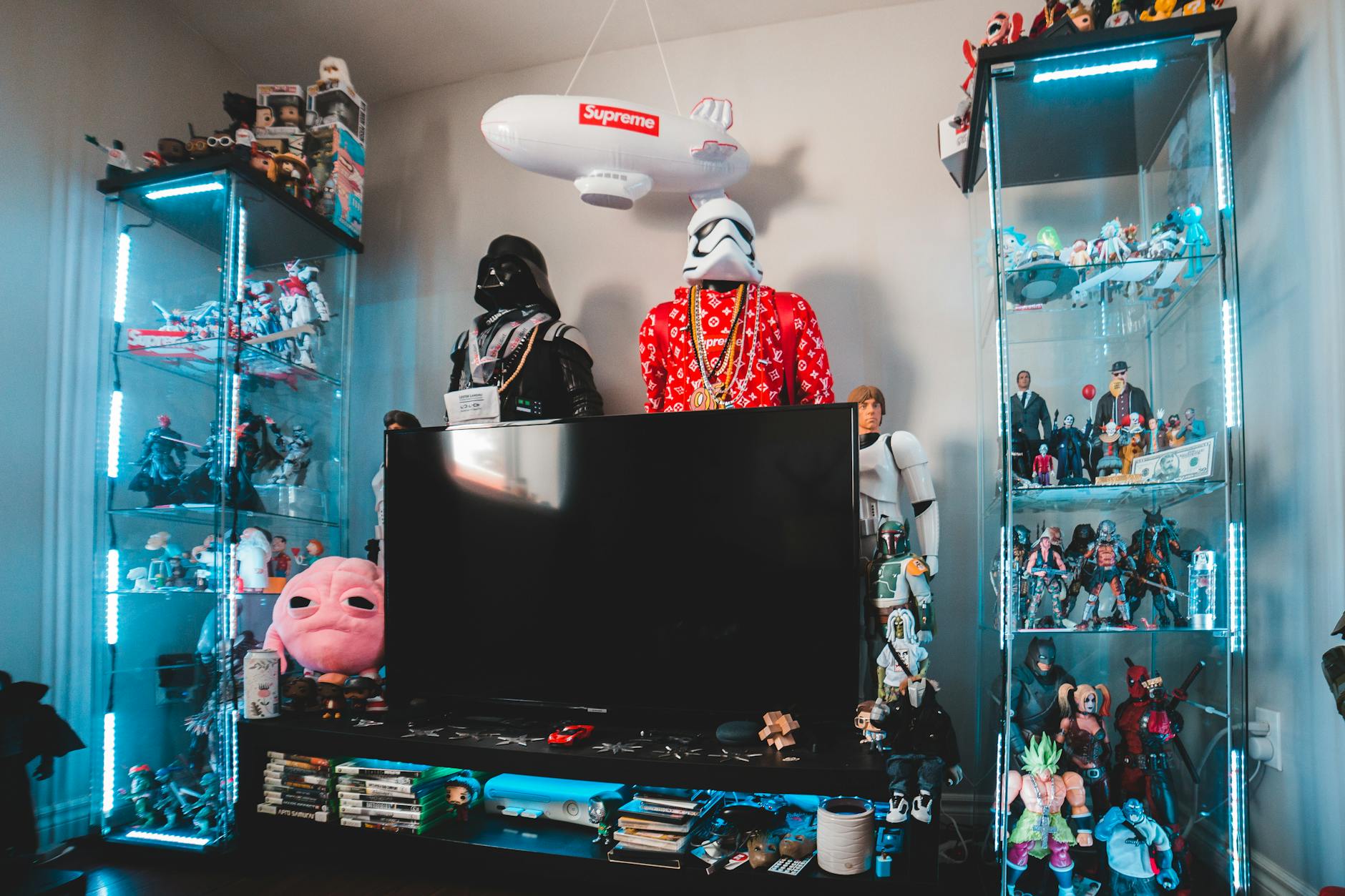
George Lucas's $1 billion Los Angeles museum legitimises narrative art as a collectable category. Original comic and film art has already appreciated 230% at auction over 12 years. Institutional validation historically accelerates price discovery — investors should position ahead of the opening.
Lucas Museum: A $1 Billion Signal for Narrative Art Investment
When a single institution commits $1 billion in capital to a new category of collecting, the alternative asset market pays attention. The Lucas Museum of Narrative Art — funded by filmmaker George Lucas and his wife, Mellody Hobson, chair of Starbucks and co-CEO of Ariel Investments — is set to open in Los Angeles with 100,000 square feet of exhibition space and an inaugural programme of 18 thematic exhibitions personally curated by Lucas himself. For investors tracking the fine art and collectibles market, this is not a cultural footnote. It is a demand catalyst with measurable implications for a segment of the market that has historically traded at a discount to blue-chip contemporary art.
Narrative art — broadly defined as illustration, comic art, film art, and figurative works that tell a story — has long been dismissed by institutional collectors as decorative rather than fine. That perception is shifting rapidly. Original comic art by artists such as Jack Kirby and Neal Adams has seen hammer prices climb from four figures to well into six figures over the past decade. A single page of Kirby's original New Gods artwork fetched over $312,000 at Heritage Auctions in 2022, a category that barely registered at auction houses fifteen years ago. The Lucas Museum's arrival gives this entire segment institutional legitimacy it has never previously enjoyed.
Why Institutional Validation Moves Markets
The mechanism here is well-understood by anyone who has watched the whisky cask or vintage watch markets mature. When credible, well-capitalised institutions begin acquiring and exhibiting an asset class, three things happen simultaneously: provenance standards tighten, price discovery improves, and a new class of buyer enters the market. The Lucas Museum's collection already includes works by Norman Rockwell, whose paintings have appreciated dramatically since MoMA and other major institutions began acquiring American illustrators. Rockwell's Saying Grace sold at Sotheby's in 2013 for $46 million — a record for the artist and a direct consequence of shifting institutional attitudes toward narrative and figurative work.
The 18 thematic exhibitions planned for the museum's opening span film, comics, photography, and painting, representing a deliberate effort to frame narrative art as a coherent, collectable category rather than a series of disconnected niches. This kind of curatorial framing has a proven track record of driving secondary market activity. When the Victoria and Albert Museum mounted its major comics exhibition in 2019, auction volumes for original comic art in the UK rose noticeably in the following 12 months. A $1 billion institution in Los Angeles — one of the world's largest art markets — operating at this scale will have a far more pronounced effect.
The Scarcity Dynamics Investors Should Understand
Unlike editions or prints, original narrative art is finite by definition. A page of original comic artwork exists as a single physical object. Film concept art, storyboards, and production paintings — all categories the Lucas Museum will exhibit — are similarly non-reproducible. Supply is fixed; demand is being structurally increased by one of the most high-profile museum openings in a generation. This is precisely the supply-demand asymmetry that underpins strong long-term price appreciation in alternative assets.
- Auction growth (original comic art): Heritage Auctions' comics category grew from approximately $30 million annually in 2010 to over $100 million by 2022 — a 230% increase in twelve years.
- Record hammer price (narrative art): Norman Rockwell's Saying Grace — $46 million at Sotheby's, 2013.
- Institutional entry signal: Lucas Museum budget — $1 billion, with 100,000 sq ft of dedicated exhibition space in Los Angeles.
- Market trend: Original illustration and comic art now regularly features in major auction house evening sales, a structural shift from specialist-only sales a decade ago.
For investors already active in alternative assets — whisky casks, fine wine, rare watches — the narrative art category offers comparable scarcity characteristics with the added tailwind of a major new institutional buyer effectively marketing the category to a global audience. The Lucas Museum will attract millions of visitors annually, converting cultural interest into collector demand across a broad price spectrum, from accessible prints to museum-grade originals.
Investment Takeaway
The Lucas Museum's inaugural exhibition lineup is a buy signal for investors willing to position ahead of the institutional validation curve. The most actionable approach is to focus on original works — not prints or reproductions — in categories the museum will actively exhibit: Golden and Silver Age comic art, film concept art, and works by recognised narrative illustrators. Provenance documentation is critical; as the market matures, works with clear ownership histories and exhibition records will command significant premiums over comparable pieces without them. Investors should also monitor upcoming Heritage Auctions and Sotheby's catalogue sales for narrative art in the 12 to 24 months following the museum's opening — historically, that window captures the strongest price acceleration driven by new institutional attention. Diversification across alternative asset classes remains prudent, but narrative art now warrants a dedicated allocation consideration for portfolios already exposed to tangible, scarcity-driven assets.
💼 Interested in alternative asset investment? Speak to the team at Whisky Cask Club — Singapore's leading whisky cask investment specialists.
Frequently Asked Questions
What is narrative art and why is it considered an alternative asset?
Narrative art encompasses illustration, comic art, film concept art, and figurative painting that communicates a story. It is considered an alternative asset because original works are finite in supply, trade outside traditional financial markets, and have demonstrated consistent price appreciation driven by collector demand and, increasingly, institutional acquisition.
How does the Lucas Museum opening affect the value of existing narrative art holdings?
Major institutional openings historically drive secondary market activity by increasing public awareness, tightening provenance standards, and attracting new buyers. The Lucas Museum's $1 billion budget and 100,000 sq ft of exhibition space in Los Angeles positions it to be a sustained demand catalyst for the narrative art category over the coming decade.
What are the strongest price appreciation examples in narrative art?
Original comic art by Jack Kirby has moved from four-figure to six-figure hammer prices over the past fifteen years. Norman Rockwell's Saying Grace achieved $46 million at Sotheby's in 2013. Heritage Auctions' comics category grew over 230% between 2010 and 2022, from approximately $30 million to over $100 million annually.
How does narrative art compare to whisky casks or fine wine as an alternative investment?
All three share core scarcity dynamics — fixed or declining supply against growing demand. Narrative art offers the additional variable of institutional validation, which can accelerate price discovery rapidly. Whisky casks and fine wine benefit from biological maturation adding intrinsic value over time, which narrative art does not replicate. A diversified alternative asset portfolio may benefit from exposure to both categories.
What should investors look for when buying narrative art?
Prioritise original works over prints or reproductions. Provenance documentation — clear ownership history, exhibition records, and auction trail — is essential and commands premium pricing as the market matures. Focus on artists and categories with demonstrated auction liquidity, and monitor major specialist sales at Heritage Auctions, Sotheby's, and Christie's for price benchmarks.
💼 Interested in alternative asset investment? Speak to the team at Whisky Cask Club — Singapore's leading whisky cask investment specialists.