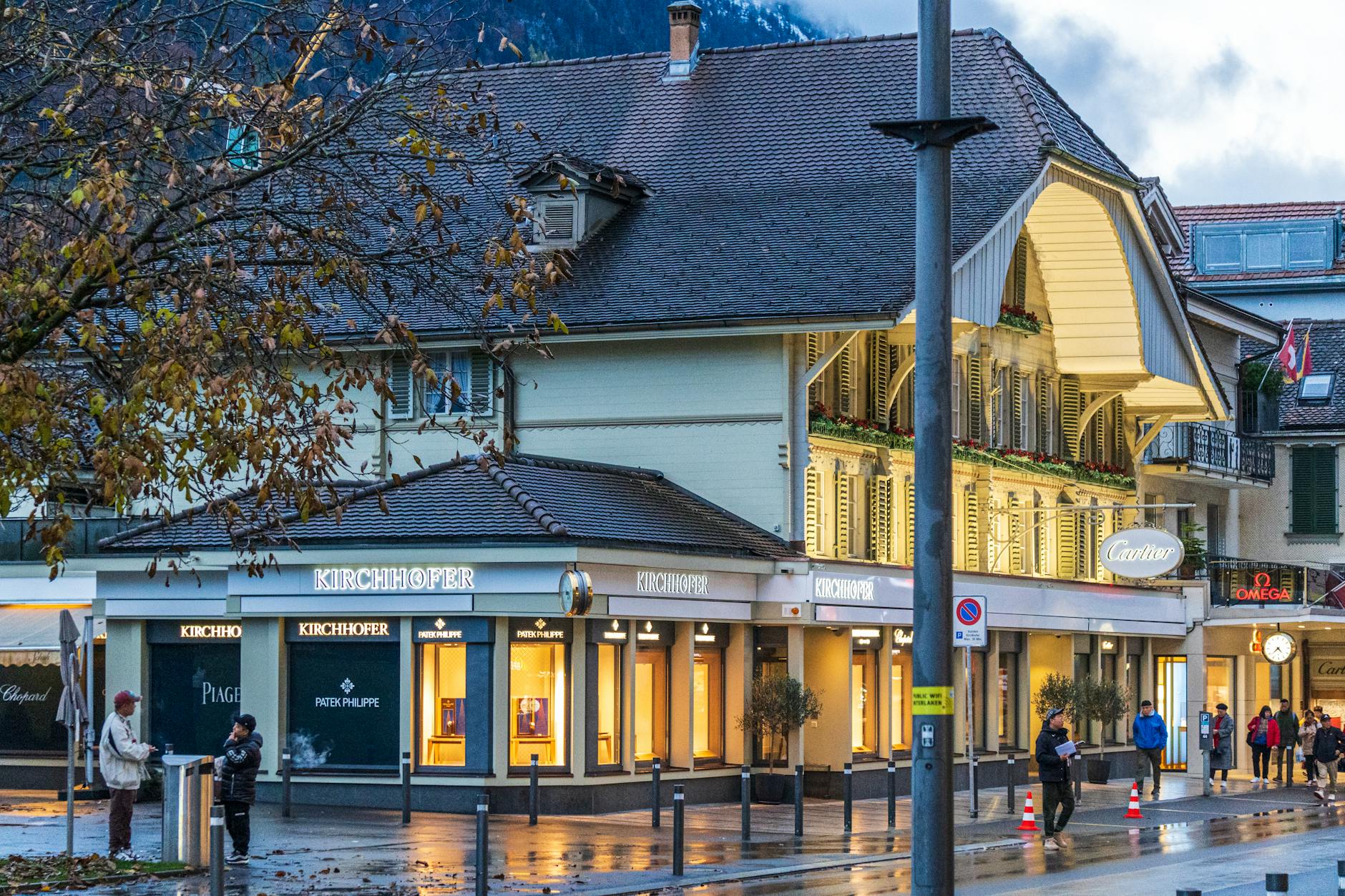
The Met Gala 2026 showcased watches worth up to $8.5 million, signalling strong demand in a $32 billion pre-owned market. Patek Philippe and Cartier references with documented scarcity have delivered 135–250% returns in under five years, making them credible portfolio-grade assets.
Expensive Watches at the Met Gala 2026: The Investment Signal Hidden in Plain Sight
When the most expensive watches at the Met Gala 2026 command headlines — led by an $8.5 million Patek Philippe worn on the red carpet — seasoned investors should be paying close attention. This is not celebrity gossip. It is a live demonstration of where ultra-high-net-worth capital flows, and what that means for the broader luxury watch market. The global pre-owned luxury watch market was valued at approximately $22 billion in 2023 and is projected to reach $32 billion by 2028, according to McKinsey. When a single timepiece worn at a cultural event carries an eight-figure price tag, it reinforces why horological assets are increasingly treated as portfolio-grade holdings rather than wrist ornaments.
The standout pieces at this year's event included a diamond-set Cartier creation that blurred the line between jewellery and horology, alongside several rare complications from independent Swiss ateliers. These are not mass-market references. They are limited-production, often one-of-a-kind pieces whose secondary market values have consistently outpaced inflation over the past decade. The visibility they receive at events like the Met Gala is not incidental — it is a demand catalyst that directly influences auction results in the months that follow.
Why Rare Watches Belong in an Investment Portfolio
The investment case for high-end watches rests on three pillars: scarcity, brand integrity, and secondary market liquidity. Patek Philippe, for example, produces fewer than 70,000 watches per year across its entire catalogue. Specific references — the Nautilus 5711, the Grandmaster Chime, the Sky Moon Tourbillon — are produced in quantities measured in the dozens or low hundreds annually. When one of these pieces appears on the wrist of a global celebrity at the world's most photographed fashion event, the demand signal is immediate and measurable. The Patek Philippe Nautilus 5711/1A-010 in steel, discontinued in 2021, was retailing at approximately $34,000. It now regularly achieves $80,000 to $120,000 at auction — a return of between 135% and 250% in under five years.
Cartier's investment credentials are similarly compelling. The brand's high jewellery and complication pieces have seen consistent appreciation at the major auction houses. A Cartier Mystery Clock sold at Christie's in 2023 for $3.1 million, nearly double its pre-sale estimate. The diamond-set pieces showcased at the Met Gala 2026 occupy a comparable tier — where jewellery-grade stones meet Swiss movement expertise — and represent a category where supply is structurally constrained by both gemstone availability and artisan production time.
- 5-year appreciation (Patek Philippe Nautilus 5711): +135% to +250%
- Annual Patek Philippe production: fewer than 70,000 units across all references
- Global pre-owned watch market size (2028 projection): $32 billion
- Cartier Mystery Clock auction result (Christie's 2023): $3.1 million — nearly 2x estimate
What the Met Gala Effect Means for Watch Valuations
Cultural moments have a documented impact on watch auction performance. Following the 2019 Only Watch auction, where a unique Patek Philippe 6300A-010 Grandmaster Chime in steel sold for CHF 31 million — setting a world record for any watch at auction — demand for Patek complications broadly surged across all price tiers. The mechanism is straightforward: high-profile exposure compresses the time between aspiration and acquisition for ultra-wealthy buyers, while simultaneously signalling rarity to the broader collector and investor community. The Met Gala, with its global media reach and cultural authority, functions as an annual reset of the luxury desire index.
For investors, the practical implication is timing. Watch auction calendars at Sotheby's, Christie's, and Phillips typically schedule major horological sales in May and November. The Met Gala, held in early May each year, lands directly in the pre-sale period when consignors and buyers are most active. Pieces that receive prominent placement at the event — either worn by attendees or referenced in press coverage — have historically outperformed estimates in the following auction cycle. Tracking which references appear at the Met Gala is, in effect, a leading indicator for secondary market momentum.
Investment Takeaway
The watches seen at the Met Gala 2026 are not merely fashion accessories — they are functioning proof-of-concept for the alternative asset thesis. An $8.5 million Patek Philippe on a red carpet is a data point, not a distraction. Investors looking to allocate to tangible assets should focus on references with documented production constraints, strong auction house relationships, and cultural visibility. The entry point for investment-grade watches begins around $20,000 for established references from Patek Philippe, Rolex, and A. Lange and Söhne, with meaningful appreciation potential over a five-to-ten-year horizon. For those building a diversified alternative asset portfolio, watches offer a combination of portability, global liquidity, and inflation-resistance that few asset classes can match. The Met Gala is the annual reminder that the demand side of this equation remains structurally robust.
💼 Interested in alternative asset investment? Speak to the team at Whisky Cask Club — Singapore's leading whisky cask investment specialists.
Frequently Asked Questions
Are luxury watches a reliable investment compared to other alternative assets?
Luxury watches from top-tier manufacturers like Patek Philippe, Rolex, and Cartier have demonstrated consistent appreciation over five-to-ten-year horizons, often outperforming inflation. However, returns are reference-specific and depend heavily on production scarcity and secondary market demand. They are best treated as a component of a diversified alternative asset allocation rather than a standalone strategy.
What makes a watch investment-grade versus simply expensive?
Investment-grade watches typically combine limited annual production, a strong auction house track record, brand heritage of at least 100 years, and a documented secondary market with active buyers. Price alone is not sufficient — a watch must have structural scarcity and proven resale liquidity to qualify as a portfolio asset.
How does the Met Gala influence watch auction prices?
The Met Gala generates global media coverage in early May, which coincides with the pre-sale period for major spring auction cycles at Sotheby's, Christie's, and Phillips. References that receive prominent visibility at the event have historically seen elevated bidding in the following auction season, as cultural exposure compresses demand timelines for ultra-high-net-worth buyers.
What is the minimum investment required to enter the luxury watch market?
Investment-grade references from established manufacturers typically begin around $20,000 on the secondary market. Pieces with the strongest appreciation potential — discontinued references, limited editions, and complicated movements — often start at $50,000 and above. At the top end, rare Patek Philippe and Cartier high jewellery pieces can exceed $1 million.
How liquid is the luxury watch market compared to whisky casks or fine wine?
The luxury watch market benefits from a well-established global auction infrastructure and an active dealer network, making it relatively liquid compared to whisky casks or fine wine. Major auction houses hold dedicated watch sales twice yearly, and online platforms such as Chrono24 provide continuous secondary market pricing data, offering investors reasonable price transparency and exit optionality.
💼 Interested in alternative asset investment? Speak to the team at Whisky Cask Club — Singapore's leading whisky cask investment specialists.