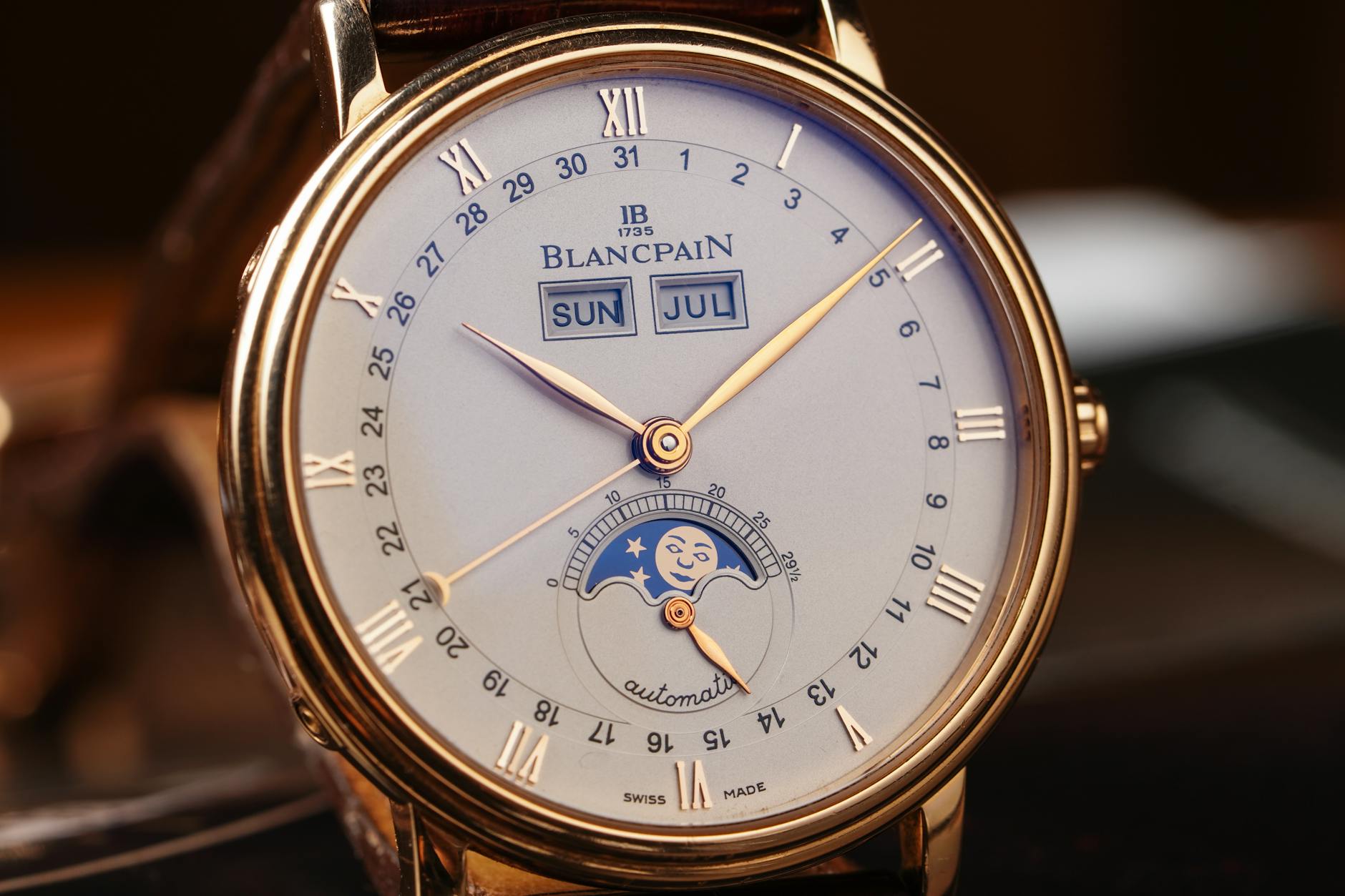
Design historians Charlotte and Peter Fiell explain how provenance and narrative drive watch valuations. With the luxury watch market exceeding $22 billion annually and top references appreciating 147% over a decade, the investment case for curated horology is compelling.
Watch Collecting as an Investment: What the Market Data Tells Us
Watch collecting has quietly matured into one of the most data-rich segments of the alternative asset market. According to the Knight Frank Luxury Investment Index, watches appreciated by 147% over the decade to 2022, outpacing art, wine, and even classic cars over the same period. The secondary market for luxury timepieces now exceeds $22 billion annually, with platforms like Chrono24 and WatchBox processing hundreds of millions in transactions each quarter. Against this backdrop, a recent episode of the SUPERLATIVE Podcast featuring design historians Charlotte and Peter Fiell offers a rare intellectual lens through which serious investors can better understand what drives long-term value in horology.
Charlotte and Peter Fiell are among the world's foremost authorities on design history, having authored over 100 books for publishers including Taschen and having curated major exhibitions across Europe. Their appearance on the SUPERLATIVE Podcast was not a collector's vanity exercise — it was a masterclass in understanding how narrative, provenance, and cultural positioning translate directly into price premiums at auction. For investors, that distinction matters enormously.
Why Curation and Storytelling Drive Watch Valuations
The Fiells argue that objects — watches included — accrue value not merely through scarcity or mechanical complexity, but through the stories attached to them. This is not a soft observation. At Christie's Watches Online auction in 2023, a Rolex Daytona with documented racing provenance sold for 340% above its pre-sale estimate, while a mechanically identical reference without comparable documentation sold within its standard range. Provenance, in other words, is a quantifiable premium, not an intangible one. Investors who understand this dynamic are better positioned to identify undervalued pieces before the broader market reprices them.
Peter Fiell specifically highlighted the role of design curation in separating transient trends from durable value. Watches that occupy a clear position in design history — the Audemars Piguet Royal Oak, the Patek Philippe Nautilus, the IWC Portugieser — have consistently outperformed generic luxury timepieces over five- and ten-year horizons. The Royal Oak, originally launched in 1972 at a price that shocked the industry, now commands six-figure sums at auction for early references, with some Ref. 5402 examples fetching over CHF 400,000 at Phillips Geneva. That is a return profile that rivals venture capital, with considerably more liquidity.
Key Investment Metrics in the Watch Market
- 10-year appreciation (luxury watches, Knight Frank LII): +147%
- Secondary market size: $22 billion+ annually
- Rolex Daytona (Ref. 6263 Paul Newman) auction record: $17.75 million, Phillips 2017
- AP Royal Oak Ref. 5402 early references: CHF 300,000–400,000+ at recent auction
- Patek Philippe Nautilus Ref. 5711 grey market premium at discontinuation: 200–300% above retail
These figures are not outliers. They reflect a structural dynamic in which supply is deliberately constrained by manufacturers while demand continues to expand globally, particularly across Southeast Asia and the Gulf states. Rolex produces an estimated 800,000 to one million watches per year — a figure that sounds large until you consider that the global market for luxury goods is served by a consumer base numbering in the tens of millions. Waitlists for steel sports references at authorised dealers routinely stretch to five years or more, a supply constraint that functions similarly to cask whisky's maturation cycle in terms of its effect on secondary market pricing.
What Investors Should Take Away From the Fiell Conversation
The core investment insight from Charlotte and Peter Fiell's podcast appearance is this: watches that can be contextualised within a broader design or cultural narrative will consistently outperform those that cannot. For investors building a watch allocation, this means prioritising references with clear historical significance, documented ownership chains, and representation in major museum collections or academic literature. It also means treating condition and originality with the same rigour applied to fine wine vintages — a refinished dial or replaced crown can reduce a watch's auction value by 30 to 50 percent, a figure that should inform storage and insurance decisions from the moment of acquisition.
The Fiells' broader body of work — spanning industrial design, furniture, and material culture — reinforces a principle that applies across all tangible alternative assets: objects with intellectual and historical anchoring are more resistant to cyclical downturns than those driven purely by trend. For high-net-worth investors considering a 5 to 10 percent allocation to tangible alternatives, watches with strong provenance narratives represent a compelling case, particularly in a period when financial asset volatility has renewed interest in stores of value that exist outside the banking system.
Frequently Asked Questions
What makes a watch a strong investment compared to other alternative assets?
Watches combine portability, scarcity, and cultural cachet in a way few other assets match. Top-tier references from Rolex, Patek Philippe, and Audemars Piguet have demonstrated consistent appreciation over decade-long horizons, with the Knight Frank Luxury Investment Index recording 147% growth over ten years. Unlike art, watches are also relatively liquid, with a deep global secondary market exceeding $22 billion annually.
How does provenance affect a watch's auction value?
Provenance can add substantial premiums — sometimes 200 to 400 percent above a comparable reference without documentation. Christie's and Phillips have both recorded cases where identical mechanical references sold at vastly different prices based solely on ownership history, racing association, or celebrity connection. Documented provenance is a quantifiable asset, not merely a collector's preference.
Which watch references have shown the strongest long-term appreciation?
Early references of the Audemars Piguet Royal Oak (Ref. 5402), the Patek Philippe Nautilus (Ref. 5711), and vintage Rolex Daytona models have consistently led the market. The Paul Newman Daytona sold for $17.75 million at Phillips in 2017. AP Royal Oak Ref. 5402 examples now regularly exceed CHF 400,000 at Geneva auctions, representing extraordinary appreciation from original retail prices.
What role do design historians like the Fiells play in the watch investment market?
Design historians provide the intellectual framework that underpins long-term value narratives. When a watch is included in academic literature, museum exhibitions, or authoritative design histories, it gains a layer of cultural legitimacy that insulates it from short-term trend cycles. The Fiells' work has helped position certain objects — including timepieces — within the broader canon of twentieth-century design, which directly influences how auction houses and collectors price them.
How should a first-time investor approach building a watch portfolio?
Start with references that have a clear design lineage, strong manufacturer reputation, and an active secondary market. Prioritise originality — unpolished cases, original dials, and complete documentation command meaningful premiums. Allocate no more than 5 to 10 percent of a total alternative asset portfolio to watches initially, and work with specialist dealers or auction house advisors who can verify authenticity and condition before acquisition.
💼 Interested in alternative asset investment? Speak to the team at Whisky Cask Club — Singapore's leading whisky cask investment specialists.
💼 Interested in alternative asset investment? Speak to the team at Whisky Cask Club — Singapore's leading whisky cask investment specialists.