Luxury gifting categories — fine watches, whisky casks, and rare wine — deliver double-digit annualised returns backed by scarcity economics and transparent auction data, making them compelling alternative asset allocations for high-net-worth investors in 2026.
TL;DR: Luxury gifting categories — fine watches, whisky casks, and rare wine — are not just sentimental gestures. They are asset classes delivering double-digit annualised returns, with auction data and scarcity economics making them compelling portfolio additions for high-net-worth investors in 2026.
The Investment Opportunity: When Gifts Become Assets
The global luxury goods market was valued at approximately $354 billion in 2024 and is projected to reach $500 billion by 2030, according to Statista. Within that broader market, a subset of categories — fine watches, single malt whisky casks, and investment-grade wine — consistently outperforms traditional financial instruments over five-to-ten-year horizons. The Knight Frank Luxury Investment Index, which tracks the performance of ten passion asset categories, recorded a 147% cumulative gain across its top-performing segments over the past decade. For an investor considering a meaningful Mother's Day gift in 2026, the question is not simply what to give — it is what to give that will appreciate.
This is not about lifestyle indulgence. It is about recognising that certain physical assets carry intrinsic scarcity premiums that financial markets cannot replicate. A Patek Philippe Nautilus, a first-growth Bordeaux case, or a single cask of aged Scotch whisky each represent finite supply meeting growing global demand — a dynamic that has historically produced outsized returns for patient holders.
Why Fine Watches Belong in a Portfolio, Not Just on a Wrist
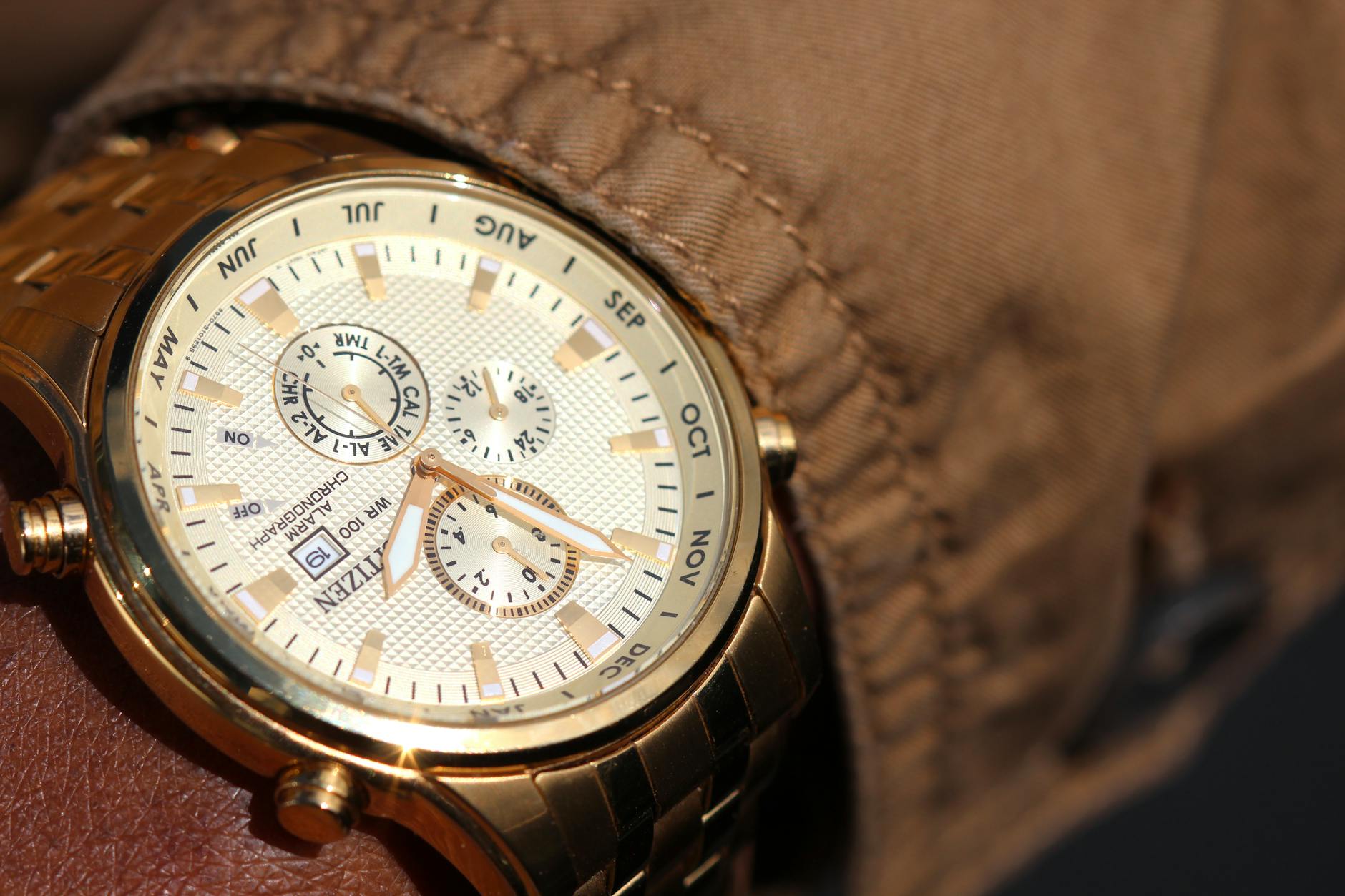
The secondary watch market generated an estimated $22 billion in transaction volume in 2023, according to McKinsey's State of Fashion: Watches and Jewellery report. Rolex, Patek Philippe, and Audemars Piguet dominate resale premiums. A Patek Philippe Ref. 5711 Nautilus in steel, which retailed at approximately $34,000, was trading on the secondary market at $120,000–$150,000 as recently as 2022 — a 350–440% premium over retail. While the post-pandemic correction has moderated some of those peaks, the Subdial50 Watch Index still shows a 5-year appreciation of over 60% for blue-chip references. For a high-net-worth investor gifting a Rolex Daytona or AP Royal Oak, the asset is not consumed — it holds, and often grows, its value. Production constraints from Swiss manufacturers are structural, not cyclical, meaning supply will not meaningfully increase to meet demand.
Authentication and provenance are critical. Watches purchased through authorised dealers with full box-and-papers documentation command a 20–30% premium at auction over incomplete sets. Sotheby's and Christie's both reported record watch auction totals in 2023, with Sotheby's Geneva achieving CHF 35.5 million in a single dedicated session. For an investor, this is a liquid, internationally recognised market with transparent price discovery.
Whisky Casks: The Highest-Conviction Alternative Asset in 2026
Scotch whisky cask investment has delivered average annualised returns of 8–15% over the past decade, depending on distillery, age, and cask type, according to data from the Scotch Whisky Association and independent brokers. The asset benefits from a structural tailwind that is almost impossible to replicate: whisky legally matures in cask for years or decades, meaning today's new-fill cask from a closed or limited-production distillery will be worth significantly more in ten years simply by virtue of time. Casks from silent distilleries — those no longer in production — carry exceptional scarcity premiums. Port Ellen, Brora, and Rosebank single casks have fetched six-figure sums at specialist auction houses including Whisky Auctioneer and Bonhams.
For a Mother's Day gift with genuine long-term investment merit, a whisky cask is arguably the most compelling option on the market. Entry-level casks from reputable distilleries are available from approximately $5,000–$15,000 SGD, with premium casks from Speyside and Highland distilleries commanding $30,000–$80,000 SGD and above. The asset is tangible, insured, stored in a bonded warehouse, and does not correlate with equity or bond markets. In a portfolio context, that non-correlation is as valuable as the return itself.
Fine Wine: Bordeaux Fundamentals Remain Intact
The Liv-ex Fine Wine 1000 index, the broadest benchmark for the investment-grade wine market, has delivered approximately 27% growth over the past five years. First-growth Bordeaux — Château Pétrus, Lafite Rothschild, Mouton Rothschild — remain the blue chips of the category, with Pétrus 2000 trading at approximately £30,000–£35,000 per case at auction in 2024. Burgundy, led by Domaine de la Romanée-Conti, has produced some of the most dramatic appreciation in any asset class: a single bottle of DRC Romanée-Conti 1945 sold at Sotheby's for $558,000 in 2018. Annual production from premier cru and grand cru Burgundy vineyards is measured in thousands of cases, not millions — supply is structurally constrained by geography and appellation law.
A case of first-growth Bordeaux or a mixed Burgundy selection, properly cellared and documented, functions as both a meaningful gift and a portfolio allocation. Provenance records, temperature-controlled storage, and purchase receipts are essential for maximising resale value. Platforms such as Liv-ex provide transparent secondary market pricing, making entry and exit straightforward for sophisticated investors.
Investment Takeaway: Gift With Intention, Allocate With Conviction
The most defensible Mother's Day gifts in 2026 are those that sit at the intersection of sentiment and scarcity. Fine watches, whisky casks, and investment-grade wine each offer documented appreciation histories, transparent secondary markets, and structural supply constraints that support long-term value. For a high-net-worth investor, the allocation logic is straightforward: physical assets with non-correlated returns, global demand, and finite supply deserve a place in any diversified portfolio — and gifting one is simply an elegant entry point.
Whisky casks, in particular, represent the highest-conviction opportunity for 2026. The combination of legal maturation guarantees, distillery scarcity premiums, and growing Asian demand — Singapore and Hong Kong have emerged as major secondary market hubs — makes cask investment a category that rewards early movers. Investors who entered the market five years ago at $10,000 SGD per cask are now sitting on assets valued at $18,000–$25,000 SGD or more, depending on distillery and age statement. That is a return profile that most fixed-income instruments cannot approach in the current rate environment.
Frequently Asked Questions
What makes whisky casks a credible investment asset rather than a novelty?
Whisky casks are legally required to mature in oak barrels for a minimum of three years to qualify as Scotch whisky, creating a time-locked scarcity mechanism. Casks from high-demand or closed distilleries appreciate as the whisky ages and supply diminishes. Independent brokers and auction houses provide transparent price discovery, and casks are stored in HMRC-bonded warehouses with full insurance. Average annualised returns of 8–15% over the past decade make this a credible, data-supported alternative asset class.
How liquid is the secondary market for investment-grade watches?
The secondary watch market generated approximately $22 billion in 2023, with major auction houses including Sotheby's, Christie's, and Phillips conducting regular dedicated sales. Online platforms such as Chrono24 and WatchBox provide near-real-time price discovery for blue-chip references. Liquidity is highest for Rolex, Patek Philippe, and Audemars Piguet, where transaction volumes are sufficient to support rapid entry and exit. Full box-and-papers documentation is essential for achieving top-of-market pricing.
What entry price should an investor expect for fine wine?
Investment-grade wine entry points vary significantly by region and producer. First-growth Bordeaux cases (12 bottles) from recent vintages are available from approximately £3,000–£8,000, while premier cru Burgundy commands £10,000–£50,000 per case depending on producer and vintage. Domaine de la Romanée-Conti sits at the apex of the market, with individual bottles regularly exceeding £10,000 at auction. Investors should account for storage, insurance, and platform fees when calculating net returns.
Are alternative assets like whisky and wine suitable for portfolio diversification?
Yes — and the non-correlation argument is compelling. Fine wine, whisky casks, and luxury watches have historically shown low correlation with equity and bond markets, meaning they tend to hold or grow value during periods of financial market volatility. During the 2020 equity market drawdown, the Liv-ex Fine Wine 1000 index remained broadly stable. This makes physical luxury assets a genuine diversification tool, not merely a lifestyle allocation.
How do I verify the provenance of a whisky cask before purchasing?
Reputable brokers will provide a certificate of ownership, distillery confirmation documents, and bonded warehouse receipts. The cask should be registered with HMRC and stored in an approved facility. Independent valuation reports from accredited specialists are available and recommended for purchases above $20,000 SGD. Always transact through regulated brokers with verifiable track records and transparent fee structures.
💼 Interested in alternative asset investment? Speak to the team at Whisky Cask Club — Singapore's leading whisky cask investment specialists.
💼 Interested in alternative asset investment? Speak to the team at Whisky Cask Club — Singapore's leading whisky cask investment specialists.