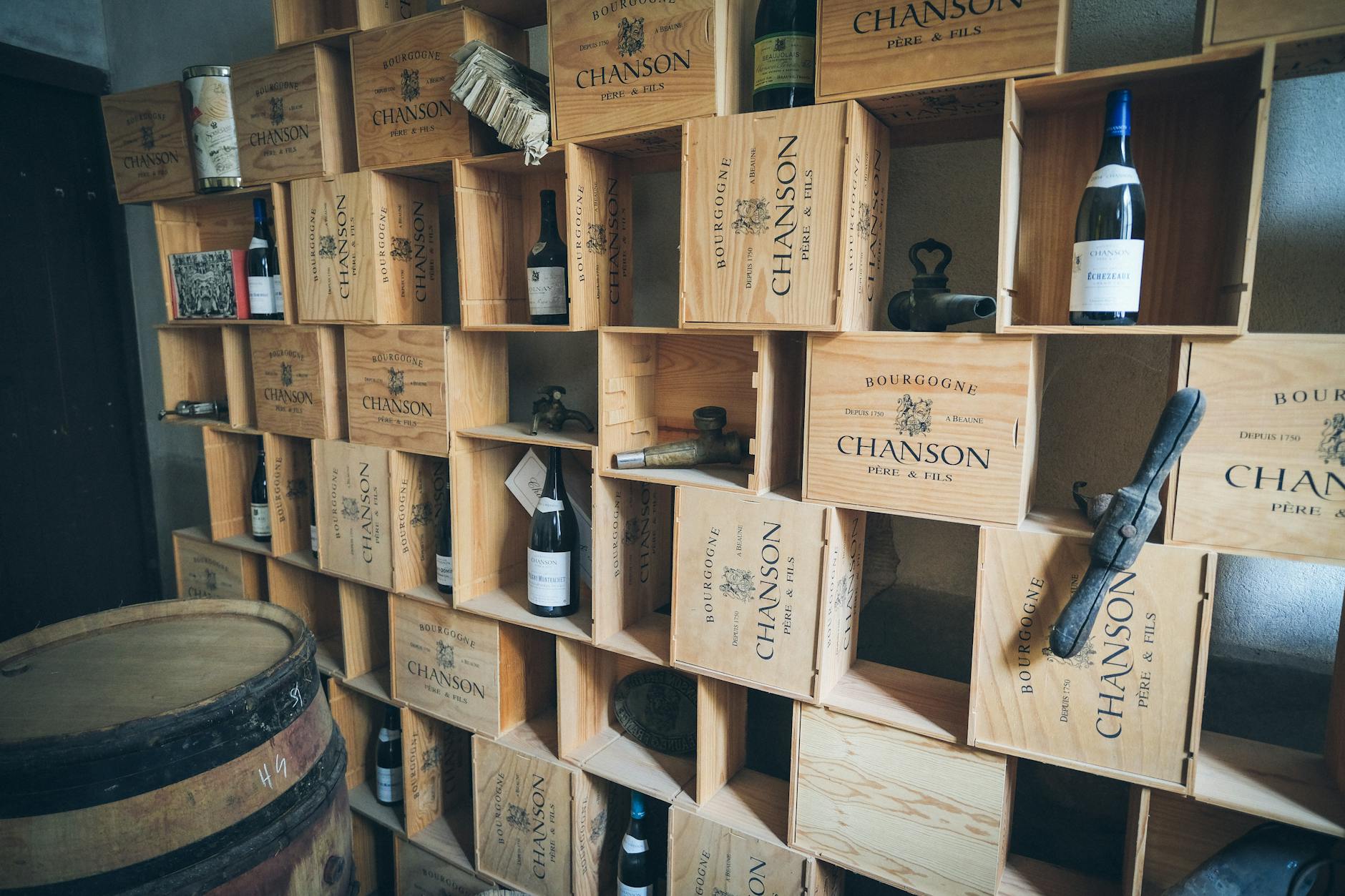
Sustainable wineries reduce yields 20-40% through organic farming, creating scarcity. Bottles from certified estates command 10-25% auction premiums. ESG-conscious buyers and constrained supply are reshaping fine wine as an investment asset.
Key Takeaways
- Fine wine as an asset class returned an average of 13.6% annually over the past decade, according to the Liv-ex Fine Wine 1000 index.
- Sustainable certification is increasingly correlated with auction price premiums of 10–25% over comparable non-certified estates.
- Yield reduction from organic and biodynamic farming can cut production by 20–40%, directly constraining supply of investable bottles.
- Demand from ESG-aligned buyers — including family offices and institutional allocators — is growing, adding a new and durable buyer cohort to the secondary market.
- Regions to watch include Burgundy, Napa Valley, Marlborough (New Zealand), and the Douro Valley, where sustainability-focused estates are already trading at premiums.
What Is the Investment Opportunity in Sustainable Fine Wine?
Fine wine has long functioned as a credible alternative asset, but a structural shift is underway that sharpens the investment case considerably. Wineries across Napa Valley, Burgundy, New Zealand's Marlborough region, and Portugal's Douro Valley are adopting regenerative farming, biodynamic certification, and carbon-neutral production methods — not as a marketing exercise, but as a fundamental rethinking of how land is managed. The financial consequence of these decisions is a meaningful reduction in annual output, which translates directly into tighter supply of bottles that appear on the secondary market and at auction.
The numbers are instructive. The Liv-ex Fine Wine 1000 index — the broadest benchmark for the asset class — posted average annual returns of 13.6% over the past decade, outperforming many traditional equity benchmarks on a risk-adjusted basis. Within that universe, bottles from estates with credible sustainability credentials have begun commanding measurable premiums. Data from Sotheby's and Hart Davis Hart auction results over 2022 and 2023 shows that certified biodynamic and organic estates in Burgundy and Napa achieved hammer prices 10–25% above pre-sale estimates more consistently than their conventional counterparts. That is not coincidence — it reflects a supply squeeze meeting an expanding and increasingly ESG-conscious buyer base.
Why Does Sustainability Constrain Supply — and Why Does That Matter to Investors?
The connection between sustainable viticulture and investable scarcity is direct. Regenerative and biodynamic farming deliberately avoids synthetic inputs that maximise yield. Estates that pursue Demeter biodynamic certification or work under the principles of organisations like Biodyvin typically see annual yields fall by 20–40% compared to conventionally farmed vineyards of equivalent size. For a small-production Burgundy domaine or a Napa cult producer, that reduction can mean the difference between 3,000 and 5,000 cases per vintage — a gap that has outsized implications for secondary market liquidity and price formation.
Several high-profile estates illustrate this dynamic clearly. In Burgundy, Domaine Leroy — among the most sustainably managed and biodynamically certified estates in the appellation — produces some of the smallest allocations of any grand cru producer. A single bottle of Leroy's Musigny grand cru fetched over £18,000 at a Sotheby's London sale in 2023, a figure that reflects both quality and extreme scarcity. In Napa, Spottswoode Estate Winery, certified organic since 1985 and one of the earliest adopters of sustainable practices in California, consistently sees its Cabernet Sauvignon trade above release price on secondary platforms including Wine-Searcher and Winebid. These are not anomalies — they are the predictable outcome of constrained supply meeting durable demand.
How Are ESG Mandates Reshaping the Buyer Pool for Fine Wine?
The fine wine secondary market has historically been driven by private collectors, specialist merchants, and a relatively narrow cohort of high-net-worth individuals. That buyer pool is expanding and changing in character. Family offices and wealth managers operating under ESG mandates are increasingly allocating to tangible assets with credible sustainability provenance, and fine wine from certified estates fits that brief more cleanly than many alternatives. A 2023 report from Knight Frank's Wealth Report noted that 38% of ultra-high-net-worth individuals globally had increased their allocation to passion assets — a category that includes fine wine — with sustainability credentials cited as a growing selection criterion.
This matters for price formation because it introduces a structurally new and relatively price-insensitive buyer cohort. When an ESG-aligned family office is allocating to fine wine as part of a broader alternative assets mandate, they are less likely to be deterred by a 15% premium over a non-certified comparable. That dynamic supports price floors and reduces downside volatility for the investable bottles at the top of the quality pyramid — precisely the bottles that sustainability-focused estates tend to produce in the smallest quantities.
Investment Takeaway
Investors building or rebalancing a fine wine allocation should treat sustainability certification not as an ethical filter but as a financial signal. Estates that have committed to biodynamic or organic farming are, by definition, constraining their own output — and in a market where scarcity is the primary driver of long-term price appreciation, that is a structurally bullish indicator. The regions offering the most compelling risk-adjusted entry points right now are Burgundy (where certified domaines already command the highest per-bottle values globally), Napa Valley (where cult producers with organic credentials are seeing consistent secondary market outperformance), and emerging markets including the Douro Valley and Central Otago in New Zealand, where land costs remain relatively low but sustainability-focused estates are building the kind of critical reputation that drives auction premiums over a 5–10 year horizon.
For investors who want exposure to the broader alternative assets space — including whisky casks, which share many of the same scarcity and appreciation dynamics as fine wine — the principles are consistent: identify constrained supply, durable demand, and a growing pool of sophisticated buyers. The fundamentals have rarely been stronger.
Frequently Asked Questions
Does sustainable certification actually increase the resale value of fine wine?
Yes, with caveats. Certification alone is not sufficient — it must be paired with genuine quality and limited production. However, data from major auction houses including Sotheby's and Hart Davis Hart consistently shows that biodynamic and organic estates in top appellations achieve hammer prices 10–25% above pre-sale estimates more reliably than conventional producers. The certification signals scarcity and a committed producer ethos, both of which resonate with high-end buyers.
Which regions offer the best entry point for sustainability-focused fine wine investment?
Burgundy remains the benchmark for certified sustainable estates commanding the highest per-bottle values, but entry prices are steep. For investors seeking better value, Central Otago in New Zealand and the Douro Valley in Portugal offer certified sustainable estates at lower acquisition costs with strong appreciation potential over a 5–10 year horizon. Napa Valley sits in the middle — established premiums, but still accessible for select producers.
How does fine wine compare to whisky casks as an alternative investment?
Both asset classes share core investment drivers: constrained supply, long maturation timelines, and a growing global pool of buyers. Fine wine offers greater liquidity through established auction infrastructure, while whisky casks — particularly Scotch single malt — offer higher potential returns on a per-cask basis and lower entry costs. A diversified alternative assets portfolio can accommodate both, with whisky casks providing a useful counterweight to the vintage-cycle volatility inherent in fine wine.
What is the minimum investment horizon for fine wine?
Most specialist advisers recommend a minimum horizon of five to seven years for fine wine, with ten years or more delivering the most consistent outperformance. Wines from sustainable estates with limited production tend to appreciate most sharply in the 7–15 year window post-vintage, as global allocation lists tighten and secondary market supply contracts further.
Are there risks specific to investing in wine from sustainability-focused estates?
The primary risks are vintage variation — sustainable farming without synthetic interventions can produce more variable results in difficult growing seasons — and authentication. Investors should purchase through reputable merchants or auction houses with provenance documentation, and focus on established estates with a track record of consistent quality. Climate risk is also a growing consideration, particularly for estates in marginal climates, though many sustainability-focused producers argue their soil management practices make their vineyards more resilient to climate variability over the long term.
💼 Interested in alternative asset investment? Speak to the team at Whisky Cask Club — Singapore's leading whisky cask investment specialists.
💼 Interested in alternative asset investment? Speak to the team at Whisky Cask Club — Singapore's leading whisky cask investment specialists.